Tag: history

  • ‘Stupid Ancient History’, by Leland Gregory- review

    Stupid Ancient HistoryStupid Ancient History by Leland Gregory

    My rating: 5 of 5 stars

    The purpose of history is to transcend the subjectivity of times in the discovery of the truth about human nature with multidisciplinary approaches that aid in our understanding of the continuity of mankind. In this sense, history is an artifact of a collective human enterprise of culture and society, which mirrors how we humans have been, what we have done, and who we really are from the times immemorial to this date. If this sounds too stuffy and boring with the gravitas of an academic subject filled with dates and names and events to remember for exams, then you will love Stupid Ancient History by Leonard Gregory because it will make you both learned and amused with a course of delightful Amuse- Bouches throughout a solipsistic feast of reading to your heart’s content.

    Filled with many unknown tidbits of ancient Greek and Roman history, this book is a pleasure to your brain overtly fed by fake-news, ego-inflated memoirs of successful people, revisionist histories in favor of political ideology, and vehemently subjective narratives of self-proclaimed outsiders away from the realities of daily lives. It’s also refreshingly accessible to all, average and academic, which shows the humble and benign character of the author who, despite his wealth of knowledge on the subject, translates the words of an academic into those of a student seemingly with a general reader in mind. The book reveals it all; it ranges from Cleopatra VII Thea Philopather, (aka Mark Anthony’s Egyptian Lover, who wasn’t really Egyptian) to Pliny the Elder, who believed that pouring vinegar over ships gave them some slight protection against storms, to Emperor Nero, who didn’t play the violin during the Great Fire of Rome but paid out of his pocket for the provisions and housing for the homeless due to the fire, to the great ancient thinker Plato, the name meaning “wide, broad, broad-shouldered” betrayed his real name Aristocres, and to many others that will wow your brain conditioned to believe what they weren’t really.

    It’s a really a Eureka experience that you will get from reading this delightful book, and you will feel effortlessly erudite in the knowledge of history and positively enriched with the knowledge of humankind that has not changed a bit according to the racy but playfully innocent scribbles found in the ruins of the ancient city of Pompeii. What’s more, by adopting the in-vogue trend of using short episodic vignettes, the book doesn’t require your following the entire chapters to sequence the narrative and makes it a very pleasing and flexible read for the benefit of simple mental pleasure. So, if you want to be conversant with the history of ancient Greece and Rome without being overwhelmed by stuffy words and boring typography in one sitting, this book is the genie to your wish.
    View all my reviews

  • The Pathfinder of the American West – review

    John C. Fremont: The Life and Legacy of the Legendary American Explorer Known as The PathfinderJohn C. Fremont: The Life and Legacy of the Legendary American Explorer Known as The Pathfinder by Charles River Editors

    My rating: 4 of 5 stars

    Before the dawn of civilization set on the American West
    With metal horses and electrical messages and gold mines,
    The braveheart John Charles Fremont opened unpathed trails,
    Uncharted rivers, and undreamed regions of the unknown
    Crossing from the east of the Appalachians to the west of the Rockies,
    Following the watery highways of the west of the Mississippi rivers
    Enduring the perils of nature and hostilities of the ancient tribes
    Defying the temptations of returning to civilization with all might
    In the discovery of new hopes, new opportunities, and new beginnings
    For those wishing for a surrendering of old yesterdays and a trust in new tomorrows.

    View all my reviews

  • ‘Tom Horn: The Controversial Life and Legacy of One of the Wild West’s Most Famous Gunslingers by Charles River Editors’, – review

    Tom Horn: The Controversial Life and Legacy of One of the Wild West’s Most Famous GunslingersTom Horn: The Controversial Life and Legacy of One of the Wild West’s Most Famous Gunslingers by Charles River Editors

    My rating: 4 of 5 stars

    You may know what you are, but you don’t know what you may be. Things never seem to go in a way that you want them to, and life can’t always be lived at the same pitch as your heart’s content. For the fickle nature of life is beyond your mortal measure, which is called the vagaries of life according to the positions of the slings and arrows of the Wheel of Fortune on which someone’s loss can become your windfalls and vice versa. That’s why life isn’t fair, and you know it, but you just have to bear it with a grin in the manner of an obscure performer on stage getting the part you don’t like. It’s easy to be said and done, but that’s how the life of Tom Horn, one of the Wild West’s most famous and last gunslingers, seems to mirror how the play of the Fate in company of the juggernaut of an epoch betrays a man’s life despite his efforts to carve it out according to his will, which makes me question the validity of Calvin’s Doctrine of Predestination that I have thus far resisted.

    unnamed
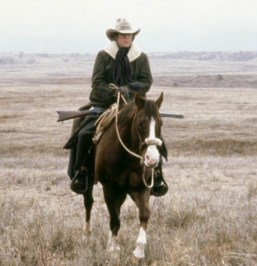
    Steve Macqueen as Tom Horn

    Tom Horn, born on November 20th, 1860 in Missouri, was an American scout, cowboy, soldier, cattle detective, and Pinkerton agent in the 19th-century and early 20th-century American Old West, spanning the two epochal societal and economic changes of the West that permeated the lives of the frontiersmen and women in all aspects of their contemporary life. However, nobody struggled to be accustomed to the changes more than the infamous Tom Horn, who allegedly committed 17 killings as a hired gunman throughout the west, including the dramatic capturing of the legendary Apache warrior Geronimo due to his commendable knowledge of Indian languages and negotiation skills. And yet, Tom Horn was not the usual footless gunslinger killing people for leisure or money, hanging around at saloons, or roaming about the town just to get kicks for scaring the onlookers with that usual contrived look of machismo. He was always working or in search of working out in the field, self-employed or employed, riding the horse from one end of the frontier to the other end where guns were a means of law and life. Until the U.S, Census Bureau officially closed the Western Frontier in 1900, Horn had been working as a mercenary assassin for the cattle industry whose job was to ambush cattle rustlers hired by local cattle lords. And it was during this employment that Horn was accused of killing a young boy in Iron Mountain, Wyoming as a result of a growing feud between the cattle and sheep industries breaking all borders of rationality.

    Whether Horn really killed the boy remains unresolved on the grounds of insufficient substantial evidence, but upon my reading of the book in association with watching the selfsame movie, starring Steve McQueen as Tom Horn, I posit that Horn must have been framed for the murder of the boy because (1) he was always a lone wolf without attachments; (2) he had extensive working experiences of handling fugitives, criminals, and hostile natives as an expert marksman; and (3) he wasn’t as cunning and slick as others to protect himself from false accusations and other kinds of infamy.

    In fact, Horn was a scapegoat for the changing social climate of the West in the transition from a lawless territory to a civilized society that slowly began to simulate the East Coast, where a man like Horn would be a subject of public farce, ridicule, and reprehension as an epitome of the barbarity of man deprived of the common constraints of civilization retorting back to the old law of teeth for teeth and eye for an eye. Horn’s glorious achievements as a dependable scout who guided the army through the unpatched perils trails packed full of unknown dangers to the frontier, a reliable bounty hunter who did his job well, and a good, conscientious employee obeying his employers were naught in the greedy minds of his cattle lords, and thus his existence was simply expendable just as another precarious serf who could be terminated for good at their wills.

    2627fc181fdf35677cd3d045929bf8d6
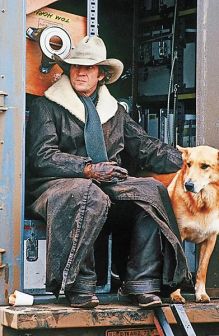
    Steve McQueen during a break on the set of Tom Horn

    Horn’s life was ended in the gallows generated by waters in a Wyoming prison on November 20, 1903. During his numbered days in a cell, Horn wrote his autobiography, Life of Tom Horn: Government Scout and Interpreter, published posthumously in 1904. Even Geronimo expressed his disbelief of Horn’s charges and the killing of the boy in a cold-blooded fashion. True that Tom Horn has become something of a Western saga with his larger-than-life figure. Nevertheless, he was not a fictional character but a real man who tried to make the best of his life in the wilderness of the West alone with what he had. I believe that Horn was a collective scapegoat sacrificed for expiating the barbarous past of the 19th Century western frontier for the want of a new zeitgeist of the 20th century civilized western society. For this, nobody sums up the tragedy of Tom Horns better than Elizabethan dramatist and poet Shakespeare: “As flies to wanton boys, are we to the gods; they kill us for their sport.” This is why my resistance to the doctrine of Predestination is being inclined to the truce for consideration.

    View all my reviews

  • dishes and books

    2c2cc0e944d117ab0561431f0cb8710a

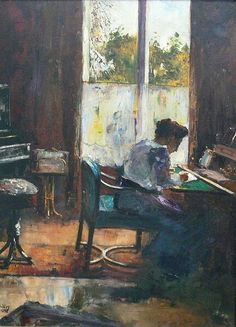
    Agatha Christie once said: “The best time for planning a book is while you’re doing the dishes.” So did Jane Austen, who used to write before preparing a meal for her elderly father and after washing the dishes. And there was Laura Ingalls, an incredible pioneer woman tenaciously grasping on her aspiration to write while guiding her poor family to the long and winding climb to long-term financial security.  Then there was Lucy Maude Montgomery working full time as a teacher and writing full time to arrive one day as an established writer. Now enter Christine De Pisaner, a single mother of three children and mother, employed as a full-time supervisor at a scriptorium in the Late Middle Age France. What they had in common was the inexhaustible self-discipline and the independent will that drove them to spur their creativity on the craft of writing while juggling with their existential needs of life.

    In fact, the figure of Christine De Pisan stands scintillating amid the somber Gothic spheres of cathedrals and gargoyles in the Late Middle Ages. She was the first professional woman writer making a living out of writing to support her three children and mother on her own against the custom of remarrying as a widow. Pisan was a precocious, voracious reader at a very young age, wallowing herself in books, soaking up in knowledge gained from hours of reading at the royal place of the Louvre. Upon her husband’s death, Pisan worked at a scriptorium where she supervised the works of calligraphers, miniaturists, and bookbinders while writing in her spare time. It was during this time of employment Pisan began to write for livelihood under the aegis of King Charles VI, attracting European royal patronage of Phillip II of Burgundy, Queen Isabella of Bavaria, and England’s Earl of Salisbury, despite the fact that England and France fought against each other during the Hundred Years’ War. But Pisan’s feats of words and erudition triumphed over the vortex of the war and communicated to Taste and Reason universal in humanity by which her love of France and admiration of the Virgin Maid of Orleans were sublimated to the epic romantic poem “The Tale of Joan of Arc”.

    Pisan, Agatha Christie, Jane Austen, Laura Ingalls, and Lucy Maude Montgomery are soul sisters bound by the ambition, fortitude, and talents to express their inner voices in the peculiar alchemy of literature with a burst of pep in spite of their dealings with the existential world hostile to their sensitiveness. They were writers who knew how to strike the chords of readers with their artistic craft and admiring independent spirits that are contemporary with our time. For they write despite life’s challenges with a resilient sense of purpose in search of a meaning of life by actualizing dreams, hopes, and values in an expression of will across a blank page in divine madness of art. You see, washing and writing are not apples and oranges.

  • ‘The Time Traveler’s Guide to Elizabethan England’, by Ian Mortimer – review

    The Time Traveler's Guide to Elizabethan EnglandThe Time Traveler’s Guide to Elizabethan England by Ian Mortimer

    My rating: 5 of 5 stars

    People tend to make an anachronistic mistake of assuming that their times are more culturally and socially superior to their previous generations’ times, whereas forty years on an evolutionary scale amounts to a million second on a twenty-four-hour clock, the amount so infinitesimal that it makes you smirk. What makes us set apart from the predecessors of our human civilization is not how they looked but how they looked at the landscapes surrounding their everyday lives, which led to the creation of the ethos of society peculiar to the different historical periods of time. This Thucydidean approach to history as a branch of social science as well as humanity strikes the chords with Ian Mortimer’s perspectives on his Elizabethan ancestors in his scintillating book, The Time Traveler’s Guide to Elizabethan England.

    Rich in details and splendid in descriptions that successfully and naturally resurrect the period, Mortimer’s vividly atmospheric accounts of the era transform the people and the landscapes of Elizabethan England from one-dimensional textual elements to animated figures in his engagingly vivacious narrative that strut in the mind’s theater of the reader, commanding attention in every chapter in a way that looks virtually real, evoking a phantasmagorical display of the periodical images. Mortimer is a knowledgeable and witty guide well versed in the English Renaissance with a practical sense of reality, which makes him something of Dr. Who, who pitchforks his wide-eyed volunteer reader to the subject time and then materializes when the reader is in a pickle. He shows the reader both the beauty and the beast of the Elizabethan society at its core with his wealth of knowledge drawn upon extensive research on the period and general erudition without putting a supercilious air of a highly learned man and stands in awe with the reader of the cultural and social progresses of Elizabethan England that began to define the “Englishness,” with which we tend to associate when the name “England” chimes the bell of literature, religion, and geography, all in the collective image of being “English.” Mortimore does this wonderfully with his engaging narrative skills that will not make you bored and skip a page.

    Mortimer as a literary Dr. Who aims to bring the gaps of time and space between the reader and the populace of Elizabethan England to elucidate his stance on the truth about unchanging human nature wrapt in a periodical costume; in fact, history is a branch of literature made by artificers and artists with stories full of events, persons, and places that are woven into a tapestry of time, which also reflects how we have become what we are. In light of this, Mortimer is a cross between Herodotus with his entertaining narrative skills and Thucydides with his objective analysis of the historicity of society and culture. At the end of the book, the reader will find William Shakespeare, one of the most notable figures of Elizabethan England, holding up “a mirror to Mankind and shows people what they really are.” This is a cracking read packed full of interesting tidbits on the ways of life in Elizabethan England which he relates with wonderfully lucid insights into the turbulent but magnificent era that marks an indelible landmark in the history of England, and ultimately, of the world.

    View all my reviews

  • ‘Books and Reading in Shakespeare’s England’ – essay

    “Reading maketh a full man; conference a ready man; and writing an exact man,” said the Elizabethan man of letter Francis Bacon. Reading was, in fact, a social experience, a public act, in the realms of academia, ecclesia, and civil service in the early 16th century England before the Reformation era, which was still reminiscent of medieval traits in general modus viendi. Reading was an expensive activity of the literate accessible to Greek and Latin texts, and books were not so much a necessity as a luxury. So much so that going to a theater was cheaper than buying a book. This Elizabethan culture of books and reading was the topic of the delightfully informative podcast interview “Books and Reading in Shakespeare” with Stuart Kells and Jason Scott-Warren, which I came upon while I was reading a book about the culture of Elizabethan England with a mental exclamation: Geronimo!

    Shakespeare used historical contents, contemporary literature, and translations of classical continental source texts to use them as his poetic imitations. The existence of Shakespeare’s library is always elusively ethereal, but the poetic dramatist was himself a walking library; carrying all of the source texts in his head and drawing on a wealth of the information, he created a polyphonic work that elegantly and wittily interwove multiple strands. With Shakespeare as an illustrative example of personalizing books to use them as source texts to create his own works, we see the Elizabethan England changing from the elitist medieval academic institution to the popular readers’ club with members from various social strata wallowing in simple pleasure of reading books to their liking. This cultural character of the era is marked by individualism; that the responsibility for your achievement is attributed to yourself was the ethos. This growing self-confidence in awareness of individualism permeated writing as well as reading by personalizing the knowledge of others to make it your own.

    The increasing availability of books in English language resulting from the Reformation encouraged people to teach themselves to read, including women. A variety of subjects, ranging from recipes for meals to Scriptures, in English gave access to those who were often excluded from a feast of knowledge enjoyed by a privileged few, and now more people could share the joy of being knowledgeable and creative thanks to the democratization of reading in general as a result of the mass production of books in the vernacular language that captured the shift to a more literary culture in comparison to the continental counterparts.

    In short, reading practice in Elizabethan England reflects social changes in the religious climate that permeated people’s literary interests: the Bible became the ultimate self-help book as well as philosophy and literature that made readers inquisitive and intelligent by trying to ascertain the meanings of the Gospel, which was the office of the clerics before the reformation. Now the time changed, and people read the Bible directly, using their own faculty of comprehension and imaginativeness. Consequently, the democratization of subjects and accessibility of books gave the power of knowledge to people to enter the truth of the world and the beyond. Blimey. For reading is to the mind what exercise is to the body.