Tag: history

  • ‘Conan Doyle for the Defense’ by Margalit Fox- Book Review

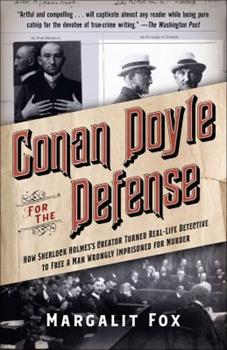
    Conan Doyle for the Defense: The True Story of a Sensational British Murder, a Quest for Justice, and the World’s Most Famous Detective Writer by Margalit Fox

    My rating: 4 of 5 stars


    Sometimes, life is stranger than fiction, imitating art, and vice versa. Picture this. A man on losing streaks decides his last bet on life in the New World. But, instead, he finds on arrival himself surrounded by the grim-faced henchmen of law with the gray eyes scanning the debonair foreigner’s appearance, measuring his moral value, judging his life at face value. The compass of Goddess Fortuna’s Wheel indicates the downfall of Oscar Slater in the direction of HM Prison Peterhead in Scotland. But, even though fortune’s malice has thrown Slater overboard, it certainly has not deprived him of a lifeboat in the person of Sir Arthur Conan Doyle.

    The case of Oscar Slater is often dubbed a sensational Edwardian murder mystery characterized by a scandalous wrongful conviction by the stupendousness of a miscarriage of justice in the history of any subject related from social justice to penal system, from police investigation procedures to forensic science. It follows from a death of a wealthy elderly woman brutally assaulted in her Glasgow home in 1908 when the Victorian prejudice against poor immigrants and foreigners, especially Jewish extraction, was PC all over on the isles. Slater being a secular German Jew with dark eyes and hair contrasted with the fairness of angelic British blonde, the blue-eyed ideal figure was the poster man of a criminal among the police and became their convenient suspect without due diligence and beyond a reasonable doubt. The Scottish police applied none of the evidentiary truth to the Slater case. On the contrary, they projected all of prejudice and complacency into the person of Slater, who was a sort of likable roguish streetwise swinger whose attractive suaveness and sleekness are reminded of Puck in a Midsummer Night’s Dream. But Arthur Conan Doyle s helped Slater set free after twenty years of hard labor at the prison for the crime he had not committed. Suppose a true writer sees the world’s corruption at its heart and stands furious with people instead of grandstanding with rants and slurs. In that case, Conan Doyle stands along with Voltaire, George Orwell, Ralph Waldo Emerson, and Henry Wadsworth Longfellow in the pantheon of the great writers who lived in the crowd of life.

    Although Conan Doyle himself could not entirely be free from the conventional preconception about lower-class foreign immigrants and the jews, his integrity and charity exceeded the flaws. They changed the fate of the wrongly convicted man, which should be highly esteemed for universal recognition of all times. In the particular alchemy of literature as connecting the reader to the universal empathy, Doyle’s support of Slater’s innocence seems particularly conspicuous in the current humanitarian crisis in Afghanistan. The British general whose Toyota Jeep took up the already limited space could have held more Afghan evacuees in an airplane. Also, the former British Royal Marine chose to take 200 dogs and cats from the shelter with him over his Afghan workers and their families. But that’s not the end. The former Afghan employees of the British Embassy in Kabul are still clinging onto a thin ring of hope that their British ambassador boss for whom they had worked even during the Covid-19 pandemic scare would come to rescue. Would there be another Arthur Conan Doyle who would act on his principle of morality in the spirit of humanity who regard the lives of the oppressed Afghans as equally valuable as their own or similar kinds- that is, white and Christians?

    My reference of Doyle’s involvement in the Slater case to current Afghanistan and refugee situations may seem a bit of a stretch with over-flowing maudlin sentimentalism. But I think Doyle’s determination to help Slater cause following the case of George Edalji, another miscarriage of justice based on racial discrimination, stems from his good natural good-heartedness aided by the brilliant mind searching for truth. It is a triumph of good over evil in the semblance of law and order. Unfortunately, I have a hard time finding a famous writer or poet who actively puts thinking into action, just as Doyle, Voltaire, Dickens, and Sand, whose brilliance of the minds resembled the magnificence of the Sun benefitting the life on earth. Where are such great writers now?


    View all my reviews

  • the world in my eyes

    On one fine day, a tiny Bushman in Southern Africa comes upon an empty coke bottle thrown from the cockpit of an airplane to desert sand. Thinking it is a gift from the gods, the man sets out a journey to return it to them. Along the journey, the Bushman encounters a pastiche of humanity in a kaleidoscope of the events he comes upon till he reaches an edge of a high cliff mysteriously enveloped by the rings of clouds and throws the bottle into the deep, exclaiming, “The Gods Must Be Crazy!” As I see now, I am in the chorus with him on the top of the cliff overlooking the world.

    Nevermore than now have I witnessed the epic moments of history that appear to be atavistic in terms of nature, motive, and consequence. A convenient way of relating the human tragedies to the scourge of gods and God will only put me on a par with Pangloss, the ever-positive pious philosopher who thinks all is God’s will for the best in the best of all possible worlds. The Taliban chanting the name of Allah in their will, Christians taking pride in being a new chosen people, and other zealots of any religion all have had recourse to their deities and used their belief systems as weapons of dominance over others. From the Coronavirus pandemic that forever changed our ways of life to the collapse of democratic Afghanistan by the Taliban and the devastating effects of Hurricane Ida in Louisiana, I see a phantasmagorical display of people’s faces in sorrow and distress in my mind’s theater.

    Following the news about the current situations of Afghanistan and its people links me to the Trojan War, which lasted about ten years with the Greek allied powers destroying Troy in the end. From the burning city of Troy comes Aeneas, a royal warrior who escapes the mayhem with his family, carrying his elderly father on his back, holding his little son’s hand besides. That image is always particularly heartfelt because of the Trojan hero’s humanness, unlike his more glamorous Greek victors. What happened in the past happens now and will always, such as the images of parents passing babies to soldiers across the sharp razor wire two young, Afghans falling from a plane climbing high in the sky, and the lifeless bodies of the young and the old, women and men strewn over the dusty ground outside the airport in the aftermath of suicide bombing.

    Back in the States, Hurricane Ida ravaged Louisiana, leaving thousands of people stranded, homeless without power (for about a month from now), and sufficient supplies of sanitation, clothing, and food. They lost everything, and nothing is what they have now. I cannot erase the image of a woman from a news interview who said the hurricane took everything from her family, then breaking into tears. Then there is news about an elderly man viciously attacked by an alligator in a flood presumed dead while his wife took a little boat to get help outside their flooded isolated community. Would the man have been swept away by the rapid stream of the flood? Would the alligator that had attacked the man have returned to him for more? Or would the man knowing or believing that was his end have let himself dissipated into the murky waters?

    Is this the same kind of significant feeling of epic moments I am experiencing as what George Orwell should have felt when witnessing the death of a Burmese condemned man on his way to the gallows, the carnage of WWII, and the tragedy of the Spanish Civil War? Orwell posited that one of the reasons he wrote was to record historical moments he was living with his own perspectives and feelings, not necessarily popular or compromising. My intention to write this essay is similar to Orwell’s but more with sheer egotism of getting the heartfelt sorrow off my chest and tears away from my eyes. But I am not so sure if that proves effective with the images still vivid in my mind.

  • Living in the historical moment – the Collapse of Kabul

    The Buddhas of Bamiyan Valleys before the destruction by the Taliban

    One of the four reasons why George Orwell wrote was to record historical events in his time with a sense of writer’s responsibility to witness the moments for posterity. Imbued with the Orwellian spirit, but more egged on by the concern for the reign of terror, as a citizen of the world, I care to write about the current volatile situation in the Taliban regime of Afghanistan. Now I can see a danger of theocracy in which religion is a leviathan consistency master computer that controls people’s lives and psyches. Religion becomes an authoritarian Big Brother, the Demiurge that plays the absolute moral and ethical being in the mask of profoundly sacred deity leading to hatred of the physical world we live in. In this situation, the beauty of art intrinsic to our human essence is a decadent luxury, expendable to the bargain in the politics of heritage.

    The fate of Buddha before the killing

    The reinstatement of the Taliban government in present Afghanistan provokes the image of the great Buddha statues located in Bamyan, Afghanistan, until the Taliban obdurately and proudly destroyed in 2003 because the statues were idols opposite the teachings of Allah. The Taliban ignored pleas from the UN, including Islamic countries, that urged them to preserve the world’s treasure of civilization for humanity. The statues of Buddha represented Gandaha art, a wonderous syncretism of Hellenism of ancient Greek culture and Buddhism of Indus Valley civilization. It’s an exquisite synthesis of the West and the East, which tells us that people found a way to cross vast continents and seas and mingled to blossom into a new civilization even a millennium ago. Thanks to the one and only Macedonian Alexander the Great, emblematic of the wise and cultured political and military leader of all seasons, our human civilizations dispersed farther. They prospered further, as evidenced by the now begone great statues of Buddhas built by Bactrians, the descendants of soldiers in Alexander’s army who remained in modern-day Afghanistan by force and perforce and founded Hellenistic Bactria. By the way, there are still the descendants of the ancient Greek forefathers living in the area, even though their cultural expectation in the form of the statues of Buddhas have become mysterious wonders of the ancient world.

    The artifact of humanity is gone

    I am not condemning the religious whose faith is commensurate with their regard for others because a true believer of any faith is also a good person. The world’s representative religions do not promulgate violence and antagonism, at least not in their sacred texts per se. Still, misinterpretation or over-interpretation of the words have been the seeds of discord in history. I remember Mother Teresa of Calcutta once said that you don’t have to be a Christian to be a good person. If you are a Hindu, be a good Hindu, a Muslim, a good Muslim. I wish people of all faiths would take her words to heart. Then we could place the Republic of Heaven on earth.

  • Philosopher, Poet, and Doctor

    Edgar Allan Poe’s tribute of “To the glory that was Greece” sprang from my mind when I received this month’s subscription to a British history magazine BBC History Revealed. It came in the magnificent package of ancient Greece Special, ranging from the Archaic to Hellenistic periods, from slaves to Socrates, and from Auspices to trepanation. I feel dutiful that writing about my thoughts from the reading serves a purpose of writing to achieve experiential value to gain refreshing knowledge about the famously glorious ancient Greece and creative value to record my thoughts about following impressive findings.

    Surprising Opponent of Democracy
    Socrates was the one who called upon Philosophy from celestial paradise into the world, took her to the villas and huts of mortals, and persuaded her to stay among them. He was indubitably the father of philosophy as Herodotus was of western narrative history. His submission to drinking fatal poison as execution for corrupting the Athenian youth by saying “Bad law is still law” is immortalized in works of art from painting to engraves, poems and plays. Woe betides anyone who would disbelieve that the most democratic thinker opposed democracy in his time. Yet don’t let sorrow turn into disappointment in betrayal because democracy in Socrates’s time was different from our modern concept and practice of republican democracy. Athenian democracy directly involved people of all classes in politics without representations for constituents. Any Athenian citizen- excluding women, slaves, and foreigners- could voice out and execute their wills however uncouth and unreasonable. This form of mob-style demagoguery without desires being reined by the judgment is what Socrates criticized, not freedom of human spirits. Naturally, having seen his venerable teacher killed by the will of demagogues, Plato was an even stronger opponent of Athenian democracy that ceased to reign in the early 4th century BC following the Greeks’ unsuccessful revolt against Macedonia rule.

    Nothing is better than the simple.
    Anyte of Tegea was a very popular poet of circa 3rd century BC. Anyte is considered one of the first poets to focus on the simplicity of beauty found in nature and life, which is different from most ancient Greek poetry eulogizing the mighty achievements of heroes and the majestic powers of gods. Her eloquently crafted poetry with comprehensively accessible use of simple language gorgeously manifests richly delicate emotional sensitivity that collapses the millenniums between her writing and our reading them. Although her popularity earned her the sobriquet of “Female Homer,” a comparison to nineteen-century American poet Henry Wadsworth Longfellow is deemed more apposite and understandable for both poets sublimated the ordinary to the sublime with the feeling of beauty and love for nature and life.

    A hole into the skull
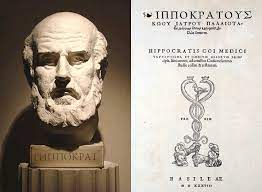
    Trepanation was a medical technique that Hippocrates, the father of medicines and doctors, codified in circa 5th century BC. He believed that there were four humors in the human body: Blood – Air, Yellow bile – Fire, Black bile – Earth, and Phlegm – Water. The idea of humourism consisted of thus: if one of them was redundant or deficient, ailments of spiritual and physical kinds arose. Therefore, drilling a hole into the skull of the affected suffering from depression, headache, fractures, or other symptoms of a mystical condition, would relieve the patient of malady. The Inca civilization was indeed famous for successful cases of trepanation, more favorably effectuated than those of 19th century American Civil War experience. However, it was Hippocrates who contextualized the procedural and impacts of the prehistoric operation. Trepanation is still performed today in the name of craniotomy.

    The mists of the past seem strangely distant due to our conditioned sense of evolutionary scale in the continuum of prehistoric and modern times. However, history shows us in today’s world that the people who lived before us millenniums ago had emotions and concerns similar to ours and that human cultural progress is a collective enterprise without fully recognizing it within the circumferences of time and space. Just as Herodotus was gobsmacked by the sight of great pyramids built centuries before him, our descendants will be awe-struck to see the ancient ruins of the Statue of Liberty or the Empire State Building and the tires of the New York City or of Los Angeles. Time and culture are ephemeral, but cultural heritage and artifacts in the treasure of works of art and humanities passed down to posterity are eternal as long as the human race exists.

  • All for the best: a tale of ‘Candide,’ by Voltaire – book review

    Candide by Voltaire

    My rating: 5 of 5 stars

    Candide is a touchy-feely whimsical story about the absurdities of optimism against realism in a delightfully witty guise of romantic adventure fiction. An entertaining satire that is both intelligent and humorous at best, it is a collective coming-of-age story of a man whose anfractuous life passages enlighten him of the reality of life and the world.

    As the novella’s title betokens, the protagonist Candide grows from a naïve young man sheltered in the Edenic castle of privilege and prestige in the protégé of philosopher Pangloss. Pangloss indoctrinates in Candide Leibnizian optimism, which posits that all is best for the best of all possible worlds. Candide’s expulsion from the castle because he was fascinated with his uncle’s beautiful daughter Cunegonde marks his journey toward the truth to the purpose of his suffering and what it means in life. Doctor Pangloss, a parody of collective complacent philosophers, keeps telling him that it is God’s will and that his life change is a manifestation of immanence, an intellectual belief in God’s presence in the world concreted by Spinoza. He preaches a pre-established harmony in the world because it is already the best in its most perfect form. Pangloss is an abstract philosophy and institutional religion incarnate in his glorious scholastic appellation and unyielding intellectual pride that refuses to recognize truth.

    The adventure of Candide is similar to that of Gulliver in his travels to unknown worlds in Jonathan Swift’s Gulliver’s Travels. Gulliver is a ship’s surgeon full of ideals shaped by established a priori schools of thought until he encounters wondrous creatures in mysterious lands, all exhibiting the best and worst human characters manifested in their appearances. Swift wrote Gulliver’s Travels to criticize the ills of society’s need for reformation as one of England’s leading literary figures with social consciousness. Swift was also one of whom lent a kind hand to Voltaire when he stayed in England to avoid the growing fury of France’s church authority. Volatile Voltaire was known for capricious terms with his literary peers, but his admiration of Swift’s work and him as a brilliant satirist remained loyal. Voltaire’s Candide is more straightforward and realistic, sans mysteriously curious creatures of a wide arc of imagination. However, both Candide and Gulliver share the same thematic elements of parodying the hypocrisies of religious doctrines, and human nature laid bare in the style of chivalric adventure fiction.

    The story is a carnival of characters united by deceptive fallacies, chased by untenable ideals, tangled by insatiable desires, obstructed by variants of life, and succumbed to deceptive pleasures. Nonetheless, one can’t weigh the misfortunes of humans and set a just estimate on their sorrows just as Pangloss deigns to aver, for humanity is imperfect in the imperfect world. Therefore we must strive to make it better for the common good of society as best as we can. Voltaire dreams of a new community with callous palms of laborers conversant with more delicate tissues of resilience, self-respect, and heroism in real life, whose touch thrills the spirit in the most exhilarating way than the idle hands of thinkers and priests. By writing Candide, he creates a society of people who sailed through the vicissitudes of life in the triumph of epistemological a posteriori truth over ontological a priori precepts.

    Candide is surprisingly easy to read and wastes no time for boredom. Voltaire himself was a man of no-nonsense whose simple but effective use of words is reminiscent of Hemingway and Stephen Crane, who were titans of literary realism. John Milton’s metaphysical poem Paradise Lost rang hallow in its abstruse display of classical knowledge. Homer and Dante lost their luster in the words that people did not use any longer. An authentic intellectual lives among people and puts his learning into action for the good of people. Candide is an excellent company to console your weary spirit and sorrowful heart if you are tired of eternal optimism and forceful positive thinking that has become a still fashionable mass mantra.


    View all my reviews

  • John Dee, Queen Elizabeth’s Gandalf who designed 007 – book review

    John Dee: The Life and Legacy of the English Occultist, Alchemist, and Philosopher Who Became Queen Elizabeth I’s Spiritual Advisor by Charles River Editors

    My rating: 5 of 5 stars


    Ben Jonson’s alchemist Subtle in his famous Elizabethan play ‘The Alchemist’ is a knave quack intent upon doing a lucrative occult business by luring the gullible, rich or poor, learned or general. But John Dee, Queen Elizabeth I’s English-Welsh astrologer, was anything but. He was a highly educated man graduating from Cambridge University with a penchant for esoteric knowledge beyond the realm of the physical world, and brilliant engineering feat contributed to his epithet as the queen’s occultist to the eyes of those who regarded him as something of Rasputin in the queen’s retinue. To me, Dee was a curious figure of science and magic, fact and mystery dissolving into one another.

    From the cradle to the grave, John Dee’s life appears to be starlit with mystical numbers and stars that govern his destiny to pursue the knowledge of the beyond. Born in the household of a well-to-do textile merchant on July 13th, 1527, Dee’s fate was already revealed in the combination of the lucky number 7 and the ominous 13. He was endowed with intellect and heart, which is not typical for an astute scholar with a high education degree. Also, an ingenious engineer in stage productions of plays, Dee created the modern-day equivalent of special effects employing a man-powered crane and other apparatuses used as a counterweight fly system. He was fascinated with the science behind mathematics and used it to know astrology and celestial navigation in understanding human lives. He chose the coronation date for Elizabeth when Jupiter juxtaposed alone with Venus, opposing Saturn, and conjecturing Mars. The astrological interpretation betrays the virgin queen’s reign with the beauty of the goddesses and the power of the god of gods. Methinks, Dee’s interpretation must have attributed to the queen’s famous Tilbury Address in which she described herself as possessing “the body of a weak, feeble woman but the heart and stomach of a king.” Furthermore, the famous secret code of “007” was an invention of Dee used between Dee and the queen meaning “For your eyes only” as in “00” as a symbol of eyes and “7” Dee’s favorite lucky number.

    Dee had a bona fide intention to use his knowledge to benefit people of all classes. During his post as royal astrologer under Queen Mary’s reign, Dee proposed to the queen that she establish a national library accessible to all for the universal education of the minds. This revolutionary idea was unprecedented and rejected. Dee was a man of books and used his learning from reading for the welfare of England. He propelled England into the Age of Exploration. He legitimized the British expansion of territories, including America, to which, according to Dee’s certification, a Welsh prince sailed in 1170, which was three centuries before Columbus’ voyage. Patriotic stargazer elucidated further that it was Grate Britain’s destiny to gain all of the territories supposedly appropriated by King Arthur by coining the term “The British Empire.”

    After the death of his beloved Queen Elizabeth, Dee dwindled in his career and fell into obscurity, not least because he lost favor with the successor King James I, the scourge of god against witchcraft and magic as deviltry. We don’t know whether he was secretly in league with the devil in his once magnificent personal library. The opinions on John Dee are still debatable, if not controversial. Some might say he was a would-be Merlin or Gandalf. Some might call him a Rasputin who tricked the virgin queen into believing superstitions with his mephistophelean pact for the souls to populate the circles of hell. I want to say Dee was akin to Atlas, one of the Titans who was also fascinated with astrology and astronomy and generous with munificent generosity in the form of divine fire to mortals, for which he was condemned to bear the weight of the celestial globe.


    View all my reviews