Tag: life

  • my life with a cat so far

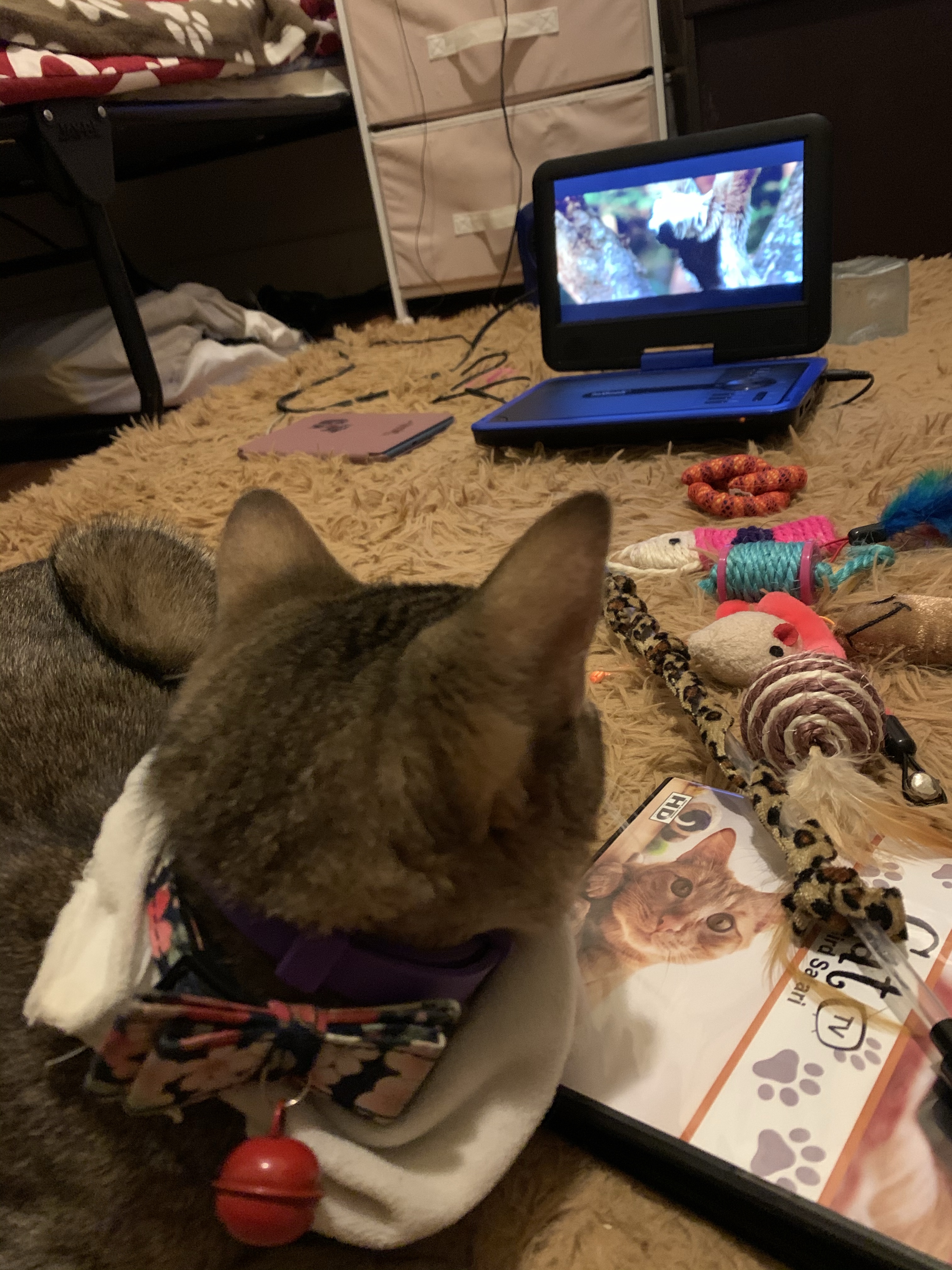
    The period of four months can be long or short, depending upon how you feel it, and to me, it amounts to a long time that has changed my life in every possible way akin to an epoch of revolution. My life with an orphaned kitten named Toro has become a fugue of meows and voices in multiple strands of more meows and voices that has no coda.

    During the four months, Toro and I had anfractuous moments made of frequent visits to different veterinarians, displays of whims and caprice on both sides, tears and smiles, frustration and understanding, doubts and hopes, wishes and disappointments, all of which are crystallized into a virtue of acceptance. I still cannot believe that I have a cat when I still have a weakness for more domesticated, more trainable, and more approachable canine breeds. This doubt develops into a sense of guilt, a whirlpool of self-criticism of not being good enough to be a loving owner of Toro, who is particularly in need of love and kindness due to his sensitive nature and suspected traumatic postnatal experience. Those educative textual and visual information on raising cats dissipates into a gray area of reality and stay there amid my trials and errors in the course of being a terrific guardian whom Toro wishes to live with. Does Toro want to live with another owner who can make him happy in a bigger house where he can run like his wild ancestors or cousins in nature with his new playmates? I ask Toro, but he returns me with that pensive glance and grooms himself like nothing more is necessary than licking his legs and rectum.



    My mother still wants me to return Toro to the shelter because his burst of pep and temper is unprecedentedly unbridled and insurmountable to be caught up with. Then I read other cat owners’ stories and watch their YouTube channels only to make parallels to their blissful lives with their cats and to descend to the labyrinth of gloom and sorrow without an exit. My previous post about my precipitated proclamation of a mutually beneficiary feeling of dependency becomes a public humiliation, a textual pillory of an incompetent cat owner who has no idea about the animal that does not like to be with her the first place. Or so it seems. Alas, woe to the one whose head is whirled like a potter’s wheel in the vortex of confusion, illusion, and discord in a da capo.

    Notwithstanding all of the above, one thing is sure that Toro’s wellbeing, both mentally and physically, is what I care about the most. I have taken him to three different vets so far due to his frequent diarrhea, constipation, and anal pain repeating like Bach’s Toccata. Even if Toro may indeed secretly entertains a wish to meet a new ideal owner, I want to take care of him as much as I can to the fullest extent within my capabilities because I care about him and want to be happy together. His little heartbeat I feel in my hand and when he sleeps at my feet is the most precious thing I treasure that empowers me with a sense of purpose that I have a life depending on me.


  • Thistle, Ambient, Regret

    She saw the hungry oceans

    Rushing toward the kingdom

    Of the shore with full force

    In the scarlet rays of the sun

    Pouring on the parched land

    And turned her ship again

    Toward the unpathed waters

    Alone, all alone, evermore.  

  • The Rambler – History

    As members of society and citizens of the world, we are one way or another connected to the past, present, and future. That is why history is a multidisciplinary study to understand human nature and learn lessons from the past. Listen to Winston Churchill: “Study history, study history. In history lies all the secrets of statecraft.”  Watching our nation’s leaders on T.V., dividing the country into splinters of dissenters instead of embracing them as one people of the nation, makes me urge the current political leaders of our country to read about what it means to be an intelligent and influential ruler who knows a thing about leadership.

    Roman emperor Hadrian was of history scholar, specialized in ancient Greek history and mythology. He was affectionately known as a “Greekling” and endeared and admired by the Greeks whose land he made in the Roman Empire. The Greeks’ love of the Roman Emperor was inscribed in the Arch of Hadrian built in AD 131, an archeological wonder with the 59 feet high structure made from marble from Mount Pentellicus used for the Parthenon, that read: “This is the city of Hadrian, and not of Theseus.” The Greek elation reached the pinnacle when their Roman ruler built the Temple of Olympian Zeus, Hadrian’s dedication to the king of Greek gods and goddesses’ splendor. He also made the legendary Library of Hadrian, containing 100 marble columns with halls with printed ceilings, alabaster walls, and great statues of the Olympians destroyed by the malice of fortune AD 267. Greek enthusiasm for their Roman emperor was no unreason for their willing submission to Rome’s rule, which they had once colonized. The site of the Temple of Olympian Zeus and the Arch of Hadrian in modern Athens

    The Temple of Olympian Zeus and the Arch of Hadrian

    Hadrian’s fascination with Greece developed from his learning under the tutelage of his cousin Trojan became a foundation of Pan-Hellenism to turn Athens into a new cosmopolitan cultural center for the Roman Empire. By way of acculturation, Hadrian hoped to stabilize the Roman Empire’s fractious eastern part and effectuate the colonials’ ruling. Hadrian followed what the antecedent Roman poet laureate Virgil in the Aeneid to solidify Greece and Rome’s cultural link. In this fashion, he succeeded in ruling the colony with glad acceptance by the governed, who even declared him a founder of new cosmopolitan Greece, intent on cutting ties with the mythical ancient past.

    Hadrian’s motto of Pan-Hellenism reminds me of Macedonian predecessor Alexander the Great’s Hellenism, both of which proved work in incorporating different cultures into a dominant culture with respect and benevolence. Both Alexander and Hadrian had an eye for beauty in arts embedded in cultures they annexed to the dominion and knew how to rule wisely and effectively. It was acculturation of the native cultures on both sides, the ruling and the ruled. Yet, Hadrian’s way of exercising sovereignty over Greece is more accommodating and welcoming, even if the intention was not free from political ambition. The ancient Athenian historian Thucydides confirmed that history is the ultimate record of the events by recognizing certain commonalities between the past and the present that transcends the subject of times and applying it to our present situation. If our current political leaders take a cue about social integration to the same vein’s present social conditions, it might help the country stratified by race and class.

  • The Rambler – Religion

    “To one who has faith, no explanation is necessary,” said Thomas More, who died for his relentless faith despite Henry VIII’s promise of honor he would confer on to his most trusted counsel in his cabinet. Samuel Johnson also confirmed that faith required no byzantine theories or philosophy for the validity of truth. Until I attended a public Sunday mass in a parking lot yesterday, I had not realized the power of faith, which I doubted I still had in my heart.

    The beautiful liturgy of the mass, which culminated in the Eucharist, was akin to a flowing of streams of life to the eyes of a seasick seaman and the thirst of a weary traveler. I had never expected such exaltation of the soul with faith disappearing into an abyss of despondency populated with a school of doubt, disbelief, and frustration nurtured in a reality of everyday life. But while listening to a priest’s sermon based on the reading of Matthew 25:31-46, which is about the importance of practicing faith into actions, especially by sharing milk of human kindness with people you feel least likable or unkindest.

    The priest further asked if we would counsel with God in making decisions in life or just about anything needful of help. No one answered yes because let’s face it, we regard such tendency to recourse to God as a derogatorily medieval way of living life in this Digital Age of Artificial Intelligence. We try to reason our faith with the validity of practical truth and willfully turn our heads from the Gospel with the usual facade of “Religion has nothing to do with it.” But then can you also prove that we are nothing but of a highly complex living organism made of accidental atoms, sans souls? What is the feeling that urges you to search for meaning in life, our sense of purpose? Can atoms do it?

    It is my wholly solipsistic reflection of hearing mass, but now I feel like finding Ariadne’s Thread in the labyrinth to find a way out on this last day of the church calendar. What a feeling. Peace to be with you, and God bless you all. 

  • Philosophical investigation of education

    “I’ll teach you differences,” said King Lear as his motto of philosophical investigations in Shakespeare’s eponymous play. I imagine the ghost of King Lear would utter it again when he deigned to come to our realities of universities in this time. The importance of responsible education to remove the social ills and carbuncles resulting from dissentious political domination has never been more conspicuously called for in our high learning institutions as a recent consequence of the George Floyd incident, and the following the Black Lives Matter movement. However, this doesn’t mean that universities should be a breeding ground for training gladiators equipped with political syllabuses and dogmatic agendas to fight against the public foes. Instead, education should disabuse the ignorance of the unenlightened for our society’s universal betterment.

    Professor Benjamin Y. Fong, in his NY Times article “Teaching Racial Justice isn’t Racial Justice,” addressed the issue of education as the fighting tool. It has become fashionable that most American universities have competingly added courses on social injustice to the Black Lives Matter movement. However, the idea of education is to provide students opportunities to learn and actively engage with conflicting thoughts and various real-life issues in a place enriched with knowledge linked with the fellow members of the human race from antiquity. In this environment, a university is a place for education that can improve social conditions in the fight against social, political carbuncles, not for the battle itself, training students for social gladiators.

    Many universities are focused on the quantitative quota of educational syllabuses aimed for the universities’ reputations as the most liberal and forward-thinking higher-learning institutions for the socially recognized prestige, not the qualitative aspect of the education of the minds. It is not the textual syllabuses filled with political ideologies and social campaigns. Still, the practical teaching of various conservative and progressive considerations enables students to incorporate the learning to their perspectives. Education serves to articulate ideas based on the standard of reason and taste universal in all human creatures regarding the principles of judgment and sentiment common to all humankind.

    Suppose we want our higher learning institutions to remedy the existing ills of our social and political realities by implementing more social justice courses. In that case, we must first understand the fact that education itself is not the fight itself. Neither Plato’s academy nor Aristotle’s lyceum was a place for the battle against the absurdities of Man. Or even the beloved, peripatetic Socrates did not use his open universities in Athens as a place for campaigning against the government hostile to his philosophy. Remember that there is no new thing under the sun as long as we as the collective enterprise called Humanity continue to voyage in the Universe.

  • Samuel Johnson Rambles on the practicality of knowledge – essay

    Ignorance is the timorous and indolent plight from fear because knowledge is considered to be remotely extensive and inscrutable to be comprehended. It retards the progress of the mind and numbs the sense. Samuel Johnson avers in his weekly essay ‘The Rambler, No. 137’ avers that one remains unenlightened unless he is diligent to search for the origin of wonder with a pause of reason, a sudden cessation of mental progress when confronting the unknown to him. The need for general knowledge, the knowledge that confers Citizenship of the World, is an essential element of human characteristics, and an easy task to fulfill in search of meaning in life.

    Johnson’s idea of knowledge is simplicity. It is jettisoned from a concatenation of needless abstrusely sophisticated theories and ideologies. It also chimes the bell with the Renaissance virtuoso Leonard da Vinci’s adage that simplicity is the ultimate sophistication in all principles. However intimidating or formidable the unknown is, the essential feature is simple to understand by way of ‘Divide and Conquer,” a principle that complication is a confederacy of the abstruse that can be broken into parts marked by the gradations from the first agent to the last consequence. The force that breaks the shackle of fear for conquering the unknown huddle is patient diligence armored in confidence. The labor of inquiry for wonder follows natural curiosity and confidence that eclipses the soul’s darkness. It comes to fruition by ceaseless efforts to ascertain the origin of the wonder in simple ways. The English philosopher who also advocated democratic pedagogy, John Locke, affirms that the surest way of thorough comprehension knowledge is to attempt little by way of repetition. For the widest excursions of the mind result from short flights of mental imagery and instant thoughts triggered by neurons fired in our cerebral cortex, which can be transformed into an organization of ideas firmly engraved in the mind.

    However, knowledge loses its purpose if it dissipates into the possessor’s cerebral ether or is locked in the mind’s cabinet. It becomes useful and purposeful when put into practice. That is why Johnson gives heed to those who pride themselves in the impressive educational backgrounds and belittle others whose mental capacities they arbitrarily judge ignorable or even ordinary. Knowledge is for share, and it is a duty of a scholar who has a wider variety of knowledge through years of academic endeavors for the common benefits of the world he lives in. As Francis Bacon fittingly concurs, books can never teach the use of books. Generally speaking, it is common for intellectuals, despite their ostensible calls for democracy and justice for all, to live out of touch with the practical realities of life and often regard such matters as trifles. But what is worthy of their glorious learning if it does not accommodate the purpose of life? Johnson criticizes such lofty arrogance of the rarified subset of the general population because they lose their days in unsocial silence and live in the crowd of life without a touch of humanity. It also reminds me of Bacon’s utterance of loneliness in a group as such: “Magna Civitas, Magna solitudo.” In this regard, George Orwell is together with Johnson because they saw the educated’s superciliousness, the intellectuals, who often conferred their knowledge to their honor in the voluntary seclusion.

    Upon reading Johnson’s essay, I could not help but wholeheartedly agree with the purpose of knowledge and the idea of sharing it with others for the world’s common good. I was also glad to learn that I was not the only one who thought that people with academic credentials were frequently dismissive of the opinions of what they regarded as the mortals of the ordinary among whom I am. Therefore, I hope that the reader who reads this essay of mine should not belittle the soul attempting to obtain the sunshine of the light of letters to understand the world in a perspicuous way to declare to the world that I also can think and express it cogently. That is my essay on knowledge for the purpose of life.