Tag: literature

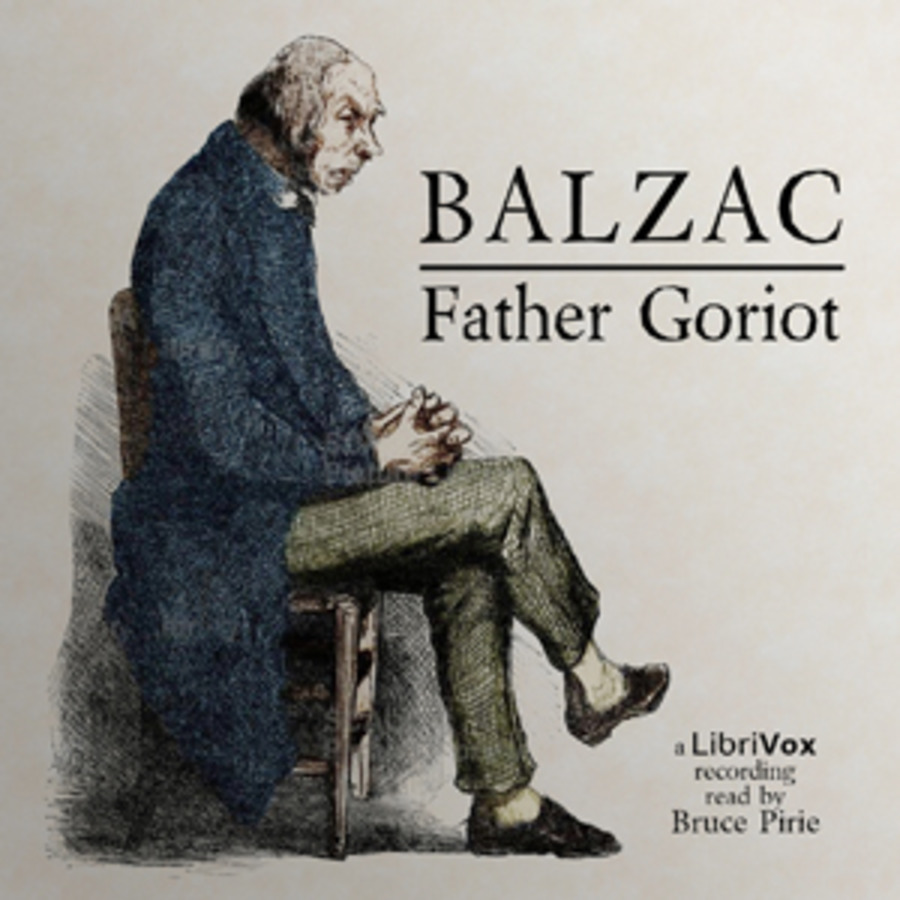
  • ‘Grimm’s Fairy Tales: 64 Dark Original Tales’, by Jacob Grimm – book review

    Grimm's Fairy Tales: 64 Dark Original TalesGrimm’s Fairy Tales: 64 Dark Original Tales by Jacob Grimm

    My rating: 5 of 5 stars


    When I was a child, Danish writer Hans Christian Anderson’s light tales were more fun than German Brother Grimm’s comparatively dark tales. Now that I have read Grimm’s Fairy Tales: 64 Dark Original Tales as a child in a grown-up body and mind conditioned in the anfractuous tidal waves of life, I now know why the Grimm’s tales are regarded as classic literature, not just for children for also for adults, especially those with defiant spirits of abandoning power to believe the mysterious and magical, all the spellbinding enchantment springing from these fascinating fairy tales the Grimm Brothers provide to readers.

    The book contains 64 stories originally published in the Grimm’s The Nursery and Household Tales from 1812 to 1814 as separate volumes. The original intention of the compendium of oral German folk tales is to study German culture and literature that can also be referenced as an academic text. Both Wilhelm and Jacob were philology students, lexicography, history, and Germany’s literature while studying law at university. For this context, during the Third Reich, the Nazis liked to use the book as a token propaganda textbook to promote their racial ideology against Grimm’s volition to preserve the cultural artifacts and heritage in anthropological perspectives. Suppose the Grimm indeed meant to use the tales to prove Aryan superiority. Why would they include the sinister and even immoral contents of some of the collection’s stories without rewriting them to immaculately vivacious and blissfully happy fairy tales suitable for the best race endowed with goodness and beauty?

    Some of the tales are shockingly straightforward about lacerating and killing characters, mostly with axes, even though the wickedness is worthy of such cruelty and urges readers to abandon pity. Even a king wants to marry his beautiful daughter in his beloved deceased queen wife’s likeness, who asked him to marry her mirror image. The incestuous labyrinth story is the queen’s stratagem of not letting her husband marry some other woman than her blood and flesh in the daughter’s form. To my dismay, the daughter at the end finds herself in the arms of her father – as a lover. The tale is too spectacular to suspect my cognitive faculty’s malfunction, but the tale’s re-reading confirms the truth of the incredible love story of father and daughter. The Grimm would have decided not to redact it from the collection to invoke such stupendousness of incestuous infatuation blinded by lust and envy nuanced in the simplicity of words. Otherwise, the tale itself remains a point-blank apocalyptic drama that leaves readers in the spinning saucers to the point of no returning of the senses at wonderland.

    All the tales from this book are not, however, akin to the tales from the crypt. The Grimm’s tales are the fairy tales where animals talk, and humans listen, fairies and humans can bump into one another on the way home or work, and peasants marry royals with the help of magical instruments, all of which look common and natural. The Grimm’s fairy tales’ characters inhibit somewhere in the gray world of mirrored reality where the wheel of fortune is spined against in our favor because of the blindfolded goddess Fortuna’s whims and caprice in the game of chance. But however unlucky it may seem, time and opportunity happens to all of us at unexpected times and can multiply the delicious fruits with wits and touches of humor, which are the handmaids to a happy life. Grimm’s fairy tales are not pessimistically gloomy enough to attest to the harsh, treacherous reality of life. Instead, the tales are lessons for insatiable greed, insolent hubris, and uncontrollable passion that bring about downfalls, which are also principal narratives of Stephen King of our time.


    View all my reviews

  • ablaze

    She believes none, belongs to none –
    God, Satan, gods, goddesses, angels
    Fairies, spirits, witches, ghouls, demons –
    Those high powers, the principalities
    Showing the pareidolia of her life, dolorous
    Intricately woven by multiple strands
    of twisted fate for the curse cast in spite
    whisper to her soul for an eternal constituency
    in Heaven and Hell, the Beyond and Nether.
    Yet she scorns all of them, spurns them all
    For she knows her gift for disaster is real
    With a Fate Note, she writes she is a Firestarter.

  • fancy away

    Carry me into your faerie chariot, 

    take me away from this humdrum rut

    Over the bridge of the rainbows

    Far away to the Elysian gardens

    Where I will promenade fancy-free. 

  • ‘The Entity (1982)’ – film essay


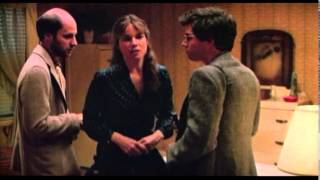
    “The Entity (1982)” is an American film based on the real-life event of Dorothy Bither, who was habitually raped by evil spirits that followed her everywhere. In the movie, Dorothy is Carla Moran, a young, intelligent single mother of three whose life becomes a Circle of Hell incarnate on earth in which she becomes a sexual slave of the unseen unclean spirits. Despite the physical signs of attacks, her well-meaning but over-zealous psychiatrist Dr. Phill Sneiderman believes that her unhappy childhood and different anfractuous life experience generate the mind’s play. He then forces his belief into her with a superior sense of academic and professional pride, even if her children have witnessed supernatural powers are attacking their mother. Carla catches at straws in the form of parapsychology to set herself free from the demonic forces, even if the help is not entirely altruistic and may turn on a full circle of violation of her body, her heart, and her spirit.


    The film agrees to the truth on the supernatural essence of rape by portraying Carla as a woman of diligence, intelligence, and heart who goes to a secretarial school at night for a better future. Her love and affection for children are filled with kisses and smiles, even to her head-strong adolescent son. Her childhood memories and paths she treaded upon thus far might have been labyrinthine, but just because you have past wounds doesn’t mean you are stigmatized for the malady of the heart forever. Dr. Sneiderman’s attitude toward his patient Carla is reminiscent of the late Victorian and early 20th-century institutionalization of women with checkered lives, the victims of violence, into crudely primitive asylums where any sane person was sure to lose a reason before long. However, Carla rejects her telltale testimony to the supernatural terror to be nothing but a tale told by a lunatic woman, full of sound and fury that means nothing.


    ‘The Entity’ is a classic movie of supernatural phenomena in the ordinary surrounding of Los Angeles, CA. What makes this film classic in its pure literary sense is the absence of gory scenes accompanied by shrill screams of overtly acted characters who know what will happen to them. Nudity is present in the film not as gratuitous scenes of repertories of box-office horror movies but as realistic segments of what and how it happened all. I initially avoided watching this film by its thematic subject of rape and its naturally subsequent psychological narrative analysis as someone craving for a true supernatural story without frequent staccatos of blood splashes and big sharp tooth. It was a low hope for high heaven when the film was impressively indelible in my mind after I watched it last Saturday. If you prefer watching 70s and early 80s supernatural films over slash movies after the golden periods of the genre, ‘The Entity’ will entertain your sentiment and satisfy reason. And remember this: “There are more things in heaven and earth than are dreamt of in your philosophy.” Don’t forget that.

  • Dulcet, Capacious, Illuminate

    She followed a full bright moon

    That appeared from the ocean’s edges

    Where day’s detritus disappeared soon

    Under the arch of rainbows over the horizon;

    Upon a hill across the moonlit lanes

    She looked at the world below

    Revealing wondrous symmetries

    And every part of her breasting the breeze

    From the ocean far away yonder

    She flew down the starry stairs 

    With felicity that was not ecstasy

    And resembled pleasure only

    As the breeze resembled wind

  • Birthday Poem

    The feast of St Thomas Aquinas

    Banqueted in the celestial garden

    By the Lethe, across the bridges

    Between the earth and heaven –

    There, Water-bearer of gods

    Whose beauty enslaved the prince

    To the passion of supreme desires

    Served the guests from the universe –

    Gods, goddesses, saints, angels, –

    Escaped to his fancy of wishes

    To return to the world, his Troy

    That existed no more in this world

    And spilled the stream of stars

    From the jar that lusciously cascaded

    Into the earth as radiant meteors

    Becoming Mystery Aquarius Children.