It was a fateful day for a man, it was a fortuitous day for a crown. A man of imposing physique with a more imposing spiritual credo stood there speechless in the cellar of the House of Lords stocked with barrels of gunpowder that could blow up the parliament to the detritus of the past sovereign supremacy. The captors were in awe of the man’s imperturbability amid the silent trepidation of the weight of aborted stratagem. He was no less than a person than Guido “Guy” Fawkes himself, one of the eight Gunpowder conspirators, the man whose effigies are ceremoniously mocked and burned on 5th of every November throughout England as his eternal Promethean punishment for defiant treason since 1605.
Nick Holland’s The Real Guy Fawkes tells it all about who this unfortunate but formidable man of unshakable faith in his realistic discourse of the accused based on historical evidence gleaned from his exhaustive research superbly blended with his vivid storytelling narrative skills that resurrect the atmosphere and ethos of the era contributing to the making of Guy Fawkes. We see young Protestant Guy with a great linguistic talent, good looks, and full of life, playing a Nine Men’s Morris with his friends. We witness Guy’s conversion to Catholicism, his stint as a valorous soldier in the Spanish Army in Flanders, his involvement in the Gunpowder Plot as the right-hand man of Robert Catesby, the charismatic leader who wanted to bring his beloved England to the One, Holy, Apostolic Church, and his last moment on the scaffold. He was a passionate man of faith who keeps his words by actions, and the image of Guy Fawkes overlaps with that of Father Mendoza in the film “The Mission”, who tried to revolt against the tyrannical oppression of despotism suppressing a freedom of wills and faith incompatible with its claim of totalitarian supremacy over individualism.
Holland’s role of compassionate and open-minded narrator helps the reader to understand what motivated Guy Fawkes to involve in such an epochal plot and who the person of Guy Fawkes was. The infamy that chained Guy Fawkes in the unbroken shackles in the darkest dungeon of history becomes justifiably lessen, and the eternal mockery of his likeness becomes faded off as a collective echo of demotic populism orchestrated by the powers-that-be with systematic religious prejudice. Personally, I feel that the celebration of Guy Fawkes Day is akin to the eternal punishment of Prometheus, which should be lifted in order that his soul can rest in peace. If you feel the way I do, or if you understand what it meant to be a Catholic in the Reformation era and before the Second Vatican Council, then you will probably agree with me.
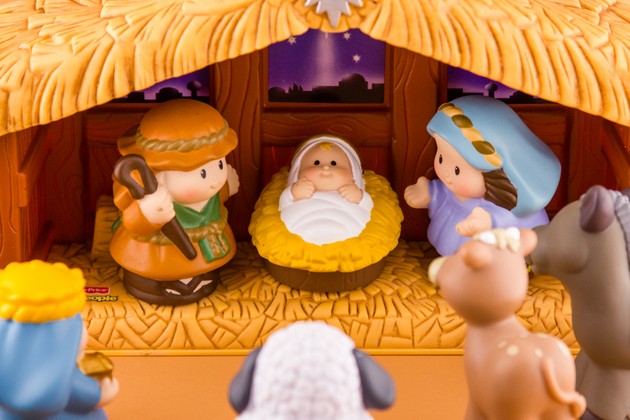
Father Christmas might have waved goodbye to us, but that’s not the end of the Christmas Season yet. According to the liturgical calendar, we are still in the month of Nativity with the Nativity scenes and the accompanying decorations around the altars still ubiquitously present in the churches across the seven seas and seven continents, resounding with Christmas hymns at masses until the second week of January. Choirs still stage their grandest and liveliest concerts, just as their counterparts in Victorian Britain did, with the customary repertoires, ranging from the popular “Silent Night”, to “Joy to the World”. Above all these oldies but goodies, Handel’s “Messiah” chorus chimes the bell of Nativity most exultantly and reverberates with the sublime impression on the harmony of human voices that perks up the senses and uplifts the spirit of man.
George Frideric Handel (1685-1759), a German-born British Baroque composer who is also called “Mother of Music” wrote “Messiah” in 1749 as an anthem for a Charity concert in the chapel of the Founding Hospital, a foundation truly close to his heart created for the guardianship and scholarship of the abandoned children and contributed the munificent largess from the subsequent performances to the hospital. Messiah’s majestic Hallelujah chorus was so impressive that King George I, the queen, and the congregation rose during the performance. Further to the royal impression, Mozart and Beethoven were said to compose similar pieces in reflection of Messiah because of its magnificent musical scale and instrumental composition superbly blended with human voices that gave a spriteful jolt to the senses and soul of the listener.
In addition to the musical excellence of “Messiah”, its significance lies in its democratization of music being accessible and doable to all pace its conception as being the prerogative to aristocrats and the proprietary to professional musicians. Out of stuffy music halls reserved for the high, Handel’s Messiah was performed in churches where the public could also enjoy it. Also, thanks to the popularization of the Hallelujah chorus, fueled by the Industrial Revolution, many an amateur choral society came into being, inviting any one to actively participate in musical activities.
Handel himself conducted or attended every performance of “Messiah” up until his death. Handel was said to riposte thus when “Messiah” was called noble entertainment: “I should be sorry if I only entertained them. I wish to make them better.” Now, that’s the true spirit of an artist who touches upon the hearts and minds of all human creatures. No wonder has the chorus given lumps in the throats of the gobsmaked audience of the world. Hallelujah.
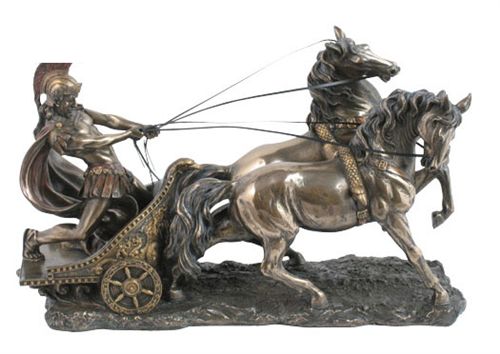
Author’s Note: I remember reading about Plato’s Chariot Allegory that illustrates our journey to the end of enlightenment with its vividly dynamic images of the aerial chariot race too compelling to reserve for a silent appreciation in my mind’s reservoir. I wonder what my chariot race has been like thus far…
Keep a single book of the Bard with the imprimatur Of literary workaday Johannes Factotum On the seventh floor of the Library of Babel Girding the constellation of stars studded over Cycle and Epicycle, Orb in Orb.@artemis1291https://t.co/93EneogcX5 via @wordpressdotcom
Byron said he woke up and found himself famous one morning, and I dare to say I woke up and found myself properly surprised this morning.
The cause of such pleasant surprise that gave a fillip to my otherwise grim and dreary Monday morning was my favorite author Stuart Kells’s tweet containing my previous poem titled “Where is his library?” inspired by his books Shakespeare’s Library and the Library: A Catalogue of wonders and his recent podcast interview with Abe Books about Shakespeare’s authorship. I am truly appreciative of his recognition of my humble writing often streaked with solecism due to English being my second language.
Thanks to this wonderful tweet, I could withstand the cruel cold morning at the barren train station waiting for the train to work this morning- with pleasure. C.K. Chesterton said a great person is great because he or she encourages others however amateurish their works may be. I can no other answer make but thanks and thanks and thanks.




You must be logged in to post a comment.