Before Adam Smith, philosophers often adopted a turgid style full of metaphorical obscurity. Smith in contrast used simple metaphors and everyday examples, so much so that they were noticed as a crucial and striking aspect of his work https://t.co/sfT6Y9ZHb2#latrobe via @latrobepic.twitter.com/htM5nz2Qp5
In the case of life imitating art, you tend to find meanings of events in life, to liken them to values of adversity in life, and to sublimate them to the divine auguries of purposeful human existence. In fact, this existential approach to the causality of certain human behaviors and characteristics can help you to understand whys and wherefores of the way people are and thus can even disarm all hostility towards strangers without prejudice. Such is the case of Adam Smith, the father of modern idea of Capitalism, author of “The Wealth of Nations” whose such proverbial reputation had piqued me no more than as a boring illustrative curriculum vitae of just another stuffy intellectual with privileged educational and social backgrounds until I read Stuart Kells’s article about the Real Adam Smith whom I might never have known.
Adam Smith, a posthumous son of a successful lawyer and customs official, was a rather melancholic, lonely, but humane thinker who liked to spend time with himself alone but also kept his foot in reality by observing everyday people’s lives and considering them to employ in contextualizing ills of society as a result of ineffective rules of law failing to protect the welfare of subjects. Smith’s brilliance shines on the simple and lucid illustrations of his thinking in common language that the literate and the illiterate could understand. He was a soul of the wit distinguished from his peers and progenitors favoring abstruse expressions of bombastic words pedantic of their academic learning.
Kells enlightens us that this humane trait in Smith can be originated from the traumatic experience of being kidnapped aged four at the home of his Scottish maternal uncle allegedly by a set of vagrants called ‘Tinkers’ or a party of Gypsies, the Wandering Egyptians. Although who the real culprit of this kidnapping is still a mystery to this day, what the event affected the tender mind was all over but the shouting. It was Smith’s first interaction with the world outside the safety of class, the innocence of childhood, and the security of the family. Already fatherless, the very young Smith must have felt powerless, hopeless, and homeless at the hands of his kidnappers. And this melancholy spell cast upon him became his curse and bliss as it made him look into the pains of other people and meditate on the causes and effects thereof by sympathizing with their sorrows and emphasizing with the sorrowful.
The kidnapping incident of Adam Smith read like a piece of sensational news to me, a kind of new awakening, the equivalent of modern-day news that a bestseller writer or a prize-winning writer hails from a poor family without expensive private high education. And it makes you think about what makes a person become who he or she is and appreciate the person’s values that overcome adversity. In this respect, Adam Smith is in league with Charles Dickens, who turned his suffering into works of art. It’s a triumph of the human spirit over the travesty of life. All in all, thanks to Kells’s telltale article about the wondrous event, I have abandoned my prejudice against Smith as a cold, stiff upper lipped economist and warmed to his humane side. Maybe I might even read “The Wealth of Nations” into the bargain.
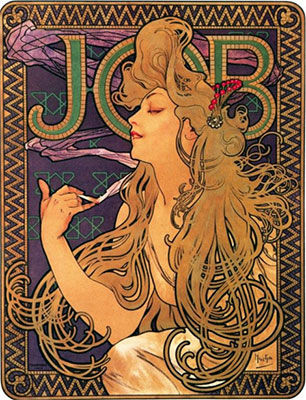
Author’s Note: They say beauty is only skin-deep, but I don’t believe it. Power is to a man is what beauty is to a woman. So much so that Oscar Wilde said, “The only way to behave to a woman is to make love to her if she is pretty, and to someone else, if she is plain.” William Shakespeare then quipped in: “She is beautiful; and therefore to be wooed.” Beauty purchases indemnity for wrongdoings. You see Beauty Does Matter. If you disagree with a grinding teeth or a grimacing face, think about a root of racism. It’s all based on how one looks. Capeesh?
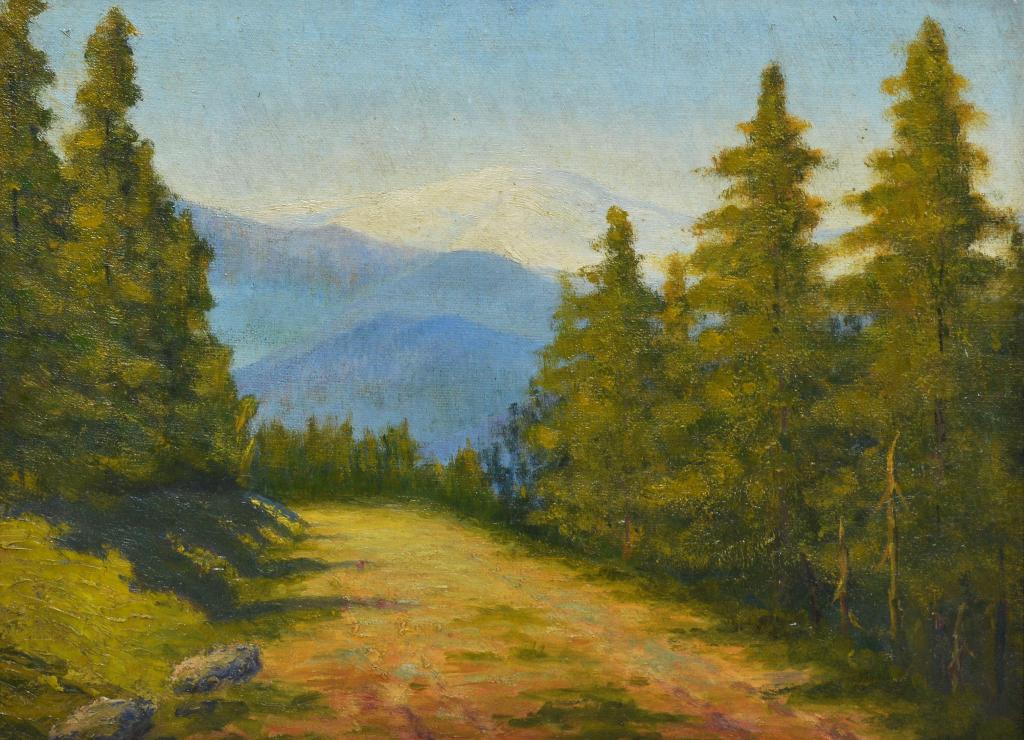
The wind was blowing eastward in the field, and the sun was stopping in the sky amid the moving herd of clouds. The susurrus of the trees was softly caressing her ears harassed by the cacophony of reality in which she could not help but endure under the pretext of fulfilling her existential duties to earn her sustenance. Nature’s medicinal touch of her malady of heart seemed to work for the moment, and she felt cared for and loved in the arms of Mother Nature whom she likened to Mother Mary. Judy was sitting like a resting Artemis, the goddess of hunting, with her loyal canine company Nena on the crest alongside San Marcello Path in the Santa Maria Mountains. Judy and Nena were different species united in the polyphony of nature’s orchestral music and the panoply of the scenes that nature’s cinema was presenting before their very big brown beautiful eyes that seemed to look into the depths of souls and to find wonders in them no matter how diminutive they might be. It’s the moment of retreat from the world that constantly threatened Judy’s faith in humanity against the strife of existential life. Every Sunday was the time to bathe herself in the Spring of Nature, and she loved every minute of it.
A noonday haze was springing over the hill with iridescent beams of sunshine, which were a feast to the eye. Nena was yawning as a gossamer of the eastward wind becoming a sweet breeze was pleasingly teasing a tip of its nose. Smiling at the playful scene, Judy was thinking about the legend of restless ghosts of nineteenth-century outlaws still roaming in the deep region of the mountain, not knowing they were dead in search of a great escape from a forest maze to their El Dorado. Reader, you may think it’s only a fiction imbued with Hollywood-generated machismo of lawless gunslingers in the Wild West, but to Judy, the legend became factoid that couldn’t be abruptly dismissed as a preposterous ballyhoo fit for a campfire story to scare kids and gullible puerile adults. Call it superstitious or benighted, but then do people not believe in the power of the greatest man above even though they have not seen him? The difference between religion and belief is a matter of hierarchy, a structural form of rite and indoctrination. Anything else is quintessentially the same as we human beings are spiritual by nature. Thus, even the wickedest, the vilest, the cruelest convict has the tainted and perverted soul warped in a wrong modus vivendi that it chose by the will or by the play of Goddess Fortuna. In that regard, the souls of the escaped convicts, drifting gunslingers, highwaymen, or luckless lost travelers might still be roaming the paths of the mountain day and night, doing their penance on earth without awareness of it, till a sympathetic living soul hears their sorrows and waves of anger to purge them out to escape to the beyond.
As Judy was wending her way to the mountain, the images of the wild west ghosts sprang in her vista as though to be screened in a phantasmagorical display of the swashbuckling bravado of their once-proud prime days. What’s more, she wanted to validate her belief in life after death by witnessing the souls of the dead, which would quell her vexing doubts on the existence of God and ultimately, the meaning of life. Nena also seemed to give a nod to Judy’s determination to figure it all out by walking beside her into the mountain. The leaves of the trees were rustling in the wind, and the eagles were flying high above as if they were welcoming the curious duo. The rustling sound now became phantasmal susurrus of trees, reciting “Curiouser, curiouser!”
Author’s Note: This is based on my viewing of “The Good, the Bad and the Ugly” directed by the great Sergio Leone. The film often referred to as the masterpiece of Spaghetti Western, is in fact far superior to any other western movies made by Americans in terms of storyline, plots, settings, and cinematography.
For example, in this film, all of the characters are morally ambiguous and ethically challenging, which makes them realistic and relatable. Besides, compared to the perfected appearance of typical “American” characters, the Good, the Bad and the Ugly are all scruffy-looking and unhygienic even, and yet they all look quite stylish in their naturally rugged ambiance and masculine outlooks, especially well manifested by the iconic piercing gaze of Clint Eastwood as the Good and the amazingly chiseled face of Lee Van Clef as the Bad. What’s more, even though director Leone had never been to the States before making the film, he was excellent in portraying the Wild American West during the Civil War by filming it entirely in Spain.
The music by Ennio Morricone also plays an integral part in this film, creating timbres for each of the characters, so that whenever the character appears on the screen, the unique thematic music is played, indicating the moods of the characters without having them narrated in words. Hence I wanted to write about the impression of this unforgettable film that’s engraved in my Hall of Fames.
In a paroxysm of wild ecstasy at the Great Rotary,
Spinning it around and around like a delirious maenad,
Changing the positions of the compass willy-nilly,
Bringing tears and sorrows, beams and windfalls
To the names of the stars the compass indicates
till the stars above fall, the earth below collapses
and her game of fortune the god of gods terminates.
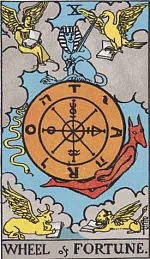
Author’s Note: This self-evident poem is about the Wheel of Fortune, a popular medieval folk belief that human lives are governed by the whims and caprice of Goddess Fortuna. She is said to spin the wheel at random, blindfolded, by which human fates are decided despite our efforts through constant trials and errors. It may sound bleak and fatalistic, but it also means that it’s not our faults to go through the ordeals of life, but that such is our fates, a force majaeur circumstance beyond our mortal controls, that we have to endure with stoic attitudes toward the vicissitudes of life. It is also a way of positive outlook on life because by attributing the ups and downs of life to the force of fates, we don’t jeopardize our self-worth and thus blame ourselves.





You must be logged in to post a comment.