
A thing of beauty is a joy to them. Its loveliness increases. It never passes into nothingness. Oscar Wilde, who extolled physical beauty as a form of virtue manifested in a physical form, once flamboyantly remarked: “Crying is for plain women. Pretty women go shopping.” Although Seraphina Rabitte and Mathilda Beare demur at such uncharitable notion of meritocracy of women’s appearance, they love visiting beauty stores in a way that little children love going to candy stores (or toy stores to be more realistic these days). For the ladies like to keep themselves prim and proper in the belief that presentable appearance (not a physical symmetry per se) indicates how one takes cares of herself by realizing her creative, attitudinal and experiential values in everyday life.
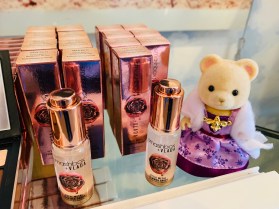
The belief is grounded in Logotheraphy, one of the three Viennese School of Psychotherapy founded by Dr. Viktor E. Frankl, a neurologist, thinker, psychiatrist, but above all, a remarkable human being who endured personal experiences of Promethean hardships and suffering in Nazi concentration camps and conquered them in triumph of will to meaning. Fashionable and knowledgeable Matilda and Seraphina are students of Logotheraphy, the theory that human nature is motivated by search for a life purpose that is unique to each individual. Unlike other schools of psychotherapy and many other subdivisions thereof, Logotheraphy encompasses a wide scope of the humanities and of course, neuroscience, making it a brilliant multidisciplinary school of thought. In fact, it is a paradigm of the consilience of the knowledge of the humanities and that of science. So, in the context of regarding Logotheraphy, the fashionable ladies’ attitudes toward appearance betokens their ways of preventing noogenic (existential) frustration by engaging themselves in activities to dispel a hint of depression or inertia from their minds, even if it means only going to shopping.
 So, you see it isn’t a symptom of conspicuous consumption as a result of our hyper industrialized social environment that Matilda and Seraphina like pampering themselves with cosmetics. Besides, who can blame them for having none other than a woman’s reason? Didn’t Queen Elizabeth also proclaim herself to have a lion’s heart in a woman’s hide? Also, did the Queen not show fierce attention to fairness herself by putting the most fashionable make-up and dresses and hairstyles of her time? Well, these modern ladies are no less different them from their loyal member of sisterhood in the race of Humankind. In fact, Matilda and Seraphina have aristocratic bearings in appearance and manners due to their fine upbringing and sweetness of the mind by nature, so whenever they go, they give admirable impressions on people whom they encounter. They are the paragon of a virtuous woman as John Milton extolled in Paradise Lost: “Those graceful act, those thousand decencies that flow from all her actions and words.”




 My letter to the editor of BBC History Revealed regarding “The Wild West” was printed in the September issue of the magazine – again! Today was the first day of the new issue which was downloaded on my Kindle Fire during my one-hour lunchtime at my regular Starbucks store. I have since ordered a hard copy of the magazine for a keepsake. It feels great to see my own writing published in an established periodical. Robert Waldo Emerson said: “Thinking is the function, living is the functionary.” Likewise, I want to actualize my thoughts from a deep cave of silence.

You must be logged in to post a comment.