Tag: Nonfiction

  • A Man Without a Country by Kurt Vonnegut

    A Man Without a Country by Kurt Vonnegut Jr.
    My rating: 5 of 5 stars

    A man without a country is a connoisseur of humanity, appreciating the universality of sentiment and reason common to all humankind beyond the demarcation of the territorial, cultural, and racial ambits. In that regard, Kurt Vonnegut is not only a great American writer but also an honorable citizen of the world.

    Vonnegut was liberal and socialist without being Marxist, but he was also a traditionalist and Christian without being conservative and religious. He was on the side of the underdogs because he regarded himself as one by being a kind of black sheep in the literary circles for his studying engineering, not English literature. However, he wasn’t a grumpy sullen dark literary figure but a funny, talkative writer who stroke conversations with anyone in daily life. Vonnegut refused to lose his days in unsocial solitude and decided to become – as Samuel Johnson called – the sun in his evening declination, remitting his splendor and maintaining his magnitude, pleasing more, though intimidating less.

    A Man without a Country is a charming little book packed with thoughts, wits, and knowledge. Vonnegut was only a human because he saw the heart of human nature and wanted to help people bring it out and nourish it thus: “To practice any art, no matter how well or badly, is a way to make your soul grow. So do it.” Vonnegut was a writer who practiced what he preached. So why not read this book by such a writer?


    View all my reviews

  • Upheaval: Turning Points for Nations in Crisis by Jared Diamond – book review

    Jared Diamond’s Upheaval analyzes why a nation is how it is now. Of course, culture plays a role in changing the ethos of each new zeitgeist. Still, it is not so much a differentiating element as a distinguishing factor to characterize a national character. Instead, it is a mindset of individuals, including the governing elites in the nation, that determine the success and stagnation of the nation’s progress.

    Of all nations’ approaches to and results of political and sociological revolutions, the most successful example is Japan’s Meiji Restoration in the 19th century and democratization in the aftermath of WWII, both of which are one-of-a-kind upheavals yielding to outstanding progress. Japan’s confrontation with the West might have blown their isolated cultural prestige. However, rather than coiling in fear of the changes, Japan sprang back with new attitudes adapted from Europe’s and the U.S.’s technological development and cultural legacy to survive the new zeitgeist as the time’s juggernaut.

    On the other hand, the United States today needs change because it is highly polarized by political affiliations, ideological inclinations, and racial stratifications. The U.S. seems to have lurched in the above marsh when it should focus on the constructive, substantial, and realistic aspects of political agenda and social movements. For example, Americans tend more to ideas than facts that collectively affect individual needs, such as universal healthcare, a better educational system, employment opportunities, housing assistance, welfare programs, and workers’ rights. It s because American politicians aim to mobilize an army of people, aka constituents, to win their ideological war for occupying more congressional seats. In fact, American exceptionalism, that America is the best of all other countries in the world, averts the eyes from the lessons from other countries simply because they are beneath.

    Diamond is a polymath well versed in science, literature, philosophy, geography, psychology, and sociology. He talks about his family, students, and friends from other countries. He is no stranger to their cultures with the knowledge of the languages and cultural cues, which entitles him to an appellation of “a citizen of the world.” This book reads persuasive and perspicacious, among other books on similar subjects. Maybe I am biased, but if the man whose assessment of nations strikes my chord, then I can’t help it.

  • Adieu, my friend

    A week has passed since the Beluga whale died in transit from the Seine to the sea. The question remains with the image still fresh on my mind refusing to fade away with my heartstrings pulled in all withers: did he break away from his kind to find a treasure island like Jim did? Or did malice of fortune take him away from the tribe on a lark to see if he could make it back to where it came from? What is the meaning of all of this anyway?

    He had no name because he had so little time to live in this world, and I mean the Beluga whale stranded in the Seine River in Paris, France, and ultimately died in transit to a sea last week. No one knew why he swam all the way up to the freshwater, which was not a typical habitat for the whale species. IT wasn’t the first time to see a whale end up in the river following an orca in May that died of natural causes, but the Beluga whale still lingers in my mind a week after his death. Maybe it’s because of his ever-good-hearted-looking appearance that oozes out a sense of pathos from my feelings. Whatever it may be, he endeared me like my two-year-old tabby tom Toro, and I had been following his tale of the river, which seemed to me his journey to the resting place – among humans with whom he might have cherished good memories. Maybe he disliked his kind, so he ran away from there. Come to think of it, do we also not do the same when we can’t take any more violence, disappointment, betrayal, and arrogance?

    Although I admire the efforts made to revitalize the Beluga whale and to send him back to the sea, I cannot help thinking that there should have been more professionally effective operations to achieve the noble human intention to save nature. We live in an information-saturated, expert-ridden global world, but why is no such help readily unavailable in dire need? Are outstanding vets only for YouTube channels and other media outlets via which they can amplify their view to lucrative celebrities? But the argument is futile since he’s gone. By recording what my heart feels about him, I want to pay tribute to his incredible journey to the human world by himself with kisses and tears. Good-bye, my Beluga whale.

  • Aristotle in Plain Language

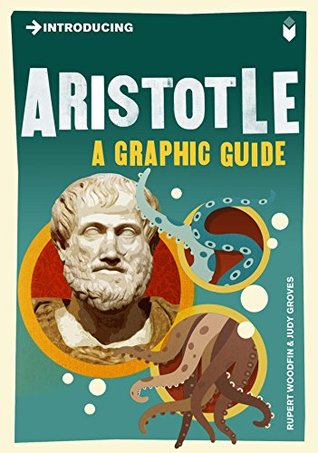
    Introducing Aristotle: A Graphic Guide by Rupert Woodfin

    Socrate was a liberal, Plato was a conservative, and Aristotle? Well, he was an educator, an academic, an intellectual with perks and passions who was never dull. His school of thought dominated western Europe during the Middle Ages. It became a foundation of Christian theology because of the conciliation of humanities with science, especially biology, to approach the hows in the quest of whys and whats.

    But don’t be intimidated by the dauntingly impressive resume of the philosopher. You don’t have to strain yourself with a burden to know the wondrous truth of our human life and the universe beyond. Woodfin’s illustrated guide to Aristotle will become your scholarly and witty Virgil to his circles of knowledge as seen in his mind’s casements. Through them, you are welcome to appreciate the panorama of Teleology, Thinness, the Four Causes, Beauty, Ethics, and the Cosmos like you never realized in plain language.

    Suppose you want to know more about the man who taught Alexander the Great and Thomas Aquinas, the top Doctor of the Church, and assured the distraught that excellence comes from habit. In that case, this book deserves your attention – with delightful Eureka!


    View all my reviews

  • Amaze Yourself: Take a Quantum Leap by Dr. Jill Ammon-Wexler – book review

    Amaze Yourself: Take a Quantum Leap… by Jill Ammon-Wexler

    My rating: 5 of 5 stars

    We know our brain is our body’s and mind’s control room, but how much do we know about the superlative organ and the supernatural power? So relax. Have no fear because Amaze Yourself: Take a Quantum Leap by Dr. Jill Ammon-Wexler will be your Cumin Sibyl to the mysterious world of the brain where the secret of the universe is locked in and waiting for you to unlock it if you believe in it.

    Dr. Jill is a doctor of psychology and a 47-year pioneer brain/mind researcher who has devoted herself to enlightening the public about the psychosomatic effects of the brain that are so wondrous and magical that they give the brain the status of a supernatural being. For example, stress isn’t just an easy, convenient excuse for our burned-out selves; it is, in effect, the evil of psychological and physiological ailments. Also, negative thoughts are not a metaphysical concept without a scientific foundation but are like a cancerous cyst that impedes the production of glucose (the brain food), which hampers a faculty of thoughts and a sense of imagination. The wonder doesn’t stop here. There is a third eye called the pineal gland in the brain that responds to altered mental states. So we all have some degree of ability to foresee the future, but that’s only if we consciously endeavor to access the subconscious mind. No wonder some of us can see and hear ghosts, and that’s true to the end of reckoning by way of a quantum leap from one sphere to another without effort.

    Suppose I am being captious by playing the role of Devil’s Advocate in the review of this admirably elegant and inspirational book. In that case, it is this: like any renowned figure of academic researchers, Dr. Jill’s successful experiments on positive thoughts confine to a pool of comparatively well-off human subjects with statuses. Of course, it’s unfair to cavil at her intention to find the truth, as her contemporary peers do the same. But I hope that someone like Dr. Jill, who writes with general readers in mind with her wealth of knowledge, includes a broad spectrum of classes in her study so that none of her readers will feel left out of the selected few. Nevertheless, Dr. Jill is a pioneer in her field, translating the mystery of brain power into our everyday language to make us realize that we are indeed starstuff harvesting sunlight only if we believe in ourselves. Therefore, this book is an excellent primer for the beautiful world of neuroscience, met with the supernatural power of the brain within us.


    View all my reviews

  • Live, Die, Repeat, Repeat…

    Life is still beautiful, even if it deceives you.

    I wanted to find the Church’s stance on reincarnation and, above all, what the Bible said about this seemingly endless shapeshifting until the purification of the soul is complete, so to speak. What about the Christian belief that we live only once and have no return of life?

    According to “A Concise Dictionary of Theology,” reincarnation is the belief or metempsychosis (“animate afterward”) that the soul preexists its embodiment. After death, the soul exists in a ghostly state before animating one again, a body of the same in a different state, which sounds a lot like a demon or malevolent spirit possessing the body of the living. It is this very belief in resurrection and official rejection of the preexistence of wandering souls without corporeal substance that denies reincarnation itself. By maintaining an endless series of chances, the doctrine of reincarnation reduces the seriousness of God’s grace and, most importantly, human liberty exercised in one life that is ended by once-and-for all death.

    Furthermore, in the Catechism of the Catholic Church, death is the end of man’s earthly pilgrimage. When the single course of our earthly life is completed, we shall not return to other earthly lives as “it is appointed for men to die once” [Hebrews 9:27]. Christianity defends the duality of the body and the soul. However, reincarnation defends dualism that both beings exist separately and that the body is simply an instrument of the soul; existence by successive existence as an altogether different body is repeatedly assumed each time one recycles life. Thus reincarnation denies the idea of the resurrection of the body, as evidenced by the resurrection of Christ, and most primarily rejects the Christian doctrine of salvation. Therefore, there is no reincarnation after death.

    I feel much better now than before. While I succumbed to the belief in reincarnation, I couldn’t accept the thought of my present life as punishment for my wrongdoings in my past lives. To think that I have to live in a miserable state of discipline until my subsequent due recycling puts me on the verge of lunacy in the form of murderous headache for which I recently found myself in the ER. Viktor E. Frankl, the survivor of concentration camps during World War 2 and the founder of Logotherapy, urged us to trust that there is meaning in suffering, which helps us lead to our purposes in life. Samuel Johnson, one of the most significant 18th-century English men of letters and the author of A Dictionary of the English Language, describes life as progress from want to want, not from enjoyment to enjoyment. Forget the arguments about the religious dogma dictating an institutionalized belief for mass mind control. Or it so, then so be it. After all, reincarnation is also another offshoot of mysticism developed into religious thought. Then I will follow the light that gives me a sense of hope. And for this reason, I proclaim that my body and soul are inseparable and that I live only once, and that’s it.