Tag: Nonfiction

  • She-Ras, Xenas, and Wonder Women

    images
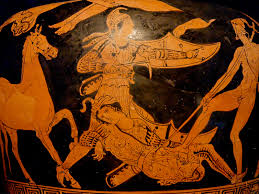
    Ancient Amazonians courtesy of google

    Before the mercantile empire of ‘Amazon’ amid the Sea of the Internet, there once was an eponymous band of fierce women warriors whose famed ferocity and fearlessness was enshrined in the Classical literature and history. It is said that they were real women soldiers living in ancient Eurasia with husbands and children who seemed to know something about how to maneuver the sphere of personal life and that of military commitments. The subject of this mysterious ancient militant women from this month’s National Geographic History intends to deconstruct such mysticism surrounding the factual evidence thereof and demystify the origin of the meta women fighters modern feistily feminists and politicians love to panegyrize.

    First, the origin of Amazonian warriors comes not from the Amazonian jungle who are believed to be scantily clothed with breasts deformed women prone to attack men without reason. They were, in fact, the female warriors among Scythian and other nomadic Steppe cultures across the Eurasian plain as embedded in Homer’s The Illiad, Herodotus’s Histories, and Plato’s Laws. The recent discoveries of 4 female corpses bearing combat-related injuries, such as slashed ribs, fractured skulls, and broken arms are claimed to be of the lost Amazonians prevalently seen among Scythian women riding to battle alongside their men.

    Notwithstanding the above archeological excavation and factual evidence, my personal sentiment toward the adulation of the female combatants is anything but the elevated opinions about them. Although Homer in The Iliad praises Amazonians for being the equals of valorous men, I wonder if he would have wanted to take one of them as his better half in reality. Plato in Laws recommends that boys and girls should be trained for horse-riding, archery, javelin-throwing, etc., which is very indeed commendable, but I opine that no every girl should be forced into such training because every girl is not of the same aptitude or disposition. Of all these complacently abstract perspectives on women soldiers, Herodotus seems to be only one who has a comparatively objective view on Amazonians not as a glorified tribe of female bravery but as a tribe of women freed from conventional conjugality. They were a group of shipwrecked women tended by local men with whom they moved to new lands and happily lived after while maintaining their own separately private lives as something of common law marriage couples.

    The modern perspectives on the Amazonians as a manifestation of gender equality in the spheres of domestic and public life exceedingly lionize the necessity of upending what is perceived as traditionally patriarchal gender roles peculiar to the biological characteristic of men and women. Needless to say, the word “Equality” is highly admirable and desirable, especially on the frontline of livelihood, but you can’t force everyone – that is every woman- to be as aggressive or belligerent as these ancient female warriors were in fighting everyday strains of life. Besides, I see there are more widespread issues of racism, classism, lookism, and agism than sexism in daily life because womanliness adorned with beauty and sex appeal armed with the art of seduction can work wonder in every place, helping her to achieve social mobility. Reading the article intent upon the historical evidence of these Amazonians makes me realize that the advocation of public sentiment in practice overrules the consideration of single individuality in theory.

  • they coveted anything and enjoyed nothing: ‘The Complete Short Stories of Guy de Maupassant’, by Guy de Maupassant – review

    The Complete Short Stories Of Guy de MaupassantThe Complete Short Stories Of Guy de Maupassant by Guy de Maupassant

    My rating: 5 of 5 stars

    Attempts to describe ordinary life without an empathetic heart and sympathetic ear are often led to cliched political or social screeds marred by a partisan ideology that fails to chime the bells of the hearts of universal readers across a great divide of territorial, cultural, and biological planes that we want to cross over. In this regard, Guy de Maupassant, a great 19th Century French writer stands alone, showing us what life means to ordinary folk at the heart of its vicissitudes with an honest, profound observation of the performers of acts as an usher to the theatre of human drama.

    The short stories are vignettes of collective contemporary lives of ordinary French folk from the middle class Parisian civil servants to the Normandy peasants that are all connected in one way or another in the wheel of fortune spun on the whims and caprice of Lady Fortune. Titles and ranks lose their forces in this game of cruel lottery, and the characters are fallen apart from their most cherished yearnings, treasured wishes, deluded hopes, and forced beliefs. Humanity, in general, lays bare its essence in the face of tragedy, and it is this aspect of human nature that Maupassant laments and pities as a detached observer of each act of the drama. “Two Friends” shows how life can be altered by the current political affairs of the time, while “Monsieur Parent” portrays a man consumed by solipsistic passions kept in a voluntary estrangement. The hypocrisy of religious sanctimoniousness aided by the idiosyncratic custom in the guise of regional tradition in “The Christening” is accused of a crime against humanity. The bullying of meekness and joviality in “Toine” manifests Shakespeare’s adage that the unkindest beast is kinder than mankind. And there is the awakening of greed and sloth in “The False Gems” as Lady Fortune beckons with a fortuitous lure that even you will be tempted into. The panoply of emotions, varied incidents, and inner conflicts are blatantly displayed in their revelation but are nuanced in their language.

    Maupassant is a genius in this regard that he elevates the perspective on the seemingly ordinary outlook on life into the intricate psychology of the human mind with the feeling of the sublime as though seen from the position of a god or an angel not permitted to interfere with mortal life. Through the characters, Maupassant shows us what makes them behave the way they do lest we should criticize their follies and foibles a priori. He is in a way a pre-existentialist by which the experience of their characters precedes their existence. That is, if you know them, you will understand them. Maupassant through the literary looking glassed-selves of the characters tells us to read their own stories breathed in a pulsation of unfulfilled longings, disallowed happiness, and shattered dreams to find sorrow and suffering enough to disarm all hostility toward them.

    This book is not for a rapid reading at one sitting. Rather you should read this anthology of short stories chapters by chapters, words by words, day after day like you are reading psalms that speak to your heart amid the vicissitudes of life that try your trust in yourself and others. For that’s what Maupassant wants you to as life is seldom fathomable to ascertain how far it will have to be lived and how much it can be appreciated based upon your own appreciation of the meaning of life in daily life.

    View all my reviews

  • Terror made him write: ‘Ghosts, Apparitions, and Poltergeists’, by Brian Righi – review

    Ghosts, Apparitions and Poltergeists: An Exploration of the Supernatural Through HistoryGhosts, Apparitions, and Poltergeists: An Exploration of the Supernatural Through History by Brian Righi

    My rating: 4 of 5 stars

    A ghost is really unfinished business. It was, it is, and it will be. The existence and belief of supernatural entities are universal in all human societies as regards the sense and sentiments common to all mankind. From the Far Eastern shore of Japan to the end of the Aegean Sea across a great divide of time, the forefathers of humankind revered, feared, or cherished the souls of the departed regardless of cultural and racial differences. Such human tendency of holding onto supernatural existence is, therefore, not an antediluvian pagan belief to be scorned or debased as a superstitious practice of the misty past but a natural phenomenon validated by historical eyewitnesses as presented in Ghosts, Apparitions, and Poltergeistsby Brian Righi.

    Although the title of the book may mislead you straightforwardly to the world of ghostbusters and mediums, it is anything but a sensational book about that sort of thing aimed for the jolt of psychedelic horror. Righi is both an erudite and refreshing writer well conversant with the ancient histories of the world and the related academic subjects, who treats the ghostly subjects of the book enlighteningly and entertainingly with the sap of a fresh-eyed academic, gripping the mind of the learned reader without losing the attention throughout the pages. He references Plato, Pliny the Younger, and the other ancient notables to corroborate the existence of supernatural strangers still roaming their once earthly abodes either not knowing they are dead or refusing to emigrate into the beyond for undying attachment to their life on earth. The method gives his stance on supernatural phenomena power of reality vested in the authenticity of truth.

    I find this book very much in accordance with my perspective on the souls of the dead, as it also corresponds to the Catholic belief in which the souls of the dead are officially revered in the fashion of feast days of saints and daily prayer for their deliverance from purgatory to heaven and asking them to pray for us to God. However, there is no prerequisite for reading this book as long as you want to know about why some of our once fellow-citizens of the terrestrial world are roaming about and living among us, seriously.

    View all my reviews

  • ‘The Secret Diaries of Charlotte Brontë’, by Syrie James- review

    The Secret Diaries of Charlotte BrontëThe Secret Diaries of Charlotte Brontë by Syrie James

    My rating: 5 of 5 stars

    Who would have thought that the woman with a calm and dainty exterior wrapped in an air of impeccable propriety was inwardly a passionate Dido, a willing Ariadne, and a beguiling Cleopatra?  Such a popularly conceived false shadow – by default of nature against her will – might have conveniently belied Truth and Nature of her substances to the eyes of the public, but her labors of love in the form of literary works bear the witness to the person of the Author. She is no less a person than Charlotte Bronte herself who created one of the most unforgettably iconic romantic characters of Jane Eyre, and who tells to readers of the millennium the stories of her own life in this beautiful and truthful The Secret Diaries of Charlotte Bronte by Syrie James.

    The Secret Diaries of Charlotte Bronte is neither nonfiction nor fiction eulogizing the greatness of the literary Titaness in the English literature. In fact, it is this mysterious ambit of the genre that gives to the book the status fused with the whimsicality of cross-over nonfiction in the likeness of fiction that reads like an enchanting novel. Drawn on the original diaries, miscellany, and poems written by Charlotte Bronte in frequent collaboration with her equally gifted sisters Emily and Anne, James does a superb job of weaving a tale of her admired literary muse as an admiring votary into one fascinating tribute narrated by Bronte herself as though to render her poetic justice on the truth and beauty of her person which had been largely unrecognized, if not ignored, in the discourse of the tale. In fact, reading this book, you will find yourself reading a posthumously published work of Charlotte Bronte with the style of writing, the tone of the narrative, and the sequence of the story, all of which superbly resurrect the atmospheric ambiance of the 19th Century English province. In this magical craft of writing, you will see Charlotte in the humble personage write in an expense of will and emotions, pages after pages filling them with heartfelt words, producing beautiful melodies of her heart and the soul.

    The beauty of this book collapses three centuries, five oceans and seven continents between Charlotte’s lifetime and our reading it, making us intimately acquainted with one of the most celebrated writers in the world. James is excellent in portraying Charlotte Bronte based on the extensive research on the original manuscripts and visitation to the places where she had trodden and lived as authentically as possible, with her immense admiration for the author delicately nuanced in the narrative, thus rendering the story the power of reality and authenticity of truth in the likeness of contemporary memoirs. That said, I am certain that Charlotte Bronte would have given the book the imprimatur willingly and wholeheartedly had she read it for review. And I also believe that her spirit would also love this book and bring it to the world beyond in all and mirth and merriment.

    View all my reviews

  • Why Magic was popular and why it dwindled – review

    Religion and the Decline of Magic: Studies in Popular Beliefs in Sixteenth and Seventeenth Century EnglandReligion and the Decline of Magic: Studies in Popular Beliefs in Sixteenth and Seventeenth-Century England by Keith Thomas

    My rating: 5 of 5 stars

    Mankind in the face of contemporary existential strains of life has often attributed its frailties to the development of certain religious beliefs, leading to the shaping of the anima mundi of the time it possesses. Such a symbolic interactionist perspective on history is perspicaciously excised in Religion and the Decline of Magic by Keith Thomas that shows us how collective splinters of folklore could influence the Modus Operandi of established religion.

    The pith of folklore is a reputed natural human tendency in dealing with daily life amid double jeopardy of whimsical nature and more capricious mankind that results in finding pain relief in the form of supernatural elements. Keith illustrates the social and cultural climates of 16th and 17th century England where the efficacy of magic was reputed to overwhelm the consolation of the Gospel in the recourse to the powerful being that could supposedly give the supplicants the immediate panacea to their existential malaise. This popular attitude toward the magical measure of putative healing betokens the reason why there was no active mass active involvement in radical social reform or political radicalism; it was their way of mitigating the rigor of their daily duties that life imposed. The concept of chance was a welcome method of diverting the rules of merit and reward in prosperous life that only a select few would and could achieve to the game of luck played by goddess Fortuna’s Wheel of Fortune. By trusting the work of pure luck, people would not jeopardize their self-esteem because fortune was beyond their measures no matter how hard they worked hard to obtain it.

    How the folk belief in magic influenced the established Christianity, particularly Catholicism, is the sine qua non of mesmerism of popular psychology and its portent efficacy of evangelization with a promise of magical healing. The church incorporated the magical elements of pagan belief to its rituals and doctrines of the catechism, such as transubstantiation and holy relics by reconciling the esoteric pagan knowledge with the orthodox Christian teaching. The investment of supernatural power through religious ceremony propitiated the minds of the low and high alike non-discriminately via syncretism until the reign of Queen Elizabeth I and the English Reformation that necessitated the emerging of new natural science and mechanical philosophy and the accordant mode of thinking ultimately debilitating the supreme power of magic and the magical elements used in the church.

    Keith is excellent in disabusing readers what might seem to be a trifle and pettifogging subject to advanced minds with his wealth of knowledge on the subject and human psychology narrated in plain language so that readers of all strata can access the secret garden of knowledge that he kindly invites us to visit and wallow ourselves in. This is my second time reading his work, and I am always amazed by his depth of erudition fabulously conflated with his witty remarks on events and vivacious descriptions of the period, all gleaned from his extensive research on the subject and keen scholarly observations thereon. This book is not a book of magical incantations, but about the power of the populace that made magic popular and unpopular as the seasons of mankind required new kind of belief system synonymous with the ethos of contemporary life.

    View all my reviews

  • a league of their own

    2294848759_75990646f3_b

    Reading a section featuring a small, pleasant Q&A type of interview with a writer in The New York Times Book Review on restful weekends gives me a kind of voyeuristic fillip to be privy to the life of the writer; moreover, the usual question of whom to invite for dinner is the gist of such small pleasure. I’ve found it quite stimulating to think about my own list of people to have dinner with. Therefore, I have herein drawn up my own list of invitees to confabulate with. Here’s my list of guests:

    • Eleanor Roosevelt: The paragon of the First Lady of the United States with Intelligence that ministered to her moral character, she put her philosophy into action by actively participating in social services. Besides, Mrs. Roosevelt possessed a polished but common sense of humor and wits communicative to people of all social strata with her timeless adage: “No one can make you feel inferior without your consent.”
    • Joan of Arc: The Virgin of Lorraine, The Patron Saint of France… Such are the epithets of this patriotic French maiden who was burned alive on the counts of witchery and treason, which was of course conspiracy concocted by the French ecclesiastical dignitaries collaborating with the English against whom Joan of Arc fiercely and courageously fought to victory. She was neither a religious fanatic, nor a hallucinated mooncalf, nor a certifiable schizophrenic. She might be a simple peasant woman but a courageous, headstrong, and smart woman of faith who did not even protect her face during battles with the English amid the attacks of sharp arrows, axes, and lances. No wonder did Mark Twain praise the Virgin Knight forthwith: “Whatever thing men call great, look for it in Joan of Arc, and there you will find it.” Besides, her simplicity of faith excelled the pomposity of ecclesiastical knowledge by saying thus: “About Jesus Christ and the Church, I simply know they are just one thing, and we should not complicate the matter.” I can learn many things from Joan as a True Model Woman who embodied Intelligence, Femininity, Courage, and Faith.
    • Marilyn Monroe: Born as Norma Jean Baker, she was not a blonde bimbo whose physical attractiveness belied her ceaseless pursuit of knowledge concomitant with her pursuit of the meaning of life she desperately wanted to ascertain. Monroe enrolled in evening college courses in New York City when she had no schedules during the daytime. Behind her pretty persona of a movie star, there was a profound shadow of existentialist. Also, Monroe’s down-to-earth personality and kind nature would make her a lovely company striking up a convivial conversation at the table full of strangers.
    • Jane Birkin: Her bohemian look – that effortlessly sensual but charmingly delightful facade with simple French Chic style is always timeless and boundless, appealing to Womankind imbuing with a sense of emulation of the style. In fact, such qualities of Birkin had one time convinced me that she was French. She seems to wear sexuality like she’s wearing her favorite set of perfumes, which is never vulgar nor degrading. Once a shy English girl is now a sensuous cosmopolitan woman demonstrating admixture of art and individuality in the most fashionable way. She will be a delightful addition to my lunchtime table.

    In view of the above, my guests of honors are an eclectic company of women, past or present, surprisingly and strictly non-professional authors who make a living by writing only, although I did not intend it to be that way. Or maybe my preconception of professional authors – especially women – as highly volatile artists with inflated egos, dazzling intelligence, divine beauty, and impressive achievements might have played a vital role in excluding unconsciously any of them from my circle of companions. But so did Michelangelo; he was never befriended with his contemporary Leonardo Da Vinci, who in fact lambasted his untidiness as a sculptor in comparison with a baker. Nor did Michelangelo make friends with other famous artists. Instead,  he was a friend of some obscure artisan who helped around various artists by doing sorts of drudgery. It all boils down to the fact that having a good company of kindred spirits can do a favorable service to your soul, making you feel charitable and magnanimous, so much so that you can- to quote the swashbuckling Oscar Wilde- “forgive anybody, even one’s own relatives.”

    저장