Tag: Nonfiction

  • Minor Earth, Major Sky

    As a hobbyist dilettante writer, I have been writing this and that on my beloved blog for four years. Despite English being my Second Language, I dare to write in it against criticism of solecism regarding all the prescriptive rules of the most popular language of the Indo-European linguistic superphyla. The reason I continue to and love to write is no more than the justice of my meek self, smothered under the mask of exoticness that has become my sole identity, and a written touchstone for the neural activities of the mind. I sometimes wonder affected by the progress of neurological or physiological maladies as I slowly walk toward the end of the mortal journey on earth. So, I want to leave the mark of my existence. Welcome to My Invisible World, the Minor Earth.

    The provenance of today’s post comes from my reading of a Saturday edition of the Guardian subscription on my Kindle two days ago. It featured a book review of Must I Go by Yiyun Li, exultantly described as a cracking read written by a Chinese-American woman writer deserving of the commendation. The article began with her illustrious academic background as an immunologist and a recipient of a prestigious MacArthur grant bestowed on geniuses. While such introductory curriculum vitae is undoubtedly relevant to denote her intellectual brilliance, I wonder if such a decorative prerequisite is necessary for the book’s worth. What if Li were just an obscure Chinese writer delving into English writing without the decoration? Such a hypothetical question might be regarded as nothing but an incoherent rambling of a jilted would-be writer. Yet, I have noticed that ordinariness is off-putting, unglamorous, and unworthy of recognition. Call it a groundless presumption or jealous subjectivism even, but it’s the truth. Charlotte’s Bronte’s author’s tenet of faithful allegiance to truth and nature seems to apply to the otherness of the Far-Eastern writers whose ordinariness is merely invisible and regardless. That is, they exist in an invisible habiliment of mysteriousness from Shangri-La.

    The review analyzes Li’s literary reality of uprooted sentimentality in the background against America’s wilderness, so to speak, in which her existential question of who she is based. Li also rides on the crest of the waves of cultural identity, as is the principal thematic element of most Far-Eastern writers. Rather than striking the chords with the universality of human life, they tend to focus on the egoistic litany of alienation with their selfsame egoist emphasis on otherness. In this regard, Far-Eastern writers themselves foster this strangeness, this otherness, these less-than-ordinary images based on their literary tenet they believe truthful and appealing to selective, not universal readers. That is why I, who is also from the far east tend to eschew their stories, void of the common ground of empathy, no other than the shared physical reality.

    Enter Kazuo Ishiguro, author of The Remains of the Day, whose literary world is not limited in his racial and cultural backgrounds. A good writer is capable of travel and metamorphosis beyond the existential terra, where the vision becomes a reality of its own. Ishiguro wants to be all that he can be away from his physical context to manifest his views on human nature, which aims to chime the bells of universal emotions. However, such transfiguration of physical reality into the universal realm of consciousness does not betray Ishiguro’s ascribed biological characteristics because creative force, in conjunction with desire for aesthetic values of literature, is mightier and higher than physical reality. In this sense, Ishiguro gloriously triumphs over racial barriers, and splendidly demonstrates that what you look like and where you are from cannot confine you who you want to become.

    I still write despite my imperfect command of English simply because I love the act of writing as a valve for opening myself dying for a fresh breath. My book has sold only five digits of a hand. I recently received a comment on one of my book reviews I posted three years ago on amazon with 32 likes that callously slighted my ability to write in general because of minor violations of grammar rules. Yes, I am an amateur writer of Far-Eastern backgrounds with an ordinary job as a legal assistant with a B.A. in English from a state university. Yes, my English is far from the perfection of English Undefiled. Yet, writing is no longer a prerogative of the academically privileged whose selfish seclusion of lettered cases is adulated. Writing is a democratic vehicle in which anyone can morph into whoever she or he wishes without restraints. Take Tolstoy, Charlotte and Emily Bronte, and Jane Austen, all of whom put their literary aspiration into reality despite their spelling weakness. No one shall bully my writing skills, nor belittle my volition to write for universal readership. Forget how I look and speak. It’s the heart’s passion and satisfaction of reason letting out of the cocooned physical reality that deserves manifestation. For this reason, I write with or without public recognition with a myriad of likes.

    P.S.: I don’t believe that you can follow my blog without liking what I have written. Also, even if you fulfill the requirement above, if you are regarded as a marketing puppet, then I will drive you away. Therefore, I will not treasure your subscription to my blog if you just press the button on caprice and whims. Certainly not for my blog.

  • ‘Planet of the Apes (1968)’ – film essay

    71oadYuBx+L._AC_SY879_

    Imagine this. You are the only person marooned somewhere far away from your world. You have all heard the dystopian chimes of every brave new world from George Orwell’s totalitarian society of 1984 to William Golding’s terrifying Lord of Flies and Aldous Huxley’s eponymously prophetic Brave New World. Yet, you have not realized how it would be like until you enter such a world alone. The world you face now is the amalgamation of all the worlds described above that exist in the selfishness of lettered cases. What would be your impulsive action toward the stupendousness of the incredible event? Besides, what if your best work a la your reason and hope as good as your pride and hubris can present turns out to be a grand Faux pas?

    planet-of-the-apes-soldiers-pose

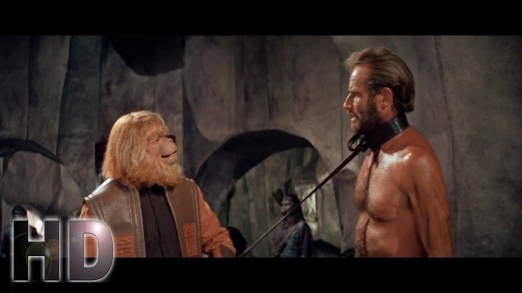
    Planet of the Apes (1968), directed by Franklin J. Schaffner, is a crackling Sci-Fi movie that translates the dystopian thematic of a world in a phantasmagorical display of primal humans and intelligent primates that upends the existing hierarchy of creations and reconstructs the fundamental doctrines of the Origin of Species. It is an advanced society of chimpanzees and orangutans that talk smart, which the 20th-century American astronaut George Taylor (played by Charlton Heston) is hard to stomach with human pride. He then becomes a deformed kind of human slave of the apes in this new brave world where from their God to a prison guard, the apes are the master of the humans. What a wonder this brave new world, that has such apes in it.

    maxresdefault

    The movie is a visually compelling Juvenalian satire that mercilessly but humorously mocks the targeted human hubris that brings about its destruction in an attempt to replace the role of God. The thinking, talking, and even kissing apes mirror the social behaviors that are no more particular to humans who fail to preserve humankind’s prerogatives by the self-destruction of humanity from catastrophic nuclear war. Taylor embodies the hubris in the optimistic veneer of audacious hope that he will find a way home, to his kinds. It is this hubris that causes the downfall of humankind and himself. He hunts desire and hopes together in the constant resistance against the apes despite the impossibility of returning to earth with the defunct spaceship. His faith is nothing but a waking dream, haughty defiance against the reality, dreaming an awareness of odds in his favor.

    charltonhestonplanetoftheapesgeorgetaylor

    The figure of Taylor is one oddly fascinating mixture of panache and wit, sarcasm, and heart, wrapped in the likeliness of Shakespeare’s Macbeth. Talyor represents dramas of human characters wonderfully packed in the imposing physique, towering the apes as if to manifest the sovereignty of man over the apes. The pathos of Taylor in the climactic denouement of the movie reveals his frailty in recognization of the collapsed grand narratives of hope, disillusioned wishes, and shattered dreams as uttered by Macbeth: “Life is but a walking shadow, a poor player that struts and frets his hour upon the stage. And then is heard no more. It is a tale told by an idiot, full of sound and fury, signifying nothing.” Will this be an empty outcry of failed civilization, echoing the collective pathos of the human consciousness for the corrupt world at its heart?

    planet-apes-ending

  • ‘Witches of Pennsylvania: Occult History of Lore”, by Thomas White – review

    Witches of Pennsylvania: Occult History and LoreWitches of Pennsylvania: Occult History and Lore by Thomas White

    My rating: 5 of 5 stars

    Edmund Burke’s canonical adage of “Superstition is the religion of the feeble mind” fits the American perspective of witchcraft as well as other supernatural views on the world. No wonder literature and media are chockablock with adolescently burlesque images and sensational accounts of the mysterious phenomena in comparison with the European approach to the subject matter in terms of historical and social contexts. However, Witches of Pennsylvania: Occult History and Lore by Thomas White is an excellent antithesis to the stereotypical American attitude toward the thematic that should merit its place in the history of American civilization. The book is concise in its volume but rich in the spirit that deserves its academic and cultural contribution to the history of the New World.

    The book treats the thematic of supernatural accounts of witchcraft and magical folk (the equivalent of the British Cunning Folk) with a sense of respect for the belief tradition held by the Germanic settlers of Pennsylvania and the origins of it in academic approach. Based on his close and observant reading of the multidisciplinary subjects from history to religion, White fills the erudition pages after pages with many unknown historical facts about witchcraft before the infamous Salem witch trial in Massachusetts and the lasting legacy of the supernatural belief still alive among the common folk. The omission of the witchcraft elements found in other cultures, such as African-American and Native-American, is not a supercilious gesture disregarding their values charged with ethnic pride or cultural jingoism. It is to isolate belief tradition in the form of folk magic and witchcraft from a cultural identity of ethnic traits that many people like to associate. Instead, it intends to distinguish it from the established religion that has deeply affected the psyches of the ordinary people, which ultimately has become a folk religion of its own with efficacy.

    Whites provides insightful intelligence about the use of folk magic as a sense of control in the world beyond human control. Recourse to supernatural means of relieving the malady of hearts is the last straw a person can think of in a recurring series of losing streaks without jeopardizing his/her self-esteem. The story of Hex Hollow, for example, is the most well-known and representative of the subject matter, manifesting the effects of folk religion on the psyches of the residents in the predominately German-American region. To dismiss the culprits of the case as good-for-nothing superstitious crybabies looking for figures to blame for their unlucky strikes of lives is, therefore, an arrogant display of willful ignorance of the truth about folk religion and its impacts on the psychosomatic functions of individuals. The best illustration of such evidence comes in the form of The Long Lost Friend by one John George Hohman, a German-American Catholic printer, bookseller. It is an impressive collection of herbal remedies, magical healings, and charms that have been known for their potency for years with wide perennial circulation. The book is still going actively available on Amazon.

    This book is an excellent read for those craving for academic perspective on witchcraft and magic folk existent in the U.S. without the assistance of parapsychology, paranormal investigators, psychics, and mediums, distinct from the genuine witches, wizards, and hex doctors. It is a collection of supernatural events and narratives recorded in case law and annals of history, told in a plain language comprehensible to eager readers of mysterious knowledge. You will find the book read fast as if you were cast a spell on by its arresting attention and wondrous truths about the existent world we still do not know in its entirety.

    View all my reviews

  • ‘A Journal of the Plague Year’, by Daniel Defoe – review

    A Journal of the Plague YearA Journal of the Plague Year by Daniel Defoe

    My rating: 5 of 5 stars

    The biblical cyclicity of history proclaims that what is happening now happened before because there’s no new thing under the sun. As I agree with the cyclical history theory, I prefer stories that confirm the continuity of human nature, which results in this felicitous book I came across on the Kindle store. The precedent epidemic scares and the response to them in Daniel Defoe’s A Journal of the Plague Year, a classic 1722 account of the Black Death that devastated England from 1664 to 1665, do not read no less different than ours. Defoe’s recounting of the plague successfully resurrects the spirit of the epoch as his narrator guides the reader to the places and scenes of the seismic event in the capacity of a charitable and knowledgeable guardian of posterity, making them surprisingly familiar with ours.

    It is a literary eye-witness account of what happened during the resurgence of the bubonic plague that had ravaged Europe hundreds of years earlier in the semblance of a nonfiction narrative. Even though Defoe was only five years old when the plague swept England, his fictional narrator feels very real and the account telltale as though it had been written it in the spirit of Veni Vidi Vici. So much so that the story seems more veritable than the counterpart of Samuel Pepys, whose narrative feels comparatively prosaic without the personal charm of the narrator. The reader will also learn that the 17th-century modus operandi of dealing with a pandemic is not that far from the current 21st-century preventive measures of social distancing, personal hygienic disciplines, and other relevant systematic societal restrictions.

    Defoe holds up a mirror to his posterity that shows what it was like during the epidemic scare and what the people from days of yore did to sail through such calamity as a wise and warm advisor to our current global pandemic situations. In fact, while I was reading the book, I was surprised by how similar the cautious measures decreed by the authority were then to our own now. In my opinion, this book replaces Boccaccio’s The Decameron as a must-read during the pandemic, because of its power of reality drawn on empirical oral accounts so close to the lives of the ordinary folk that we can relate to our own time.

    View all my reviews

  • universal man: ‘Ben Jonson: A Life’, by Ian Donaldson – review

    Ben Jonson: A LifeBen Jonson: A Life by Ian Donaldson

    My rating: 5 of 5 stars

    I have always been drawn into a writer whose noble ambition and unswerving individuality are distinct from those of the officialized popularity of famed celebrities simply because of the sheer provocativeness of the author translated into the textual world of reality, which is a reflection of his conceptions by the barrier he establishes proudly and profoundly against those of others. In fact, it is this unapologetic individuality that enables the author to become what he is capable of in protean varieties; an alchemist of words, a high priest of the temple of Apollo, a mortal equivalent of Hercules, a neo-classist of a new renaissance, an independent scholar of the great leaning, and a humanist committed to the Classical principles to contribute to the new capital of the Arts. The hero of the splendid epithets is no less the poet and playwright than Ben Jonson himself, and it is in this superbly told biography Ben Jonson: A Life that his modern disciple Ian Donaldson resurrects the person of Jonson in flesh and spirit vividly.

    Ian Donaldson’s Ben Jonson begins with the burial ground of Jonson and then comes alive as Donaldson presents the protagonist Jonson through a phantasmagorical display of the epochal chapters of Jonson’s life as though to be screened for posterity in Immortal Theater of Art. Donaldson’s capacity of screenwriter and director of Ben Jonson’s dramatic life is deprived of blind idolization of Jonson as a suffering lone wolf-typed writer whose brightness was unfairly adumbrated by that of his contemporary peer William Shakespeare, nor is it intent upon accounting the greatness of Jonson over Shakespeare by elucidating the dichotomic feud between the two equally but differently brilliant literary stars in the constellation of Arts. Also, the book rejects the conventional mode of biography in the frame of “cradle to grave” by guiding the reader through specific epochal moments that profoundly influenced Jonson both personally and professionally during one of the most politically and religiously turbulent periods in the history of Great Britain.

    Rich in details of the political and social backgrounds of Jonson’s plays and poems in addition to his personal elements that make him stand out among the contemporary literary figures, Donaldson follows the Thucydidean way of examining the history of Jonson in attempt to transcend the subjectivity of the time and popular opinions on the subject and to balance scholarly objective equilibrium to test the validity of truth about the subject matter to the extent possible by holding his express personal opinion thereon. The result is myriad imaginations and images of Jonson as the reader likes to create, whether it be that of dauntlessly confident Achilles, wisely ambitious Agamemnon, divinely valorous Odysseus, or compassionately passionate Hercules.

    Upon reading this book, I saw the images of Rodrigo Mendoza played by Robert De Niro from the excellent film “The Mission” and Ben Jonson as himself springing from my mind’s garden as both of their faces a piece like a great Ancient Greek statue. Both of them are passionately devoted to their causes, unfailingly humane, and admirably courageous in fulfilling their destiny to achieve their noble ambitions for the good of humanity – one for the building of terrestrial heaven governed by deeds according to the Gospel in the case of Fr. Mendoza and the other in the person of Jonson for the reconstruction of British Renaissance based upon classical principles as a stratagem of moral and artistic reform. And behind this fascinating literary witchcraft lays Donaldson’s superb biography of Ben Jonson that successfully resurrects the noble and heroic spirit of his literary Hero whose work is enshrined in the Temple of Divine Arts as a scintillating star of the Humanities. And I am sure that Jonson is so happy with Donaldson’s account of his life that he introduces his biographer to the Immortals (including his chum Shakespeare) and that they are having a divine feast with heavenly wine in a constellation of literary stars evermore.

    View all my reviews

  • ‘West from Home: Letters of Laura Ingalls Wilder’, by Laura Ingalls Wilder – review

    West from Home: Letters of Laura Ingalls Wilder, San Francisco, 1915West from Home: Letters of Laura Ingalls Wilder, San Francisco, 1915 by Laura Ingalls Wilder

    My rating: 5 of 5 stars

    Looks can be deceiving, for sure. It can yield an ill-judged misapprehension of the true person and therefore, form a certain prejudice about the person. A person’s appearance is a false shadow for the substance, but our faculty of mind based on a sensory perception with the works of imagination often falls into fallacy. That said, this charming little book comprised of lovely missives to her beloved husband Almanzo back home in Mansfield, Missouri comes surprisingly pleasant twist of the image of Laura Ingalls Wilder, the creator of Little House on the Prairie, whom I always considered to be stoic and imperturbable, a kind of austere and puritanical mid-west matriarch, who turns out to be one sweetheart with the untainted sensibility of feminity.

    In these letters written to her batter half she called ‘Manly Dear’ during her travel to San Francisco and her stay there too in 1915 following an invitation from her only child Rose, you will read the words of her heart and soul enveloped in tenderness, colored in vivaciousness, and sealed with love, all the marks upon pages in the felicity of vivid descriptions wonderfully mixed with the perspicacity of reflective introspection, so jolly that reading them makes you feel like reading love letters from a smitten maiden to her smashing beau.

    It’s one of the reads that require no practical analysis of the psyche of the author or of the social, political climates to make revisionist commentaries. It’s a pure mental delight of peeping into the inner world of the author that puts a smile on your face. Also, it’s a great read to while away your time at one sitting. On a personal note, if you have read Prairie Fires: The American Dreams of Laura Ingalls Wilder by Caroline Fraser, the magisterial biography of Ingalls, this book is a lovely accompaniment to feel this great American writer of all generations closer to you as none other than her true person, talking about her journey to you as a great story-teller.

    View all my reviews