 The Return of the Dead: Ghosts, Ancestors, and the Transparent Veil of the Pagan Mind by Claude Lecouteux
My rating: 4 of 5 stars
Salman Rushdie spoke of ghosts as the souls of the dead tending unfinished businesses on earth. Be it everlasting phantasmal whistling from the desolate fields of the buried or flickering of lights with sounds of footsteps in manmade abodes, but mind you that sometimes they come back. It is not about the fashionable New Age enlightenment advocating the veracity of paranormal activities involving ghost hunters, would-be, or self-proclaimed practitioners of occultic practice. It is academically certifiable, according to the eminent French Medieval Studies scholar Claude Lecouteux in his treaties on the formidable return of the souls departed.
The belief systems that the souls of the dead will and can come back to where they have left are universal in all cultures, including the dominant Christianity. Christianity, especially the Church of Rome, has drowned upon syncretism of pre-existing uniform pagan beliefs that paying due respect to the dead by offering food on their anniversary of death is an obligation and prevention of malice thrown upon the living. Lecouteux affirms in the discourse of the truth of revenants by the ecclesiastical records of Pope Gregory the Great, Thomas Aquinas, and Augustus. Even the ancient pagan luminaries, such as Ovid, Pliny the Elder, and the Younger, and Plato, corroborated the Wondering Souls’ existence roaming among the mortals. These great benefactors of humanity averred that sometimes, by the mysterious will of God, the dead are not entirely gone to the world beyond or occasionally permitted to manifest in reality. Therefore, it is worth giving such notions a preferential credit over the sensational testimony of ghost hunters, psychics, or gypsies.
Lecouteux illustrates peculiar funereal practices, especially of the Northern Europeans, such as putting the deceased’s head between the legs, sealing the roofs, windows, or any openings of a house of the dead lest the departed remain in the place of the living. After a breath of life leaves the corporeal temple, it ceases to exist and is, therefore, doesn’t belong in this world. Lecouteux’s treatise becomes a historical narrative of the deceased’s whys and wherefores in a confused state of spiritual anomy, refusing to cut a tie to the terrestrial world that they don’t belong any longer.
The book is my second read written by the French scholar following The Secret History of Poltergeists and Haunted, an excellent read in its multidisciplinary approach to validate the historical events of the fantastic phenomena in the narrative style conflated with Thucydidian objectivity and Herodotusian parataxis. Although this book retains the cracking narrative tradition of his, it is not as enthusiastically stimulating as the other book on the more popular noisy spirits for the sake of the subject itself. Perhaps, my being of the modern era accustomed to the sensory effects influenced by films and other visual aids may contribute to a rather unjust opinion on this book about revenants. Notwithstanding the preferential subject matters, this book will be a valuable textual source for historical, cultural, or social research about the universality of belief systems molded into a syncretism of the Church’s established religious doctrine. Or to put it simply, this book will pique anyone not easily succumbed to occult fad but equipped with a curious mind on the restless wandering souls, thus helping fortify his or her belief that sometimes they do come back.
View all my reviews
Tag: Nonfiction
-
‘The Return of the Dead: Ghosts, Ancestors, and the Transparent Veil of the Pagan Mind’, by Claude Lecouteux – review
-
A Tale of a Cat in Tote

Finding a good vet is a challenging task It may sound funny but finding a good veterinarian seems parallel to Perseus’s finding the Hesperides’ whereabouts, the nymphs holding the weapons for destroying Medusa, as instructed by goddess Athene. The half-god and half-human Perseus had divine help from the goddess to accomplish his terrific mission. Still, the whole human Me, left with my limited mortal device, had to embark alone on a daunting quest for a competently proficient veterinarian who could precisely ascertain the cause of my cat’s gastrointestinal malady with the utmost professionalism and most profound care for animals. So, I want to relate my journey to arrive at the mission accomplished to Hercules’s Twelve labors to fulfill his moral responsibility for the beloved he had slain.

Toro’s Arrival at the Hospital in Tote No, not that I harmed my little sixteen-week old Toro. How despicable! But that he had been suffering from irregular bowel syndrome, aka constipation. Although well-potty trained, Toro had difficulty in releasing excrement completely with heartwrenching yowling, resulting in inappropriate elimination everywhere in my room. As his human caretaker/sister/mother, the onus of relieving him from the pain was naturally on me with an initial frustration of finding the panacea. In a new city with no acquaintance to recommend me an expert on cats, I looked up a list of veterinarians nearby on the Internet, mostly Yelps and Googles’ reviews. As a follower of Thuclyclides on hearsay’s integrity, not on the popularity of the subject from the masses, I eliminated the superfluously effusive complements of reviews suspected of blind bromides advertised by sponsored reviewers. I followed my instinct that led me to a particular veterinarian with less florid advertisements and more evidentiary results of curing cats, one of whom looked a lot like Toro. What can I say? It was more of my intuition, leading me to take Toro to the veterinarian of my choice.

Toro’s X-Ray reveals his inner world, including a microchip The doctor listened to my plea for examining Toro thoroughly with his entire medical history obtained at his adoption from a shelter. He took Toro’s X-ray and explained that it was constipation and that he would inject enema to release due eliminations from his stomach. I was also given a bottle of lactulose solution to be administered to Toro orally three times a day. Besides, he gave me a bottle of Betagen topical spray for Toro’s infected buttocks due to the remnants of dried defecation, free of charge. It was certainly more than I expected of the care, now that the cause of the sickness had already been precisely diagnosed and adequately remedied.

What an adventure I had today! Toro is now easily defecating in the letterbox. However, he seems to be a bit lethargic due to the oral solution that I have been injecting to him, which is a challenging task every time because of his apparent dislike. But Toro knows that he feels better now than before, so I guess he takes his medication as a daily ritual until the solution is finished. At the moment of writing, Toro is sleeping sweetly on the books shelved on my desk, and looking at him produces a phantasmagorical display of images of all things loving and caring and comforting I have seen from paintings and movies. Would this be the same kind of feeling when God sees his creatures made in love? It may be a bit of stretch, but I like the idea of it.
-
‘The Language Instinct: How the Mind Creates Language’, by Steven Pinker – review
 The Language Instinct: How the Mind Creates Language by Steven Pinker
My rating: 5 of 5 stars
People tend to judge who you are according to how you speak and write as an effortlessly conspicuous touchstone of your intelligence. The pesky lexical solecism in writing, funny way of talking with accents, and fumbling manner of delivering thoughts are the Three Capital Sins decreed by English Language Purists regarding English Undefiled. Since English is not my mother tongue, such derisive experience often forced me to conform to the notion that the language ability determines general cognitive ability, until I read Steven Pinker’s The Language Instinct.
Pinker, who himself came from a French/English/Yiddish linguistic family background, asserts that the salient features of language should not be synonymous with the performer’s general reasoning ability. He expounds that the language is the instinct, a survival mechanism resulting from human evolution, universal in humankind, whether technologically primitive or advanced. It is a highly specialized mental module established through the passing of times by wonderfully flexible human faculty of learning by mutation, heritability, and isolation. The aptly fitting allusion to the biblical Tower of Babel illustrates the universality of language due to the innate universal human consciousness. Hence, different languages are the descendants of the proto-type language with its changeable nature according to the passing of times, calling for changes in social and cultural modes of life.
In this sense, idioms and other forms of English-based pidgins demonstrate divergent evolutionary traits of English, not the illiteracy of the speakers of such languages. Pinker remonstrates with famous critics, editors, and writers, who are bulwarks of the Pure English since language is the instinct, not the mind itself. Their judging people based on how they speak and write shows the ignorance of the truth, seeing what they want from their designated vantage point of arrogant grammarians. Come to think of it, didn’t William Shakespeare, a former maker of leather gloves with a limited education of grammar school, ruffle the feathers of his university-educated colleagues in his time? Leo Tolstoy, Emily Bronte, and Jane Austen were not perfect spellers, nor was Jack Kerouac, who often stumbled into existential lingual vertigo because English was not his mother tongue.
The book covers everything you want to know about language: how and when people started to speak the way they do now, where the origin of proto-type language took place, and why language is not a barometer of intelligence. There is no such thing as linguistic relativity, a principle claiming that how you speak affects how you think, which alternately means that you are not as intelligent as you like to believe because your English is imperfect. I could not believe why many people disagree with Pinker’s view of the language instinct. They pillory him for being something of a language eugenist when he is against those language mavens, one of whom publicly derided Pinker for defending his parents’ less than perfect English language ability. The depth and breadth of knowledge that Pinker shares with his reader become scintillating with his trenchant wit and feisty honesty, comparable to Samuel Johnson, author of A Dictionary of the English Language. This book addressed my soul-searching question of language and its relation to intelligence, and it prescribed to my wounded soul with a new perspective of language as the instinct. Whether or not you subscribe to Pinker’s theory of the language instinct is voluntary, but don’t forget that prejudice darkens the knowledge.
View all my reviews -
Theodore Tom’s Virgin Maid – ‘How To Be Owned By A Cat’, by Kate C. – review
 How To Be Owned By A Cat: Simple Action Plan For First Time Cat Owners Who Have NO Idea What They Are Getting Into by Kate C.
My rating: 4 of 5 stars
Cats remind me of whimsical and capricious Greek gods and goddesses. Sometimes, cats are like Baroque European aristocrats with sophisticated finickiness. They are like spoiled children with no regard to manners in the sudden pulsing of stalking and jumping, rigidly dominated by their blindly unchecked ego. Whatever of the feline nature it may be, there is undoubtedly more than one of it; cats are convincingly intelligent, bracingly artless, and surprisingly affectionate with a display of individualities particular to each cat. No wonder there are celebrity cats as follows: A Cat in the Puss walking around as if he were man, Tom outwitted by Jerry, Garfield as laid back as his lookalike master, Felix the Car becoming a timeless icon of the style, and Theodore the Cat, who likes to challenge, “Who’s the Boss?” in this amusing read.
With an imposing name associated with a man of outstanding achievement, Theodore likes to think himself as a lifetime resident of a presidential suite attended by his matron-in-waiting Kate, a virgin cat owner without prior experience of raising a cat. Her meeting with Theodore, whom she happened to adopt from a pet shop, is a match made on earth, orchestrated by time and chance, aka Fortune. Or it may be the stars that shine brightly above their heads. The journey both Kate and Theodore has thus far embarked is akin to a real one of a road trip by a small caravan, consisting of bumpy drives, drive-ins, park-ins, give-ins, give-outs, etc. Kate’s relationship with Theodore parallels that of the Chef and his stray gourmet cat named Apollo in John Steinbeck’s “The Amiable Fleas” regarding the narrative’s realistic atmospheres illustrating the significance of ordinariness in daily life. Both works celebrate the values of simple pleasures that give a fresh hold upon our problems and different perspectives on life.
This charming little book also attests to Emerson’s tenet that thinking is the function, and action the functionary. In other words, the understanding of truth results from the successful union of knowledge and practicality on reality. Kate comes to the A-HA moment by realizing that her knowledge about cats from books and the media is not complementary to its applicability to tending her cat, Theodore.
I picked up this read because in reading its summary, I felt related to the author’s case for being a first-time cat owner without initial interest in cats. Her daily interactions with Theodore has taught her that there are no bad cats but only misunderstood cats due to a lack of patience or a deficiency in compassion on human parts. What will happen when what you read from books and watch from Youtube about cats contradict the realities of your Toms and Mollys at home? Just as lawyers do not learn their trade at law schools till they practice, pet owners will not know about their flurry fireballs till they clean their poops. In light of the above, this book is a lightheartedly vivacious and entertainingly down-to-earth read that makes you emphasize with her experience as a first-time cat owner.
Furthermore, for those who criticize the author’s poor writing style as posted on Amazon reviews, I want to tell each of them that being a purist regarding English Underfiled does not guarantee that you are not an ignoramus. Good writing means not in immaculate grammar but in the richness of sentiments and of thoughts. Therefore, I regard this book as an excellent read to read; especially, if you are a virgin cat owner like we are.
View all my reviews -
Wounded Wings
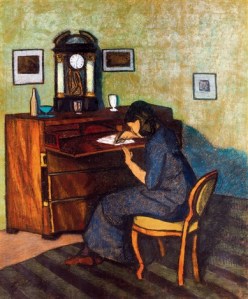
I often feel excluded from circles of literary people who seem to think less of what I have written. Be it self-conscious or counterintuitive perception, but my senses feel acutely from the stolid reaction or derisive comments on writing platforms. When my writing is derided or ignored, I take arms against the invisible keyboard scoundrels to guard the bastion of my creative world. Otherwise, I will remain a victim of ruthless bullying combined with barbarous ridicule, which I do not deserve, ever. I am only a human, so there’s no magnanimous pretext of “constructive criticism” because there’s no such.
There are new comments for my review of a particular book posted on Amazon. The acrid and derisive comments that my writing was incomprehensible pierced my heart with a great spear and put my entire body fixed to the wall. While I have been trying to write better, the comments only affirm a doubt about the purpose of writing. The common denominators of the words were as follows:
- They were both men.
- They seemed to form an appreciation of English Undefiled.
- They were British and American.
Though I always try not to associate people with their national characteristics, men who speak English as their mother tongue have a certain air of arrogance, young or old, and seem to delight in schadenfreude. What makes these men put their hands on keyboards to pillory my writing skills in public is astonishingly callous and vile. I am with the disappointment dipped in the anger of Timon of Athens uttering, “The unkindest beast is kinder than a man.” How rightly so.
People associate a fluency of language with a level of intellect, believing that thinking shapes language. Therefore, solecism in writing equals a lack of education, learning disability, or low intelligence. It is their ignorance of such a mode of thought because language is instinct, not a thinking product. It is said that the windows of learning other languages are typically closed at the age of 13. Given that fact, shall we regard someone who tries to exercise an adopted language by writing, however poorly, as a buffoonish dilettant pitifully trying to simulate the impossible?
I am more in sorrow than in anger as I am trying to compose my emotions’ agitated waves. That does not mean I beg for customary sympathy, empty consolation, or instant charity. I want to defy being put in a public pillory to endure underserving mockery, harassment, and ridicule like a poor maid masquerading as a refined lady of high society. Truth is truth to the end of reckoning, and it will reveal itself someday. You may not like my writing, but that doesn’t give you an ipso facto reason to belittle it.
-
‘Writers and Their Cats’ by Alison Nastasi – review
 Writers and Their Cats: by Alison Nastasi
My rating: 4 of 5 stars
If dogs are man’s best friends with their childlike artlessness and uninhibited affection, what are cats? Lucy Maud Montgomery, the author of Anne of Green Gables, answered thus: “Cats are so nice and selfish.” Writers and Their Cats by Alison Nastasi is a delightful illustration of such a relationship between writers and their cats with peek-a-boo glimpses of the celebrity authors’ unknown personal aspects behind the public façade.
The fascination with the graceful demeanor and graceful capriciousness of cats is particularly intense among the volatile and imaginative writers as the muse of their lettered labyrinths. Edgar Allan Poe wished he could write as mysteriously good as his cat Catarina who liked to hover herself over Poe’s shoulders while he was writing. Mark Twain, whom I used to associate with something of a Dog Father, turns out to be a godfather of cats who rented cats to city dwellers during their holidays in the countryside. Twain also named his cats commensurate with his wicked sense of humor: Satan, Soapy Sal, Lazy, etc. Furthermore, Twain proclaimed that anyone who likes a cat is his friend. The imposing figure of rough and tough Ernest Hemingway may not match the delicate silhouettes of cats’ sophisticated society. Still, Papa Hemingway loved them with the tenderness he rarely showed even to his better halves.
The book also introduces readers to various writers of our digital era whose love of cats takes them to the world outside their comfort zones in selective solitude. Patricia Highsmith, a high-strung, highly opinionated, no-nonsense author of The Talented Mr. Ripley, reveals her Tate-a-Tate moments by greeting her cat, “We are going to have a great day today.” Marion James, who wrote A Brief History of Seven Killings, met Tom the Cat at a café in Brooklyn, New York, who, like the writer, enjoyed being outside among people because both of them thrived on the liveliness of the world around them as a creative force. Then Peeti Shency, the Indian novelist and artist, writes about the experience of sharing a terrific story about her trip to the Kedar-Gouri Temple dedicated to the eponymous goddess with a particular fondness of cats, thus elevating them to the divine status of the immortals. Shency resurrects the legends of holy cats in the temple to our digitalized reality of the world and connects them to our need for their presence for nature’s mysteriousness.
There are many other writers in the book whose love for their cats are touching. They all confess to their odes to cats that only cats can understand what they are and who they are. Whether or not cats have a supernatural sense of reading people’s minds, I have no intelligence. Still, I do know that a cat is good at observing your movement and facial expression from my observation of Toro, a 12-week old male brown tabby kitten, who likes to watch me what I am doing and where I am going. A cat is a curiously interesting beast, and it is this semblance of intelligence that makes a cat so attractive to the imaginative, high-strung writers. If you have a cat at home and a writer at heart, this book will present you with a delightful treat to your mind, packed full of beautiful pictures of writers and their cats not in grim portraiture but natural snapshots. Readers may tempt to show the writers’ photos with their cats to your cats.



You must be logged in to post a comment.