Tag: Nonfiction

  • ‘A Harlot’s Progress (2006)’, directed by Justin Hardy – review

    71+BMGiROqL._RI_Throughout human civilization, prostitution has been arguably something of a necessary evil, intentional or unintentional, an institution of erotic bartering between a client and s prostitute for wants of flesh and fortune. For a client, it’s all about releasing his rapacious libido in a brothel, whereas for a prostitute offering a pleasure of the flesh can be a means to a social mobility in a period when women’s place was confined by biological determinism. But that social mobility would be possible with the intervention of Goddess Fortuna. ‘A Harlot’s Progress’ follows a life of an unfortunate prostitute named Mary through the eyes of William Hogarth, an English painter and social critic renowned for choice of his subjects crossing the strata of the social class system for inspirations.

    The painter Hogarth chooses Mary as his unofficial muse for various paintings depicting modern moral subjects as a series of picturesque statements of social criticism on the oppressed conditions of the poor whose lives are already determined by their biological and social statuses. Likewise, Mary’s downfall from a beautiful courtesan to a common, over-the-hill backstreet slut is already a foregone conclusion for the nature of the profession. Besides, she’s not exactly cut out for a fine prostitute with artful plans to forward her rank and condition; she has a pride but no courage. She yearns for a polite society, but her frailty of character prevents her from advancing in her career to a mistress of a high-birth man. In other words: Mary chose a wrong job that ruined her life.

    The film is said to be based upon a true story with references to the famous figures of William Hogarth and his friend Henry Fielding, the author of Tom Jones. It gives the veracity of the event with a charge of authority, rendering the story of lachrymose life of Mary emotionally powerful and factually unchallenged in the veneer of historicity. Yet, in terms of objectivity of the stance that the film takes, its view on prostitution in the 18th century London is clearly askew on the side Mary because she is cast as being a victim of the social evil with her purity of the soul torn apart by men’s rampant animalistic sexual desires as presented by all uniformly unattractive and perverted men on screen. In fact, the only pitiful character in the film seems to be Mother Needham, who is mercilessly abused on the pillory for three consecutive days and nights of stoning, defiling, and cursing from the public who were once or twice her clients and neighbors. The sight is sufficient to incite pathos because of her plea for life authentically delivered by the excellent performance of actress Geraldine James.

    No one can throw stones at Mary for her life of “sin and depravity” because there’s no one who is immaculately cleared of guilt and sins to judge her character as arbitrator of morals. But then she is responsible for her own life with her own free will to choose to be a harlot. For not all destitute women driven by abject economic conditions are succumbed to the trade of the flesh. Nonetheless, this film is a good period drama that resurrects the ethos of the time with the parlance, habits, and costumes of different classes peculiar to the 18th century, well executed by a cast of classically-trained fine thespians.

  • ‘Socrates: A Man for Our Times’, by Paul Johnson -review

    Socrates: A Man for Our TimesSocrates: A Man for Our Times by Paul Johnson

    My rating: 5 of 5 stars

    In the constellation of philosophers in the intellectual firmament, there is none other than Socrates whose influence on humanity, ranging from academic disciplines to everyday cultural memes, strikes the chords with the contemporary minds at its simplest form. It is this essence of Socrates’s simple but profound moral philosophy that has been enshrined in the pantheon of Immortal Knowledge of our collective human civilization for thousands of years. In Socrates by Paul Johnson, this immortal philosopher is hard to resist and difficult to find fault with through the author’s cicerone guide to the streets of the ancient Athens, where Socrates is in his usual convivial mood to speak in public and welcomes the reader with his genuine warm smile to join his conversation.

    The stratagem of moral education in the form of philosophy is to tame the appetites (the senses or the id) and to guide spirits (emotions or the ego) in man to reach the highest level of humanness, which is the reason (the judgment or the superego). The process of this moral education is civilization, a standard by which barbarism is judged and separated from the educated mind, and Socrates thought it essential to implement it in all aspects of Athenian life because it was the surest avenue to happiness, meaning of human life. In fact, Socrates was the first philosopher to democratize the concept of philosophy from lofty abstraction of an academic plane to practical realism of a living guide. Johnson describes Socrates as something of a Prometheus, who translated the heavenly into the terrestrial in the sense that Socrates wanted to unlock the goodness of life for the benefit of mankind. For Socrates was the one who brought philosophy down from the wondering skies, domesticated it the huts and villas of people, and familiarized it with the ordinary life in examination of good and evil.

    Socrates seems even more likable thanks to Johnson’s historical accounts of Socrates’s personal traits and physiognomy: the corroboration comes from his young, handsome, controversial, but nonetheless valiant aristocratic friend Alciblades that (1) Socrates was a selfless comrade in battle, fearless in fighting, and artless in helping his battle buddies: (2) commendable hardiness enabled him to wear thin clothing despite the cold and the snow; (3) he disliked letting his emotions show on his face; (4) he regarded poverty as a shortcut to self-control; and that (5) he kept fit in the stadium and gymnasium and even danced because he believed that a healthy body was the greatest of blessings. It is also well known that Socrates was an ugly man with a flat, broad nose and beer belly, especially by the standards of Greece in the 5th century that highly valued regularity of features we would call Byronic today. And yet, Socrates, ever imperturbable and optimistic, was not depressed by his ugliness because to Socrates beauty was not inherent in itself but was by the virtue of its use. It was more of utilitarian nature for practical purpose. Socrates’s way of accepting himself as he is relates to logotheraphy, neuroplasticity, and habit of positive thinking, now bestriding the domain of self-help literature.

    I have always been a fan of Paul Johnson’s writing style in harmony with his wealth of erudition and fountain of humor, a fascinating combination that makes his reads so likable and interesting. And here again, he did it again: with his customary witty narrative packed full of lots of unknown anecdotes and personal tidbits on subjects he writes about, Johnson tells the reader about Socrates as precisely and candidly as possible based upon historical evidence to resurrect him in the textual theater of literature. His interpretations draw on his exceptional knowledge of the philosopher and the history of his time, but he wears his learning lightly and always writes with a general reader in mind. Hence, the figure of Socrates in his book is no longer seen as the ancient adumbral thinker but a jovial, avuncular teacher who really cares about the lives of his students of all walks of life in this highly entertaining book. This book presents a pleasant banquet of the mind and spirit hosted by the consummate storytelling narrative of Johnson in the honor of Socrates, the people’s philosopher.

  • the ancients already knew it

    BUJDt1DIAAA7rUX

    The brain is a foundation of the universe that controls our physical as well as mental being. In a similar manner of the cosmos constantly moving across the great divine space, the brain fires nerve cells called neurons and expands their territories from the physical realms of perception to the world of consciousness, which creates a model of our own reality. The brain is the leviathan enterprise that puts together the tesserae of our existence under our constant attentive care of its functional longevity by understanding its fabulous varieties that neither age cannot wither away nor custom can stale away.

    Our brains keep learning and adopting throughout our lives by the two neurological processes: Neurogenesis by which the brain creates neurons and neuroplasticity, the ability of the brain to rewire the connections between the neurons. These processes continue to change and grow our brains into very old age as scientifically corroborated by the finding of these neurological processes in the brains of 70-year-olds with terminal illness. Also, Albert Einstein whose brain was dissected after his death to unravel the secret of the genius was found to have more interconnections between the neurons in his brain. This is very telling evidence because Einstein was considered “slow” during his high school years. What Einstein made genius was his use of imaginations and reasoning skills that required of him the use of the faculties of the mind to the extent possible by firing and wiring millions of neurons. To further illustrate the wonder works of neurogenesis and neurolplasticity, scientists have found it in the avian world. Unlike other birds, canaries produce new melodies every ear to attract a mate. On examining their brains, scientists discovered that canaries generate each neurons each spring.

    The theory of the brain is not as complex as it seems. Simply put, thoughts are like “sparks” rising from a campfire or sunlight’s igniting fire when focused through a magnifying glass. A thought repeated with intense focus becomes concentrated mental power, which becomes a dominant, archetypal energy that authorizes our thoughts and actions. These thoughts in the form of neurons form neural networks, which are like paths through a meadow. What we should do is a change in our brain by rewiring the neural pathways that drive our thought and actions. Einstein, whether or not he knew about neurology, constantly expanded the neural networks by engaging himself in finding a Rosetta Stone for Relativity Theory and other questions of the Universe.

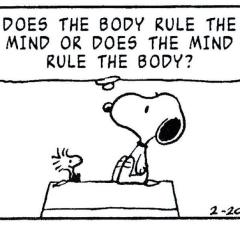
    The workings of the brain are in conjunction  with the upkeep of physical exercise, social interactions, and new daily challenges because they are portent stimuli to ignite ongoing mental sparks in the brain. In fact, the ancient Greeks and Romans already knew about the key elements of keeping the body and mind fit with the slogan of “Mans sana in corpore sano” (Sound mind dwells in healthy body.” Father of western narrative history Herodotus noted a holistic connection between diet, drink, exercise and lifespan. Socrates pointed out that many people did not think clearly because their body wasn’t in good health. His pupil and founder of Lyceum Aristotle added that physical exercise was essential for general mental and physical capacity. Then there was famous Roman orator, writer, and statesman Cicero proclaimed that soundness of mind depended on applying one’s energies to something of interest. This relates to the empirical finding of keeping the mind fit and alert in spite of horrible existential situations as evidenced by founder of Logotheraphy Viktor E. Frankl, who endured the horrors of daily life at Auschwitz and other subsequent concentration camps by persistently forcing this thought to turn to drafting his books on the tablet of his mind to publish them after the war. It’s both a priori and a posteriori illustration of how channeling one’s interest to intellectual or creative activities keeps his mental state stable and fit in such a dreadful mire of despondency and atrociousness.

    In light of the above, it is not a hyped fashionably cliched mantra that we are what we think and what we do all the time. Popularity of self-help literature bestriding the bestseller charts has the origin of truth in the workings of the brain in the form of neurogenesis and neuroplasticity. For my own brain at the moment of writing this essay is firing and wiring neurons, expanding the neural pathways and the yonder territories of my consciousness. The brain is then also plastic because it is being shaped by everything we do and what we opt not to do. It’s really a self-fulfilling prophecy without recourse to deities or even demons. Consequently, the more actively we use our brain to accomplish new daily challenges by fulfilling demands placed upon our daily tasks however trifle and insignificant that may seem and learning something creative or intellectually stimulating, the healthier our bodily and mental health becomes. Which is elegantly summed up by poet Henry Wadsworth Longfellow: “Still achieving, still pursuing… Learning to labor and wait.” For this reason, the brain and the mind are concomitantly intertwined to constitute our wholeness so fascinating, so awesome that even a Psalmist praised God because we are “fearfully and wonderfully made.” Surely, the praise is worth the singing, for our brain and its works are indeed a wonder.

    저장

  • leonardo’s horse that came alive

    01-leonardo-da-vinci-og.adapt
    “Il Gran Cavallo” in San Siro, Milan, Italy

    It was meant to be the largest horse in the world when the future Duke of Milan Ludovico Sforza commissioned Leonardo Da Vinci in 1482 to conjure it up from the phantasmal world of the artist with his magic chisels. This fantastical statuesque beast, “Il Gran Cavallo” (aka “Cavallo”) was soon to be cast in bronze, standing 24 feet high as the greatest equestrian statue in the world, following the clay model of the equal height made by Da Vinci. Then war broke out in 1499, ravaging Milan and engulfing the clay horse, leaving Da Vinci alone with the original sketches of Cavallo to go back to the drawing room. Such was Da Vinci’s plan to restore the aborted birth of the magnificent bronze horse before it became indefinitely suspended by his death.

    The story of the unfinished Leonardo’s Horse piqued my usual counter-popularity curiosity when I came upon an article in a magazine on the train. Since this year sees the 500th anniversary of the death of Leonardo Da Vinci, many an article has featured the masterpieces of Da Vinci and the background stories thereof, but to me none other than this story about Da Vinci’s last masterpiece is intriguing and worth the writing. In fact, this “Horse that Never Was” had spanned a phantasmagoria of imaginations throughout the centuries until a certain American art patron named Charles C. Dent intended to make it his lifelong goal to bring the abstract equestrian statue to reality in 1977 when he first learned about Leonardo’s incomplete project about which the National Geography magazine covered. Upon his death in 1994, American sculptor Nina Akamu continued to carry out where her Renaissance predecessor had left off based upon the surviving sketches as a substratum of artistic guidance and completed a bronze sculpture of the horse in 1999, which was dedicated in San Siro in Milan, Italy. The great statue of Cavallo is a sight to behold with poised magnificence: it commands a sense of legitimate attention in a moment of suggestively continuous galloping that looks wholly authentic and real, rendering a majestic impression of dynamic continuity to marching music as pomp and pompous as Radetzky March.

    Da Vinci’s creation of the great horse proves to be his last masterpiece that truly links the past with the present and the future by the medium of art. It weaves the subjectivity of time into a grand tapestry of history and betokens cultural achievements as an intelligent collective enterprise. Akamu wonderfully re-created the great horse by internalizing the artistic sense of the Renaissance period by devoting her years of studying Italian Renaissance works of art in Italy as she pursued the highest levels of craftsmanship and professionalism in the field. Also, her love of animals, especially horses, contributed to the anatomical study of and aesthetic perspective on Leonardo’s Horse. Akamu’s recreation of Cavallo manifests beauty that penetrates minds of the beholders and lingers there in solipsistic ecstasy so deep and intimate that it feels almost physical. For our faculty, as it interacts with a plight of fantasy, is rather instinctive than reasoning; rather sensual because it delights in pleasure than because it thrives in disciplines. That is why “Il Gran Cavallo” is a gorgeous piece of art.

  • Lifeline advice from Francis Bacon

    Some wise people take shadows for true substances. Like medieval mounted knights in body armors, they skillfully protect themselves from the exploitation of their true substances in everyday interaction with the people they are forced to work with. How the wise accomplish this art of shielding amounts to an art of war in its defensive and offensive strategical tactics as well as to a discipline of cognitive behavioral therapy in its practical approach to noogenic neurosis or existential crisis. English philosopher Francis Bacon (1561-1626) knew all about this intricacies of human nature in conflict with existential planes, ergo he advised to the posterity how to keep our individuality from pressure of false conformity under the pretext of socialization.

    According to Bacon, simulation and dissimulation are an armor and a shield to guard oneself from being a subject of malicious gossip or cruel bullying, if used wisely. The dichotomy of two principles is simple: simulation as being what he is not. That is, he pretends to be someone he’s not. Dissimulation as being what he is not by way of concealment. However, simulation and dissimulation should not be confused with signs of diffidence or cowardice. On the contrary, it is for the benefit of anyone whose softness is often mistaken for weakness, his hamartia in all things he hopes to achieve. In fact, Bacon posed the advantage of simulation and dissimulation as thus: (1) to quell opposition and to surprise – that is, being a wolf in sheepskin can be a good thing in social interaction as long as you do not hurt anyone with claws and teeth; (2) to reserve a fair retreat to a man’s self – which means by concealing himself to a certain measured degree, he can protect himself in a situation that he feels inappropriate to him. It’s better kept to yourself in a situation that feels and seems a bit averse to you; and (3) to discover the mind of another by letting the other party open himself and turn his freedom of speech to freedom of thought. Simply put, let the other one do the talking until the tower of barbel rings the bell of the talker’s mind to retreat into his chamber of thought. In the end you will remain unsullied by the pompous self-revelation.

    As a coin has two sides to it, the principles have the disadvantage that is inescapable. It casts a shadow of fearfulness that discourages people to flock around the quiet one. Also, it transmits a false impression on others who might otherwise corporate with the the reserved one, which then unfortunately begets a deprivation of camaraderieship or closeness that the thoughtful one does not deserve. Hence, it will be the best to concoct doses of (1) prepossessing demeanor; (2) secrecy in habit; and (3) concealment in use – all for the power to feign, so as not to get hurt unnecessarily by those whose intellect, characters, personalities, and habits do not amount to your class and thus are unworthy of even tying your shoelaces. Bacon’s elegant treaty of simulation and dissimulation may seem heretical, treacherous even to the minds of today’s world where stark self-revelation is highly prided and treasured as a modus operandi of self-empowerment paddled by motivational speakers, clinical social workers, therapists, celeb-turned authors, etc… However, of all the chanting mantras of “being yourself”, Bacon’s method of being yourself by means of simulation and dissimulation to guard your most sacred mental sovereignty is still powerfully resonant with its practicality that strikes the hearts of those whose mildness is used against by the rabble.

  • for love of a tabby

    praying-cat
    Praying cats

    As a dog person who always has a soft spot for the man’s best friend, I tend to give a rather stoic glance on a cat that seems so high and aristocratic to reciprocate my regard. Cats are the cool, agile, cynical, and independent lords of the households, the poised and legal Pharisees of the animal kingdom. Yet a comparison of superiority between the canine and the feline is a puerile way to exert one’s favoritism of one species to another, which is reminiscent of eugenic theory of a superior race aggressively peddled by intellectuals in the early 20th century. That said, this note on cats reflects my findings of cats as man’s timeless companions in historical contexts, casting different lights over their stereotypical sinister image that I had about them.

    170px-Interior_of_a_school_in_Cairo_(detail)
    Mohammad and Muezza

    Cats as a symbol of witches betray the fact that a revered religious figure such as Prophet Mohammad was very fond of a cat. So much so that his pet cat named Muezza was treated with the utmost tenderness. It is said that Mohammad used to shiver without his cloak in the cold rather than disturbing sleeping Muezza. Further to the Mohammedan episode of his beloved cat, cats have a sacred pedigree in Christianity as well. It is said that a local tabby, after a fresh wash, instinctively jumped in and laid down next to Baby Jesus. The cat’s warmth and soothing purr, all the more added by a pleasing after-wash scent, were conducive to an undisturbed sleep of the baby. In fact, researchers claim that letting a cat sleep on your bed at night will relieve you of symptoms of insomnia due to its calming purring sound that sends relaxing positive signal waves to your mental as well as physiological wavelength.

    51m9fTbUyKL
    C.S. Lewis and his Cat

    C.S. Lewis, Author of the Chronicles of Narnia, also loved cats and had a stray cat he loved tenderly. Every morning he took his hat off when greeting his cat with pleasantly resonant “Good morning.” Moreover, when his veterinarian told Lewis to euthanize the cat due to its senility, the great Lewis refused to do so and nursed the cat for years until it finally met its creator.

    Baby-Jesus-and-the-tabby-cat-artCome to think of it, cats have appealed to the fountains of imagination and boundless perception in the human mind. The ancient Egyptians worshiped the lithe beauty of cats that distinguished itself from other animals. Edgar Allen Poe also saw something magically fascinating in a feline creature as his creative muse in literature. For me cats do not seem to be as cold, arrogant, and coquettish as they used to be. I even say hi to my neighbor’s big beautiful cat in sight, although it sends me a quizzical look as if I were a Prodigal Daughter. But above all, now I think that not only dogs but also cats will go to heaven.