Tag: Nonfiction

  • ‘The Power Of Habit’, by Charles Duhigg – review

    The Power Of Habit: Why We Do What We Do In Life And BusinessThe Power Of Habit: Why We Do What We Do In Life And Business by Charles Duhigg

    My rating: 5 of 5 stars

    William Shakespeare’s convivial axiom of “A merry heart goes all the day” contains a profound secret of the power of the mind. It tallies with the tenets of quantum physics that consciousness is the foundation of the universe. Accordingly, the significance of willpower has always been the subject of philosophy, literature, and science because that is a prerogative of our humanness, our sovereign power and right of exercising the great faculty of mind to the extent possible, just as John Milton in Paradise Lost advised us: “Mind is its own place and in itself, can make a Heaven of Hell, a Hell of Heaven.” Further back in the antiquity, Aristotle corroborated that habits reigned supreme in connection with our construction of reality: “We are what we repeatedly do. Excellence, then, is not an act, but a habit.” In the tradition of Milton’s existential observation of the mind and Aristotle’s epistemological truth about the power of the mind, Charles Duhigg in The Power of Habit propounds an auspicious argument that explains how habits are formed and how to discontinue bad habits based upon the scientific findings of the brain and factual evidence in lay terms.

    In order to give the reader the importance of habit formations and its relation to the neurological functions of the brain and the physiological effects on the bodily functions, Duhigg first avers that subconscious mechanisms that impact the numerous choice that seem as if they were the products of sound logics are actually influenced by habits of thinking. This habit formation results from the evolutionary progress of the brain’s mechanism for saving efforts, so that we can stop thinking constantly and redundantly about basic behaviors to devote mental energy to inventing irrigation systems, letters, waterwheels, printing machines, and other technological artifacts.

    Then how are these habit formations programmed in our brain? Duhigg provides the reader with the simple but potent secret of 3-step loop as follows: (1) Cue: a mental trigger that commands the brain to go into automatic response and which habit to use; (2) the routine: physical and mental response to outward stimuli; and (3) a reward: feedback from the brain to parse if this particular loop is worth the remembering for the future. It is also quite reassuring to learn that even the smallest shift in the routine stage can upend the pattern and that every habit is malleable and fixable, however complex it may seem. Once the entire loop is established through a steady period of time, the brain stops fully participating in decision-making, letting an action put in auto-pilot mode. Hence, a habit is born. This also means that we can take control of the loop if we learn to create new neurological routines to overpower our less desirable or undesirable habits as long as cues are present.

    To illustrate, the case of Travis Leach is the most compelling and realistically substantive in proving the power of habit formations fueled by willpower. Leach dropped out of a high school aged 16, wasn’t mentally strong enough to withstand criticisms and indignities, resulting in his frequent changing of odds-and-ends jobs. Then goddess fortuna must have winked at Leach when he got a job as a barrister at a newly established Starbucks store that made him turn over a new leaf in life. At the age of 26, Leach became the manager of 2 Stabucks stores overseeing 40 employees. He never got upset by irate customers or felt utterly powerless in a drip of criticism due to the company’s education of empowering willpower to their new employees based upon the science of habit formations. To dismiss it as a tactful advertisement for Starbucks’s business umpire is to discredit Leach’s hard-won triumph of will over his sociological disadvantages and psychological scars as a result of his unhappy childhood.

    Duhigg’s vastly informative and highly entertaining guide to the habit of success does not bestride a vox populi bestseller list of common self-help books. With his thorough research of evidentiary neurological impacts on habit formations and use of everyday examples thereof, Duhigg marshals his knowledge of the subject and willingness to help people in plain language that is accessible to the initiated and the uninitiated. He then delivers a burst of scintillating pep to the reader with steadfast belief that the right kind of habit formations supported by willpower will transform the raw material of the mind into its Excellency through a process as mysterious as a “caterpillar transforming mulberry leaves into silk,” as his like-minded intellectual Ralph Waldo Emerson agreed two centuries ago. This is not a self-help book per se, but a modern day version of Aristotelian principles of ethics examining the nature of and relations between virtue, the mean, pleasure, and happiness that can make your life different.

  • what i liked about “Upstairs, Downstairs” (TV Series) – review


    upstairs-downstairs

    A long time ago, somewhere in London there lived two families under one grand roof: one lived in downstairs, and the other upstairs, all behaving according to their modus vivendi that seemed only natural to accept without a shadow of doubt to contest. It was the time when a lady would require a parlor maid to groom her in her boudoir and a butler would act in the capacity of a superintendent of a household as well as a messenger incognito for his master. But to dismiss those “good old days” as an obsolete oppressive social institution is to deny the memories of those cherished in their everyday lives as portrayed unforgettably in a British television drama series, “Upstairs, Downstairs” (1971).

    This is not like the overhyped “Downton Abbey” in the sense that the plot of the story involves these two opposite classes (the benevolent master and the content servant) in a very fashionable mansion. Contrarywise, this classic series of “Upstairs, Downstairs” is rich with feelings and thoughts that make the viewer empathetic to the characters and absorbed into each episode for the reason that they touch upon the heart of the viewer, let alone the fine performance of the cast and the elegant screenplay attuned to all.  On the point of purely subjective note, the character of Rose Buck, an excellent parlor maid who is beautiful both inside and outside is what gives to the ethos of the drama: she is all humanity, showing compassion toward the eccentric but tragic footman Alfred who was shunned from others. Notwithstanding her goodness and beauty, Rose is unlucky with her personal life, ever finding herself out of reach of love like the forlorn nymph Echo. Her character is universally appealing regardless of time, ethnicity, and class. And Butler Hudson may seem prejudiced and stuffy, but he has a heart, too. In fact, he’s a good father figure: stern but fair, strict but kind. No one in Downstairs is sacked coldly, come what may.

    The residents of Upstairs are not your proverbial snobbish English aristocratic family whose haughtiness and zero regard for their subordinates are something to be enshrined in the temple of Marxism; the Bellamy family, headed by the magnanimous and highly respectful viscount Richard Bellamy, who was originally a son of a country parson, were all too human, woven into intricate relationships of love and loneliness, betrayal and misunderstanding. To put it in a nutshell, the Bellamys are a paradigm of noblesse oblige. No wonder Butler Hudson and his Downstairs family show such a high, heartfelt regard for the family like they are their real family.

    If you are accustomed to the splendid British manor scenes that typify your image of the classic British class distinctions, then you might find this drama rather antiquated and boring as a period drama. But those of you who value stories and characters, not to mention fine scripts, this will feast your senses and sensibilities. What’s more, you don’t have to be British to enjoy this excellent drama that fuses historical backgrounds as factual grounds of each episode with interesting and empathetic characters with stories to tell which we could relate to one way or another. Good dramas are contemporaneous with any period of times, theirs and ours. 

    Author’s Note: Since the acquisition of a Kindle Fire, I have been wallowing in the enjoyment of quality TV shows of the past. People ask me why I am hooked on the dramas or comedy shows of the bygone eras before my coming to the world. But as I firmly believe that pathos of humankind are transcendent of time and universal in every culture, my sensibilities channel me to the dramas that know no boundary of zeitgeists. I am open to all good TV shows so long as they are worth the viewing. 

  • mission impossible


    It’s the busiest hour at the Union Station in LA. Trains decant crowds of people rushing toward their destinations like toy soldiers winded to the fullest marching forward at war. Among all this hoopla of rush hour actions, there goes Fido, an unlikely K-9 agent from Terra Canina. Fido knows no fear and always accomplishes its missions with fortitude and loyalty. One of the daily missions is to cross the frontline station to make a rendezvous with another  K-9 agent from Terra Canina. With the help of a human ally from Resistance against Confederation of Lumpish Rabble, Fido hurries the way to the rendezvous point with alacrity of speed and a burst of pep peculiar to the species known for fierce loyalty and universal magnanimity. The mission impossible became possible. 

    Author’s Note: I shot this video last evening at the station on my way home after work because (1) I loved dogs; (2) the dog was right next to me on the escalator to the upper level; and (3) I felt a sudden feat of venturesome temerity to film the trail of the dog. Watching the dog took my momentary existential worries off my mind. Benjamin Franklin must have felt the same when he said the following timeless adage:

    “There are three faithful friends – an old wife, an old dog, and ready money.”
    untitled
    Here’s Fido’s secret K-9 agent waiting for Fido at the rendezvous point
  • moleskine and me


    31lI0LqPkSL
    Moleskine Limited Edition, Snow White Notebook, Pocket, Ruled, Apple, Hard Cover (3.5 x 5.5)

    Being a regular commuter from Camarillo to Downtown LA via train and Metro on weekdays requires light traveling; hence it was all over but the shouting that I would get a portable diary compact enough to carry about with me without adding even an incremental extra ounce to my already weighty messenger bag filled with a book, a Kindle Fire, a Traveler’s Notebook, a Makeup pouch, and a small stationery bag. Furthermore, I needed one such that it would be my ubiquitous mind’s reservoir in which I could preserve paroxysm of ideas, emotions, and feelings  conveniently at a coffee shop and on the train.

    Out of such prerequisites for my traveling companion came this pocket-sized Moleskine Limited Edition Snow White Notebook at a quite reasonably affordable price. It is sturdy, well-bound, and even hard-covered, let alone prettily designed. There are choices of “Ruled” and “Blank” at your personal preference. (My recommendation is that if you choose a blank version of it, you will write more on each page, which is all the more economical.)

    All in all, as a novice user of Moleskine notebooks, I glory in the novelty of it all with the haunting echoes of Sherlock Holms and Mr. Watson: “Excellent!” I cried. “Elementary,” said he.”

    Author’s Note: I am neither an undercover agent for Moleskine nor a mystery shopper paid to write this review of the notebook. And no, I am not a would-be power blogger in search of sponsors or followers to promote my Blog. 


  • goodbye mr. lagerfeld

    s

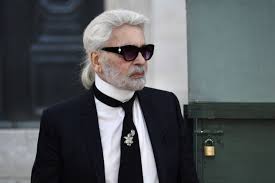
    You would know him if your sense of style strikes the chords with his idea of beauty that seems a curious conflation of the ethereal with the down-to-earth. Or you would know him as a photographer whose world of beauty betrayed linear conformity in the most brilliant way. If none of the above belongs to you, then you would probably recognize him by his signature silver hair tied in the 18th-century man’s ponytail style in urban tight attire that looked strange but charismatic, decadent but conservative. In the fashion and beauty firmament, Karl Lagerfeld (1933-2019), the creative director of the French fashion house Chanel, was one of the principalities whose dazzling collection of creativity formed a legion of cult.

    The death of Lagerfeld seems a bit distinguished from those of other fashion designers to me based on my purely subjective taste and reason: First of all, Lagerfeld was a very intelligent man of culture, judging by his display of erudite knowledge on art and literature due to his voracious reading of books. I saw his interview with Charlie Rose several years ago and was delighted in listening to his conversing with the host because of his intelligence and quickness that was never a bore. Also, Lagerfeld’s world of style is not far-fetched and always mixed with individual attitude that looks so cool and stylish and emulative. Although a gorgeous but exorbitant Chanel tweed jacket is like Jason’s golden fleece to me, I can take a cue from Lagerfeld’s feasible but fashionable style to make it my own in everyday life. Besides, Lagerfeld’s controversial but honest opinion on thinness as an ideal beauty chimes with mine. Call me ever so superficial, politically incorrect, or even persnickety, but the emblem of the flesh as a forced common denominator of beauty and fashion is arbitrary and despotic.

    Karl Lagerfeld was the only fashion designer I admired, and his death saddened me when I learned it yesterday from this week’s issue of The Spectator. During his reign of the Chanel House, Lagerfeld used to say, “T-shirts for ten dollars are even more fashion today than expensive fashion.” Must I say more? That is why I liked and like Lagerfeld and his canon of style that is timeless and classic.

  • dead or alive

    u

    They saw him struggling and being done. He seemed to stop breathing with no vital signs of being “alive and kicking” any longer. They saw it all, they thought him dead up there on the scaffold, suspended for 50 good minutes on a sturdy rope tied around his neck on one cold November afternoon of 1740. Then this presumably dead man came to life as soon as a penal surgeon put a surgical knife on the body laid on a slab for anatomical dissection. This really happened, and so it did. Hence the phrase, “Dead or Alive.” The subject of this incredible case was 16-year old William Duell, condemned for the rape and murder of a servant girl.

    This incredible cheating of death spawned doubts on the effective way of enforcing deference value of the penal law, religious musing on a possibility of divine intervention, and dilemmas of what should be done with this resurrected convict. It was concluded that Duell was to be transported for life to North America discreetly lest his survival should stir up any public imbroglio that would result in a call for abolishment of execution by hanging deemed to be ineffectual and thus inoperative in enforcing authority of the capital code in society. Accordingly, there are no known records of Duell’s transportation to North America and his after-life therein. What a chance of life he was given despite his cardinal sin!

    Then how did it all happen? It was due to a miracle of our human body that will make the reader’s head swivel in wonderment: the fact that the execution was carried out in cold winter increased Duell’s chance of survival because the brain must have triggered the body’s survival mechanisms when in traumatic comatose. That is, the body in its own biological defense against such trauma lets the brain reduce the temperature and keeps the heart and lungs alive by maintaining optimum oxygen levels to prevent major brain damage in a trauma, such as Duell’s being hanged in the winter cold.

    It’s a cracking case of “Ripley’s Believe It or Not,”which is worth the knowing if the reader is keen on uncanny things. But then nothing is more wondrous than our own human form. To the agnostic skeptics, it’s science of the body that works a divine feat of miracle in the sense that it can fight back threats from the outside and even death, such as being manifested in Duell’s incredible dead-alive illustration. On the other hand, as not all hanged men did return to life, it would be supercilious to conclude that only science rules in this strangely curious case, for there are more things in heaven and earth than are dreamt of in our modern rational mode of reasoning.

    snoobybanner