Tag: Nonfiction

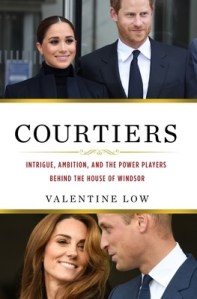
  • ‘Courtiers’, by Valentine Low


    My rating: 4 of 5 stars

    When Queen Elizabeth II left this world, she left the palace door open from upstairs and downstairs. And it’s not a Downtown Abby because it’s not a palace, and we are talking about King, Queen’s Consort, Prince and Princess, Duke and Dutches, and the people who serve them of all levels. Indeed, the Royals do not manage their affairs without their helpers. This is a book about those helpers, especially the upper ranks called “Courtiers,” who have existed since the days of yore. Glamorous and fanciful as they may sound, the courtiers are the royal equivalent of assistants and secretaries in bureaucratic and industrial organizations. This book is about these helpers who deserve to be cast spotlights for their physical and mental hard work.


    Working with the royals, as it were, is not much different from working with lawyers or any corporate heads or any paying masters who are at the helm of your livelihood in the real world. You don’t want to be on the wrong side of your bosses for fear of rage-firing or losing their favor for your financial security, which will affect your and your family’s welfare. When I learned that King Charles III sacked his long-term employees in Clarance House who had been loyal in their service to him and his family before the coronation, I was immediately on the side of the forlorn subjects whose lives were now upended with the loss of their steady income. Indeed, some of them might have received compensation that would give them enough not to worry about their future. Still, losing a job is undoubtedly a blow to mental equanimity, let alone material necessities. According to the narrative, the royal temper is a legacy of Elizabeth I to his son Prince Harry, Duke of Sussex. Harry is notorious for his tempestuous tendencies that have made the courtiers disaffected and displeased with the person. His precarious and unpredictable behaviors and inconsiderate remarks towards people who assist him contribute to the criticism of his wife Megan, who is also infamous for arrogant and unthoughtful deportment. The couple might have won the public’s sympathy, not in the least thanks to the power of Oprah, who took them under her aegis against the racist royal family and the British general, who discriminated against Megan for her being “exotic.” Stephen King once said that if you want to know what kind of person they are, you must go backstage with them. I am not hell-bent on slandering the duke and dutchess. Still, it will be an injustice, discrimination even, to forego or ignore what the courtiers witness and think about the famous glittering couple who has become one of the most scintillating Tinsletown couples in the world.

    It seems to me that this book wants to give a fair chance to the people who rendered their services to these whimsical and capricious royal families, given that the courtiers have become targets of criticism for discrimination against Harry and Megan. Charles’s infamous temper is comparingly forgivable because that’s what kings and queens have been like, as it is their blood-blood characteristic. But Harry is a proud prince who champions equality on the one hand and hypocrisy on the other hand. If he really cares about his wife’s privacy and respectful treatment against racial discrimination that the couple so always clamoursuly voices about, then they should also equally care about those of the people who work for and under them, no matter how different opinions they may have. People who believe Harry and Megan deserve sympathy should look closely around them because there should be those who really deserve sympathy and understanding in situations far worse than the rich and famous duke and dutchess. In light of the above, I like reading this book that draws the curtains behind the royal stages where the courtiers busy themselves pleasing the spoiled royals. By the way, Princes William and Harry lounge around the palace in flip-flops and treat their guests or interview their employees at interviews to tea in a nondescript mug, not a royal china teacup.


    View all my reviews

  • ‘The Complete Book of Cat Names’ by Bob Eckstein

    My rating: is 4 out of 5 stars.

    T.S. Eliot, an admirer of the cat, advocates the importance of naming them in his Old Possum’s Book of Practical Cats because cats are so individual that they defy asinine nominative determinism inadvertently assigned by humans. Suppose cats like the names they are called. In that case, they will turn their heads toward the resonance of the calls with inquisitive eyes full of curiosity that often turns into alacrity of adventure. In this witty and illustrious book, Eckstein agrees with Eliot and gives practical advice on naming cats ranging from ancient legacies to modern celebrities.

    Toro, the Tiger

    Eckstein provides a variety of ideas about cat names according to the guardians’ cultural inclinations, such as history, fine arts, and entertainment. For example, if you are keen on ancient history, consider the names like Cleopatra or Caesar. Picasso or Figaro if you love their paintings. How about Bono of U2? Whatever it may be, one thing is sure your cat loves it by responding to the name. According to a book I read about dogs written by a monk who specialized in dog training, it is advisable to give a gender-specific name to a dog. For example, if it is a female dog, the name should end with the -na suffix. Conversely, if it is a male dog, it should end with -no. Although the canine and the feline are different species, I always think it is convincingly good advice. Hence, I named my tabby cat Toro, derived from Tora, meaning a tigress in Japanese. Incidentally, my zodiac animal is Tiger, so I thought it would be apropos of him. Does Toro like his name? You bet.

    Nero, being Nero

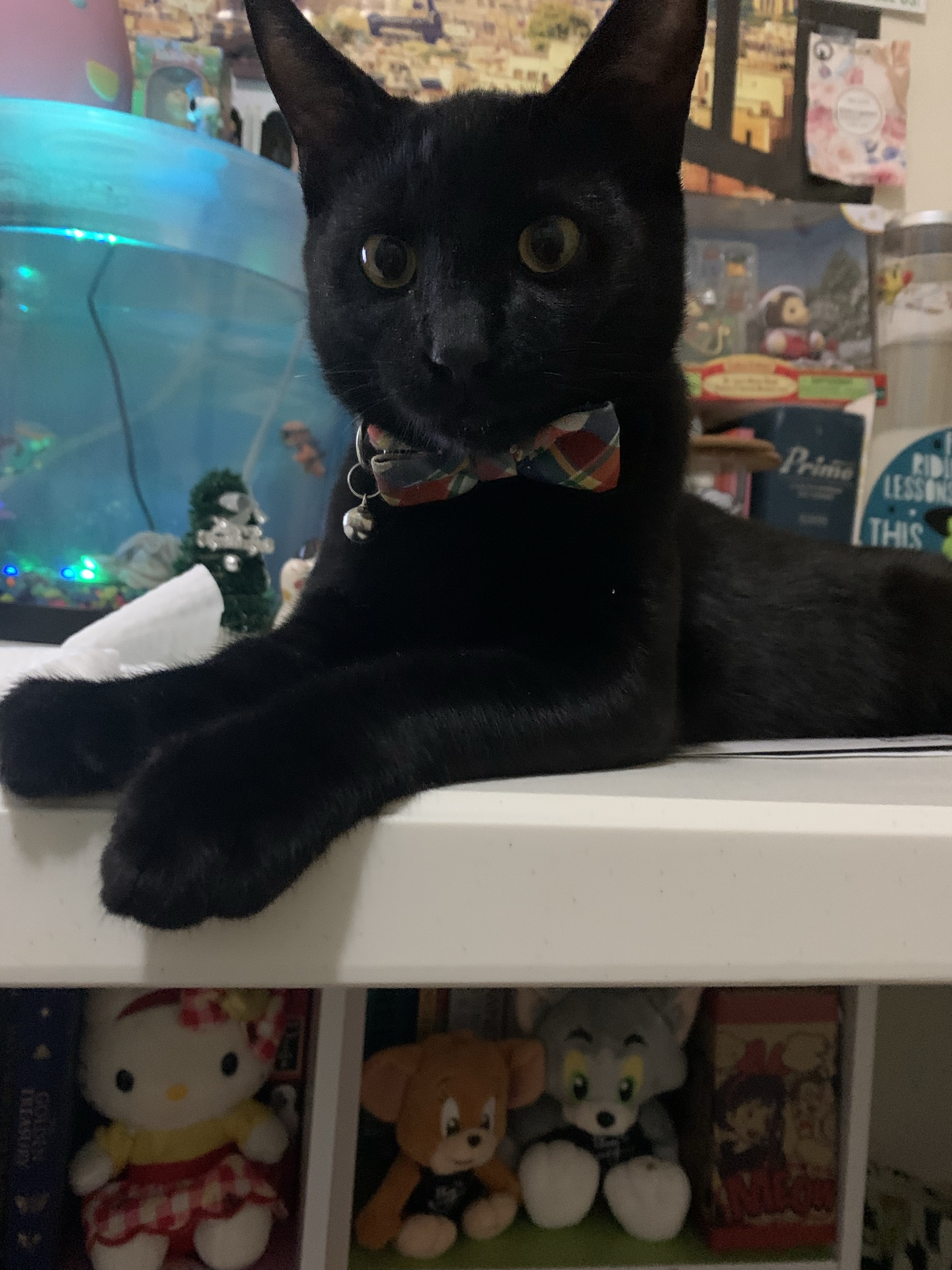
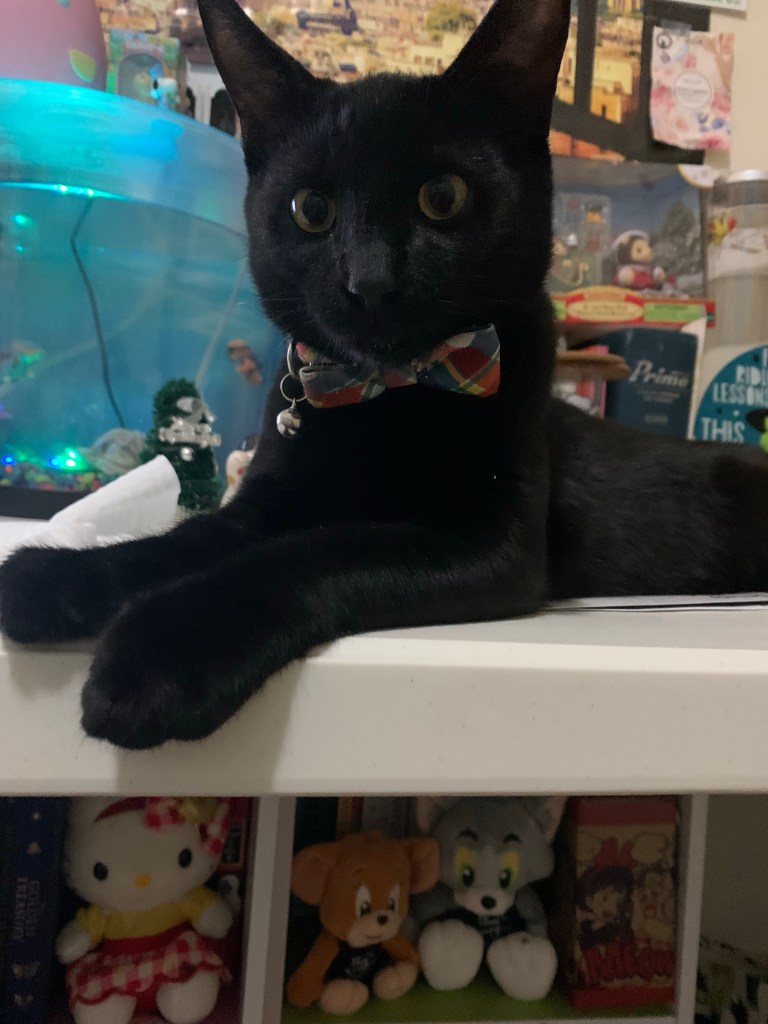
    My black cat now has a new name, Nero, changed from Camille, the name he didn’t respond to. Initially, I thought about naming him Bono as suggested by Eckstein, not because I like U2 but because I suspected my newly adopted cat being a Bombay cat with his beautifully shiny and sleek ebony fur coat. So I tried it, but there was no response. Then I remembered the song “A Black Cat Named Nero,” I liked when I was a little child. The result was Nero materialized. What can I say? Cats are individuals.


    I want to say this book is not only for readers with cats, but practically speaking, it isn’t. Any would-be cat owner or one who has just adopted a cat will find this book delightfully helpful in naming the cat. I have to say it reinforces me to change my second cat’s name from Camille to Nero. So when you call your cat, it should be the one only your cat has and likes it. You will know because your cat will meow. All cats are personal with stories to tell.

  • ‘I’m Glad My Mom Died’ by Jennette McCurdy


    My rating: 5 of 5 stars

    When I first learned of this sensationally titled book with the pinky perky cover photo of the author from the New York Times Book Review, I knew I had to read it because of its boldness and frankness that I believe would strike the chords of many who must have felt or wished it (let’s be honest). However, it was more like seeking a kindred spirit in such a titled book because I felt exhilarated with camaraderie and, once exonerated from such membership, a desire to revolt against mothers.


    But the book isn’t an angst-ridden, hate-filled, violence-saturated memoir nowadays in-vogue among celebrities who live to tell their dark life histories. Although it isn’t precisely wholesomely hall-mark like loving family history, it is worth pointing out the moments of love and warmth that childhood memories sometimes invoke because we thrive as human beings on those memories. McCurdy’s mother may not have been perfect, but who is an ideal mother anyway? The Bard once said that look not with the eye but with the mind. She was the one who saw talents in her daughter, encouraged them, and made them blossom into a pink dandelion when many parents either ignore or overlook the bests of their children for their future. Although I can understand McCurdy’s disaffection with her passionate mother controlling her life, I am envious of having such a mother who was willing to sacrifice her hard labor for her daughter’s success.


    The cover photo is puzzling. The author has a smile but not smiling, or instead trying to smile but is subdued as if her emotions are changing instantly or frozen in the moments between joy and sadness, independence and confusion in the transition of belonging to freedom. I can’t honestly fathom what the author thinks inside, but one thing is certain she loves her mother, who is now unburdened with the cares and pain of the world. Perhaps, that is why she is glad her mother died.


    View all my reviews

  • Once More unto the Breach! Here comes my New Year’s Resolution

    Once More unto another year, once more!

    As the first day of the new year has almost ended, I feel the urge akin to duty to make a new year’s resolution. There’s not much but high hopes for low heaven, with a reasonable scope of expectation and humble measurement of happiness. And since none other writers know about the depth and breadth of humanity than Shakespeare, I deem it fit to match his quotes with the contexts of what I have resolved to make this year of Rabbit fruitful and blissful.

    1. Be Not Afraid of Challenges
      ‘This is a step on which I must fall down, or else o’erleap. For in my way it lies.’ – Macbeth
    2. Don’t be easily crestfallen
      ‘There is nothing either good or bad, but thinking makes it so.’ – Hamlet
    3. Read More, Write More, No Matter What
      ‘We know what we are, but we know not what we may be.’ – Hamlet
    4. Keep it simple with humor
      ‘I was born to speak all mirth and no matter.’ – Much Ado About Nothing
    5. Let not a curse be my light purse
      ‘I say, put money in thy purse.’ – Othello
    6. Be vigilant at all times
      ‘Love all, do wrong to none, trust a few.’ – All’s well that Ends Well.
    7. Overcome existential malaise
      ‘Then I defy you, stars!’ – Romeo and Juliet

    Nobody says life is easy, and we know it to the point that such a saying has become a cliche. But life itself shouldn’t be and is not because we are such stuff made of spirit, fire, and dew, harvesting sunlight and starlight. Now that I have listed my New Year’s resolutions as above, I feel fresh of spirit charged with new energy like the Energizer bunny to keep going in my life, even if perils will lie ahead. But in the meantime, let me be that I am who I am as I write this post in my tiny room with my two cats, Toro and Camille, and seek not to alter this moment of simple pleasure.

  • Cat Mom’s Diary – 1

    My babies -Toro and Camille-

    I spent the whole day with my two babies, Toro and Camille at home. Initially, I planned to go to the gym in the morning, but since Camille became a family, I had been working full-time more than 8 hours a day outside the home, so I changed the plan. Besides, Toro has never seemed to be off guard of his young brother whom he punches with his front paw whenever he feels irate. In light of the above, they needed me all day today.

    2-year old Toro

    Toro is a timid tabby who tends to be startled by a sudden change of movement. He wasn’t like this when he was a kitten, though. Toro was and still is an affectionate, sweet, and lovely cat, but he doesn’t like a change in his environment. He needs constant care, which is impossible for me because I have to make a living outside the home. Besides, I have a mother who is the most difficult person to live with. I feel guilty for not providing an ideal environment for Toro, but I try to dispel the weight of guilt with the love of Toro. I wish he would know it. I hope he will understand my purpose in bringing Camille as his younger brother to play with.

    7-month old Camille

    Camille is an unbelievably affectionate and sweet black cat whom I believe of a Bombay cat breed because of his velvety shiny, ebony fur. And he eats like an elephant. I always have to give him at least two cans of wet food per meal a day. Last night, I woke up to his throwing up sound, which made me swear that I would be more strict about satisfying his voracious appetite. But that was only a fleeting caution. He’s back to his usual self, which means eating like an elephant.

    Although Toro and Camille are not the best cat duo, there’s hope when I see Toro let Camille devour his plate of wet food. Also, they sometimes sleep side by side on my dilapidated bed sofa. Rome wasn’t built a day.

  • On Reading ‘Listen, World!: How the Intrepid Elsie Robinson Became America’s Most-Read Woman’ by Allison Gilbert and Julia Scheeres

    Elsie Robinson (1883-1956) was an unforgettable writer whose nationally syndicated column “Listen, World!” spanned over 30 years and garnered more than 20 million readers. Yet, her legacy has not met with the justice of recognition, forgotten in the careless oblivion under the shadows of her contemporary starry women writers. Nelie Bly was sensational as an undercover in a mental asylum and an ambitious challenger to Phileas Fogg of Around the World in 80 days. But Elsie Robinson was a champion of writers whose heartfelt writings touched the finer tissues of the millions of hearts who found solace and support in her words. She was honest, and her words were real, alive, and alike, and there was none other like her.


    Robinson was my kind of model writer who wrote from her experience and heart. Edgar Allan Poe would praise a type of writer with a passion for intoxicating the heart and the truth to satisfy reason. The fates had let her go through trials of life, but her mind exceeded the compass of her wheels. She didn’t mind working as a miner as a single mother before a tide of fortune finally took her to her literary career in the Oakland Tribune. While her peers and contemporary writers took the naval-gazing, angst-ridden narratives a la mode, Robinson used her writing to communicate with readers seeking elbow room in her column. They recognized themselves in the plight of a stranger and found commonalities in it, making them feel that they were not uniquely flawed. I guess that’s why Robinson didn’t get recognition as much as her contemporary peers, who enjoyed the stardom of literary legacy. She wanted to tell her woebegone readers their problems were not theirs but yours, mine, and ours.


    Like Kurt Vonnegut, Robinson wanted to let readers know that to express ourselves in the form of art is to allow our souls to grow, however poor or good, by encouraging us to write our own columns. In that regard, blogging is a great platform to express one’s artistic self without fear of rejection or ridicule, freed from the devil’s advocates of literary purists intent upon finding grammar faults in anyone’s writings. To that end, Robinson is a scintillating writer with an eye for truth and a heart for passion – like the sun in the twilight, remitting the splendor while retaining magnitude, dazzling the eyes of the beholders with the hearts’ contents. As a result, Robinson has become one of my darling writers.