Tag: psychology

  • Untitled

    Is anyone out there? Although I feel like a lonely gauche scientist who incessantly sends a life signal to an extraterrestrial being across the galaxies, I am again sending another life signal in writing to express that I am still alive. So, if any accidental reader stumbles on this blog, welcome.

    I once read that magic is the power of manipulating nature without knowing the source of the force. If so, then the magic I once possessed is lost, making me good for nothing. But, as observed by Francis Bacon, I am talking about the faculty of cognition that affects linguistic abilities for speech that makes a ready person, reading a full person, and writing an exact person. The satisfaction of reason, the power of expression aspiring to development of the spirit, which gave me a content elbow room, vanished into the curtains of the past, leaving me to fend for provisional existence of survival in the most primitive way. It reminds me of Viktor E. Frankl’s memories in concentration camps, where many of the inmates dissipated into the hopelessness of abandoning themselves in the stupendousness of tragedies.

    I always think of my life as an inspiration fit for a documentary film about a working-class immigrant single woman who painstakingly tries to preserve a sense of purpose in life with a grasp on intellectual aspiration. Doing so makes her compare to the burgeoning careers of her peers, who seem to be of a higher station in life than she. I am not trying to play a typecast role of proverbial fatalist or unreconstructed defeatist caviling at the happiness of others as a result of their hard work and abilities to do wonders. That would be a callous and sordid a priori judgment for her unfortunately cursed life. Didn’t Shakespeare also say that our lives are governed by our stars? Didn’t Cicero believe that our lives can be read by avian augury? Come to think of it, Francis Bacon and Isaac Newton also believed in and engaged in alchemy craft. The commonality of the examples described above illustrates that there are more things in heaven and earth than are dreamt in your philosophy about the world, whatever it may be.

  • ages of man

    No matter how many leaves have fallen from a tree as the wind of changes has been blown – sometimes placidly and many times harshly – I still feel like a girl who has refused to enter into adulthood, shunning away from the nature of things. Cicero said the ages of man have their stages of nature with sovereign rights, so anything you fly in the face of them will ask for troubles. But then Cleopatra declared to reject the forces of mortality, and Shakespeare thus praised her courage and fortitude by saying: “Age cannot wither away, nor customs can stale her infinite varieties.” Oh, and there is also Cher, now rightly revered as a dame of celebrity, and she has recently decried acknowledging her age on our evolutionary scale. So why not me with my consistent resistance against the fate of a mortal in all aspects with all my might, with all my soul, and with all my heart?

    It’s not only the inevitable awareness of the passing of generations by me. With the recent death of Sidney Poitier, the eminent actor famous for his unforgettably charismatic roles in ‘In the Heat of the Night’ and ‘To Sir with Love, it has begun to dawn on me that those who lived through WW2 and pre and post Second Vatican Council are now gone with the wind to the haze of time, a new breed of generations has germinated, sprouted, and dispersed across the lands and oceans, just as mammals began to stage after the extinction of dinosaurs. It’s a nature of the universe, but still hard to accept it, especially when everything else but I change, or seems it so. The difference between the millennials and the Me generation seems as far and wide as that between the Victorians and the Flappers, so to speak. Less than 50 years must have felt a great leap of 100 years to the opposite generations, I gather. But that’s not hyperbole, I believe.

    Greek gods knew too well about such a human yearning to be agrasia and played the weakness in favor of their everlasting egoism. Otherwise, why did they keep nectar made with ambrosia to themselves on the Mount of Olympus? Demeter, the goddess of harvest and corn, put the baby of her master who took the goddess in the guise of a poor woman as her baby son’s nurse in a sacred flame on the pretext of making him ageless as a favor to the kindness of her lesser mortals. And it doesn’t end with Greek gods. Jesus never became old, preserved in his prime days of preaching travels with stylishly long hair that reminds me of a famous musician or poet. So was Mary, the mother of God. In the end, only humans stand in the audience, appreciating the agrasia beauty and immortality, comparing the presence of eternal youth to the absence of it.

    What with the flow of time and what with the present state I am in now, inching toward the end of the era, is already enough to blow me away into the twilight zone, where things are unlike Alice’s Wonderland but Vincent’s Price’s Haunted House. Magic is no joke and is real for sure, but you always have to pay for what you wish for. But I think it’s a mindset that significantly impacts physical reality, which is magic turning you forever young.

  • Patience and Fortitude

    My misery will be beatitude
    Smiling at grief, grim and gray
    Till I see two little birds afar, fly
    Tweeting in fugue of melodies unknown
    And sit on the back of my weak palm
    Frolicking with the beads of Rosary
    Wreathed by pearls of wishes porcelain,
    Bringing the message from the Queen
    Above to her votary sentenced in sadness
    Patience in Blue and Fortitude in Green.

  • ‘Royalty’s Strangest Characters: Extraordinary But True Tales of 2000 years of mad monarchs and raving rulers’ by Geoff Tibballs

    Royalty’s Strangest Characters: Extraordinary But True Tales of 2000 years of mad monarchs and raving rulers by Geoff Tibballs

    My rating: 4 of 5 stars

    It always amazes me that some people can get away with their character flaws and faults under the aegis of social status and wealth, such as modern-day celebrities. The celebrities of the bygone days were kings and queens whose God-given authorities indemnified them from punishment. Their entitled strangeness swiveled my head in wonderment at the stupendousness of freakiness. Ironically, this anecdotal recounting of the cruel-to-be kind potentates reminds me of a tenet of Logotherapy, which explains that a healthy dose of suspense in life helps us escape boredom, resulting in excessive indulgence in perverted pleasure-seeking.

    This book tells of the infamous kings and queens and some aristocrats. They are famous and lesser-known, mainly from Russia and Eastern Europe, which gives a somber ambiance to the tales of weirds born with silver spoons in their mouths. The most memorably horrible and ignoble characters that left indelible marks on my consciousness are as follows:

    1. Elizabeth Bethany: This diabolically perverted Hungarian countess whose uncle was a king of Poland had a fixation on blood and pain in devotion to youth and beauty. Some say she was trained to be cruel, but I think it has to do with her connatural inclination for cruelty passed down in her lineage. Her aunt was a Satan-worshipping noblewoman who sought erotic pleasure in young girls, which Elizabeth also learned and practiced in her castle. She had her trusty three maids lured beautiful young girls, usually from poor families, under the pretext of training them for top-rated maids-in-waiting with generous munificence to the families. What happened next was all over but the shouting. Bethany tortured the girls in unthinkably cruel ways and bathed in their blood because she believed doing it would restore youth and beauty. She deserves no revisionist or appeals on the crime against the girls under her care. Nevertheless, modern-day feminists and the radical leftists are moved to portray her as a wrongfully accused Calvinist woman in a time when sectarian religious rivalry and antipathy were rampant. Her being charged by a Lutheran minister in the town does not ipso facto constitute Lutheran machination of destroying the Calvinist influence in the region. If the minister conspired to concoct any such plot, he would have targeted a man, not a woman whose social status was not entirely regarded as equally significant as a man even in high birth.

    2. Vlad the Lad, aka the Impaler, aka Dracula: The proverbial bloodsucker ruler had a penchant for impaling men, women, and children for leisure and punishment. The point was to give them slow deaths to heighten the apex of pain till the last breath. The legend of Count Dracula is loosely based on this Romanian ruler who might have inspired an idea of shashlik, kebab. Or any skewed food. Thanks to the detailed accounts of how Vlad artistically mastered impaling, I swore off any such skewered food lest it should conjure up the vista of the impaled helpless.

    3. Frederick I of Prussia: A stout and short, the king’s obsession with men in great height was his actualization of ideation. He had the tallest men in all the regions of Europe, especially from the North, to establish the royal military version of a freak company called “The Potsdam Giants.” The recruits, or in many cases, abductees, were consisted of a former woodsman, laborers, and farmers, allured by abundant compensations promising dazzling delights of secured lives. Yet it was an empty promise, beguiling the simple-minded low-class foreigners, who were subjected to mistreatments and even punishments should they attempt to escape. The king’s pastime was to call upon the guards at any time anywhere, including in his chamber at night, and watch them in full uniform, admiring their impossibly imposing physique that he coveted but could never have. Thank God that his son Frederick the Great disbanded the freakish guards no sooner than had he succeeded his father upon his death.

    I wonder if these royal characters were due to in-breeding abnormalities, which were usually customary in European dynasties to preserve their noble royal lineage. It also testifies that keeping means in one’s life is a blessing because extreme wealth and poverty lead a soul astray due to listlessness and exasperation, resulting in amoral walking dead subsisting on the pain of the others. Robinson Crusoe’s sagacious father was right in saying that the best is the upper station of low life. Mel Brooks once uttered, “It’s good to be a king.” Unfortunately, it only applies to these afore-described weird and evil characters. A good king or queen doesn’t.


    View all my reviews

  • The princess fairy tale

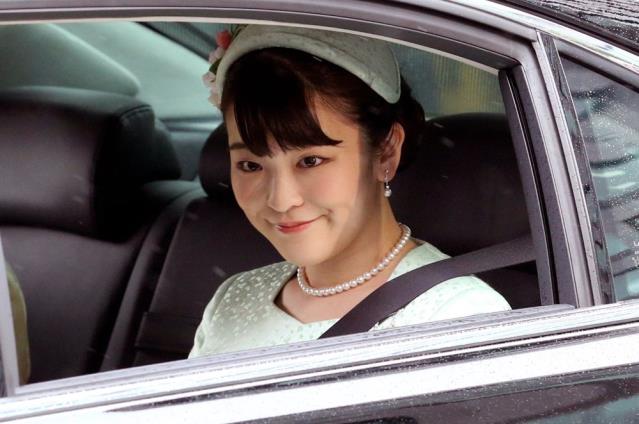
    First of all, let me clarify that I don’t believe in fairytales where beautiful poor girls achieve social escalations by marrying handsome princes and kings. Nor am I keen on the affairs of modern-day royalty whose lives are not even desirable. And yet, the news of Princess Mako’s marriage to her college sweetheart despite forced delays and oppositions is worth writing about because it is a fairytale of the most beautiful kind becoming a truth in reality. Would it be a bit of a stretch if I relate Mako’s heartaches and ordeals to Psyche’s Wanderings and Trials set by Aphrodite to separate her son Eros from the insolent mortal? It also shows that the crowned cannot escape from the intoxication of the heart that is worth denouncing the pomp and circumstances.

    Marrying a commoner is no new in modern-day history, starting from Edward VIII’s marriage to the American divorcee Wallis Simpson and his descendants Princes William and Harry. While those mentioned above British royal members married those outside the peerages, they were not the average commoners working nine-to-five or even more or fewer hours in ordinary situations where they had to depend on the whims and caprice of their employers for the secure livelihood. But Mako’s case stands most excellently because she was determined to give up the whole royal privilege to live as a commoner by marrying the one who is not from a wealthy, not even above average family. Moreover, Mako refused to receive a considerable amount of money as a gift from the royal family for marrying a commoner. On the contrary, Harry and Meghan are considerably wealthy, living without day-to-day financial insecurity about what might happen tomorrow. Their surrendering the titles publicly will not forfeit their assets as in the case of foreclosure that many struggling hard-working Americans are unfairly subject to. After all, why do they need to hold the titular positions to make more money outside the palace? People flock to the brave Meghan and her ever-supportive husband, but why do they do when their happiness illustrates no emblem of sacrifice without a sense of proverbial entitlement?

    I cannot help but compare Mako and Kei to the famously showcased ex-royal couple Prince Harry and Duchess Meghan. Besotted by the sensual charm of his renegade, free-spirited wife, Harry decided to move his young family to Los Angles, California, for good. He joined her Dissent Division to criticize his long-time family for being racist and cold-hearted. On the contrary, Princess Mako never decried her dissenting royal families against her marriage to a commoner, nor did she rebel loudly against the constitutional monarchy outside Japan. Instead, Mako kept all of her affairs of the heart discreetly, remaining true blue to her beloved Kei despite public uproar about his below-than-expected family background for being of a problematic single-mothered household. Forget the stereotypical Japanese politeness and the prejudice on the East Asian women’s submissiveness. Her graceful acts and decencies flow from her natural disposition and upbringing, which I have hardly seen in the famous royal family members.

    Watching Mako and Kei looking at each other with the eyes exchanging affection with radiant smiles in their serenely happy faces put me into a pleasant mood to make me wish for their long and happy life together. Mako is a brave princess who surrenders herself to the love of her choice, even if it means giving up her title and privilege that would make her married life comparatively comfortable to ordinary people. Mako’s decision to live the life of an ordinary wife seems anachronistic and incongruent. Still, not everyone wants to be an Amazon or Scythian warrior, nor does she want to climb up the career ladder to prove her abilities. Mako’s declaration of independence signifies an act of exercising her right to happiness by living with someone she loved dearly. What else could she do to prove her worth for love? It is a beautiful fairytale dissolving to the truth.

  • ‘The Kite Runner’ by Khaled Hosseini – book review

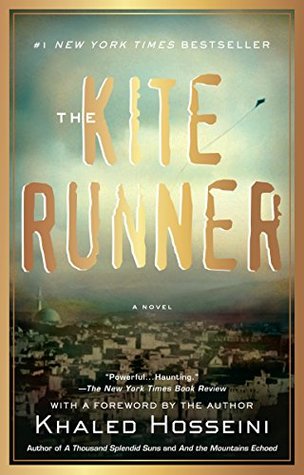
    The Kite Runner by Khaled Hosseini

    My rating: 5 of 5 stars

    Writing is the most solipsistic and democratic means to make people discover your secret histories or inner world so that they can understand why you are what you are. That is what Khaled Hosseini does enchantingly in The Kite Runner. It is a bildungsroman story reminiscent of the Au revoir, Les Enfantes-Esque ambiance surrounding the narrative of a grown-up boy who wants to reconcile with the stupendousness of mistaken guilt becoming a malady of the heart. But that doesn’t mean it is all too surreal or stark grim to make an accidental reader think it is a wrong choice. On the contrary, Hosseini vividly conjures up the faces and scenes, resurrecting the spirits of the places and times, by putting together the tesserae of his memories in this rivetingly heartrending read.

    The book incorporates the sociological theory of symbolic interactionist perspective focused on the relationships among individuals within a society and how political changes affect the lives of individuals and the sense of who we are and our relationships to others. The story’s narrator, a young Afghan boy of the upper-class named Amir Agha, gives the reader a ride to his childhood in Kabul to show the halcyon days of pre-soviet and Taliban reigned Afghanistan. First, you will see him and his best friend Hassan, a Hazara servant boy in his house, wallowing in reading stories and lost in kite flying. Then and thereafter, Hassan becomes a victim of the most horrific act committed by the half-German blue-eyed Afghan boy threatening him to win kite. Amir’s retrospective narrative becomes his public confession and ablation, all of which is a combined act of purging out the painful memories of the past and exorcising his demons tormenting him with the guilt of jealousy, ignorance, and cowardice. The whole narrative then becomes a plethora of pathos and empathy, resulting in a cornucopia of forgiveness and sympathy, drifting it all in a high-flying kite once and for all.

    It is a fitting story in this particular time of Afghanistan history and Abdulrazak Gurnah’s winning of 2021 Nobel Prize in Literature for his achievement of universalizing human travails transcendent of racial, cultural, and geographical differences. Vivacious at times but dolorous at most, the Kite Runner is synthetic literature that wears habiliments of memoir and novel. There truth and fiction dissolve into one another anchored in real life with factual geographical and historical facts smoothly amalgamated in the individual narrative account, which reminds me of Herodotus’s “Histories.” Or it is an alluringly pioneering memoir-making that resembles Realistic Fiction. For whatever it is, the Kite Runner bestrides the aisles of contemporary literature sections, alluring the public with simple language that magically juxtaposed in beautiful prose style with lyrical quality, all soul and mind in the marks upon pages evocative of the spirits of the memories materializing.


    View all my reviews