Light and dark, full and empty – how mysterious! Spring of Words is now elusive – how tantalizing! To the secret seeker with no pity – how heartless! And no more spirit so festive. – how agonizing!
Midnight and moonlight and shining stars – so beautiful! Angles and fairies and ghosts – so ethereal! Come to my aide before I lose sight of it! – Yes, quickly! And possess me with the best of your powers – by all means!
Is Tree of Knowledge going to become sere? – How unthinkable! Has Tree of Knowledge already become sere? – How miserable! Let nothing dishearten my spirit still pursuing, still trying With hope, while I breathe, even if it seems impossible. How beautiful!
Like muffled drums in rains of thunder and lightening, her heart was still beating as the intuitive leap within her was on the verge of falling into the crevice of darkness. She hoped that life would be better or that if life wasn’t unresponsive to her hope, she could seek an elbow room in her writings blog, her glass castle of the soul. In this regard, her purpose of writing and that of George Orwell agreed that it was for sheer egoism of being an individual and recognizing it. For all she had read and seen, her spirit wanted to record it in writing before leaving the world without a trace. How pathetic it would be!
If only. The girl hoped to articulate her thoughts to the unseen public somewhere out there. But above all, the girl used her writing practice as an autodidactic exercise to improve writing skills in the language she fell for. She loved the English language so much that she was ready to forsake the native language if she must choose one. She would have wished to possess the art of English Writing if a benign fairy had asked about what gift she would want. Perhaps she would have made a Mephistolean pact for the craft. Yet her love was alone because she loved the language more than it reciprocated the appreciation to her. How cruel it was!
To pure lead into an open wound, the girl realized her brain was not as alert as it used to be in the locomotive of thinking. As thoughts shape language, she reasoned that a slowly deteriorating neuroplasticity in her brain might have contributed to her difficulty in reading and writing. Something ominous was happening to her, and it was gripping her spirit under its diabolic aegis for the sheer pleasure of tormenting the soul in hopelessness. Words she saw refused to make a coherently complete sentence and enter a faculty of thinking. The circuits to the control center of the brain felt blogged or damaged to the point of making telegraphic phrases swiveling at a vortex of frustration. It had never happened until last year. But why was it happening to her? Alas!
She tried to find reasons for the ghastly maladies and self-diagnosed the following:
Moving to California
Demanding nature of her roles and tasks at the workplace
Attending her elderly mother
Approaching her end with no security for future
She further decided that the existential frustrations were exhausting her will to essay her creative and experiential values in fulfilling her meaning of life to be expressed in writing. All of it was tantamount to the enormous boulder Sisyphus had to roll up on a steep hill in Hades as punishment for his trickery on gods. But the girl was more akin to a Caryatid, a sculptured female figure used as a pillar supporting an entablature of a building on her head.
But what then was her solution to untangle the web of the menacing spider? She had nothing but her will and resilience born of eruditeness and level-headiness. It helped her sail through some of the difficult adventures between the Scylla and Charybdis in her life’s odyssey. Like an earthling who never gives up hope on getting a signal from an extraterrestrial being via radio transmission, every day, she would write even if it would receive no response. Thereby hangs a tale told by a mad girl in hopeless love with words, full of words and madness, but signifying something.
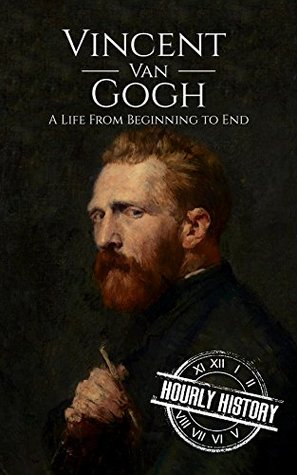
Here’s a portrait of a man who hated being alone yet found freedom when alone. Austere yet bohemian, religious yet autonomous, he was a paradox himself like the faces of Janus. It was no other than the painter Vincent Van Gogh himself in his well-known portrait looking more in disappointment with the world than in madness against it.
As the late eminent Australian biographer of Ben Jonson Ian Donaldson once put, good biography is anything but a bland, chronological summation of a man’s life, and I am not intent on reciting the dates of from Gogh’s birth to death and in-betweens. Instead, I am all mind in positing what I think he was, other than the man with a bandaged self-mutilated ear because our sensory perception often betrays the truthfulness of what we see when stimulated to the external sensation. Indeed, Gogh was a disturbed man whose sensitivity found no elbow room in the world with which he so endeavored to have a long-lasting content relationship. It is not to say that Gogh was an archetypal self-imposed exiled artist who voluntarily distanced himself from ordinary life scenes. Hardly so. As shown in his letter to his beloved little brother Theo, who helped his misunderstood forlorn artist brother as ever, Gogh tried to be as good-humored and cheerful as he wanted. Still, it was the world that seemed to betray him with blows that bludgeoned his unalloyed wishes and noble aspirations.
Gogh’s paintings reflect his love of realism and reject artificial romanticism without the ideal romantic ambiance in vogue with the time. He was interested in all that existed as they were because discovering beauty in the coarseness of reality was his objective in achieving creative and experiential values. In this regard, Gogh was in the same artistic vein as Francoise Millet, whose paintings Gogh admired because Millet believed that treating the commonplace with the feeling of the sublime was what gave art its true power. The only difference between the masters of art was how to portray it with individual flairs of colors, techniques, and perspectives based on their tastes and judgments. Gogh’s ‘Potato Eaters” might not have that romantic dignity surrounding the hardscrabble peasants. Still, they were unforgettably expressive in the nuanced struggles and strife they had to bear and live with. Perhaps the uneasy cohabitation of the independent spirit and the loving heart distinguished Gogh from his famous peers who had the practical sense to reconcile their creative souls to social needs.
Moreover, Gogh lost a sense of direction when he realized that a man of the cloth wasn’t his cloth. The existential frustrations from the confliction of the will then added to his already innate fragile sensitivity, a hereditary mental trait running in his maternal family. Nevertheless, Gogh continuously endeavored to fend it off and conquer it, even when the citizens of Arles, where he dreamed of building a haven for his kindred spirits, united to expel him from the city he once cherished. However, one good-hearted postman continued to give him a touch of kindness till he voluntarily admitted himself into a mental asylum for the peace of his mind and others’.
To me, Gogh tried to live up to his conviction of good, fulfilled life with exquisite sensibilities, and unalloyed humanity too great for the realities of the world he was born into. His life was life imitating art, and art was not imitating but expressing life as he saw. Yet, be it ever the play of the fate, the more he tried to be good-humored, the more estranged he became because he was an extraordinary artist constantly breaking away from confinement prejudicial to his ever sensitive and creative spirit. Upon reading this elegantly narrated life of Vincent Van Gogh, I realized the truth of the genius only took some time for its brilliance to shine, no matter how long it would take. Who would have thought Vincent Van Gogh, who once sold only one of his works out of hundreds, would be looking at his admirers in the constellation of brilliant painters in heaven? For those who are creators of arts in all genres, famous or hidden, amateur or professional, the story of Vincent Van Gogh will be a consolation to the heart and hope to the spirit that never knows the end.
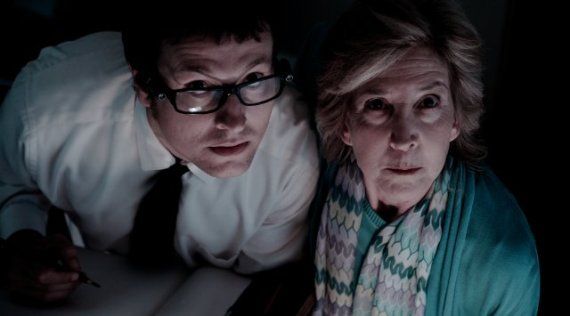
“Insidious” (2010), directed by James Wan is an intelligent movie with an entertaining flair to hold the attentions of both serious and light-hearted movie lovers. I am glad to have watched it last night on Netflix after reading a book on the history of ancient magic and ritual, and I must say there must be some kind of strange reason that I came upon the movie. It always seems so pat to find a supernatural movie orbiting around me and materializing at an apropos time that it gives me chilling fillip to my suspected element unrealized from within. Whatever it may be, and apart from all the mysterious signs hinting at something about my unknown anima, I am pleased to write about the movie herein.
The movie is anything but a faulty horror movie. Not “Insidious.” Hardly Ever the criticism of flamboyant cast. Never the limitations of a seemingly infinite range of imaginations that the writer wrote and the director portrayed. It is beautiful alchemy of the harmonious performance of the stellar cast and brilliant storytelling of the extraordinary event in the ordinary existence, all fascinating and riveting. Like an incantation of a professional sorcerer, the narrative slowly builds mystery around the atmosphere. It brings up images of the beyond at the zenith of the ritual when everything seems ready for demons or the superiors to appear before your very eyes.
The magnet of the movie is the Elise character faultlessly played by Lin Shaye, who began to change my perspectives on a psychic that if there is one like her in real life, I would love to chat with her and possibly work for her even as a part-time assistant. Elise reminds me of an ancient Cumaean Sybil who helped Trojan refugee Aeneas meet his father’s spirit in the Underworld with a gentle but powerful voice elucidating her beautiful spirit. But to call her psychic doesn’t do justice to her essence and vocation as a mystic helping people in distress. She balances her spiritual power with a rational mind by scientific methods to discern the origins of the spiritual maladies of her clients. And she does it in the gracefulness of a good witch performing white magic that I believe even priests would be envious of.
What makes the movie on par with the timeless supernatural film is the universal subject of the world beyond our sensory perceptions and across religious dogmas. It’s the world of “Further” where spirits lost wander around and dammed lurk in the darker corners of the crossroads. Elise helps the lost spirit of the boy in the Further find his way back to Here and goes further than she should save people’s lives from the evil power even it means to be at her expense.
“Insidious” is a thoughtful movie dealing with a supernatural thematic element that is harder to play on the screen than it is to envision in the mind’s theater. The movie’s impression spreads into a mind’s garden and stays there in alterations like an insidious charm of ghastly sightseeing so incredible that you can hardly dispel it. If you like to watch a good, decent ghost movie without mutilated bodies and ear-shattering screams, but ghosts or demons only, this movie may do.
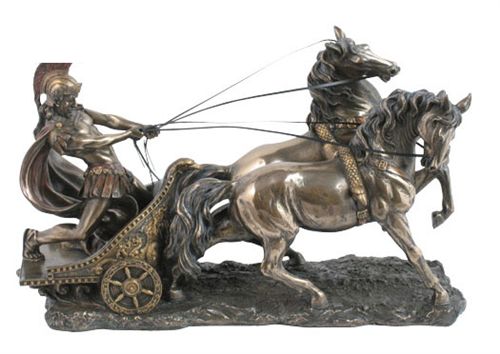
Author’s Note: I remember reading about Plato’s Chariot Allegory that illustrates our journey to the end of enlightenment with its vividly dynamic images of the aerial chariot race too compelling to reserve for a silent appreciation in my mind’s reservoir. I wonder what my chariot race has been like thus far…
It is the star above her that governs her conditions. Iris knows that the fault is not entirely in herself but mostly in the lucky star that does not seem to know where to find its beneficiary. The star was born when Libra and Capricorn were met in the house of Aquarius on the nineteenth hour of a blustery snowy wintry night. The star hangs on the vault of nightly celestial ballroom among the other stars twinkling merrily and boldly but alone in a corner of the limitless dome, twinkling ruefully and dutifully as if it were trying to signify its insignificant presence on the nocturnal cosmic stage. For this lone star has not found its beneficiary, the ascribed terrestrial hair of its power, and without it, the star cannot become a lucky star. Which is a tragedy for both Iris and her star.
In fact, Iris’s existential frustration or noogenic neurosis agrees to what Shakespeare was suspected of harboring in all his life. Surely, the Bard was a very successful playwright and poet who marched in a parade of famed hits in his time, but he was wrestling with a doubt whether it was Fate or Freedom of Will that governed human lives as conveyed in his works, such as “Julius Caesar”, “Othello”, and “Hamlet”. The characters of these plays fight for their causes as masters of their fates, but the consequences are not entirely fortuitous in bliss. That’s why the Greek soldier and historian Thucydides regarded vain hope imbued with a paroxysm of flattering confidence and blind devotion to the law of attraction as a dangerous hubris to one’s philosophy of life.
Hope plays its role as a morale booster when one sees it as a card of chance in awareness of odds in one’s favor. In this manner, one does not have to think about it but can fight with every hope of winning. This also relates to a principle of Logotheraphy: the less one cares, the more one can without stress for success. But alas, my dear reader, to pour lead into the wound, all the aforesaid needs luck as the Bard chips in thus: “There is a tide in the affairs of men, which taken at the flood, leads on to fortune.” A tide of the deep wide ocean of Life that arises from the heart of the ocean to surge in bounty of fortune to a weary wayfarer on the land is what Iris has been waiting for till now.
All this thought, all this doubt about her so-called life – the existential frustration- are vexing her mind and crippling her faculties of the mind like vermin, so much that she feels utterly disoriented and deserted in the crossroads of life. The faith she has begun to lose with reasons justifiable only to herself, meaning of life she still hasn’t found, Iris finds herself lost in the Labyrinth where the Minotaur is roaming around to find his prey. And she does not have the hero Theseus nor Ariadne for help. Iris must find the way out anyhow for her dear life. But one thing is certain my dear reader; that although fortune’s malice or absence might conspire to overthrow her state, her feisty and recalcitrant mind will eventually exceed the compass of her will of fortune with a triumphant laugh.






You must be logged in to post a comment.