Tag: reading

  • Rembrandt is Jacob and the angel

    There is something about Rembrandt’s (15 July 1606 – 4 October 1669) paintings that are fascinating, like Bach’s Baroque musical pieces that are profound and elegant. Rembrandt was Northern European art’s answer to Italian Renaissance art. Then there is more to this wonder of genius that touches humanity’s universal hearts and minds.

    What distinguished Rembrandt from his contemporaries was his choice of subjects that were both common and profound in the everyday setting, tinged with a religious theme. Although he was as Protestant as Bach and Handel in terms of his birth of origin being the proud Dutch, he had a Catholic cast of mind regarding the scale and ambiance of the biblical scenes he chose to express. His paintings are an exquisite admixture of sweet simplicity and magnificent sanctity communicated to the eyes then lingers in the heart. It is also realistically factual and mystically imaginative, producing a powerful pathos and awesomeness as though to play a great drama across the canvass in which the actions of the figures, even in still positions, give the impression that they are not suspended in the silence but caught in moments of action.

    To illustrate, one of Rembrandt’s most celebrated paintings, ‘ Jacob wrestling with the angel,’ epitomizes such fine moments of vigor and sereneness altogether, sensuously wrapped around in the forces of life of this world and the meaning thereof. Jacob represents our human life full of highs and lows, loaded with energies that fuel the muscles of desires and the heart of will. Jacob looks coarse, plebeian, and sturdy, simultaneously faulty and confused, whereas his angelic opponent is slender, patrician, and imperturbable. The angel of heaven is supra-meaning, the meaning of life, the refinement of life itself, the beauty of life that we strive to find through trials and foils. If Jacob is the Strength of the Human, the angel is the Spirit from within.

    Rembrandt is a kind of Artist who has the sense and sensibilities particular to Artist with heart, which matches the spirit of enlightenment that mind without humanity is not genuine intelligence that nourishes our mind. So Rembrandt deserves his constellation of stars shining bright in heaven’s dome in all brilliance.

  • Wanderlust

    For one hundred and twenty years
    Trapped in the maze of this mirage,
    Where I began, I can go back never;
    Here I stand and face the bare fate
    Or is it nothing but the illusion ever?

    As Aurora releases the first dewdrop,
    I go high over, down under
    From one end of the horizon to the other
    Across the five continents and six oceans
    Above the heavens, below the abyss
    Far into the milky ways and back to earth
    with the jewel of hope in beatitude.

  • Patience and Fortitude

    My misery will be beatitude
    Smiling at grief, grim and gray
    Till I see two little birds afar, fly
    Tweeting in fugue of melodies unknown
    And sit on the back of my weak palm
    Frolicking with the beads of Rosary
    Wreathed by pearls of wishes porcelain,
    Bringing the message from the Queen
    Above to her votary sentenced in sadness
    Patience in Blue and Fortitude in Green.

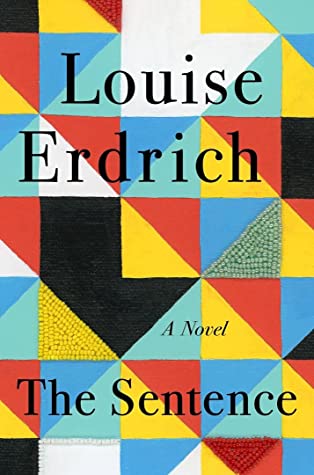
  • Spirit Away: ‘The Sentence’ by Louise Erdrich

    The Sentence by Louise Erdrich
    My rating: 4 of 5 stars

    The Sentence by Louise Erdrich is about the power of words, spoken or written, awakening the spirits of the author, storyteller, characters, and readers, all adrift and luminous as the boundary between the real and the ideal collapses. It’s a polyphonic work of trauma narrative, cultural studies, social commentary, and philosophical memoir interwoven in multiple strands of a joint account.

    The story evolves around Tookie, a doubting bibliophile who thinks books have everything you should know except what actually matters. Books are no more than a portal to mental escapade, a world of make-believe in the likeness of truth or reflected in the highest ether of reason and sentiment, which makes no defining impact on her checkered life as if it were her sentence from the judges of this world and the beyond. So much so that when Tookie finds that the newly deceased soul of a regular customer haunts the bookstore, she works at, she laments her fate of chaos that seems ever to stalk her small wish to live a quiet everyday life. Is it her sentence to live In perceptual existential malaise? And yet, Tookie ends up living daily life with a loving husband and daughter in a house of their own with a steady job as a bookstore attendant. Isn’t it what is considered an everyday life? So why can’t Tookie let the ghost alone when ghosts refuse to depart for the other until they finish their businesses in the world as part of their spiritual sentence?

    I decided to read this book after reading a review from the NYT Book Review a couple of months ago because of Tookie for being exceptional wanting to be ordinary. I felt for her, which was valid until the middle of the book. But as Tookie became settled with her husband in their own house burgeoning as a knowledgeable employee at a local bookstore, she began to lose her fabulous, unique luster. Indeed, I was all high fives for her happiness that I felt deserving, but the further I progressed to pages, the more my heart parted with Tookie’s existential frustration, except the touching moments of love between her and her husband. Also, unlike the book’s general introduction as a ghost story, It is not a supernatural book that will fulfill your cravings for an intelligent horror story. Instead, it is an extended short story featuring a ghost as a fire-starter of narratives connected by bibliophilia. The author believes bibliotherapy is a recipe for the existential malady to quiet the anxious mind. There is no more enchanting than a book, electronic or bound. The lifeless words become alive as the reader awakens the book’s spirit by entering the world of make-believe through the labyrinth of stories leading to the secret garden of truths that the author has fruited.


    View all my reviews

  • the sentence

    Order tends toward disorder. Chaos stalks feeble efforts. Normal is not default, and sadness is nature. I see it all as a gift of the fates that I have to grin and bear with stoic charm like a Sisyphus rolling up the boulder on a hill in Hades. So much so for the morning’s episode that shadows the day’s remains.

    I had to cancel my counseling appointment for tomorrow at 7:00 pm due to training at my new prospective job after work. Should I have rescheduled it instead of canceling? Anyway, the counselor could have asked about such an option if she had been a caring and considerate licensed listener. Writing usually shows a person’s character, however brief it is, as proven by my text communication with her earlier today. Her response was curt and short with a timbre of haste, artful courtesy of an empty reply to her client. I know it because of my divine ability to look through people’s psyche by the mode of speech, writing, or twitching facial muscles. Depending on how you look at it, you can call it a blessing or cursing, but I call it nature. For what’s worth, my extrasensory perception tells me that it’s high time that I prepared a slow parting with her with the pain of disappointment and resentment for betrayal.

    In retrospect, she has never provided me her feedback on my mental state since the onset of counseling sessions. Once I had asked her opinion, she was obliged to tell me reluctantly that I had traumas due to an unfavorable family environment, interacting with lots of missed lucky opportunities and debauched aspirations. Then was heard no more. My understanding of counseling is active communication with constructive feedback about the client’s mental state and what to do. However, she only listened, smiled, said goodbye, and continued. Although my heart is weeping for the loss of paid listener whom I could turn to for talks, sorrow will dissipate into the currents of time. Goodbye to you, Ms. A____. I may see and talk to you again, but my spirit will not welcome you again with all my heart and all my mind.

  • ‘Maid: Hard Work, Low Pay, and a Mother’s Will to Survive by Stephanie Land’ – book review

    My rating: 5 of 5 stars

    A good memoir amid the detritus of in-vogue memoirs is a gemstone, like a treasure island descried by a weary sailor. Marry Ralph Waldo Emerson’s appreciation of travails of life as the best teachers with George Orwell’s no-nonsense realistic credo for writing. You will see that Stephanie Land’s eternal spirit fills the pages at the expense of her will with a sense of purpose and a tenacious grasp on intellectual superiority. It was a tide in her affair Stephanie Land was waiting while wiping a stranger’s dirty toilet bowel due to fortune’s malice or, shall I say, whims and caprice of the supreme beings?

    Land’s memoir applies to Orwell’s tenets of “Why Am I Writing?” In it, four elements of writing are (1) aesthetic purposes, (2) sheer egoism, (3) political/social purposes, and (4) historical record. Contrary to most reviews of focusing the book on her single parenthood, I deem it to be her testament to her self-worth in a society where external achievement determines your character. In fact, Americans have a Calvinistic cast of minds in a puritanical cultural foundation that poverty is a priori resultant from laziness and that it should be dealt with scorn. American Catholics are not altogether generous because of John F. Kennedy’s adage to Americans: “Ask not what your county can do for you… ask what you can do for your country….” Land feels the hostility of the skewed, confused, maligned conservatism masqueraded as patriotism in an ordinary landscape of daily life. In writing, she potently and victoriously wields her pride smothered in want of bread and roof with her daughter.

    Memoirs of rags-to-riches are thought to inspire readers with can-do attitudes fused with a dangerous combination of ephemeral hope and flippant desire that Thucydides warned of his progeny. However, they are self-treaties of achievements, usually despite the biological or sociological plane, and almost always with people who help them achieve their goals. Jeannette Walls of The Glass Castle was from a low-income family, but her family was loving, and she had scholarships and went to Barnard College and became a journalist. Hillbilly Elegy was touching, but the poor white boy who had a loving mother went to Yale and became a lawyer. But Stephanie Land is intelligent and honest, down-to-earth, and her issues and circumstances are more existential and relatable than what the mentioned above have famously accounted. Forget the dialectic classicism, forget the social reform, forget the right for single parenthood. It’s all about Stephanie Land’s dignity, her right to be happy, her yearning to be what she wants to be. So be it ever the nominative determinism, and it’s in the name. All who have the name Stephanie have that feistiness. Well done, Stephanie!


    View all my reviews