Tag: reading

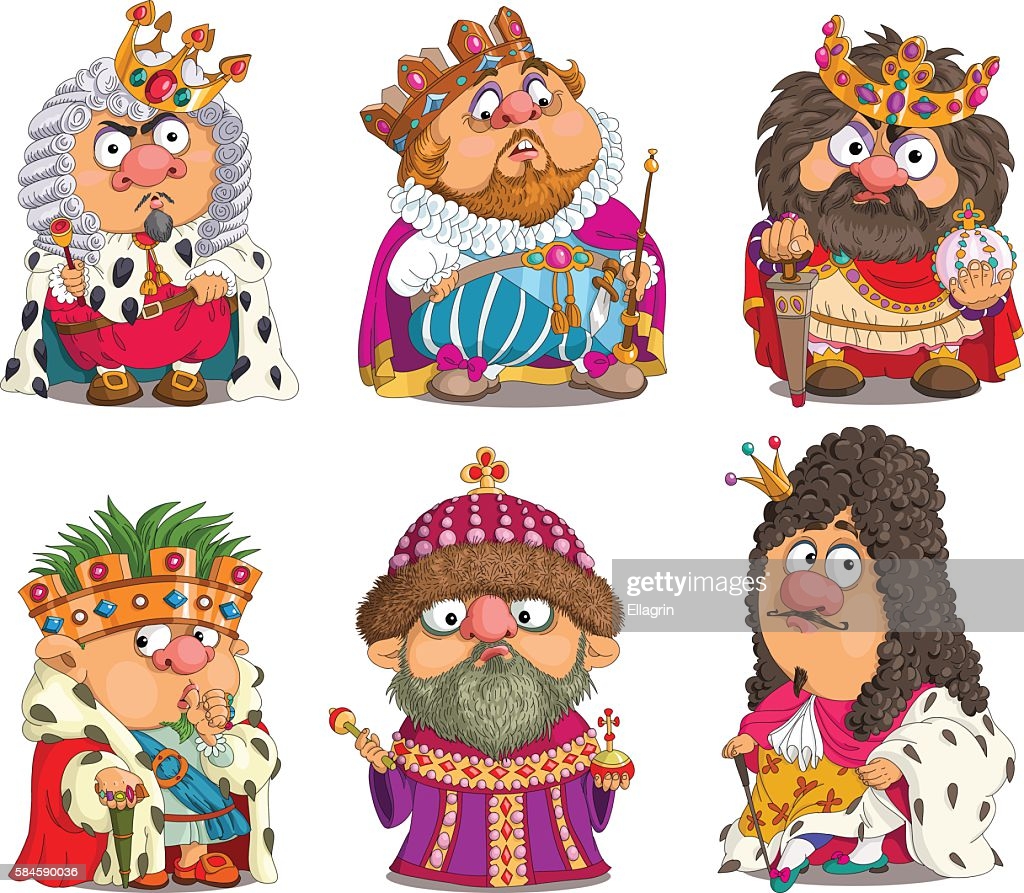
  • ‘Royalty’s Strangest Characters: Extraordinary But True Tales of 2000 years of mad monarchs and raving rulers’ by Geoff Tibballs

    Royalty’s Strangest Characters: Extraordinary But True Tales of 2000 years of mad monarchs and raving rulers by Geoff Tibballs

    My rating: 4 of 5 stars

    It always amazes me that some people can get away with their character flaws and faults under the aegis of social status and wealth, such as modern-day celebrities. The celebrities of the bygone days were kings and queens whose God-given authorities indemnified them from punishment. Their entitled strangeness swiveled my head in wonderment at the stupendousness of freakiness. Ironically, this anecdotal recounting of the cruel-to-be kind potentates reminds me of a tenet of Logotherapy, which explains that a healthy dose of suspense in life helps us escape boredom, resulting in excessive indulgence in perverted pleasure-seeking.

    This book tells of the infamous kings and queens and some aristocrats. They are famous and lesser-known, mainly from Russia and Eastern Europe, which gives a somber ambiance to the tales of weirds born with silver spoons in their mouths. The most memorably horrible and ignoble characters that left indelible marks on my consciousness are as follows:

    1. Elizabeth Bethany: This diabolically perverted Hungarian countess whose uncle was a king of Poland had a fixation on blood and pain in devotion to youth and beauty. Some say she was trained to be cruel, but I think it has to do with her connatural inclination for cruelty passed down in her lineage. Her aunt was a Satan-worshipping noblewoman who sought erotic pleasure in young girls, which Elizabeth also learned and practiced in her castle. She had her trusty three maids lured beautiful young girls, usually from poor families, under the pretext of training them for top-rated maids-in-waiting with generous munificence to the families. What happened next was all over but the shouting. Bethany tortured the girls in unthinkably cruel ways and bathed in their blood because she believed doing it would restore youth and beauty. She deserves no revisionist or appeals on the crime against the girls under her care. Nevertheless, modern-day feminists and the radical leftists are moved to portray her as a wrongfully accused Calvinist woman in a time when sectarian religious rivalry and antipathy were rampant. Her being charged by a Lutheran minister in the town does not ipso facto constitute Lutheran machination of destroying the Calvinist influence in the region. If the minister conspired to concoct any such plot, he would have targeted a man, not a woman whose social status was not entirely regarded as equally significant as a man even in high birth.

    2. Vlad the Lad, aka the Impaler, aka Dracula: The proverbial bloodsucker ruler had a penchant for impaling men, women, and children for leisure and punishment. The point was to give them slow deaths to heighten the apex of pain till the last breath. The legend of Count Dracula is loosely based on this Romanian ruler who might have inspired an idea of shashlik, kebab. Or any skewed food. Thanks to the detailed accounts of how Vlad artistically mastered impaling, I swore off any such skewered food lest it should conjure up the vista of the impaled helpless.

    3. Frederick I of Prussia: A stout and short, the king’s obsession with men in great height was his actualization of ideation. He had the tallest men in all the regions of Europe, especially from the North, to establish the royal military version of a freak company called “The Potsdam Giants.” The recruits, or in many cases, abductees, were consisted of a former woodsman, laborers, and farmers, allured by abundant compensations promising dazzling delights of secured lives. Yet it was an empty promise, beguiling the simple-minded low-class foreigners, who were subjected to mistreatments and even punishments should they attempt to escape. The king’s pastime was to call upon the guards at any time anywhere, including in his chamber at night, and watch them in full uniform, admiring their impossibly imposing physique that he coveted but could never have. Thank God that his son Frederick the Great disbanded the freakish guards no sooner than had he succeeded his father upon his death.

    I wonder if these royal characters were due to in-breeding abnormalities, which were usually customary in European dynasties to preserve their noble royal lineage. It also testifies that keeping means in one’s life is a blessing because extreme wealth and poverty lead a soul astray due to listlessness and exasperation, resulting in amoral walking dead subsisting on the pain of the others. Robinson Crusoe’s sagacious father was right in saying that the best is the upper station of low life. Mel Brooks once uttered, “It’s good to be a king.” Unfortunately, it only applies to these afore-described weird and evil characters. A good king or queen doesn’t.


    View all my reviews
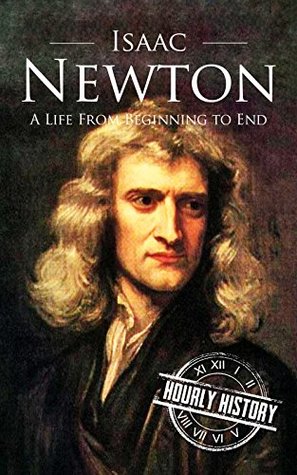
  • Isaac Newton as he was

    Isaac Newton: A Life From Beginning to End by Hourly History

    My rating: 4 of 5 stars


    I never particularly liked Newton despite his paramount discovery of the law of Universal Gravity from the fallen apple tree in his mother’s little garden. Maybe it was his somber, irate facial expression adorned with a long white wig. He was a reluctant spiritual godfather of physicists Albert Einstein, Stephen Hawking, Michio Kaku, whose theoretical findings are based on and upgraded from Newtonian laws of physics. However, being a keen observer of human characteristics, I am inclined to write the review about Newton’s personality traits, not a drab biological chronology and analyses of his laws of motion.

    Isaac Newton was never the kind of chap whom you could be jovial with. If you caught Newton in a cafeteria or a coffeehouse and asked for an autograph, he would first give you a look with an exasperated grimacing and either reluctantly succumb to your request if he was in a good mood or curtly said, “I am busy.” His gaucheness in social interactions might be due to a deficiency in maternal affection and care. Newton’s mother willingly separated from her young and tender son when she married her second husband after the death of Newton’s father, whose name was also Isaac Newton. Although I object to profiling any kind and any person because it leads to a grave miscarriage of justice in many cases, Newton’s character profile doesn’t read favorably in any of his writings. To illustrate, Newton used to be harsh on his family servants, whom he often mistreated with corporeal measures and hit his younger sister. Nevertheless, his genius purchased indemnity for all his character flaws and beautified them as individual eccentricities endemic to the intellectual elites.

    But the illustrated Godfather of Science was also a discreet practitioner of alchemy in search of the Philosopher’s Stone to turn it into gold. I wonder if all of the laws of motion Newton discovered were unexpected comeuppance of his private practice of alchemy. Not surprisingly, Newton kept his behind-the-façade business, and it was until the mid-18th century that the truth came to shine in his journal. Despite its occultist nature and nuance, Alchemy was also not too far from chemistry in studying metals according to three principles: Salt, Sulphur, and Mercury, based on four elements of air, earth, fire, and water. To this fascinating manipulation of heaven and earth, Aristotle added the 5th element of aether that was believed to fill the universe beyond the terrestrial sphere. The weightlessness due to the absence of gravity occurs in outer space full of invisible aether propagating light waves. As Newton’s principal muse to inspire his scientific musings, Aristotle is plausible to understand Newton’s fascination with alchemy. He treated it not as a magical practice but as a branch of chemistry that would have looked magical to the uninitiated.

    Grumpy as he was, Newton was nonetheless a remarkable individual who devoted life to the pursuit of truth, a satisfaction of reason, in the temple of science, believing there are more than material bodies in this world, which became a foundation of quantum physics. With his head filled with the mystery of numbers and frail body subsisted on the nourishment on the mind, Newton was a lifetime bachelor without chivalric anecdotes or sybaritic tell-tales. Instead, he spurred his energy on his studies, wallowing in the delicacy of quiet and uneventful solitude. Newton influenced multidisciplinary studies including philosophy, and music, with his laws of motion, especially making the word “inertia” so democratically popular with the public that British pop band Blur made it a title song in their first Leisure album. You don’t have to like Newton to appreciate his contribution to the consilience of science and humanities. But it wouldn’t hurt you to learn what makes him enshrined in the Parthenon of civilization of humankind, even though he wasn’t a nice person to chat with.


    View all my reviews

  • frightful

    High towering ire beneath the mountains of tidal waves whirling,
    Darkness howling, ascending to light moaning, descending,
    Blackest somber fear turning into whitest hot hubris roaring,
    The spirit in the fetters bursts upon the furious waters, revolting.

    The souls of the dead rising from the abyss and walking,
    Midnight, moonlight, and starlight upon the waters shining,
    Heaven gaping then cracking, earth laying and embracing,
    The spirit with the wings clipped begins to flutter and leap, rejoicing.

  • education is not a status symbol

    Education is not a prerogative of the fortunate who have been born into comfortably well-to-do socioeconomic families or, if deprived, sponsored by goodwill fairylike patrons for splendidly expensive private higher education. It is not a status symbol to distinguish the fortunate from the melee in ostentations display of their supposedly high intelligence, dazzling scholastic aptitude, and a means to continue such expensive education as a symbol of confidence, competence, and cleverness.

    But Joshua Angrist, an Israeli-American Nobel laureate in Economics of the year 2021, doesn’t think that way, not least because those who enter expensive elite schools are already brighter than their ordinary or troubled peers. The Nobel-Prized theory of education in the context of the selective admission process has become a concrete, incorruptible credo for the elite academic institutions and enflamed the already swelled up egos of the diploma holders doing well in their lives. When I read about him from today’s newspaper, I had to re-read his saying that “the reason graduates of those schools tend to do well has more to do with selective admission than education.” I understand his intention to demystify social legend that an Ivy-league diploma will guarantee you lifelong flowery roads to financial security and commensurate social status. However, it has more to do with his defense of continuous selective criteria to muster a pool of academically, and usually economically affluent, prospective students than anything else. What he argues is, “Don’t mess with the elite schools’ admission processing, for they select only the smartest ones!” Therefore, his argument calls for changing social agendas for changing such selective admissions to improve public education.

    Angrist himself is a product of privileged education that some people wear like fancy hats on their pointed heads. He went to Oberlin College for BA and Princeton University for MA, Ph D. He teaches at Harvard University, which has become the infallibly supreme Ivory Tower in the States and most East Asian countries. Based upon Angrist’s focus on causality and effects on social impacts, it will be natural for him to defend the selective admission process, and I say go for it.

    But it irks me to read from the Nobel laureate that supreme education is not for everybody. Since Angrist prides himself in employing real-world empirical evidence in his theory, does he marginalize those who have ambitions and aspirations to receive such quality education but are disadvantaged of the opportunities to learn the skills apt for demonstrating their minds? What about them, and how can he help them to access such opportunities? He’s not a social worker, which I don’t think he will not be pleased to be associated with even, but as an intellectual, he has a social responsibility to answer such vital issues. And if this unequal distribution of privileged educational opportunities is not worth studying, I wonder if those Nobel Prize panels thought his opuses deserve such international recognition. After all, Economics always comes last in the Nobel Prizes, with its being on the criteria most recently in the late sixties mainly begetting Americans.

  • blah, blah, blah and lord of the flies

    Greta Thunberg is an 18-year-old environmental activist who has risen to a child crusader against the corruption of the world, not for incorrigibly persistent unequal distribution of wealth within society and among nations, but for the blahs of the world leaders who irk her nerves for not listening to her pleas to save the earth. In all fairness and recognition of her endeavor to raise red herrings on environmental issues, I applaud her to the very echo. But why is it that I see in the face of Greta talking “Blah, Blah” the faces of the boys chanting “Kill the beast! Cut his throat! Spill his blood!” from William Golding’s Lord of the Flies? Or is it that I am a seriously near-sighted adult whom Greta forthwith denounces as politically and culturally blinded conventionalist speaking the Blah only?

    It was interesting to read and watch Greta’s speech at Italy’s Youth4 Change, growing more prominent and bolder with a singular air of superiority. It bestowed upon her a right to mock the world leaders, including President Biden and Prime Minister Johnson, in their conference for environmental issues. Her English was flawlessly articulate, with accents that denote her fierceness of character and feistiness of personality. Indeed, such a high level of confidence is highly remarkable and undeniably recommendable. Still, there is a distinction between arrogance and confidence regarding the speaker’s manner of speech and demeanor. The subject brings me back to the wild Boys of the Lord of the Rings, in which the gentle-mannered protagonist Ralph is soon abdicated by the rebellious Jack, who provokes ids in the followers of Ralph to subvert the order and to rule the tribe. Greta’s rhapsody about youth as not being “blinded by realpolitik and the assumption of compromise” sounds like a youth manifesto from Peter Pan. He never gets old to build a society of the young only. But does Greta know youth is wasted on the young?

    Also, I wonder what Greta thinks about those at her age and younger underprivileged, mistreated, and malnourished worldwide if she is so concerned about the earth’s well-being, for we are the earthlings. Does her activist profession disavow acknowledging and addressing the humanitarian crisis because it is trivial compared to the lofty environmental ideal? Come to think of it; I have seen fewer youths making substantial movements toward eradicating hunger or preventing child abuse, including but not limited to sexual nature systematically worldwide. It comes to mind that people who use children for their political and social ideologies don’t regard such concerns as being worthy of being mobilized with the child drummer in the front. What is the difference between a child soldier recruited elsewhere in the world and a child activist under a supervision of a master adult activist?

    What I feel about Greta and her famous Blah address is probably no different from what Shakespeare must have supposed in Elizabethan England: “Woe to that land that’s governed by a child, tis much when scepters are in children’s hands, there comes the ruin, there begins confusion.” Maybe that is what William Golding envisions in his fictional island where children’s mutiny proved to be as catastrophic as those on the Bounty or even more. So that is my undiluted sentiment toward Greta, smiling, chanting “Blah, blah.”

  • today’s world in my view – news from norway

    Politics comes in gray gravitas, and politicians look like seasoned actors with Tears for Fears singing in a mighty chorus of “Everybody Wants to Rule the World.” Simply saying, a majority of elected officials are charmless. But at least not Norway’s winning Labor Party leader Jonas Gahr Stoere about whom I read from a newspaper this morning because his background and perspectives feel like, as it were, a fresh cool mint breath out of stuffy, dull air.

    In the last two decades, the world has turned conservative and jingoistic in many countries due to economic and social changes. The liberals seem to clamor for ideological agendas that do not gain universal support without a structural plan concerning livelihood from healthcare to job security and social security benefits. For example, in the States, it’s all about ideology politics, not constructive reformations that attempt to narrow a wide gap of class stratification. In addition, American liberals are not closer to European liberals any more than the fashionably favorable appellation for free-thinking politicians. That said, Stoere, despite his being mega-rich with old money, has a clear vision for the universal welfare of Norwegians without antagonizing people of different classes. Stoere saw the vast difference of living qualities between the rich and the poor in France during his study at Science Po in Paris in the 80s and vowed to prevent it from existing in Norway. He also reassures that only the top 20 percent of the high-income individuals will see their taxes increased. Contrary to the vehement subjective political agendas vilifying the other with scarlet letters as an enemy of people prevalent in the States and elsewhere in the world, Stoere includes all strata with an ideal vision to match his practical campaign to distribute wealth among people evenly.

    Stoere is indeed undeniably rich himself with the wealth that will support at least three generations of his family. It is also true that not many politicians pinpoint another country’s quirks and make an example out of it for the betterment of their countries. Social reformation of narrowing a wide wealth gap has been a duty of politicians since the age of reason. Still, it never comes to realize without determination and intention to make it happen. As a cosmopolitan citizen of the world, I vote for Store for being refreshingly innovative and nobly aspirational.