Tag: reviews

  • Isn’t this irony?

    Our post-modernist culture is nuanced with anti-establishment of anything traditional and proper, such as decorum, mores, and codes of chivalry. The result of degradation of the values under the pretext of establishing a New Brave World is illustrated  in the following cases of Manifest Grand Irony of Liberalism that is supposed to be synonymous with altruism and niceness.

    ima
    A Nazi sympathizer? Are you kidding?

    According to this week’s edition of The Spectator, an anonymous former British Prime Minister revealed his hatred toward Theresa May by saying that she should be stabbed or done harmed in the most despicably atrocious fashion that reminds me of the gruesome murder of women by the Reaper of Whitechapel in the late Victorian period. Then there is a British conservative party leader named Esther McVey, who was maliciously excoriated by John McDonnell, a British Labor party politician instigating the mass in public to “lynch” her. Also, the First Lady of the U.S. Melania Trump was criticized for her supposedly apocryphal colonial fashion in Egypt by the media which also prompted the subsequent rebukes from the public. And this does not stop in the West. The first female president of Republic of Korea, Keun Hae Park was preposterously ousted by her radical left-wing contender Jae in Moon on the count of accepting bribery from a prominent business conglomerate based on unfounded grounds. Besides, Moon’s myrmidons maligned her reputation with indecent computer-generated photo-ops of her to destroy her political career as well as her personal life in prison because she was a leader of a conservative party.

    What the aforesaid ladies have in common is not only their conservative affiliations but also their social defenestration from their societies that show neither sympathy nor solidarity among the members of the parties and of the humanity in general. But then, woe betides anyone declaiming against the faults of the demagogues! Criticism of a political rival on different stances with courtesy is countenanced and actually encouraged in democracy, but contextualizing it in the egregiously violent words toward the women amounts to terrorism and therefore should be publicly deplored in full force and effect. Besides, however strong-willed and imperturbable the aforesaid women might seem in public, they are “ladies” deserving being treated with courtesy, for none other than being women because they are women. Where has all the honorable, respectful chivalry gone? It’s a code of honor, civility, respect toward womanhood that is transcendent of geographical, cultural, and racial boundaries. Just because they are conservative does not give anyone a license to harass them with malicious verbal remarks or gestures marshaling a mass prompting for the behoof of their political hegemony.

    To top it all off, the aforesaid betrays the usual faux-pas of declining against their contenders ad hominem, not on the ground of substantive factors or evidence, as Shakespeare corroborated thus: “Condemn the fault, and not the actor of it?” So it’s not altogether based on the standard of Reason but the manifestation of appetites, the raw emotions, the unbridled egos. Sounds antiquated, abstract, or even priggish? – Maybe so, but the men speaking about the women in the aforesaid manner are beyond the pale because it IS a violence of men in power against their women peers in a form of sordid verbal harassment. And it makes me wonder why #MeToo tweeters seem to connive at it, doing nothing to mobilize the supporters for pillorying the guilty men as usual.

    저장

  • The Beautiful World of Henri de Toulouse-Lautrec

    220px-Lautrec_moulin_rouge,_la_goulue_(poster)_1891
    Moulin Rouge La Goulue 1891by Henri de Toulouse-Lautrec

    On my desk now, I have a lovely little music box made out of a replica of Lautrec’s Moulin Rouge La Goulue 1891 that pleasingly plays “French Can Can” when I wind up a handle attached aside to the box. The sweet melody played from the vivacious four-color lithograph affords a delightful digression during my study, which sparks off the subsequent musings on the artist and the arts, self-proclaimed, would-be,and aspiring artists and the act of creation itself.

    A creator of the arts is a solipsistic benefactor of humanity whose congenitally proud egotism is a grand collective reflection of his cultivated trauma, sadness, frustration, anguish, and anger. With this in mind, an artist is endowed with a certain kind of poetic license to be freely and respectfully egoistical because an act of creation – or sometimes referred to as “intellectual drudgery” – demands of an unusual degree of courage, imagination, imaginativeness, knowledge, confidence and patience, all in a frenzy of his imago already existing or incipiently forming, by pouring out everything that is in him unsparingly, furiously into his creation. In fact, creative originality of standing quality often reflects high resources of courage, especially when the artist will not yield to his formidable foe in the form of biological determinism. Such was a noble spirit of Henri de Toulouse-Lautrec (1864-1901), a French painter and illustrator who sublimated his existential cross into his glorious laurel through the medium of art, the creation of his own reality of the world as he saw and felt in his mind’s eye.

    bio_toulouse_lautrec_henri
    Henri de Toulouse-Lautrec (1864-1901)

    Anyone who is interested in the Post-Impressionist paintings by Cezanne, Gogh, and Gauguin, might have come across Lautrec’s bold but gorgeous posters of actresses and dancers of Paris cabarets and theaters during the Belle Epoch period (1870-1914). Lautrec’s inherited disabilities as a result of his aristocratic familial consanguinity blighted him with grotesque physical deformities and congenital weakness: a midget taking a feral resemblance to a cross between a bull frog and a monkey. If you think that this physical misfortune alone merits his artistry or self-inflicting sybaritic lifestyle, you are probably not seeing the forest for trees. True, that he was often too ill to paint any and frequently visited the brothel to dispel his existential loneliness due to his pronounced external features. However, it was his preservation of a sense of purpose in life and tenacious grasp on his artistic existence, his recognition of the values he possessed and talent to express them to mark his standing in the world. The wisely chosen attitude toward things that he could not change but accept speaks to our world of post truths, grand fustian narratives, fake news, and fleeting ambitions that demerits  courage and patience, which are the handmaids of genuine confidence as a reservoir of creativeness.

    4147-2
    Le Rire Les Grans Concerts De L Opera 1897  by Henri Toulouse Lautrec

    Being an admirer of the works of this amazingly daring and talented artist, I believe anyone struggling to better the self can relate to a prodigy of courage and effort demonstrated by Lautrec at the darkest hours of his life, when in fact it was the most creative time of his artistic career as a highly sought-after illustrator of French entertainment industry that provided visionary artists and technicians the substantial grist for the mill of their subsistence. Into this dazzling new luminous conflation of art and technology staged Lautrec, lord of the blank space and the bold line, to claim his dominance as the bell epoch’s master of artistic poster designer not only of his time but also of our time. The capital difference between Lautrec and his contemporaries was his daring characterization of the models and ambience he portrayed; the individuality was in the expression of the colors, lines, and perspectives, making the subjects into work of new creation, elevating their planes and milieus into the artistic ether of exquisite beauty and peculiar charm, giving unforgettable impressions on the minds of the beholders.

    Lautrec proves to be a human testament to triumph of will over biological/social inhibitions during difficult times. His decision to work through his sadness by painting comes closer to serving as a sovereign remedy to the existential ills than any other semblance to solution thereof. In light of the above, it occurs to me that to practice any form of art, however good or bad, is not a prerogative of a professional or publicly recognized artist with more than hundreds of followers. The actualization of ideation, i.e., an expression of yourself in writing or painting, is a noble act of claiming your sovereignty, your own intractably unique self that attests to your existence, a sense of purpose in life. A life is not fully realized unless you actually live through it by unlocking what’s inside you. Be it ever called a cathartic effect or solipsistic satisfaction through the medium of creative act, just as Aristotle defined the primary function of the Arts as an imitation of natural beauty. That is why I write, and so should you.

    저장

  • Pleasure Garden, Emerald Thoughts

    IMG_4085
            Mary’s Proud Pleasant Garden

    What an immaculately beautiful sunny Saturday it is! The sun claims its indomitable superiority alone in the azure sky without the scatterings of clouds with occasional pleasant breezes sent from the nearby Pacific Ocean, or “the Lethe of the Pacific,” according to Henry David Thoreau, who saw the West as Land of Rebirth or Rejuvenation where you could exorcise all your past easterly mishaps and misfortunes by the baptism of water in the Pacific. In the poetic eyes of Thoreau, a Lethean stream flew through the West, and it was imperative we drink it to forget the Old World and its Institutions in order that we could start anew in the West. With this poetic justice rendered by Thoreau in mind, Mary Lamb, a benign spinster and loving aunt of Sally Lamb, couldn’t think of doing anything more pleasant and uplifting than tending to her lovely garden this afternoon.

    IMG_4088
       Everything grows with love.

    Mary is an expert gardener trained in her old family home in New Jersey when she was little. It was her father Ted who inculcated in  her the wonder of nature and the beauty of simplicity. On point of digressive notes, people think that it was Leonardo da Vinci who legitimatized the aphorism of “Simplicity is the ultimate sophistication.” But come to think of it, who would not have arrived at such stratagem of aesthetics throughout our human civilizations? It’s all about the merits of whoever said it. That is, your status weighs against the validity of sayings.  For what’s worth, Mary’s gardening skills and her love of gardening prevails on any such abstruse philosophical musings of influential talking heads just for the sake of its pleasantness.

    IMG_4086
    Homegrown organic vegetables!

    Laura Collie, a good neighbor of Mary and trusty confidante, calls on Mary’s to look at her lovely garden in the afternoon. Laura wants to decorate her backyard with flowers and hedges around it, but the whole task of doing it seems daunting because she has so many other businesses to attend to: a wife, a mother, a shopkeeper, and a member of church’s guild for women. Laura thinks that Mary’s spinsterhood imparts freedom from marital obligations to her, which sometimes Laura secretly covets. But then unlike Mary, Laura is always surrounded by her laconic but loyal and understanding husband Paul and their perky and smart daughter Julie at home. Surely, looking at Mary’s gardening makes anyone think about the life itself. It’s a visual exhibition of life with its vicissitudes, with its impositions, and with its obligations, all beautifully embroidered with flowers, plants, and trees.

    IMG_4089
          The laborer is worthy of the reward.

    When Mary finishes her gardening, she invites Laura to have refreshments with her in her proud garden to bask herself in the beauty of the sun and nature in general. It’s also very gratifying to have a glass of cold orange juice or Fanta after laboring on the nature’s work, which Mary regards as a religious experience of being a guardian of nature with the power of appointment by the Creator. Mary, who is also an admirer of Thoreau’s work, understands why Thoreau did not go to church despite being a Christian; it’s because of this feeling of sacred guardianship of nature conferred by the Creator, which can’t be felt by mechanical recitation of prayers without understanding the meanings. Although Mary’s unorthodox views on faith and the church worry religious Laura to a certain degree in a way that makes her unmarried friend look perched precariously on the brink of heathenism like a solitary village cunning woman in Elizabethan England accused of being a witch, Laura admires her spiritual friend’s tenderness toward nature and aesthetic expression of herself through gardening that is all the more resplendent with her erudition from reading many a good book, mostly classics pertaining to previous centuries. While enjoying the carpe diem of the afternoon, both Mary and Laura think in harmony that God is in his heaven, and all’s well with this world.

    thanks-for-reading-Rok-Hardware


    저장

    저장

  • The Hound of Troubadour

    greyhound-bus-clipart-10

    Into the dark of the night, we all travel
    tranced in the eurythmics of rainfalls
    outside the moving coach in a dazzle
    of somebodies packed full of stories
    to carry them over the westerly end
    of our dreamscapes, half-assured but
    willing to take on Fortune’s loose end,
    as we head for our unknown Fortune.

    P.S. Ralph Waldo Emerson once said, “Thinking is the function, and life (i.e., putting thoughts into actions) is the functionary.”

    Along the line of this maxim, anyone who’s been on a long distance cross-continental bus travel contracts sociological and psychological strains of Stockholm Syndrome; that whoever rides on the same bus with you will be an aggregate of the ad hoc assembly of accidental passengers, a surrogate band of battle soldiers from all walks of life, vivacious or lugubrious, voluntary or unintentional, funded or impecunious, assured or doubtful. That’s also an elemental attribute of the travel because there’s always something unexpected that happens along the way, which is what makes it all the more interesting and enriching for our life experience.

    After a long but worthwhile travel by bus, you will understand what made the former British Prime Minister Benjamin Disraeli during the reign of Queen Victoria declaimed about the lesson of travel thus: “Travel teaches toleration.” Which is also to be yoked into the ever truthful Nietzschean tenet of existentialism: “What doesn’t kill you can only make you stronger.” I can vouch for it on account of my own veritable veni vidi vici empirical learning acquired alone after five nights on two Greyhound buses from New York City, NY to Los Angeles, CA . I have lived thru it. I take the liberty of positing that I am now also become something of a student of life and literature following the existential experiences of George Orwell, Viktor E. Frankl, Henry David Thoreau, Stephen Crane, Bill Bryson, and Jane Eyre (the fictitious but realistic character) into the bargain.

  • Things can only get better

    IMG_3984
    Getting ready for work

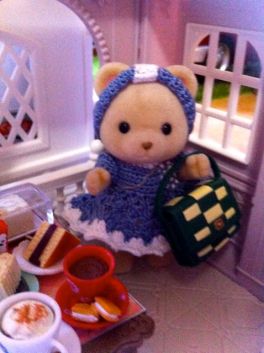
    Patricia has been recently working as a legal secretary at a personal injury law office in the city, the job she secured through her former boss Alfred Petersen, Esq., a high-profile defendant insurance lawyer at a powerhouse Gothic City law firm. Patricia, a principled, intelligent, and discreet character could have found a position commensurate with her ability and experience in the city had the hiring managers in the HR departments been understanding of a nine-month lapse after her resignation from the position of paralegal at a boutique real estate law firm in downtown last year. The reason for her leaving was that the field of law did not turn out to be her best match, pace her previously held naive anticipation that it would require of her less contentious meeting with demanding clients and less leg work that would push her to be out of the doors most of time. Besides, she did not get along with her boss, Susie K. whose whimsicality flitted though the ebbs and flows of her melancholia and in the weather of her sanity with all too frequent paroxysm of hysteria. Patricia wanted to keep her sanity and dignity rather than to succumb to the incivility of an irreparable solipsist. Hence the lapse in her work experience.

    IMG_3866
    At home

    When Patricia needed a helping hand to secure her employment with a B.A. degree that would leave you either overqualified or under-qualified in this ever volatile job market and the inglorious gaping period in-between employment history, she could not help but think of Mr. Petersen who was a lot like the empathetic boss of Bartleby the Scrivener in Herman Melville’s eponymous short story : that intellectually brilliant, characteristically benign, and professionally equable epitome of a “good” boss. Likewise, when Mr. Petersen whose heavenly blend of moral character and intellectual gifts endeared him to many of his admirers got email from Patricia out of the blue, he was willing to cast her a life jacket on a perilous sea under the aegis of his perennial benign influence. Since Mr. Petersen knew that Patricia was a good person who had not only the intellect but also the heart, an angelic admixture of humanity, he phoned one of his best lawyer colleague in town and connected him to her by sending him her resume via email for review and consideration that did not de rigueur need afterthought; it was the job to be had for the asking.

    So far Patricia has been well adjusted to her work routine in the new office and the work style of her new boss who’s fair and magnanimous. She only secretly wishes that the current state of things will remain unperturbed because she feels that she’s worthy of such reward after what she went through while being the subject of the vertiginous treatment that knew no reason and stratagem at the expense of her wailing spirit smothering in the existential daily duties and responsibilities. Isn’t it a crime for anyone to yearn such a continuation of equilibrium?

    thanks-for-reading-Rok-Hardware

  • When cranes dance

    Kranich-Tanz_Bruno_Dittrich

    Their wings fluttering gracefully by the lake

    Guarded by dryads, naiads, elves, and dwarfs

    Shimmering iridescently in midnight moonlight,

    The ancient birds dance along the borderlines

    between mythology and history, hither and thither

    Till daybreak and fly away beyond the Misty Arc.

    P.S. Elsewhere in the world, people have believed that cranes dance at night when no mortals are around to transform themselves into human forms; then they choreograph their courtship, wooing and wooed. Mysterious and ancient, a crane is a bird of the misty past, of the uncertain present, and of the unknown future. Its regal poise makes wherever it stays a heavenly palace and entrances me into the whirlwind of Magic and Myth. 

    저장