Tag: reviews

  • The Glass Castle by Jeannette Walls

    The Glass CastleThe Glass Castle by Jeannette Walls

    My rating: 5 of 5 stars

    Dickensian world of poverty is so abominably tenebrous that we tend to think of it simply as an anachronistic, if not antediluvian, work of fiction apropos of a bygone Victorian era, without translating its elemental essence of nobleness of human spirit that arises from predicaments into our own zeitgeist. The fictitious characters of Oliver Twist, David Copperfield, and Pip are the embodiment of such resilience, phoenix-like spirits enduring sordid conditions that life could impose upon us to the extent possible. Spinoza, the Dutch thinker and watchmaker, once said that it is Amor fati, love of fate, by which man’s inner strength could raise him above his outward fate. In fact, Nietzsche centuries after corroborated by saying: “That which does not kill me only makes me stronger.” Given the above axioms, what if someone in our contemporary time a fortiori lives to tell such victory of human spirit? That was the reason that I chose The Glass Castle by Jeannette Walls. All of the aforesaid noble triumph of human spirit over existential horrors of life is substantively and stoically recorded in this compelling living memoir with all her spirit, with all her intelligence, and with all her heart.

    The story starts as Walls invites us to board her memory train and travel back in times until we return to where we depart along the long and winding railroads of her windy but beloved past. We meet her charismatic, intelligent father whose engineering feats are passed in smolder by his ever independent, anti-establishment, recalcitrant spirit a fortiori emboldened by a spirit of Dionysian portion. The artistically inclined mother is all liberality: She is a devout Catholic – although far from being sanctimonious – and has a heart of gold, save a practical sense of the world. Then there are one brother and two sisters, all of whom are highly intelligent and well-behaved thanks to the moral upbringing by their parents. The parents do not have the gumption to support their children, let alone themselves in terms of economic security, which was the cause of the existential ills of the family, pushing Walls into a position of  a de facto breadwinner of the family.

    What is most profoundly august about Walls through living amid the straits of constant economic insecurity, frequent threats of family separation by social agencies, and dangers of physical harassments was her strong sense of responsibility for her life and for her family that enabled her to endure the existential predicaments. Many people mired in such situations might have develop disputatious streaks of rebellion against everything ascribed to them. However, Walls and her siblings took different attitudinal values to their existential dilemmas: they held on to a sense of purpose and a tenacious grasp on togetherness nurtured by their yearning to achieve a higher aim in life. In fact, such attitude toward life corresponds to one of the tenets of Logotheraphy: in order to find a meaning of life however trivial or nihilistic it many seem, taking a different, constructive stance on what is ascribed helps us to rise above biological, social, and cultural inhibitions during a difficult times because we give our suffering meaning by the way in which we respond to. Which also brings us back to Spinoza’s Amor fati axiom: a different approach to our suffering is sublimated into supremeaning of life in travails by believing in its meaning to every situation with will to live a meaningful life, which then ceases to be a suffering itself.

    The literary merit of this memoir lies in its absence of unbridled namby-pamby outpourings of emotions in the narrative with a certain air of stoicism. Ironically, Walls’s frank, touchy-willy, matter-of-fact manner of discoursing her story belies her overwhelmingly heartrending heartaches, disappointments, and dismay smothered under factual descriptions of her past that renders the authority of truth and the power of reality without hindrance of prohibitive emotions that often results in fabrication. In her literary confession, Wall achieves catharsis by putting what was in her mind on pages after pages, pushing her pen through in expense of her will to come to terms with her parents, let alone herself, producing forgiveness of her parents’ wrongdoings and acceptance of their frailties in a package of love and tenderness.

    All in all, Walls’ s message to her reader is clear: you can’t choose your fate, such as a family, but you can choose what to make out of what you are given. In one way or another, the story itself chimes the bells of emotions and thoughts of many of us: the problems and issues that the Walls had and the ones we have or had are not oranges and apples through our voyages of life. Walls shows us that notwithstanding all the vicissitudes of life, self-reliance, resilience, and determination helps us to sail through with cheerfulness and humor as handmaids to courage. This honest-to-goodness tale of a woman rising above the planes of her inhibitions speaks straightly to our hearts. This book is a one-of-kind testament to its veracity and quality that upon reading this book, you will feel as if you knew Walls telling a story with a sense of elemental kinship which you can relate to. Moreover, this bona fide memori gives us a sense of relief that no family is perfectly blissful, which resonates with Tolstoy’s view of families as inscribed on the first page of Anna Karenina: “All happy families are alike; each unhappy family is unhappy in its own way.”


  • Rose that smells as sweet

    1918-yardleyChristian Dior, the father of modern women’s fashion, said of a perfume thus: “A woman’s perfume tells more about her than her handwriting. ” How rightly so. A scent is stronger than a sight because it not only creates a certain mystery of ambience but also unlocks a cascade of memory. Hence is my approbation of a certain perfume I have begun to like.
    This is my first time to wear this historically famed English brand Yardley perfume, and I am already hooked on its enchanting fragrance of English Rose. It is a delightful conflation of rose petals on the top lightly sprinkled with drops of magnolia and violet enveloped in a hint of woody notes as a base. The result is a light, crispy pleasure of convivial sensuality and playful innocence that will make you feel just like it. This perfume is not a tawdry perfume as some of us might suspect just because perfumes are obtainable from Amazon, not department stores or Sephora.

    The fragrance is ageless and the effect effortless. This perfume will make you feel prettier all day long with sweet smell and flit in rose garden of your cerebral lobe. Which also brings me to conjure up by sheer dint of the essence of rose the following quotation from Romeo and Juliet by Shakespeare: “That which we call rose by any other names will smell as sweet.” This one is called English Rose, and it smells just as sweet.

  • On “Fantastic Beasts and Where to Find Them”

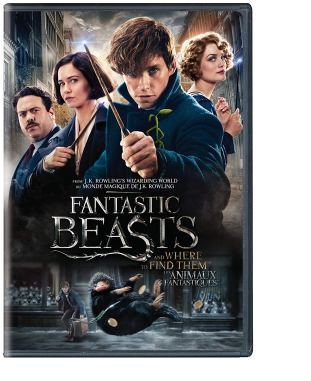
    91NQY9pyARL._SL1500_J. K. Rowling bewitches us again with her famed literary magic wand. Her fabulous creation of fantastic beasts, a young brilliant wizard, white witches with hearts of gold, an ominous black magician, and an amiable non-magician all coming vividly alive on the screen, will please your senses and touch your heart in no time with delightful feats of magic and boundless imaginativeness without interventions of boredom or cheesiness.

    Set in the 1920s New York City, the film yields the verisimilitude to the story-line that anchors the world of imagination in reality where magic is smoothly laced with chores of everyday life without forcing you to accept the fictitious ludicrousness and cinematic anachronism. At the heart of the film lies the wonderful chemistry of the actors and actresses harmoniously manifested in their illustrious performance of the characters in their own roles, coupled with a dazzling technical employment of bewitching visual special effects.

    What’s more, this film will get to your heart, so after watching it, you do not want to leave the world of the fantastic beasts and remain with them even though you may be non-magicians. A feast to the eye, a festivity of the mind, this film will take you breathtakingly from the humdrum life to the world of magic, making you wonder if you could also find the fantastic beasts just as I did, for “There are more things in heaven and on earth than are dreamt of in your philosophy,” as Shakespeare believed too.

  • Who’s the Real Ripper of Whitechapel?

    My Review of  9/1/2018 BBC History Magazine article of “The Ripper of our Nightmare”

    It was a diabolical killing spree of the late 19th century that made the residents of Victorian capital shudder with visceral fear, and swivel their heads in incredulity. No one dared to venture the nightly labyrinthine streets of Whitechapel in London’s East End between August and November 1888 when five women were found dead and grotesquely mutilated with surgical precision in a ritualistic fashion. The unfortunate victims of this heinous crime were all prostitutes in the slums of the East End into the bargain. With the evasive killer still forever on the run in the wings of imaginations of many to this date, the stupendousness of the crime and its phantasmal committer still egg the inquisitive minds on coming up with zany theories as presented herein.

    The turpitude of the extraordinary epochal net murder case has gripped the minds of many with journalistic bent who often go to extremes in search of novelty in what is established now as its own field of study. They are called “Ripperologist,” the individuals, as it were, with mission to provide the most feasible cue on who-done-it. Naturally, these Ripperologists have often looked for their suspects in a group of outsiders in the time of the era who were regarded as misfits, introverts, loners with hints of eccentricity because they are easy to be gorged out of the melee without much strains of their cognitive faculties and mental exertions. Yet, out of a pile of idiosyncratic mugshots of their suspects come some profiles I think are worth the noting by sheer dint of ingenious entertainment .

    The Likely Suspects

    • Francis Thompson: A poet with radical religious views was posited as the killer on account of the fact that all of the crimes were committed on Catholic saints’ days. However, this theory is hamstrung by the fact that those days are the feast days of the particular martyrs in celebration of their sacrifice of their lives to the Faith.


    • A Mad Midwife: In 1939, a certain author named William Stewart posited that the killer was most likely a bloodthirsty deranged midwife. But then anterior to Mr. Stewart’s theory, Frederick Abberline, an inspector investigating the kills, had also suggested that it could also be a woman’s act of crime on account of a witness who had seen a female figure leaving one of the victims. Yet, the inspector later concluded that it’s more likely that the killer was a man dressed in a woman’s clothing as a way of quelling his potential victims.


    • Lewis Carroll: Of all other suspects, I think this eminent writer of Alice in Wonderland stands all alone in his prodigality of literary fame and notability. In 1996, an author named Richard Wallace suggested that the Ripper was, in fact, none other than this famous writer and Anglican deacon into the bargain on the ground of the anagrams in his novels which indicated the carnival of killings in 1888. Surely, positing Carroll as the Ripper may be regarded as ludicrous and beyond the pale and even defamatory. However, Wallace must have exerted himself on interpreting the anagrams to decode the messages that Carroll had left as an act of contrition for his mortal sin. Otherwise, he would not have published his theory, knowing that doing so without any factual grounds might have incriminated one of the most renowned English writers and his descendants.

    It is always interesting to see how people become fascinated with crimes and criminals of the most wicked and bestial beyond the pale. Maybe it’s because of the ignoble, recalcitrant horse that we have in the soul, always inclining to a raw, precarious stimuli to our senses, spurring the other noble, reasonable horse toward such pleasure. But why not so when our minds wonder when they spur our imaginations on devising brilliant theories such as the aforesaid? The theories will only remain possible in the domain of poetic justice and in the wings of our imaginations so long as no substantive facts surface out of the mists of the eerie past. And I defy any of the Ripperologists not to come up with any such ingenious theories to that end – all for the Truth of who-done-it in deference to the victims.

  • Notes from a Small Island by Bill Bryson

    Notes from a Small IslandNotes from a Small Island by Bill Bryson

    My rating: 4 of 5 stars

    It has been twenty years since Bill Bryson, a writer originally hailing from a small town in Iowa, fell in love with Great Britain where people are delighted in small pleasures, call strangers “Love,” and orderly wait on lines in public without peevishness. So much so that he has even married one. Now it is high time that Bryson returns to the States along the lines of Odyssey, who returned home in Ithaca twenty years after the decade-long Trojan War and another decade of travails. In retrospection of the memories collected on his beloved adopted homeland, Bryson decides to take a valedictory jaunt around the island small but big enough to nurture him with a wealth of culture and a bounty of humanity. And he does it on public transportation and by hiking equipped with his trademark razor-sharp wits, intractably keen intelligence, and his usual touchy-feely way of observing people and things that either irk or pique him. All of it comes to fruition in this highly amusing and genially forthright travel memoir.

    You will be surprised to find out that the British think that the cereals are their invention. You will be overawed by the ubiquitous hedgegrows dated back to Anglo-Saxon times embroidering on the British landscape. Bryson will also take us for a ride in a London cab driven by an affably jocular cabbie who has to pass the Knowledge Test to memorize almost everywhere in the City of London. But London is not his demarcation of traveling. Bryson will further come along with you to Bournemouth, Exeter, Liverpool, which is his favorite city, Manchester, and even up north to Scotland all by train or coach, and by walking. With his truculent feistiness, irrepressible inquisitiveness, and scintillating sense of humor fabulously ingrained in his choice of the apropos words and jovial descriptions devoid of malice, Bryson is a cool cicerone, and your excursion will never be a bore.

    The book seems to be primarily aimed for British readers who might be curious about what a foreigner would think of them and their country as a whole. In that regard, Bryson’s words are predominately British in the sense that the words and expressions he uses in the narrative are familiar to the British. For example, “bank holidays,” “coach,” “lorry,” or “Sainsbury’s” are peculiar to the British ways of life. But this kind of cultural barrier is kindly tackled by Bryson by providing you with a glossary of the British terms at the end of the book.

    I have read other books by Bryson because of the same reason that induced me to select this book: his story-telling like narration is very appealing to me with his proverbial witticism smeared in every word he employs. He may appear to be a grumpy American man, but he has a heart to feel and see milk of human kindness in every quotidian thing or nondescript person by using the most appropriate words in wonderfully lucid expressions. There is a charm in his writing that will make you an admirer of his writings, and this book is no exception. It is Bryson’s long love letter to the small island he has fallen for head over heels with sincerity sealed with kisses and memories.

  • Prairie Fires: The American Dreams of Laura Ingalls Wilder by Caroline Fraser

    Prairie Fires: The American Dreams of Laura Ingalls WilderPrairie Fires: The American Dreams of Laura Ingalls Wilder by Caroline Fraser

    My rating: 5 of 5 stars

    A really good biography by a really good writer about someone fascinating reads like a good novel full of intriguing characters, events, and places. In the peculiar alchemy of literature, such biography creates a literary chiaroscuro, an iridescent interplay of light and shade alloyed in the alchemy of words laced with an internal rhythm of the words that delightfully flavors otherwise flat discourse of nonfiction. On top of this magical incantation, all-around erudition of a writer cognizant of the historical and social contexts armed with exhaustive scrutiny into the subject is the Rosetta stone that consummates the performance by contextualizing the subject’s motivation, actions, and vicissitudes of life that is all very much like a plot. In this regard, Caroline Fraser’s Prairie Fires about Laura Ingalls Wilder, a prodigious American literary heroine enshrined in the great American literary pantheon, fits into such definition with gusto.

    I first came across this book from an article about The Laura Ingalls Wilder Medal, a significant achievement award in Children’s literature, from The Los Angeles Times a few months ago. The award changed the name into “The Children’s Literature Legacy Award” because Wilder’s allegedly stereotypical attitudes toward people of color were considered to be not in harmony with today’s social core values of inclusiveness, integrity, respect, and responsiveness to the epochal changes. In defense of Wilder’s works, Fraser argued that her works were products of her life and that the reception of her books should be more complicated than we might hastily believe based upon the cursory reading of her books as social or historical contexts. It was this very argument that piqued my curiosity about Wilder and her biographer Fraser. As someone who always inclines to someone whose views and attitudes are dauntlessly unreconstructed and intellectually provocative, I wanted to know more about the accused and her public defender. Hence, Prairie Fires is a testament to its quality that sheds light on the myths and misconceptions on the literary world of Wilder and her fascinating self.

    To many of us, Wilder is most well known by A Little House on Prairie, also translated into television firmament by Michael Landon in many a language, making it a kind of household name in everyday life. I remember watching it with the unforgettable leitmotif music that rendered the ambience of a story of a pioneer family with none other than faith, charity, hope, and themselves on the Great Plains. Notwithstanding a streak of fictionality laced with idyllic romanticism portrayed in the TV show version, it was this very ambience Wilder cherished the most and delineated in words despite her seemingly perpetual struggle against impoverishment in the epochal changes of economic climates of her time. She was something of a pioneer troubadour who sang the chaste and rustic beauty of the wild prairie as well as the acuteness, coarseness, and strength of a pioneer spirit found in her beloved father. Through a series of poverty after poverty, struggle against struggle, and hope against hope on the life of the open prairie, Wilder was already in training to become a great writer.

    It is one of Fraser’s literary finesses that she alludes to “prairie fires” as a metaphorical means for illustrating Wilder’s queasy and passionate character that ultimately spurred her on to writing professionally at a relatively late age in her life. Wilder’s circumstances pushed her into a reluctant lifetime position of a breadwinner and caretaker, making herself to the hostage of Fortune. Her stoic, matter-of-fact manner belied overwhelming fear, dismay, disappointment, and grief as a result of taking a vow of self-denial against her feisty feminine self. All of her aborted dreams and hopes and projections smothered under daily duties that life demanded by a succession of misfortune and became her pant-up fury that metastasized into the fiery images of prairie fires, real or phantasmal.

    Fraser is also excellent in providing us with very intriguing information on Wilder’s inseparable relationship with her writer daughter Rose, who is also believed to influence her mother to write professionally. Rose was a very complicated woman whose literary talent seemed to be prevented from blossoming into full fruition on pedestals by her endless windy rage and self-doubt. She loved her mother and father dearly for sure because whatever money she had earned from writing was a munificent largess to them in the forms of a house and other apparatuses. Moreover, it was Rose who induced Wilder to write about her dramatic life that ultimately resulted in A Little House on Prairie. And yet Rose was also always out of reach of her beloved parents. She loved independence, living in the New York City and Europe with a penchant for cultural sophistication and extravagance, measuring herself against the burgeoning careers of her peers. But even her foibles are pathetic and sympathetic in Fraser’s punctilious portrait of Rose colored by the language she employs from her arsenal of words and narrative skills that guard Rose from misconceptions.

    The paramount achievement of Fraser in this biography is her flawlessly lucid contextualization of Wilder’s philosophy of life, her viewpoints society, and most importantly, her backgrounds of the oeuvres in the context of regarding the epochal social and historical changes of her time, all of which are gleaned from her comprehensive research into the relevant subjects and her impressive erudition fascinatingly laced with her acute feminine sensitivity in the magical play of the words. In fact, her knowledge on the 19th and early 20th centuries are so impressively and naturally incorporated into the discourse of Wilder’s story that you come to an understanding of Wilder like never before and appreciate her oeuvres in the canon of American Classics by exonerating  the accused from being a jingoistic provincial “white” writer. Rather than pontificating the blind idolization of Wilder, Fraser serenely but efficaciously narrates the facts of the controversial author and her meritorious achievements both in life and literature in an expense of will, belief, and truth, producing a mesmerizing biography of a riveting character in literary Americana.

    The book does succeed in shedding light on the life of Laura Ingalls Wilder by recasting this famous American literary figure in a candid way which none other than Fraser could have possibly done on the topic with her magistral knowledge of Wilder armed to the teeth with thoroughly exacting research on historical and social resources with utmost solicitous attitude and sweet tenderness. For this very reason, Wilder’s books should read as a classics not as a historical textbook of the bygone era whose zeitgeist irks the populace of this modern time. Literature is an art, and therefore its value lies in Art for art’s sake. We use the real to perfect the ideal, and the real encompasses anything – including our foibles and idiosyncrasies – we deem worth sublimating into beauty, which is what art is all about by appealing to our senses, the pleasure of reading something beautifully profound, evocative, and enduring. In this regard, Wilder was and is an artist making the beauty of life out of the reality of life. All this makes this book an enjoyable and illuminating read with Fraser’s irrefutably magical alchemy of words and consummate storytelling skill devoid of expression of infelicity and authoritativeness. This is a canonical biography of a great American writer by another fascinating writer who deserves of the applauding to the very echo.