Tag: reviews

  • Kill or Cure? – on Medieval Medical Practice

    RE: September 1, 2018 issue of BBC History Magazine article by Elma Brenner

    The grace of health is conspicuous only by its absence when we fall into sickness unexpectedly in the course of our earthly lives. Throughout the history of human civilizations, there have been many interesting ways of curing illnesses peculiar to different wells in sound body,” went to Temple of Aesculapius, the demigod born into Apollo and Coronis, a beautiful mortal, later raised by the wise and kindly old centaur named Chiron, in eager hope of seeing the demigod in their dreams to listen to his prescriptions for the maladies, primarily consisting of a mixture of herbs and cooling potions followed by divine incantations. In this regard, the people in the Middles Ages were not more different than their ancient pagan Mediterranean counterparts. Moreover, their medieval attitudes toward sickness and a general well-being was no less incongruent than those of ours as Brenner takes us to the time period in this scintillating article.

    Pace our prevalent perception of backwardness of its culture and science in the tenebrous reign of the Church, there was a multitude of practical treatments for maladies as well as preventive health cares that appeared to produce efficacy to certain desirable extents. Just like their 21st century progeny, medieval physicians emphasized on the importance of preventive health cares, such as “Rapid stair climbing” for 3 or 4 times a week to strengthen cardiovascular endurance, a moderate diet, good sleep, and other types of physical exercise to promote general health of the medieval folks. In fact, it seems to me that such measures may seem as a wise way of preventing an individual from falling into a serious type of sickness that might have required of a physician a diagnosis of which he would not have yet known at that time,  or even if he had known it, he would not have known the cure.

    It is also very interesting to know that during this period of time, a physician was to diagnose causes of ailments and then referred a patient deemed necessary for a surgery to a surgeon whose status was considered less than a physician’s by dint of the nature of the physical exertions that involved unpleasant sensory aspects, such as bloodletting, collecting urine, and most dreadful of all, cries and screams of the patients under the surgeries without anesthesia. All of these physical “drudgery” or “legwork” was strictly undertaken by a surgeon under the guideline of a physician who offered prevention medicinal advice based upon a patient’s case-history, observation of pulse, urine, and blood. Thenceforth, at the instruction of a physician it was an apothecary, a modern day equivalent of a pharmacist you see in Duane Reade or Rite Aide, who completed the physician’s job by supplying the prescribed medicine to the patient.

    Since the medieval times was undeniably under the aegis of the Church that functioned as the Divine Terrestrial Office with its authority imprinted in all aspects of life, a spiritual application of supernatural agency in the cure of sickness was de rigueur for a medicinal procedure. For example, the Church instructed the agnus dei to see a priest prior to visiting a physician who also often had some degree of medical knowledge. Moreover, in the practice of Couching, which was a cataract surgical procedure by which a surgeon moved the cloudy lens on the iris of the patient to the bottom of the eye with a gold/or silver needle, 4 recitations of Pater Nostra –  the Lord’s Prayer-  were administered.

    In view of the above, it seems to me that except for the absences of antibiotics, surgical methods, and anesthesia, some of the practices are still existent, such as the use of uroscopy, which is the examination of urine to determine a patient’s conditions, a general medical procedure involving the trinity of physician, surgeon, and pharmacist, and the advocate of preventive health cares are very much similar to those of the 21st century counterparts. Hence, I am in agreement with Brenner that it would be our fallacy of human ego to flatly deride or discredit the medieval medical practices as backward or ludicrously primitive or even barbarous and proclaim our modern superiority. For were we pitchforked backward in the Middle Ages, perhaps we would understand their ways of working the cure apropos the medieval epoch. But then the prospect of going through  a surgery minus anesthesia – not even a dosage of Vailum – makes me thank God for the fact that I wasn’t born in that time.


  • Marie Antoinette: A Captivating Guide to the Last Queen of France by Captivating History

    Marie Antoinette: A Captivating Guide to the Last Queen of France Before and During the French Revolution, Including Her Relationship with King Louis XVIMarie Antoinette: A Captivating Guide to the Last Queen of France Before and During the French Revolution, Including Her Relationship with King Louis XVI by Captivating History

    My rating: 5 of 5 stars

    History is a branch of literature made by artificers and artists with stories full of events, people, and places woven into a timeless stereoscopic tapestry of humanity, which in a succession of ages lays bare truths unjustly condemned in the circles of Treachery, Heresy, and Wrath by the winners of the epochal changes. In this regard, Marie Antoinette by Captivating History is a viable account of one of the most arguably scandalous figures in the history of civilization written without prejudice but with facts based upon the extensive collection of historical evidence of letters, small notes, and other written records that is testament to the veracity of the characters and historicity of the events concerning with the lachrymose last queen of France and her family swept in an indomitable whirlwind of epochal changes.

    The book delineates the humane sides of the Bourbon couple, Marie Antoinette and Louis XVI with an ample provision of personal aspects of the king and the queen in the context of regarding the historic accounts that give the reader new insights to the last dynasty of France and the bellicose retribution of the revolutionaries. Maria Antonia became the famous “Marie Antoinette” at the wedding with Louis XVI, an academic introvert who was into locksmith work and carpentry with a generous soul and deep love for France and the people. The young couple was bounded by spirit of charity and benevolence and exemplified the epitome of nobless oblige: To illustrate, Marie Antoinette told the French not to pay “Queen’s Belt Tax,” a customary tax that the subjects must pay when a new queen ascended the throne because she had heard the woes of the impoverished states of the people. Also, both Marie and Louis founded the Maison Philanthropique and hosted evening meals at Versailles and built cottages for the needy, which the French willfully forgot and forced themselves to remember the ridiculous price of bread when they later invaded the palace and demanded the lives of the Bourbon family.

    With respect to the monumental achievements of Louis XVI, the promulgation of Edict of Versailles, also known as the Edict of Tolerance, permitted the French to practice their own religions and marry without converting into Catholicism. In addition, he abolished for the first time servitude akin to serfdom and slavery in France and did cut back the personal budgets to the extent possible by funneling the money into a multitude of charity organizations, all of which was willfully overlooked or ignored by the demagogic revolutionaries and vengefully ambitious bourgeoisie and their populace whom they used as minions to overthrow the monarchy by force.

    The book leads the reader to a kind of Eureka moment of light to see the souls of Marie Antoinette and Louis XVI in their captivity at the Temple, an ancient royal prison where the family was incarcerated and unjustly tried, during their numbered days before the executions by the mob. We see Marie’s hair turned completely white a day before the execution, which is now known as “Marie Antoinette Syndrome,” as was in the case of Thomas More prior to his execution, and feel her fear at the kangaroo trial where she was arbitrary and intractably accused of (1) stealing French money and sending it to Austria; (ii) planning the deaths of revolutionary soldiers; and (iii) abusing her youngest son, which was patently manipulated by the perfidious revolutionaries to make her a scapegoat for the social ills of the past monarchy because she was a naïve foreigner with soft manners and cultural sophistication, which was an ad hominem embodiment of aristocratic refinement that must be annihilated in a new brave world of the middle class and its peasant class as their henchmen and women.

    Nevertheless, this is not a revisionist book on the last queen and the king of France. Rather, it is a book of rare gemstone that is discrete from so many other books on the subject in a pervasively uniformed perspective that does not cast positive light thereon because of the modern complacent intellectual attitudes that discourage an objective scrutiny of historical facts by safely choosing to remain in the political correctness of history. However, truth will come to light at the length; Truth is truth to the end of discreditable reckoning of demotic, partisan views and defamatory opinions on infamously misconceived historical figures that deserve of equitable judgment of the characters and deeds thereof. All this makes this book enjoyable and enlightening read, which is much to recommend it if you are willing to find out facts that lead you to beacons of truths.

  • The Druids: The History and Mystery by Jesse Harasta and Charles River Editors

    The Druids: The History and Mystery of the Ancient Celtic PriestsThe Druids: The History and Mystery of the Ancient Celtic Priests by Charles River Editors

    My rating: 5 of 5 stars

    When Ralph Waldo Emerson visited Stonehenge, which he described as a peculiar juxtaposition of primeval-looking stones that resembled “a group of brown dwarves in the wide expanse,” he was also overawed by its mysterious ambience laced with its ancient esoteric elements woven by the flight of ages and the succession of the primordial Druidic spirit peculiar to the British Isles. In the poetical visions of Emerson, the sacrificial stones of the Druids were a phantasmagorical display of the enigmatic nature of the Druidism and the Druids clothed in their long white robes of fierce mystery. Such mysteriousness surrounding the Druids is still paramount to the image and perennial legacy of the clandestine ancient cult with its formidable ritual practices and influences as vividly related in The Druids by Jesse Harasta.

    In this book, Harasta draws up a wide range of historical contexts ranging from a memoir written by Julius Caesar to annals by Strabo, Pliny the Elder, and the Younger, and others, in search of the eyewitness accounts of this notoriously secretive cult and its ritual practices in the context of regarding its social and cultural influences on the colonial Gauls, especially the Britons. According to Caesar in his Notebooks about the Gallic War, which is still arguably the most detailed record of the Druids and their customs written in between 50 B.C. and 40 B.C., the Druids were originally initiated in Britain and that they acted as the grave executors of justice with solemn probity in conjunction with the religious elements to instill respect and order imbued with theocratic fear in people because the Druidism was by nature theocratic. In fact, such theocratic aspect of druidism is evident in Geography published in the 1st Century A.D. by Greek philosopher, historian, and geographer Strabo as follows: (1) the Bards: singers and poets; (2) the Vates: diviners and natural philosophers; and (3) the Druids: moral and natural philosophers. These three strata of the Druid ruled the roost of every aspect of their society with the authority and power tantamount to those of the Supreme Pontiff in later years.

    The peculiarity of the Druidic custom is the absence of written records, save other public and private transactions recorded in Greek. Although the Druidic education was heavily focused on memorization of a great number of verses, writing was strictly forbidden based upon Harasta’s viable hypothetical grounds of (1) to make the knowledge of the study inaccessible to the other castes, such as warriors and common people to maintain their social supremacy and dominion; and (2) to improve the faculty of memory to develop cognitive ability, since an act of writing tended to reduce the ability to memorize.

    The ritualistic practice of human sacrifice is the ubiquitousness recorded in annals and manifested in archeological evidence. Even before the rise of the Roman Empire, the ancient Greek historian Athenaeus in the 4th Century B.C. recorded the Druids’ sacrifice of their prisoners to the gods, which was subsequently echoed by Pliny in the 1st Century A.D, who confirmed that the emperor Tiberius outlawed the Druids and their murderous types of diviners and physicians, while the succeeding emperor Claudius obliterated the  inhuman cult.

    Such ritualistic killing of humans and animals as well as performing ritual cannibalism was the most exquisite act of the greatest kind of piety. To illustrate, diviners stroke a human being chosen for sacrifice in the back with a saber and divine from his death struggle in the presence of the Druids or stabbed the victim with a small knife in the area above the diaphragm. Then they interpreted the future by observing the nature of the victim’s fall, the convulsion of his limbs, and especially from the pattern of his spurting blood in ancient tradition of undivided observation. In another example, the Druids built enormous effigies and filled them with living persons and set them on fire for mass sacrifice. Also, they burnt faithful slaves and beloved subordinates at the climax of the funerals of their masters. All of the aforesaid rituals took place in oak graves, since oaks emblemized sacredness and wisdom as the word “Druid” was originally derived from Celtic word “derwijes,” meaning oak and “wid,” to know or to have a vision.

    Pace other reviews of this book as desultory, partisan accounts of the Druids gleaned from ancient historical resources primarily written by the Roman colonials with supercilious opinions on their barbarous Briton colonialists, this book is an interesting read on this delphic ancient cult and its esoteric customs elegantly put together in plain language based upon the scholastic historical contexts. This is indeed a comprehensive overview of the quaint Druids whose formidable mysteriousness still resounds with the modern day revival of the cult in its outer form to the descendents of the Britons. For the reader who wants to delve into the Druidism in depth, this book serves as a decent primer on the subject as a preliminary requisition of rudimentary knowledge of the ancient cult. For all others, this book is an informative read that will bestow another literary pleasure and self-satisfaction on your mind.

  • Modernization of Fishery is no about-face

    RE: July 30th 2018 article of “A Fight over Amendments to the Magnuson-Stevens Fishery Conservation and Management Act” by Robert F. Bukaly of The Los Angeles Times

    photo (4)Ever a voracious reader of good books and sensible, informative articles of The Los Angeles Times, Paul Collie is immediately steeped in a headline of today’s newspaper; that is, an article he has just read in the Times about a fight over the present fishing laws. It is reported that some amendments were made to the laws, which are called “The Magnuson-Stevens Fishery Conservation and Management Act”, a 42-year old rules regulating over-fishing of New England Sea Scallops and Bering Sea Crabs, and that they were approved by the House of Representatives on Monday. Subsequently, these changes have stirred a projected friction between fishermen and environmentalists mostly consisting of researchers, scientists, and radical natural/animal conservatory activist whose viewpoints are normally out of touch with realities.


    photo (8)

    As Paul is perusing  the article word for word as if he were tattooing it on the cerebral globe of his brain,  Paul’s thoughts are embroiled in a swirl of agitation and indignation that begins to brew a collection of words in a form of cogent opinion. ‘The amendments were favorable to many people and will promote business growth, especially commercial and recreational fishing groups that need to hire many more people.  The changes relate to a provision of managers with flexibility and refocus of the Act on sound science. It’s all about modernizing the management of recreational fishing! But those recalcitrant opponents who know nothing or little about dealing with constraints of daily task think that it is a rollback of the landmark law! There is no risk of over-fishing delaying the re-population of depleted fish! Logical Fiddlesticks!’

    Paul has cogent reasons for his argument for the amendments to the Act: the purpose of the changes is to remove unscientific time frames that unnecessarily restrict access to fishery, which encompasses an revocation of a requirement for annual catch limits for certain fish species as aforesaid as well as amending rules about requirements to rebuild the stocks. He strongly believes that reauthorizing of the Act seems and is believed to be long overdue. As a matter of fact, Paul cannot help but link the article with The Rational Optimist by Matt Ridley that he read last year with relish. In it, Ridley tries to enlighten the reader about the necessities of changes as part of cultural evolution for the betterment of mankind and the world itself. However, Ridley lays bare the the pressure of militant environmentalists who are evermore against any changes made to the agricultural as well as fishing industry. To Paul, their flagrantly truculent opposition to any such changes is a luxury disguised in the package of humanity/nature that only pampers their far-flung elitist attitudes that disregards or overlooks the need of everyday life.

    Such is Paul’s axiomatic opinion on the article that he feels strongly. It’s not because he has a means of business, nor is his conservative tendency, nor his hereditary solidification of genes in the Proud Scottish Collie Family; but because the Act was unnecessarily binding the hands and feet of independent fishermen and other proprietors of the business tied to and related to fishery to overtly harsh conditions in which their households suffered under the strains of financial hardship. Which also brings Paul back to Act I, Scene 2 of Hamlet that illustrates the the hypocrisy of environmentalist dogmatism:

    The head is not more native to the heart,
    The hand more instrumental to the mouth,
    Than is the throne of Denmark to thy father.
    What wouldst thou have, Laertes?


    thanks-for-reading-Rok-Hardware


  • Playing a legal gambit – Immunity under the aegis of the 2002 SAFETY ACT:

    RE: July 28th 2018 article of “Immunity in case of attack: the 2002 SAFETY ACT would prevent legal claims from survivors by Matt Pearce of The Los Angeles Times

    The cardinal purposes and functions of law in any civilized society per se are: (i) establishing standards; (ii) maintaining order; (iii) resolving disputes; and (iv) protecting liberties and rights of citizens, all of which transcend the subjectivity of time and culture in the universality of Reason as illustrated in the canons of the Decalogue, the Hammurabi Code, and the Napoleonic Codes. Since the law itself is immaterial – that is, devoid of feelings, emotions, and thoughts, its intrinsic nature is neutral. There is nothing either good or bad, but interpretation and applicability makes it so in the execution of justice.

    That is exactly what MGM, the owner of Mandalay Bay in Las Vegas, is trying to do with the law called the 2002 SAFETY ACT (“The SAFETY ACT”), which the company wants to use as an indemnity against their liability from last year’s Las Vegas shooting survivors’ lawsuits. The SAFETY ACT is an acronym for “The Support Anti-Terrorism by Fostering Effective Technologies Act” passed after the Sept, 11, 2001, which allows companies to apply to the Department of Homeland Security to seek verification that their security products and services were beneficial. In exchange, Homeland Security would provide certification under the law, which is a portent immunity claim in federal court in case of a terrorist attack.

    The SAFETY ACT defines the nature and kinds of terrorism in its own terms, discrete from the traditional counterparts based on an ideological agenda of law, thus leading to multitudinous interpretations of the law. To illustrate, the SAFETY ACT defines terrorism as acts “intended to cause mass destruction, injury or other loss to citizen or institutions of the United States.”

    Could MGM, then, successfully escape from liability for the massacre of fifty eight people at a concert in Las Vegas last year on the ground of an act of terrorism under the protection of the SAFETY ACT with certification issued from Homeland Security? It all seems to me that human nature has not changed at all throughout the history of civilization. For example, indemnity from liability in the form of certification reminds me of the sale of Indulgence by the church in the medieval times, especially in Germany, which ultimately gave rise to Reformation led by Martin Luther. Or shall I compare it to a letter of Marquis from the Crown kept and carried about by English privateers (or more popularly known as “pirates”) because it protected them from being pursued by the Navy and gave free rein to pirating in open seas?

    In my opinion, defendant MGM’s argument of the massacre as an act of terrorism does not hold water, full of sound and fury, signifying nothing because the company was responsible for duty of care owed to the concert attendees on the ground of a breach of duty by neglecting an assumption of unforeseeable and foreseeable risks. For if the case is rendered in favor of the company, it could be all systems go for all other negligent companies to misappropriate the otherwise sovereign protection from the  SAFETY ACT over any incident that lacks such political motive, such as this Vegas case. The authority of law should lay bare the facts and the truth, and there should be no fettering of authority in deliverance of justice.

  • Walk like Poet Henry David Thoreau!

    photo (1)
    Sally, the Thinker

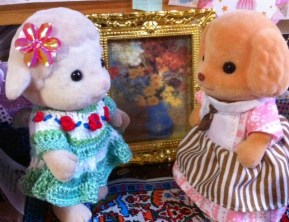
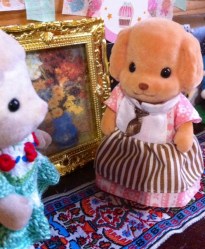
    “Give me a box of bonbons and a pouch of fruit candy assorted with gummy worms to sweeten my vapid imaginations! Oh, and a cup of Hazelnut coffee with a little bit of half-and-half to spark up my dormant spirit that resists to awake after a day-off.” Sally was hoping to make a new Monday as vivacious and jovial as possible, so she decided to meet with her lovely alter ego Bonnie for brisk morning sauntering. Yes, sauntering. Or even perambulating, which in fact reminded her of a baby perambulator.

    “Hi, Sally!” Bonnie’s euphonious soprano voice manifested her presence like a spirit conjured up by a magician in an esoteric ancient language. Sally saw her dear friend approaching her from a distance waving effervescently at her with genuine smile. ” Oh, Dear. You look a bit pale… Have you eaten well? And please tell me not you are in a diet because you need it not.” Bonnie was concerned about a noticeable difference in Sally’s outward view: she looked thinner than before, and it did not look becoming to Sally. No, it was not out of that cardinal jealousy of womankind that knew neither friendship nor truth. In the eye of Bonnie, Sally looked prettiest with her round cheeks and dimpled elbows.

    photo (2)

    “No, I am not on a diet, but I just did not have any appetite… I like walking than eating! Well, let’s call it our “sauntering” as the great poet Henry David Thoreau defined. Do you know Thoreau himself was an aumbulater nascitur non fit? He was an avid walker who used to spend about two hours walking in nature. His study was out of doors like his poet pal William Wordsworth.” “Oh, I did not know it, Sally. I only know that Thoreau was a great naturalist poet and died from consumption. “Yes, Bonnie. That too was right. Soon both adorable ladies were embarking on their ritualistic morning sauntering along the Avenues of trees and flowers with larks and bluetits vivaciously chirping and tweeting, all in nature’s symphony that could make you forgive your foes and love humankind at least for that pristine moment of pleasure.

    photo
    Bonnie, La Bonne amie

    Thoreau was right: the act of sauntering in nature would blot out the strains and cares of contemporary life and anesthetize your weary body and minds against the strains of everyday life. It’s absolute freedom from all worldly engagement. Like Thoreau, Sally thought that sauntering was not an exercise but a kind of enterprise, an adventure of a day that invigorated her spirit and mind. And Sally was hoping that Bonnie would share her pleasure of appreciating the symphony of nature. “You know Thoreau was something of an eccentric genius,” Sally decided to add some tidbit of gossip on the poet. “Oh, really? How so? ” Bonnie seemed intrigued.  “Well, he never went to church but believed in God; did not marry, nor did he cast vote, nor did he pay taxes! But this very individuality endowed him with a crown of literary ascendancy, I think.” “How could he not pay his due taxes as it’s his sacrosanct duty and responsibility as a citizen? You know what, Sally? That’s why I do not like any of these intellectuals who put ideas before their civic duties and personal responsibilities.”

    Bonnie’s truculent remark was a bit startling aberration of her usual diplomatic modus operandi of expressing her opinion. But come to think of it, she couldn’t agree more with her friend about the duplicity of so-called the intellectuals, the new ecclesiastical estate of our modern society. And Sally was inwardly glad to have a friend as thoughtful and truthful as Bonnie. But still, Sally wanted to spare Thoreau from the supercilious learned elites.

    1-210

    The ante meridian sun was suavely sunny in the fiercely blue sky that would remind you of the celestial garb of the Virgin Mary in Rembrandt’s paintings.  The Italians would call the color “azure,” and they were good at making the pigment for Renaissance painters who raved about its lucidity and vivacity of the exquisite hue. And the fragrant breeze was a blessing of the beautiful Titan-goddess Aura for their friendship bound by mutual understanding and love of history and literature. As the two good friends were continuing to enjoy their sauntering in nature, it seemed right that without even going to church on Sundays, you could find the evidence of the Creator in awe of nature’s beauty and feel the presence of the existence just as Thoreau and the late Pope John Paul Second had felt and expressed.

    hqdefault