Tag: sociology

  • woes of workers

    I have always appreciated the magnificent impacts on the Industrial Revolution, especially during the mid 19th century in the West, as it upended the contemporary foundation of the economy and reconstructed the social systems and culture around the world. However, I cannot help but look on to the plight of workers at the mercy of ruthless employers in a toxic working environment still practiced in this aeronautical, wireless internet age.

    While the rights and benefits of workers have even been recognized and improved, thanks to people like Lord Ashley, the mistreatment of workers is yet rampantly prevalent by their callous employers exploiting their labor in the toxic environment. Unfortunately, sad tendencies exist everywhere in our world, particularly among non-western populations for whom the Industrial Revolution is the relatively late advent of human progress in terms of collective welfare.

    Workers may be born free by the bill of rights, but they are at the whims and caprice of their employers like their ancient slave owners who would decide the livelihood of those under their mastership. Otherwise, Elon Musk’s Tesla would be careful about their non-white workers at his factory, but that’s just the tip of a vast collective unfair employment iceberg. Indeed, the history and experience exhibit to be utterly inconsistent with the advanced minds in the real world.

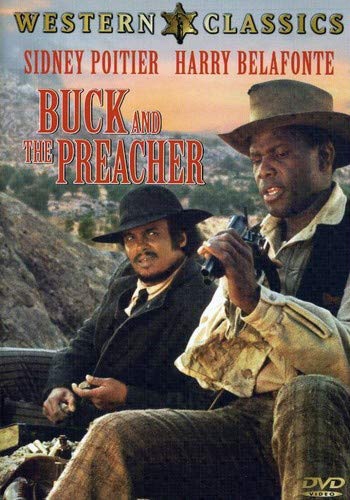
  • ‘Buck and the Preacher’ (1971)

    Rousseau’s dictum of “Men are born free and are chains everywhere.” fittingly describes the condition of what it means to be free from slavery after the Civil War. Even so, freedom was recalcitrant to belong to them, and the hardships that came with the price of liberty from the carnage of the war still beset the newly freed along the trail of exodus to the new promised land in the west as articulated in Sidney Poitier’s classic western film “Buck and the Preacher” (1971).

    Buck (played by Sidney Poitier), a former Union sergeant turned scout, leads a wagon of freed blacks from Louisiana to the west, where they hope to start their new lives without a shadow of slavery. But alas, the shadow of slavery still haunts them. It is up for grabs in the form of renegade ex-soldiers, probably both of the Union and the Confederates, hired by the former enslavers to bring the migrants back to the chains of slavery. They attack the wagon, rape women, and kill the old and the young, constantly intimidating them to return to where they belong. But the pain of loss and death is even less painful than the thought of returning to the past, and the journey marches on. Buck protects the journey, and the self-proclaimed preacher conman artist (played by Harry Belafonte) a former slave, chimed in, despite his original ulterior motive of money-gaining. This unlikely dup proves to be something of Moses and Aaron, so to speak, in a way that they guide and protect the persecuted people from the sordid bondage to a new promised land even if it takes a nearly decimal lot.

    Then there are Indians across the wilderness as gatekeepers to the land of freedom. They are no outsiders to the persecution with their land taken away and their very beings threatened to decimate. The Indians live by the toll fees migrants have to pay when crossing their territories, not the least due to the paucity of livelihood resulting from the government’s confiscation of the land. When Buck implores the tribal chief to help them against the white attackers because they are all brothers, the chief retorts him by saying, “But black people also fought against us with the whites.” The mistrust is natural, as is the confrontation of the two peoples whose rights are put to contests orchestrated by the forfeiter of the rights. The class consciousness between the Indians and the blacks needs a manifestation of shared injustice and empathy, which both of them attest to an objective reality where they prove to be on the same side.

    This film is one of the great Sidney Poitier’s and finest as I have been watching as remembering this brilliant actor who has recently died. Always poised with a commending presence filled with natural confidence and will without being febrile and vociferous, Poitier exudes his irresistibly graceful charisma on screen in this memorable Western about blacks and Indians, who are often seen in the peripheral characters contributing to highlighting main white characters. But this is not a revisionist Western at all to polarize the thematic elements of the genre. Hardly so. Instead, “Buck and the Preacher” is an eye-opening Western film about the peoples who are likely to be cast as outsiders even if they also rightfully belong to, to quote Lincoln, “the family of freedom with a jewel of liberty” called Americans.
  • ‘Enlightenment Now: The Case for Reason, Science, Humanism, and Progress’ by Steven Pinker

    My rating: 5 of 5 stars

    Gods may be crazy, as the tribal men thought when they picked up a bottle of coke dropped from an airplane. But the world is not crazy and will not be crazier unless you wish it. So you’d better lose faith in the doomsday industry that prompts you to think so because our faculty is intuitive rather than reasoning, rather physical than metaphysical. Steven Pinker points out in this book that we need rationality or a habit of rational thinking to aspire to objective understanding lest we should fall back on the doomsday scenario of a dystopian world.

    To begin with, the enlighten movement is not a product of the west but rooted in human nature as the universal feature. The spirit of the enlightenment movement is “Dare to Understand,” which means applying knowledge to understanding our world to enhance our human welfare to the full effect and force. Enlightenment is comprised of Reason, progress, science, and humanism. However, the currents of modernity flow into global populist tractions that champion totalitarian relativism from individual modes of thinking to social and political policy-making in the name of progressive liberalism or conservatism, when it is not with the absence of Reason and humanism. The proponents of the ideologies described above take precedence of faith over Reason, nation, or culture over individualism and metaphysical over real because they couldn’t care less about it.

    The most impressive finding that I have described from this book is Pinker’s perceptive analysis of the counter-enlightenment movements run by both conservatives and liberals, especially in the States. As many people might conjecture, Pinker is not an ultra-right-wing intellectual because his view on former President Trump and his cult is logically solid and intellectually revoking. He explains that the philosophical roots of Trumpism are a synthesis of a militant derivative of Nietzchean school of philosophy and anti-enlightenment humanism. It’s not conservatism but racism lite, shading into authoritarian populism and romantic nationalism, harping on the good ole days, which weren’t good in respects of the quality of living conditions and level of human rights.

    Amid the bipartisan world of ideologies, the heightened pessimistic opinions of our planet from the environment to social services, Pinker’s education on what Enlightenment means on human progress shines like a beacon of light on Slough Despond. This book gives the world a sense of self-confidence in our cultural progress this far as a collective human enterprise. The history of the world is not cyclical or linear, but progressive and in progress as long as humanity continues. It is this humanity that Pinker emphasizes in the truest sense of Enlightenment that the thinkers such as Voltaire and Kant also professed to be an inseparable element of human progress. Progress without humanism is not progress. Humanism is not a sign of shallow intellectual culture akin to pastoral romanticism or unproductive ideals. Humanism represents the sense, as science reason, which are universal human traits common to all. That is what this book wants to teach us.

    View all my reviews

  • live to tell

    I just read an article from the January 2021 issue of BBC History about a British family’s real-life experience in China during the Chinese Cultural Revolution in the 60s. It was so engrossing a read that prompted me to put pen to paper.

    Kim Gordon’s live-to-tell childhood memories during the turbulent times in the country where he and his parents had believed to be a model communist haven as accounted in his diaries and letters put it on the same pedestal with Louise Malle’s Au Revoir Les Enfants and Anne Frank’s Diaries in the context of regarding political turbulences through the eyes of the tender age and the lasting impacts on the minds of the young.

    Gordon’s writings are a prime example of historical records, which George Orwell called a reason to write in his “Why I Write.” In fact, reading Gordon’s account of his memories of forceful detainment in Peking gives me an association with reading one of Orwell’s war correspondence and his first-hand experience as a voluntary tramp in London to report the reality of homelessness and unemployment.

    I think his writings deserve far higher recognition and broader readership in the publication of a memoir, for which I will read forthwith.

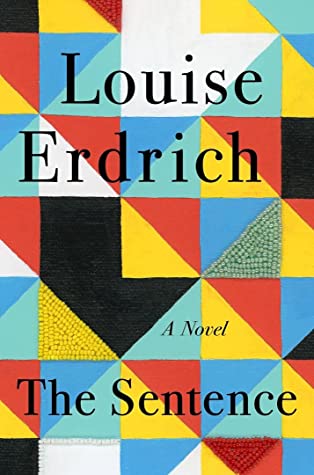
  • Spirit Away: ‘The Sentence’ by Louise Erdrich

    The Sentence by Louise Erdrich
    My rating: 4 of 5 stars

    The Sentence by Louise Erdrich is about the power of words, spoken or written, awakening the spirits of the author, storyteller, characters, and readers, all adrift and luminous as the boundary between the real and the ideal collapses. It’s a polyphonic work of trauma narrative, cultural studies, social commentary, and philosophical memoir interwoven in multiple strands of a joint account.

    The story evolves around Tookie, a doubting bibliophile who thinks books have everything you should know except what actually matters. Books are no more than a portal to mental escapade, a world of make-believe in the likeness of truth or reflected in the highest ether of reason and sentiment, which makes no defining impact on her checkered life as if it were her sentence from the judges of this world and the beyond. So much so that when Tookie finds that the newly deceased soul of a regular customer haunts the bookstore, she works at, she laments her fate of chaos that seems ever to stalk her small wish to live a quiet everyday life. Is it her sentence to live In perceptual existential malaise? And yet, Tookie ends up living daily life with a loving husband and daughter in a house of their own with a steady job as a bookstore attendant. Isn’t it what is considered an everyday life? So why can’t Tookie let the ghost alone when ghosts refuse to depart for the other until they finish their businesses in the world as part of their spiritual sentence?

    I decided to read this book after reading a review from the NYT Book Review a couple of months ago because of Tookie for being exceptional wanting to be ordinary. I felt for her, which was valid until the middle of the book. But as Tookie became settled with her husband in their own house burgeoning as a knowledgeable employee at a local bookstore, she began to lose her fabulous, unique luster. Indeed, I was all high fives for her happiness that I felt deserving, but the further I progressed to pages, the more my heart parted with Tookie’s existential frustration, except the touching moments of love between her and her husband. Also, unlike the book’s general introduction as a ghost story, It is not a supernatural book that will fulfill your cravings for an intelligent horror story. Instead, it is an extended short story featuring a ghost as a fire-starter of narratives connected by bibliophilia. The author believes bibliotherapy is a recipe for the existential malady to quiet the anxious mind. There is no more enchanting than a book, electronic or bound. The lifeless words become alive as the reader awakens the book’s spirit by entering the world of make-believe through the labyrinth of stories leading to the secret garden of truths that the author has fruited.


    View all my reviews

  • ‘Maid: Hard Work, Low Pay, and a Mother’s Will to Survive by Stephanie Land’ – book review

    My rating: 5 of 5 stars

    A good memoir amid the detritus of in-vogue memoirs is a gemstone, like a treasure island descried by a weary sailor. Marry Ralph Waldo Emerson’s appreciation of travails of life as the best teachers with George Orwell’s no-nonsense realistic credo for writing. You will see that Stephanie Land’s eternal spirit fills the pages at the expense of her will with a sense of purpose and a tenacious grasp on intellectual superiority. It was a tide in her affair Stephanie Land was waiting while wiping a stranger’s dirty toilet bowel due to fortune’s malice or, shall I say, whims and caprice of the supreme beings?

    Land’s memoir applies to Orwell’s tenets of “Why Am I Writing?” In it, four elements of writing are (1) aesthetic purposes, (2) sheer egoism, (3) political/social purposes, and (4) historical record. Contrary to most reviews of focusing the book on her single parenthood, I deem it to be her testament to her self-worth in a society where external achievement determines your character. In fact, Americans have a Calvinistic cast of minds in a puritanical cultural foundation that poverty is a priori resultant from laziness and that it should be dealt with scorn. American Catholics are not altogether generous because of John F. Kennedy’s adage to Americans: “Ask not what your county can do for you… ask what you can do for your country….” Land feels the hostility of the skewed, confused, maligned conservatism masqueraded as patriotism in an ordinary landscape of daily life. In writing, she potently and victoriously wields her pride smothered in want of bread and roof with her daughter.

    Memoirs of rags-to-riches are thought to inspire readers with can-do attitudes fused with a dangerous combination of ephemeral hope and flippant desire that Thucydides warned of his progeny. However, they are self-treaties of achievements, usually despite the biological or sociological plane, and almost always with people who help them achieve their goals. Jeannette Walls of The Glass Castle was from a low-income family, but her family was loving, and she had scholarships and went to Barnard College and became a journalist. Hillbilly Elegy was touching, but the poor white boy who had a loving mother went to Yale and became a lawyer. But Stephanie Land is intelligent and honest, down-to-earth, and her issues and circumstances are more existential and relatable than what the mentioned above have famously accounted. Forget the dialectic classicism, forget the social reform, forget the right for single parenthood. It’s all about Stephanie Land’s dignity, her right to be happy, her yearning to be what she wants to be. So be it ever the nominative determinism, and it’s in the name. All who have the name Stephanie have that feistiness. Well done, Stephanie!


    View all my reviews