Tag: sociology

  • The princess fairy tale

    First of all, let me clarify that I don’t believe in fairytales where beautiful poor girls achieve social escalations by marrying handsome princes and kings. Nor am I keen on the affairs of modern-day royalty whose lives are not even desirable. And yet, the news of Princess Mako’s marriage to her college sweetheart despite forced delays and oppositions is worth writing about because it is a fairytale of the most beautiful kind becoming a truth in reality. Would it be a bit of a stretch if I relate Mako’s heartaches and ordeals to Psyche’s Wanderings and Trials set by Aphrodite to separate her son Eros from the insolent mortal? It also shows that the crowned cannot escape from the intoxication of the heart that is worth denouncing the pomp and circumstances.

    Marrying a commoner is no new in modern-day history, starting from Edward VIII’s marriage to the American divorcee Wallis Simpson and his descendants Princes William and Harry. While those mentioned above British royal members married those outside the peerages, they were not the average commoners working nine-to-five or even more or fewer hours in ordinary situations where they had to depend on the whims and caprice of their employers for the secure livelihood. But Mako’s case stands most excellently because she was determined to give up the whole royal privilege to live as a commoner by marrying the one who is not from a wealthy, not even above average family. Moreover, Mako refused to receive a considerable amount of money as a gift from the royal family for marrying a commoner. On the contrary, Harry and Meghan are considerably wealthy, living without day-to-day financial insecurity about what might happen tomorrow. Their surrendering the titles publicly will not forfeit their assets as in the case of foreclosure that many struggling hard-working Americans are unfairly subject to. After all, why do they need to hold the titular positions to make more money outside the palace? People flock to the brave Meghan and her ever-supportive husband, but why do they do when their happiness illustrates no emblem of sacrifice without a sense of proverbial entitlement?

    I cannot help but compare Mako and Kei to the famously showcased ex-royal couple Prince Harry and Duchess Meghan. Besotted by the sensual charm of his renegade, free-spirited wife, Harry decided to move his young family to Los Angles, California, for good. He joined her Dissent Division to criticize his long-time family for being racist and cold-hearted. On the contrary, Princess Mako never decried her dissenting royal families against her marriage to a commoner, nor did she rebel loudly against the constitutional monarchy outside Japan. Instead, Mako kept all of her affairs of the heart discreetly, remaining true blue to her beloved Kei despite public uproar about his below-than-expected family background for being of a problematic single-mothered household. Forget the stereotypical Japanese politeness and the prejudice on the East Asian women’s submissiveness. Her graceful acts and decencies flow from her natural disposition and upbringing, which I have hardly seen in the famous royal family members.

    Watching Mako and Kei looking at each other with the eyes exchanging affection with radiant smiles in their serenely happy faces put me into a pleasant mood to make me wish for their long and happy life together. Mako is a brave princess who surrenders herself to the love of her choice, even if it means giving up her title and privilege that would make her married life comparatively comfortable to ordinary people. Mako’s decision to live the life of an ordinary wife seems anachronistic and incongruent. Still, not everyone wants to be an Amazon or Scythian warrior, nor does she want to climb up the career ladder to prove her abilities. Mako’s declaration of independence signifies an act of exercising her right to happiness by living with someone she loved dearly. What else could she do to prove her worth for love? It is a beautiful fairytale dissolving to the truth.
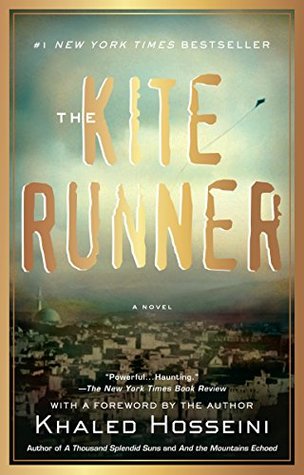
  • ‘The Kite Runner’ by Khaled Hosseini – book review

    The Kite Runner by Khaled Hosseini

    My rating: 5 of 5 stars

    Writing is the most solipsistic and democratic means to make people discover your secret histories or inner world so that they can understand why you are what you are. That is what Khaled Hosseini does enchantingly in The Kite Runner. It is a bildungsroman story reminiscent of the Au revoir, Les Enfantes-Esque ambiance surrounding the narrative of a grown-up boy who wants to reconcile with the stupendousness of mistaken guilt becoming a malady of the heart. But that doesn’t mean it is all too surreal or stark grim to make an accidental reader think it is a wrong choice. On the contrary, Hosseini vividly conjures up the faces and scenes, resurrecting the spirits of the places and times, by putting together the tesserae of his memories in this rivetingly heartrending read.

    The book incorporates the sociological theory of symbolic interactionist perspective focused on the relationships among individuals within a society and how political changes affect the lives of individuals and the sense of who we are and our relationships to others. The story’s narrator, a young Afghan boy of the upper-class named Amir Agha, gives the reader a ride to his childhood in Kabul to show the halcyon days of pre-soviet and Taliban reigned Afghanistan. First, you will see him and his best friend Hassan, a Hazara servant boy in his house, wallowing in reading stories and lost in kite flying. Then and thereafter, Hassan becomes a victim of the most horrific act committed by the half-German blue-eyed Afghan boy threatening him to win kite. Amir’s retrospective narrative becomes his public confession and ablation, all of which is a combined act of purging out the painful memories of the past and exorcising his demons tormenting him with the guilt of jealousy, ignorance, and cowardice. The whole narrative then becomes a plethora of pathos and empathy, resulting in a cornucopia of forgiveness and sympathy, drifting it all in a high-flying kite once and for all.

    It is a fitting story in this particular time of Afghanistan history and Abdulrazak Gurnah’s winning of 2021 Nobel Prize in Literature for his achievement of universalizing human travails transcendent of racial, cultural, and geographical differences. Vivacious at times but dolorous at most, the Kite Runner is synthetic literature that wears habiliments of memoir and novel. There truth and fiction dissolve into one another anchored in real life with factual geographical and historical facts smoothly amalgamated in the individual narrative account, which reminds me of Herodotus’s “Histories.” Or it is an alluringly pioneering memoir-making that resembles Realistic Fiction. For whatever it is, the Kite Runner bestrides the aisles of contemporary literature sections, alluring the public with simple language that magically juxtaposed in beautiful prose style with lyrical quality, all soul and mind in the marks upon pages evocative of the spirits of the memories materializing.


    View all my reviews

  • education is not a status symbol

    Education is not a prerogative of the fortunate who have been born into comfortably well-to-do socioeconomic families or, if deprived, sponsored by goodwill fairylike patrons for splendidly expensive private higher education. It is not a status symbol to distinguish the fortunate from the melee in ostentations display of their supposedly high intelligence, dazzling scholastic aptitude, and a means to continue such expensive education as a symbol of confidence, competence, and cleverness.

    But Joshua Angrist, an Israeli-American Nobel laureate in Economics of the year 2021, doesn’t think that way, not least because those who enter expensive elite schools are already brighter than their ordinary or troubled peers. The Nobel-Prized theory of education in the context of the selective admission process has become a concrete, incorruptible credo for the elite academic institutions and enflamed the already swelled up egos of the diploma holders doing well in their lives. When I read about him from today’s newspaper, I had to re-read his saying that “the reason graduates of those schools tend to do well has more to do with selective admission than education.” I understand his intention to demystify social legend that an Ivy-league diploma will guarantee you lifelong flowery roads to financial security and commensurate social status. However, it has more to do with his defense of continuous selective criteria to muster a pool of academically, and usually economically affluent, prospective students than anything else. What he argues is, “Don’t mess with the elite schools’ admission processing, for they select only the smartest ones!” Therefore, his argument calls for changing social agendas for changing such selective admissions to improve public education.

    Angrist himself is a product of privileged education that some people wear like fancy hats on their pointed heads. He went to Oberlin College for BA and Princeton University for MA, Ph D. He teaches at Harvard University, which has become the infallibly supreme Ivory Tower in the States and most East Asian countries. Based upon Angrist’s focus on causality and effects on social impacts, it will be natural for him to defend the selective admission process, and I say go for it.

    But it irks me to read from the Nobel laureate that supreme education is not for everybody. Since Angrist prides himself in employing real-world empirical evidence in his theory, does he marginalize those who have ambitions and aspirations to receive such quality education but are disadvantaged of the opportunities to learn the skills apt for demonstrating their minds? What about them, and how can he help them to access such opportunities? He’s not a social worker, which I don’t think he will not be pleased to be associated with even, but as an intellectual, he has a social responsibility to answer such vital issues. And if this unequal distribution of privileged educational opportunities is not worth studying, I wonder if those Nobel Prize panels thought his opuses deserve such international recognition. After all, Economics always comes last in the Nobel Prizes, with its being on the criteria most recently in the late sixties mainly begetting Americans.

  • ‘Forgotten Peoples of the Ancient World’, by Philip Matyszak

    Forgotten Peoples of the Ancient World by Philip Matyszak

    My rating: 5 of 5 stars


    Forty years on our evolutionary scale amounts to a microsecond on our twenty-four biological clock. The millennium years, even Before Christ, feel so alienly anachronistic from our modern sensibility. The sense of time builds upon a fundamental element of consciousness as molded into a collective emotional experience as contemporary citizens of the world, just as the peoples of the misty pasts we tend to overlook felt the same for the civilizations before them. They were the titans of the pre-ancient Egyptian, Greek, and Roman cultures. They, like the evening sun in its full declination, vanished in the hazy horizons of the time, still dazzling with its scarlet hues of radiating halo lingering on the remnants of human civilization to this date.

    Forgotten peoples of the Ancient World is an anthology of the peoples whose feeling of permanence and importance in their time of the world betrayed their fates buried in the tires of cities beneath the earth and returned to the dust in the winds. To illustrate, Akkadians were the first builders of the empire who elevated the Akkadian language to the cultural and political lingua franca of the late Bronze Age. The Hyksos were outstanding charioteers, and their military prowess benefitted their Egyptian subjects. The Bactrian culture was a delightful mixture of Greek and Indian heritages, while the Vandals gave a final, fatal blow to the already destabilized Roman Empire. These peoples affected the celebrity civilizations we are automatically associated with the ancient civilizations. As to why the forgotten peoples became peripheral in our realm of ancient history, it is a question of the immanence of the supreme being in the universe. However, what is certain is that they were the torch-bearers of the first civilizations passing the torch of society they had ignited and encouraged to the next in a relay run of collective humanity.

    The book is an excellent anthology of these ancient peoples in chronological order from east to west, showing how civilizations expanded from the cradle across the plains, mountains, deserts, and seas to the Isles of Britons. Divided into the eras marking the epochal changes of history, Matyszak succinctly elucidates the peoples of the misty past with his trademark witty ways of describing historical contexts. Moreover, the exciting historical trivia resurrects the eras in a phantasmagorical display of faces and places.

    To conclude, the stories about the forgotten peoples attest to the objectivity of truth applicable to any time of history that that which is here was there, has been, and will be. All things must pass, and there is nothing new under the sun. Our sense of time and culture is a likeness of truth, a matrix-like reality, because our facility is rather instinctive than reasoning, rather physical than metaphysical. Who would have known that people 100 years later now would think our time and us in this time anachronistic and antediluvian? Herodotus felt the same when he arrived in Egypt and saw the wondrous pyramids in awe that the people before his generations had built. So did the Babylonian king, who dug and discovered artifacts from centuries ago. We have seen the hungry ocean gain advantage of the kingdom of the shore, and the firm soil win of the watery main, increase with loss and loss with increase. The forgotten peoples and we are time’s subjects, and time bids are gone.


    View all my reviews

  • from this corner of the world

    A beautiful field of flowers on a background of mountains and clouds

    It was a great leap from northern New Jersey to southern California when I decided to relocate two years ago. At that time, I felt like a pioneer girl from Willa Cather’s novel or a Horace Greeley in his Overland Journey from New York to San Francisco. Now the not-so-long time has passed, and I still have the job I got first in California, but I am now not sure about being rooted here like a tree without luscious fruits, which is just one of many plain, common trees whose sudden absence will not be conspicuous. Amid in this existential tides of life, willful, fateful, or both perhaps, reading today’s article from the New York Times about a declining trend of relocation after the ease of Pandemic-related restrictions statewide seems to shake my already shaking ship adrift between Scylla and Charybdis.

    The article reports that now that the post-Covid 19 has dawned a new era of remote-controlled employment, many people do not need to move to another state for their new jobs unless they are packaged with satisfying relocation fees. And staying put in their home grounds while working remotely for their bosses across the Rocky mountain or on the other side of the coast fortifies a sense of close-knit family and community that they feel strongly related and belonging by staying put in their home grounds. Further, the article illustrates a particular fragment of well-to-do middle-class people with professional careers or executive positions who indeed don’t have to take trouble moving their already content families to new locations. Finally, the article excludes the peripheral class that orbits around the lesser bright solar system whose life spans depend on a dominant sun’s brilliance.

    People are still moving to and from for their uncertain futures, as I have witnessed so far, despite the Pandemic scare less than the existential threats of daily life. Hasn’t the journalist seen enough of the genuine fabrics of life by getting on a morning bus carrying a crowd of the middlings and underlings heading for their workplaces? Isn’t The New York Times proud of being one of the most liberal newspapers in the world? Or is it for most liberal middle-class only?

    I still like to think of myself as a frontier woman in the Still Wild West, living with an elderly mother and an eleven-month-old tabby cat with chronically weak respiratory and digestive systems in a make-shift house on a pitiful homestead often besieged by the lawless and the uncultured. And I still don’t know my decision to move from here to there was a fool’s wish, acting on a foolhardy impulse neverendingly. Nevertheless, I want that all that wise sayings about hope and courage are truth and nothing but the truth, and I am sure that many people share similar kinds of wishes in the courses of their lives that today’s article excludes.

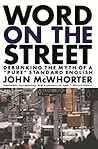
  • ‘Word On The Street: Debunking The Myth Of A Pure Standard English’, by John McWhorter – book essay

    Word On The Street: Debunking The Myth Of A Pure Standard EnglishWord On The Street: Debunking The Myth Of A Pure Standard English by John McWhorter

    My rating: 5 of 5 stars


    Sometimes, the courage to express my thoughts in English as a second language meets with insidious challenges between the grammarian Scylla and fault-finding Charybdis, lurking in the safety of anonymity on social media to stalk the prey with perverted joy. So, it is only natural for me to find encouragement from the books reassuring me that the mastery of language does not equate with intelligence. So, it is no wonder that I have the pleasure of reading  Word on the Street, an invigorating narrative told in scholastic zeal and impressive erudition flavored with street-smart audacity. McWhorter, who belongs to the constellation of brilliant linguists, such as Samuel Johnson and Steven Pinker, talks about language in terms of social and cultural contexts, making the academic subject a hot topic of a Charlie Rose talk show.

    McWhorter takes his view against language relativism that language shapes thoughts. The possession of words does not determine the thought process to contextualize the mentalese. Therefore, slang, idioms, and parlance outside the elite group of society and the educated middle class are not denigrated as improper English. In this sense, Pidgeon English, the quaintly charming admixture of scattered English words and a speaker’s native language, is not a corrupt version of pristine English but a hybrid of languages born out of the ingenuity of the human mind and changeability of language in nature. Isn’t English a living proof of the incredible amalgamation of languages still undergoing evolution? Who would have thought that English of the underclass would shine as a lingua franca?

    What strikes me most about the book, which concurs to his fellow linguist Pinker’s point of view on language not as a touchstone for one’s cognitive ability, is that solecism in spoken and written language does not reflect the user’s less desirable trait of academic ineptitude. To put it more bluntly, just because your grammar is besotted with errors doesn’t mean you don’t know what you are saying, or forthright, you are less intelligent. Take Leonardo da Vinci, the Renaissance polymath, who had no fewer than six grammar books on Latin and Greek to grasp the syntax of the classical dead languages he was so hopeless to learn thanks to his lack of formal education. In fact, da Vinci’s writings are ridden with misspellings and amorphous sentence fragments, just as Leo Tolstoy, Jane Austen, and Emily Bronte showed in their manuscripts. So, did their imperfect language skills overrule their force of imagination and contextualizing it in words? Does this betray that language shapes thought? 

    McWhorter can transcend the demarcation of race in the communication of this extensive knowledge about the subject drawn from a wealth of learning and scholastic industry with urban wit and debonair guy attitude to his readers, academic or general. His intelligence freely crosses over time gaps, chasms between class divide across continents and oceans with a universal theme of words that we, as human creatures, have spoken thus far. And he tells it using full of scintillating metaphors, examples, and anecdotes, which helps the reader comprehend otherwise monotonously academic subject without pressure and enjoyably. Samuel Johnson said that the possession of knowledge is to share it, and the possessor of the knowledge shines when he applies the knowledge to the crowd of life. Well, Word on the Street shows it all.


    View all my reviews