Tag: story

  • ‘Outliers’ by Malcolm Gladwell

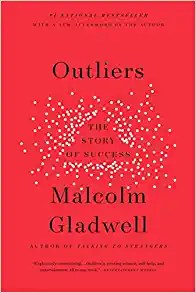
    The personification of success equals the characterization of the person in our society that has established an unwritten pervasive eugenic rubric of material success in representing where you live. The stories of Rags to Riches are mainly to blame because they are modern-day mythology of heroes and heroines or fairytales to imbue the populace with slim hopes that can also be dangerous, like mass-marketplace placebo anti-depressants. From Hercules to Cinderella, those whose success from their humble origins we love is not self-made as they claim to be in their memoir or interviews but are made of chance and circumstances. This book reveals how these outliers are not outliers but are insiders of the leagues of winners in sociological terms and facts.

    The book opens with a remarkable bible passage from the Gospel according to Matthew, dubbed as the “Matthew Effect” thus: “For unto every one that hath shall be given, and he shall have abundance: but from him, that hath not shall be taken away even that which he hath.” It means that success results from accumulated advantage and vice versa. The accumulated advantage is a combination of one’s ability and ambition interacting with the particular circumstances surrounding their rise over difficulties or challenges. Indeed, people who make lots of money must have burnt their midnight lamps to arrive where they are, but they also have people who help them and time to achieve their goals without worrying about other cares of the world. Hence, I don’t like JF Kennedy’s proclamation, “Ask not what your country can do for you – ask what you can do for your country. You can criticize people on welfare as losers lacking motivation and diligence when they need personal structural guidance and constructive public assistance to help them stand on their feet. You can’t just leave those behind the race as being slow or inadequate for the race.

    In ancient Greek mythology, the human race was born of mud by Prometheus and imbued with intelligence by Pallas Athena. Prometheus then gave sacred fire stolen from Olympus to make a better life. In the Old Testament, God blessed Abraham with wealth, who also helped his chosen few from those who instigated his wrath. Although modern-day outliers are not prophets or demigods, they certainly have their lucky stars. As Shakespeare agreed, “it’s the stars that govern our conditions.” Even if you disagree, you should not judge people who make less money than you, or no employment, or live in humble housing, thinking their situations result from their faults.

  • a lie, yes a lie

    No pain, no gain!
    Who said that?
    What a sadist!
    Break the heart,
    what do you want?
    Blow the spirit,
    does it come again?
    Some may regenerate
    like an inveterate clown
    when some can’t take it
    with the heartstrings pulled
    tweaked, pinched, and torn
    Till their souls refuse to stay
    besieged, assaulted within.
    So, never say once again
    Pain is s necessary gambit
    with stacks of aces hidden
    because it simply isn’t
    but a swaggering fiddlestick.

  • Later by Stephen King

    What seems abnormal may be normal to you. Seeing dead people may not be the most pleasant talent, but if that’s what you are born with, then it’s normal, and you have to live with it through Kubla-Ross’s famous five stages of dying. That happens to Jamie in his narrative of the coming-of-age proclamation of his identity in this story.

    Dead people are like quiet people lurking in the background of Jamie’s life. They appear to him as the last moments of their earthly lives, talking and joking to Jamie, who can see and hear them, albeit rather unreluctantly, because he’s not much pleased with his uncanny ability. But then it’s the discerning talent -says the Bible – that helps him know who he is, like an epiphany of a family secret locked in his uncle’s lost memories, thanks to nature’s force of dementia. However, this story is not so much a psychological thriller as a supernatural drama that is so characteristic of Stephen King’s novels, with a level of uncanniness combined with realism that makes his stories all the more real and relatable. The settings, the dialogues, and the jobs the characters have are not far-fetched, fanciful, or bourgeoisie, all of which attest to King’s engagingly realistic storytelling skills.

    Later is a three-fold story of horror without goriness, mystery without glamour, and bildungsroman without teenage angst. King has a unique knack for incorporating popular entertainment with serious literature that attracts readers of all generations and classes. He is a literary descendant of Nathaniel Hawthorne, Washington Irving, and Edgar Allen Poe, who defined American literature in the constellation of the World’s Literature for the joy of the beholders from generation to generation. All in all, this book will be one of the stars in the constellation.

  • ‘I’m Glad My Mom Died’ by Jennette McCurdy


    My rating: 5 of 5 stars

    When I first learned of this sensationally titled book with the pinky perky cover photo of the author from the New York Times Book Review, I knew I had to read it because of its boldness and frankness that I believe would strike the chords of many who must have felt or wished it (let’s be honest). However, it was more like seeking a kindred spirit in such a titled book because I felt exhilarated with camaraderie and, once exonerated from such membership, a desire to revolt against mothers.


    But the book isn’t an angst-ridden, hate-filled, violence-saturated memoir nowadays in-vogue among celebrities who live to tell their dark life histories. Although it isn’t precisely wholesomely hall-mark like loving family history, it is worth pointing out the moments of love and warmth that childhood memories sometimes invoke because we thrive as human beings on those memories. McCurdy’s mother may not have been perfect, but who is an ideal mother anyway? The Bard once said that look not with the eye but with the mind. She was the one who saw talents in her daughter, encouraged them, and made them blossom into a pink dandelion when many parents either ignore or overlook the bests of their children for their future. Although I can understand McCurdy’s disaffection with her passionate mother controlling her life, I am envious of having such a mother who was willing to sacrifice her hard labor for her daughter’s success.


    The cover photo is puzzling. The author has a smile but not smiling, or instead trying to smile but is subdued as if her emotions are changing instantly or frozen in the moments between joy and sadness, independence and confusion in the transition of belonging to freedom. I can’t honestly fathom what the author thinks inside, but one thing is certain she loves her mother, who is now unburdened with the cares and pain of the world. Perhaps, that is why she is glad her mother died.


    View all my reviews

  • Cat Mom’s Diary – 1

    My babies -Toro and Camille-

    I spent the whole day with my two babies, Toro and Camille at home. Initially, I planned to go to the gym in the morning, but since Camille became a family, I had been working full-time more than 8 hours a day outside the home, so I changed the plan. Besides, Toro has never seemed to be off guard of his young brother whom he punches with his front paw whenever he feels irate. In light of the above, they needed me all day today.

    2-year old Toro

    Toro is a timid tabby who tends to be startled by a sudden change of movement. He wasn’t like this when he was a kitten, though. Toro was and still is an affectionate, sweet, and lovely cat, but he doesn’t like a change in his environment. He needs constant care, which is impossible for me because I have to make a living outside the home. Besides, I have a mother who is the most difficult person to live with. I feel guilty for not providing an ideal environment for Toro, but I try to dispel the weight of guilt with the love of Toro. I wish he would know it. I hope he will understand my purpose in bringing Camille as his younger brother to play with.

    7-month old Camille

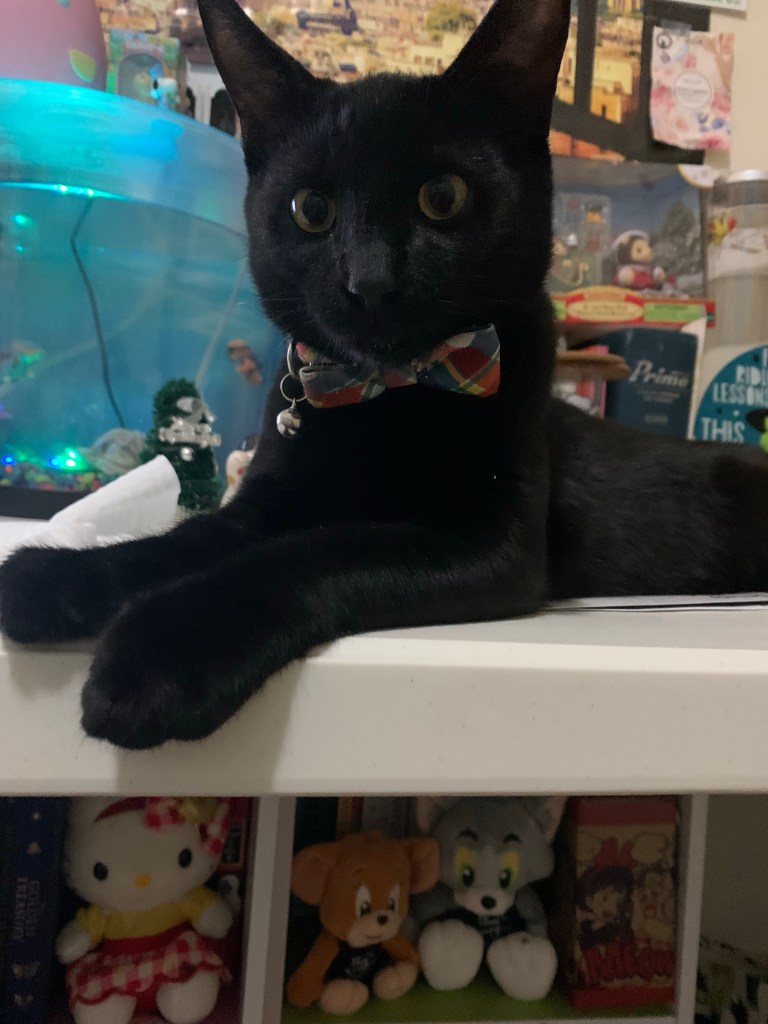
    Camille is an unbelievably affectionate and sweet black cat whom I believe of a Bombay cat breed because of his velvety shiny, ebony fur. And he eats like an elephant. I always have to give him at least two cans of wet food per meal a day. Last night, I woke up to his throwing up sound, which made me swear that I would be more strict about satisfying his voracious appetite. But that was only a fleeting caution. He’s back to his usual self, which means eating like an elephant.

    Although Toro and Camille are not the best cat duo, there’s hope when I see Toro let Camille devour his plate of wet food. Also, they sometimes sleep side by side on my dilapidated bed sofa. Rome wasn’t built a day.

  • Turkey and Thanksgiving

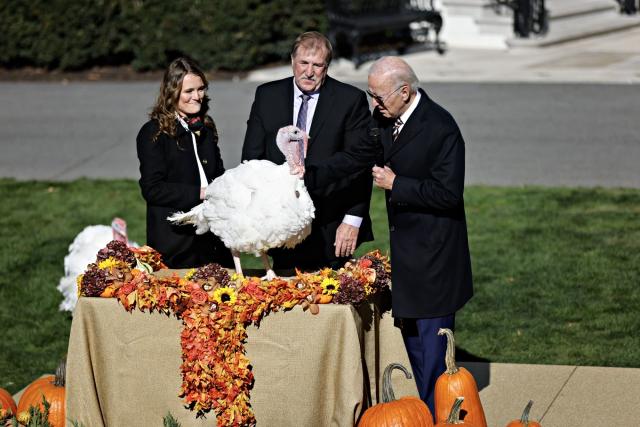
    This year’s lucky pair of turkeys that received a presidential pardon for not being sent to a slaughterhouse is Chocolate and Chip. The turkey symbolizes American festivity and character distinguished from all other birds of feathers, such as the eagle, the dove, or even the phoenix. So then it’s only natural to find out why the turkey has become the signature bird of the Thanksgiving holiday on Thanksgiving day.


    Benjamin Franklin, the amiable and ingenious American polymath founder, associated a virtue of morality, bravery, and strength with the natural characteristics of the turkey native to the American continent. He proposed that the bird be an emblem of the New Country. While the mystical implication of the bird with the New World has traditionally embodied in the cultural context of the pilgrim’s attributes to the nation’s founding in search of religious freedom from the Old World, the real stories about the American bird encompass the endorsement from the historical figures. George Washington proposed a Thanksgiving in 1789 as a day of “public thanksgiving and prayer,” which was chimed by Alexander Hamilton’s acclimation: “No person should abstain from having turkey on Thanksgiving Day.” But the Thanksgiving tradition began in 1863 when President Lincoln proposed the last Thursday in November as a “day of thanksgiving and praise to Almighty God, the beneficent Creator and Ruler of the Universe.” The regular Thanksgiving dinner menu culminated with one Sarah Joseph Hale, a magazine editor. She wrote Lincoln to urge celebrating the day with roast turkey, savory stuffing, gravy sauce, and pumpkin pie in memory of her beloved New England style of feast staple.

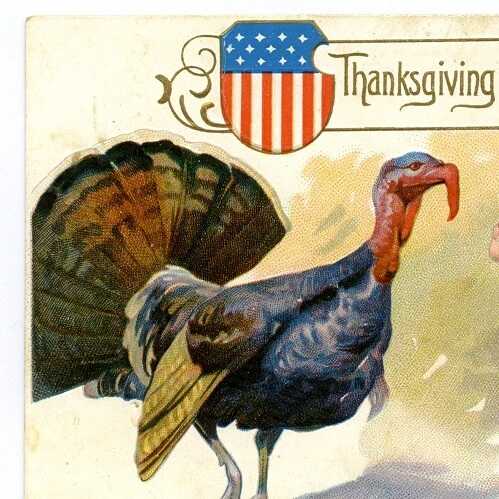
    Patriotic Turkey: Detail from a vintage Thanksgiving greeting card.


    In Europe, the turkey was a poor man’s fanciful feast because it resembled the peacock, a dish fit for the rich. The turkey occupies a dinner table alone as if it could stuff all the hungriest souls for days and nights. I agree with Benjamin Franklin that the turkey is a fit bird to become a bird of national symbol. The eagle may look regal and lofty, but it has no ingenuousness particular to America, which will always be a young country that is still growing and will grow as long as the tradition continues from generation to generation. Happy Thanksgiving.