Tag: thoughts

  • the real logan’s world

    Since Oscar Wilde said a woman who reveals her age reveals all about her, I will not tell how old I am, but I am still far away from the Shakespearean age of the Old Man. If interested, hark thus. That is about the culture and tendency of the post 9/11 generation omnipresent in everyday life spheres from social media platforms to workplaces. Equipped with computer savviness with a flair for chic insouciance and minimalistic sentiment, this new generation has dominated all. So what’s the rap?

    The cause for such generational distance came in the figures of two young lawyers fresh out of law schools in my workplace. They were both in their late twenties – the post 9/11 generation – didn’t have any practical work knowledge, which could be understandable. Yet their work ethic and attitude were disgraceful because a lack of enthusiasm and willingness to blend in the environment was a sign of defiance of conformity and cooperation, which people mistake for a display of subservience or acquiescence in the surrender of the will. But, of course, diligence is not synonymous with servitude. I am not even talking about Stakhanovism, in which workers spend more time at their work than at home. But the new generation is an entirely new breed, a new type of people aversive to warmth and friendliness on account of personal space because goodwill is suddenly turned malice, goodness weakness nowadays. How about calling them, Les Enfants Terrible? Would the ancient Roman scribbler who wrote on a tablet that the kids in his time were all spoiled have felt the same way as I do?

    My sentiment toward the post 9/11 generation is, I daresay, dystopian, which pitchforks me into a scene in the movie “Logan’s Run.” In the film, everyone on their 30th birthday is executed under the euphemistic pretext of Renewal. It’s a cult of Youth synonymous with Beauty, and the human race means the everlasting beautiful Youth. Agism and lookism are principles of such utopia, conquering Racism, Sexism, and Classism. Women of the utopia use their Beauty to exert their prowess on their targeted subjects. Only young and beautiful rule the world, and the faces of the post 9/11 generation dissolve into the spectators of the Renewal ceremony in “Logan’s Run.”

    Nevertheless, who cares about what I feel about this new type of humankind that will soon dominate the entire generations in our time? Indeed, time is ephemeral, so is culture. Yet, the universality of reason and sentiment common (I hope) in all human creatures has remained since time immemorial. Will the world now turn into the Real Logan’s World in the future? Or maybe am I too serious about it? Suddenly Madonna’s “Live to Tell” sings in my ears.


  • Teresa of Avila – book review

    Teresa of Avila: A Life from Beginning to End by Hourly History

    My rating: 4 of 5 stars

    Her epithet is deservedly illustrious, equal to her protean capacities for being multifarious: saint, mystic, and artist’s muse who was a curious kind of practical mystic with vision to match – that she would talk and hear God’s words from within and share them with the crowd in practice of charity, faith, and hope but never without heart. Protestant Elizabeth I of Great Britain might have envisioned the image of a Catholic nun of Spain a night before her Tilbury address that she had a woman’s body but had the bravery of a king. She is also the Doctor of the Church. She is Saint Teresa of Avila, the headstrong founder of the Carmelite Discalced and the woman of Lorenzo Bernini’s Ecstasy of Saint Teresa.


    My first encounter with this remarkable woman was not religious but academic; while researching women’s monasticism in the high medieval age during my college. Teresa saw many women who were too poor to pay dowry and didn’t want conjugal life found convents as shelters from social conventions without certain religious convictions. Consequently, convents became gossipy sonority houses populated with lackluster and jealous nuns backstabbing one another. The sad atmosphere of the convents used as a mere social institution propelled Teresa to establish the Carmelite Discalced – the Convent of Saint Joseph – with physical labor and disciplined monastic rules not without tenderness attended to individual nuns from all walks of life. She abolished land ownership and rent collections of and by nuns and instituted self-sufficiency of working without shoe but sandals, hence the name “Discalced.” The reformation within the Church was seismic but was a necessary medicinal receipt for the ailing monastic community.

    What is most brilliant about Teresa was to create the idea of “The Interior Castle,” a philosophy that the creator of the Universe dwells inside the castle of our souls. That God is from within us, rather than the beyond betokens the idea of personal God with whom we can communicate and thus become a literal mirror image of him for what’s best in ourselves. In fact, this revolutionary philosophy is also linked to Giordano Bruno’s “The Memory Palace,” from which the knowledge needs to be unlocked to bestow upon us the power and joy of the knowledge from within. Further, it is related to the idea of the Nine Muses, whose inspirations are invoked from our minds, not from the Olympus or oracles. All of the mentioned above shares one origin in the cognitive technique employed in Christian meditation developed from the essential reading and contemplating the Bible. But Teresa’s Interior Castle is a beautiful poetic license to enrich power that is never esoterically prideful but blissfully joyful. Where Bruno’s Memory Palace and the Artist’s Nine Muses are not all-inclusive, Teresa’s Interior Castle is universal with tender charity and faith even if it is not necessarily Christian God.

    Teresa of Avila was one brave and adventurous woman who was a prototype of feminist in the sense that she voiced out her mind to the patriarchal church authority in danger of being suspicious of heresy or witchcraft even in Catholic Spain, known for the Spanish Inquisition. But she was not a vociferous activist for abolishing the Church or would-be founder of an offshoot of the Church. Teresa was religious of the supreme kind. However, she never abandoned her femininity latticed with passion for helping a young priest in his spiritual crisis in war with physical temptation, tenderness for attending those in need of her consolation, and beauty that was both beautiful externally and internally. She shows us that a strong woman doesn’t need to shout out invective expletives or clamor for the reward for her damages in the name of womanhood when it is really for her sworn revenge. Aside from sectarian religious affiliations, Teresa of Avila deserves her reputation as a star in the Milky Way of the Great.


    View all my reviews

  • The Girl Without Hands

    The devil came upon a poor miller
    In exchange for wealth with luster
    And wanted his daughter’s hands
    Though it pained her in blood and tears.

    Now the girl without hands wandered off
    Day and night with her tears washing off
    The pain she suffered from the promise
    Her father made with the devil for riches.

    The girl without hands came upon a garden
    Where Tree of Fruits of Grace seemed to beckon
    with the susurrus of leaves coaxing her
    And she saw a besotted king approaching her.

    The girl without hands became a queen
    But the devil returned with a scheme
    To kill her and her son for their pure souls
    As bounty for his region against angels.

    The girl without hands fled with her son
    Deep into a forest where seven years began
    Until the king found them in Angel’s Hut
    And the girl with no hands was no more.

  • today’s world in my view – news from norway

    Politics comes in gray gravitas, and politicians look like seasoned actors with Tears for Fears singing in a mighty chorus of “Everybody Wants to Rule the World.” Simply saying, a majority of elected officials are charmless. But at least not Norway’s winning Labor Party leader Jonas Gahr Stoere about whom I read from a newspaper this morning because his background and perspectives feel like, as it were, a fresh cool mint breath out of stuffy, dull air.

    In the last two decades, the world has turned conservative and jingoistic in many countries due to economic and social changes. The liberals seem to clamor for ideological agendas that do not gain universal support without a structural plan concerning livelihood from healthcare to job security and social security benefits. For example, in the States, it’s all about ideology politics, not constructive reformations that attempt to narrow a wide gap of class stratification. In addition, American liberals are not closer to European liberals any more than the fashionably favorable appellation for free-thinking politicians. That said, Stoere, despite his being mega-rich with old money, has a clear vision for the universal welfare of Norwegians without antagonizing people of different classes. Stoere saw the vast difference of living qualities between the rich and the poor in France during his study at Science Po in Paris in the 80s and vowed to prevent it from existing in Norway. He also reassures that only the top 20 percent of the high-income individuals will see their taxes increased. Contrary to the vehement subjective political agendas vilifying the other with scarlet letters as an enemy of people prevalent in the States and elsewhere in the world, Stoere includes all strata with an ideal vision to match his practical campaign to distribute wealth among people evenly.

    Stoere is indeed undeniably rich himself with the wealth that will support at least three generations of his family. It is also true that not many politicians pinpoint another country’s quirks and make an example out of it for the betterment of their countries. Social reformation of narrowing a wide wealth gap has been a duty of politicians since the age of reason. Still, it never comes to realize without determination and intention to make it happen. As a cosmopolitan citizen of the world, I vote for Store for being refreshingly innovative and nobly aspirational.

  • Democratizing Delicacies

    The delicacy of life that sprinkles flavors to our otherwise mundane routine of everyday life is not a prerogative of the rich. American Catholic saint Dorothy Day once gave a diamond ring donated by a wealthy woman to a poor demented old lady and riposted to a chiding onlooker thus: “Do you suppose that God created diamonds only for the rich?” In this light of democratizing luxuries, Chef Marie-Antoine Careme championed the world of haute cuisine available to all walks of life and shared his knowledge and experience of Haute culinary arts for the use and enjoyment of the public.

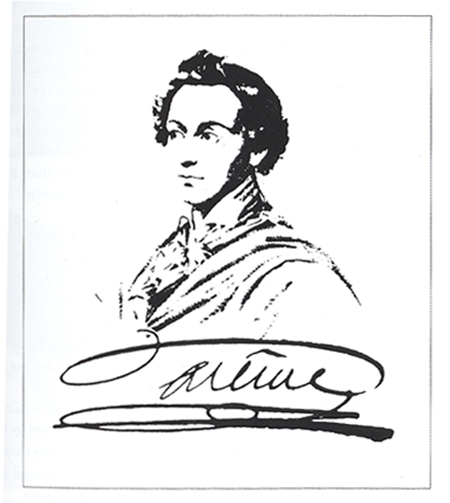
    Born into a poverty-stricken peasant family in 1784, Crame was abandoned at ten by his father, who told him to make use of his cleverness for his future. Before long, Careme found an apprenticeship to a famous patisserie. That was the beginning of his long, epoch-making legacy of master patisserie. With an innate intelligence and passion for culinary art, he opened his patisserie within a couple of years. His ingenuity for culinary art and a happy chance led him to a top diplomat’s chef to cook diplomatic banquets, for which he became the most sought-after chef in Paris. The success catapulted him to opening a famous patisserie at 19 on the rue de la Paix, baking the wedding cake for Napoleon and Marie-Louise of Austria. If Napoleon conjures up an image of a scrumptiously layered piece of Napoleon, Careme is smiling in a constellation of artists in heaven. Careme’s popularity endowed him with a celebrity figure in post-revolution, industrial age Europe where the luminary la dolce vita aristocrats commandeered was beginning to shine on those on the low rungs of social ladders. Careme might have been an ambitious entrepreneur to mark his name all over Europe with the crowning glory of lucrative success, but no one else but he tried to share the taste with the crowd indiscriminating class distinctions in his time.

    Careme’s success story has a familiar rags-to-riches repertoire with a combination of chance and apposite time surrounding his rise to success interacting with his talents. But why not the taste of the fame when his triumph of will over strife inspires achievable hopes and approachable aspirations? Careme personifies overcoming the mantra of existentialism that experience precedes essence. The fact that his own indigent family abandoned Careme didn’t dispirit his connatural intelligence nor did it plunge him into a Slough of Despondency. Or that didn’t really matter to Careme with his eyes, nose, and hands tuned for the world of delicacy that used to be exclusive for the rich and whose heart made it accessible to all. Indeed, the man was not a saint, nor do I intend to canonize him. But at least his actions and legacy deserve appreciation and admiration adorned with flowers and bonbons.

  • cathedral of forest

    She, with her wings clipped in shackles
    Sees the light above the high altar
    Through the dusk of leaves and boughs
    Beneath the dome of boundless skies
    Without spires and stained glass within.


    But why else when nature has it all
    Sermons in trees, brooks, and skies?
    From the haunt of life’s vicissitudes
    rests herself under the pillars of trees
    As the choristers of hummingbirds begin
    The hymns of hope in nature’s cathedral.