Tag: Writing

  • ‘Michelangelo and the Pope’s Ceiling’ by Ross King – review

    Michelangelo and the Pope's CeilingMichelangelo and the Pope’s Ceiling by Ross King

    My rating: 5 of 5 stars

    After Pope Julius II saw the Pieta installed for the tomb of a French cardinal, he wanted the same awe-inspiring adornment for his tomb. Hence, Michelangelo Buonarroti from Florence was summoned for the work. That’s how Michelangelo at age thirty-three reluctantly embarked on his Herculean task of frescoing the vault of the Sistine Chapel. This book by Ross King recounts such background stories of the making of the Sistine Chapel frescoes and descriptions of the personal traits of Michelangelo.

    Michelangelo’s work on the frescoes resulted from part Divine Providence of endowing the humanity with an awe-inspiring masterpiece of art to delight the senses of mankind throughout the ages, and part secular ambitions to mark the names of both the commissioner and the artist themselves. Pope Julius II also wanted to renovate the Sistine Chapel that had been used as a living quarter for the guards, a fortress against papal enemies, and a jail. As no one pours new wine into old wineskins as said in the bible, the pope’s plan to revert the chapel to its original place of worship, which made him drop his tomb project, was met by his idea of frescoing the vault in its entirety. Michelangelo, who was a breadwinner of his family, accepted the commission with good amount of salary and commenced four-year of labor of woes and dramas on the vault of the chapel.

    There are revealing truths that should be known concerning the process of frescoing the Sistine Chapel as follows: Contrary to popular belief that Michelangelo did the work while lying prone on his back, he worked with his upper body bent backward like a bow. Also, it wasn’t done by Michelangelo alone but by a team of his assistants chosen by Francesco Granacci, a close friend of Michelangelo, even though he was innately a solitary worker who had a strong distrust of others who worked with him.

    Michelangelo was said to be a man of  homely appearance without sociability in comparison with his contemporary and rival Raphael Santi whose beautiful look, even-tempered, and sweet character topped with artistic ingeniousness endeared him to the many. Also, Michelangelo’s direct altercation with Leonardo da Vinci as described in this book was amusing to discover. Both of the masters of the arts did not like each other publicly, but it was on the part of da Vinci who instigated such heated feud. He disregarded sculptors, including Michelangelo, as mechanics in the appearance of unkempt bakers.

    It is also interesting to pay special notes on the figures Michelangelo used for the frescoes, which shows his ingenuity of selecting unique subject matters distinguished from his contemporaries. To illustrate, he used 7 prophets from the Old Testament and 5 sibyls from pagan myth to decorate the Sistine vaults. He was fascinated with prophetic knowledge of the sibyls who had dwelt in sacred shrines and predicted the future in fits of inspired madness. This offered a riveting link between the sacred and the profane, the church and the esoteric pagan culture by reconciling pagan mythology with orthodox Christian teachings.

    Readers will find that the position of a painter/sculptor was not esteemed highly; he was more of a skilled laborer, a craftsman given exact orders how to produce his work by his commissioner or patron. In fact, he image of a solitary genius who would wield his brush and pallets to portray his world of imagination from the fathoms of his soul was a romantic fable. In Michelangelo’s time, an artist’s creativity was fettered by the demands of marketplace or his patron. Nevertheless, Michelangelo often disagreed to the pope’s own artistic direction and even had a temerity of broaching the shipping charges incurred in transporting the marbles from Carrara for the aborted tomb project at a dinner table with the pope .

    All in all, this book has its magical way of transporting readers to Italy in the early 16th century and invites readers to meet with Michelangelo as he was without sprucing up his personal character. Upon reading this book, I avert that Michelangelo is an artist bizarre fantastico whose magnum opuses on the ceiling of the Sistine Chapel have both the beauty and the sublime that produce in the spectator a kind of astonished wonder so formidable and so fantastic transcendent of time and place.

  • Ancient and Modern on Amore Fati

    Hope is not all sweet-minded and sweet-eyed as imagined by armchair intellectuals and best-selling writers when we stumble into moments of existential vertigo in real life situations. Shakespeare knew a thing about the nature of hope as an analgesic to numb the strains of daily life thus: “The miserable have no other medicine but only hope.” So much so that his martyred predecessor Sir Thomas More, the patron saint of lawyers and statesmen, had already said, “A drowning man will clutch at a straw.” Even before these two benefactors of humanity, the humble ancient Greek farmer/poet Hesiod affirmed hope as a psychosomatic pain relief in the story of Pandora’s Box in which only hope was left to console crestfallen Pandora deprived of all special gifts from gods.

    The didactic gist of this famed myth in his ‘Works and Days’ is that a belief in predetermination that we have no control over our life without hope is a delusion, a corollary of fatalism. It is a biological determinism, which must be vanquished, because according to his practical wisdom as a farmer, “Hope could come to fruition, since life pairs good with ill.” This wisdom is viable, since Hesiod as a farmer was a witness to resilient human spirit against unremitting soul. In this regard, Hesiod’s view on hope as an antidote to a malady of heart, giving a flickering force of life its meaning and a sense of purpose that will rekindle reason to continue living in the dark night of the soul relates to Austrian neurologist and psychiatrist Viktor E. Frankl’s Logotheraphy, based on an existential analysis focusing on will to meaning, meaning of life, with freedom of will. Frankl’s aphorism of “what is to give light must endure burning” must have struck the chords of Hesiod and even Thucydides, the Athenian political and military historian.

    Thucydides saw hope as an illusory idea of vanity and flattery that weakened man’s will to combat the existential reality. He highlighted the way delusional aspects of hope that generate a kind of hubris with catastrophic aftercome. He saw desire and hope hunting together that led man to choose a divisory lot rather than a realistic approach to life in travail to right the ship in distress. To Thucydides, hope was nothing more than awareness of odds in our favor. That is, you don’t have to think about it,but can fight with every hope of winning. It’s a case of the less you think about, the more you achieve, which was also addressed by Frankl. We are destined to live purposefully and meaningfully as a result of responding genuinely to life’s challenges. And hope is a handmaid to a sense of purpose in life.

    The ancient and modern are all united in Theory of Hope because it helps us look at our fate not at its face value but at its meaning. Hence the Latin phrase “Amore fati” chips in. We are challenged to change ourselves to continue living by choosing a right attitude toward life. Nietzsche sums it up brilliantly as thus: “Those who have a why to live can bear with almost any how.” And let us not forget what President Theodore Roosevelt advised us: “When you’re at the end of your rope, tie a knot and hold on.”

  • ‘Fairies: The Myths, Legends, & Lore’ by Skye Alexander – review

    Fairies: The Myths, Legends, & Lore

    Fairies: The Myths, Legends, & Lore by Skye Alexander

    My rating: 5 of 5 stars


    They are the hidden children of Adam and Eve. They are the minions of Lucifer fallen from Heaven into this terrestrial world when the gate was being closed by the Archangels at the time of the great celestial rebellion. No wonder they are neither good nor evil, although their amorality is felt more akin to treachery and terror to our mortal sense and sensibility. The ancient Greeks called them nymphs, and we call them fairies, frolicking and romping, feasting and dancing deliriously in their own fanciful realm: the slice of seacoast between tides, the deepening foliage between field and forest, and the sloping land between plain and mountain – a parallel universe existent in in their liminal four-dimensional world. Skye Alexander’s Fairies: The Myths, Legends, and Lore tells us all of it with her wealth of knowledge and introspection of these mystical beings as though it were her literary enchantment.

    The ambiguous nature of fairies endows the mystical folk with wonder and terror, glamour and danger, all in the veil of mysterious invisibility that has protected them since the time immemorial. They can be friends or foes, depending upon their moods. In fact, fairies have a status which fuses the capricious powers of demoted deities with the erotic charge of modern celebrity in the kingdom of myth and folklore. So much so that they have consistently appeared in literature and movies, such as ‘The Fairy Queen’ by Edmund Spencer, ‘A midsummer night’s dream’ by William Shakespeare, ‘Rip Van Winkle’ by Washington Irving, and ‘Peter Pan’ by Walt Disney. Unlike educated Christianity of angels and demons, these mystical celebrities have lived among humans because they embody our certain human traits, which are the good and the bad, and wishes that we cherish secretly to live better life. Take the case of glamour spells that will make a plain-looking lady beautiful to impress the onlookers in a favorable light. Fairies are the embodiment of our what-ifs in a land of imagination where our strains of existential life can be forgotten, if not eradicated. This also relates to historian Keith Thomas’s analysis of myth and magic as a mental analgesic. That the concept itself can account for such misfortune explains any conspicuous discrepancy between merit and reward and thus helps to reconcile anyone who believes it to the environment in which he lives. That is, it helps a man to take decisions when other agencies fail him, not jeopardizing his self-esteem because it does not relate existential dilemma to his ascribed social ranks and conditions.

    Changelings, Sleeping Beauty, Pixies, Brownies, Elves, Dwarfs, Selkies, Leprechauns, and Tinker Bell come alive pages upon pages of this enchanted book in an expense of the author’s charmingly kind guide to Fairyland we all have once believed. Since writing is also a peculiar alchemy of literature, this book is a magical concoction of the author’s knowledge of fairies and her alluring invitation to the liminal netherworld that will make the read even more enjoyable and lovable. Believers or unbelievers, this book is a good primer for the world of folklore and myths that we feel losing or lost.


    View all my reviews

  • ‘Joker (2019)’, directed by Todd Phillips- review


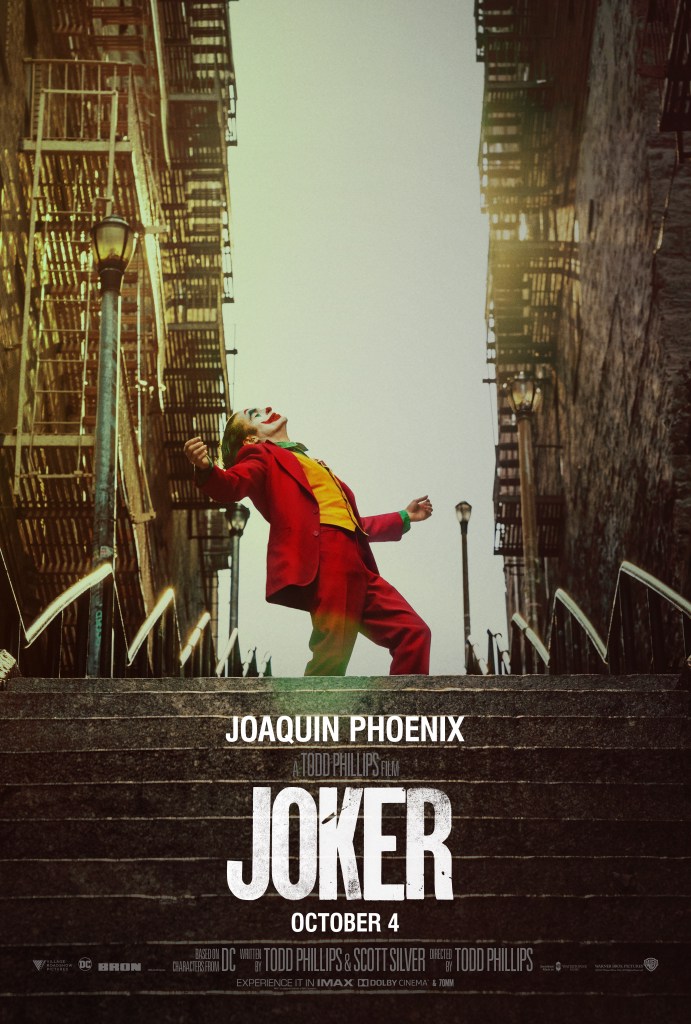
    He’s nobody to whom people neither listen nor talk. He’s alone, alone, all alone on a vast gaping sea of people who continuously berate the person and the dream and the existence of himself ruthlessly. Francis Bacon’s phrase of ‘Magna Civitas Magna solitude’ bethinks the case of Arthur Fleck. The Joker is a man trying so hard but futilely to preserve a sense of purpose and a tenacious grip on social recognition at the bottom rung of social hierarchy. Even the goddess Fortuna seems to vent her usual aeonian capricious nature on the fate of this unfortunate man whose Wheel of Fortune is destined to be positioned to True North of Tragedy. If this sounds maudlin enough to frown over that “just a movie” façade, then think of what Charlie Chaplin elegantly sums up thus: “Life is a tragedy when seen in close-up, but a comedy in long-shot.” This is a life of Arthur Fleck, and it is here where he becomes Joker, the archenemy of Batman and the good citizens of Gotham City. It all begins here in ‘Joker,’ directed by Todd Phillips, who seems to have an eye for the absurdities and hypocrisies in our society.

    fragileArthur Fleck is said to be mentally insecure, seeing a social worker every week who only cares about her civic duty to talk but not listen so that he can get his usual five different psychotic medications. He is conditioned to be mad amidst the licensed incivilities of the people indiscriminately. He is a victim of severe bullying and taunting for his bouts of uncontrollable laughers and gawkish rail-thin appearance in which his piercing blue eyes are the only resilient torches of his soul that defy the injustice and humiliation by society. It is the society that slowly maddens Arthur with those multiple chemical prescriptions and willful neglect of his presence. Must I chant his litany of woes further?

    The clown mask of Arthur Fleck becomes the persona that gives him a new personality with a sense of empowerment by freeing him from conscience in the heat of passion. According to the ancient Greek thespian idea of drama, the tragic actors were heavily disguised with a religious purpose in honor of Dionysus, the god of ecstasy, for the actor was to give up his identity to let another (i.e., the mask character) speak and act through him. In this regard, Arthur’s clown face betokens his suppressed self, drenched in vindication against the tyranny of societal conformity that allows no place for anyone like him. It’s certainly a tragedy in the sense that the painted mask becomes paradoxically the real character that imbues people with fearful attention to him, not the entire bare face of the man. The Joker’s face is stark defiance to the hypocrisies and absurdities that slight his existence as a person. As Melpomene, the muse of tragedy is portrayed as wearing a mask of sadness and a buskin, Arthur Fleck wears a clown mask with a buskin hiding his tears from his heart. The uncontrollable bouts of his laughter are, in fact, a cry of his wretched soul.

    At the heart of this film lies a heartfelt performance of actor Joachim Phoenix, who is said to have lost about fifty-two pounds in response to the director’s request to portray the linchpin as a gaunt man to render his vulnerability and alienation from people. The dedication to the character that is never easy to play shines through Phoenix’s stellar performance on the screen. The deliverance of the characterization is so realistically touching that it pains my heart to follow through the life of Arthur Fleck, oozing out insurmountable pathos and that even his chain-smoking is deemed less toxic and vice-signaling. We see him alone in his apartment, on the bus, and on the street, even among the crowd. We see him slowly abandoning himself to a bottomless pit of despondency as the world around him, including his mother, shuns him from humanity. His crime is to be condemned, but is this not a man who is more sinned against than sinning? Joker is a kind of movie that makes you go thinking after the lights are off.

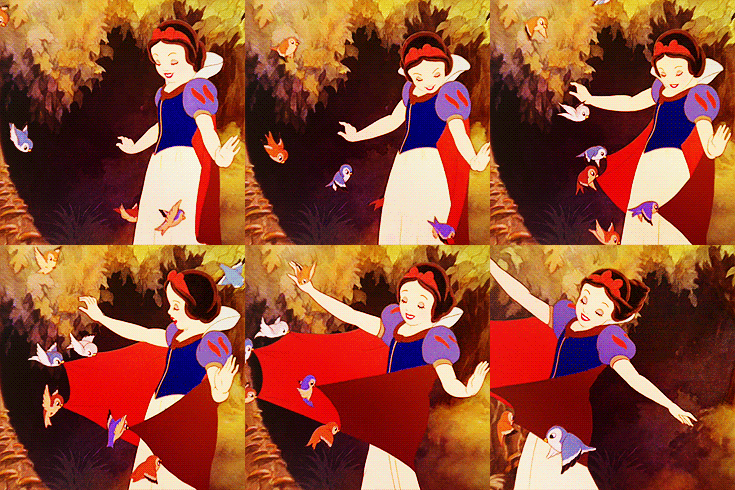
  • dances with birds

    A high blue sky

    It hangs a rainbow

    Its sight reigns

    Its colors glow.

    Lark is ascending…

    Sweet caroling is a melody

    Small wing stroke opens a new day

    Misty eyes see hope ascending…