Tag: Writing

  • Why We Get Fat: And What to Do About It by Gary Taubes

    Why We Get Fat: And What to Do About ItWhy We Get Fat: And What to Do About It by Gary Taubes

    My rating: 4 of 5 stars

    We all have read about books about dieting and exercising. We all have tried most or some of the methods as provided, but the bottom lines are all the same: that eating less, exercising more is the sine qua non of getting thin and staying healthy. Does this res ipsa loquitur (a thing that speaks for itself) model really work wonders to all? Then why doesn’t everyone following this principle get the uniformed result?

    Gary Taubes does not believe so. In fact, he subverts all such received ideas of what we have so far known as norms of dieting rules and regulations because they are scientifically fallacious and commercially expedient based upon his years of punctilious research on this subject matter. In this book, Taubes goes back to the primordial question of what makes us fat despite our efforts and offers head-turning advice which “stands the the received ideas of dieting and exercising on its head”.

    He criticizes such faulty knowledge on calorie intake/outtake as a result of insufficiently conducted experiments of nutritional science of the 20th century. (He calls it the product of “bad” nutritional science”) This belief of less “calorie take-in” and more “calorie-out” contradicts the science of physiology – i.e., how it works as regards to how our body digests food, where it is stored,  and how it influences our body.

    Furthermore, he looks into a role of genetics playing in metabolism. Which one is more influencing in making us thin? Exercising or your genetic composition? Besides, does meat really make us fat? Should we become vegetarians to lose weight and stay gracefully thin? Taubes answers these questions in detail and enlightens us from the mass hypnotic mantras of the calorie intake/outtake that have been permeated in our society for more than a century. If you are on the verge of abandoning your will to lose weight, or tired of listening to the fad dieting, or want to try something new and really effectual just as I did, this book will make a breakthrough guidance book for your healthy life.

    저장

  • Foretoken

    ex

    A high cold star on a winter’s night
    chiming the notes of her emotions
    entering a forgotten melody in the past
    is the word she feels for her pathos.

    저장

  • The Writer’s Guide to Everyday Life in the Middle Ages by Sherrilyn Kenyon

    The Writer's Guide to Everyday Life in the Middle Ages: The British Isles From 500-1500The Writer’s Guide to Everyday Life in the Middle Ages: The British Isles From 500-1500 by Sherrilyn Kenyon

    My rating: 4 of 5 stars

    Although the Middle Ages (roughly from the 5th to 15th century) is often dubbed as “The Dark Ages,” the epitaph coined by the thinkers of the Renaissance, this was the period when many important social institutions, such as universities, hospitals, marriage as a sacrament, and use of surnames, which have become norms of our society, were established. In this book, the author Sherrilyn Kenyon succeeds in closing the great divide of time and space between modern readers and the folks living in the medieval time by presenting general aspects of life in the medieval England ranging from food to medicine and so forth which are not so much outlandishly different from what we are familiar with in one way or another. This review of mine intends to provide the facts on the two of the necessities of the human life, which are food and clothing, plus medicine to share the fun of knowing them and of learning about the misty but not too distant past on an evolutionary clock.

    Food
    The folks in the Middles Ages were not usually voracious eaters; breakfast consisted of a loaf of bread and some wine for the nobility or ale for the peasantry, partaken of after a daily morning mass. Then between 10:00 AM and Noon, a dinner was served, and supper at the time of sunset was prepared. In the castle of a lord, during a supper time, a traveling minstrel (a wandering singer-songwriter) entertained the host of the castle and received food or coins in return. The most perplexing fact about the medieval table etiquette involves attitudes toward the dogs: food scraps were forbidden to be given out to the dog while the diners were at the table. It further prohibited tossing a morsel of food to the dogs even after the meal.

    With respect to the kinds of food mostly available to the folks living in the middle ages, the following were some of the common staples of the nobility and the peasantry:

    • Sugar was a very valuable spice and expensive to import. It was during the 12th century sugar became a common ingredient in England, where sugar imported from Alexandria was regarded prime quality because it was flavored with roses and violets. In fact, England in the Middle Ages seemed to be quite actively engaged in commercial activities in comparison to Spain, France, and Italy as follows:
    • England’s exports: Fish, Cheese, and Ale. Its imports: Raisins, figs, dates, olive oil, wine, almonds, and rice.
      Spain’s exports: Sugar, preserved fruits, and syrups
      France’s exports: Wine
      Italy’ exports: Pies
    • The most common vegetables were onions, peas, beans, and cabbages. However, cucumbers and leeks were considered unhealthy. As for the kinds of fruit, most consumed were apples, plums, pears, peaches, and nuts. Citrus ones, such as oranges and lemons were not seen in England until the Crusades.
    • Speaking of the Crusade, it was said that the French crusaders’ garlic breath disgusted the people of Constantinople for the reason that garlic was used as a main spice to conceal the taste of spoiling meat. There are two other ways to preserve meat: (1) Dry salting by burying meat in salt; and (2) Brune curing by soaking it in a salt solution. However, in many times, the meat, which was a main staple of the noble and the wealthy, became perished, causing a variety of skin irritations, scurvy, tooth decay, and different types of infection.

    Clothing
    Despite the class differences, there was a little difference between the styles of clothing and the types of fabric worn by the nobility and the peasantry at least during the early middle ages due mostly to limited trade caused by poor travel conditions. Merchants and peddlers could not travel far with their carts and wagons as a result of such poor road conditions and a peril of highwaymen. So Nobles made their fashion statements with jewels as accessories for their garments. When the power of kings and nobles grew stronger, they also controlled the roads, decreasing the risk of robbery and violence. Consequently, this new social mobility led to an increase in trade, bringing a greater variety of fabrics and colors. Moreover, the term “Fashion Police” was originated from this period when this deputy of the nobility literally patrolled the streets and checked all to make sure they were wearing clothes appropriate to their social class.

    Medicine
    I was especially interested in this subject due to my recent urgent medical treatments. What was it like being a patient of painful ailment? Contrary to my previous beliefs of barbarian methods of curing the sick without anesthesia and other superstitious ways of treating common diseases, the medieval doctors were actually quite competent to heal the wounded with surprisingly inventive surgical tools and remedies that can be adopted to tend to the modern day patients. Also, Jewish doctors armed with the knowledge of Arabic and Greek were most highly esteemed and exclusively employed by kings, nobles, or wealthy merchants in their castles or manors. Also, many women were licensed to practice medicine equipped with knowledge of various remedies passed from their elders. Some of these women specialized in eye diseases.

    The common types of ailments in the middles ages are as follows:

    • The most common diseases in the middles ages were dysentery, epilepsy, influenza, diphtheria, scurvy, typhoid, St. Vitus’ Dance, St. Anthony’s fire, stroke, heart disease, and leprosy. On the contrary, tuberculosis, cancer, alcoholism, and venereal diseases were rarely recorded despite the author’s thoroughly extensive research.
    • Also, doctors believed in the importance of preventive medicine, advising people to refrain from taking a nap because they followed the Greek belief that the body was made up of four humors that were sanguine, choler, phlegm, and melancholia and three spirits.
    • Interestingly, women gave birth in a sitting stance to allow gravity to streamline the delivery process. Moreover, anesthesia was used in surgeries in the form of a sponge soaked in the juice of opium, ivy, or lettuce and then dried in the sun. It’s re-soaked in water and held to the patient’s nose and mouth whenever it was needed.

    Further to the notable medieval medical achievements as listed above, here are some interesting information on how the folks at the time tried to cure their physical weaknesses which I think might benefit us:

    • Acorn: A woman carrying it will have the eternal youth
      Amethyst: the possession of it will prevent you from falling into drunkenness
      Blackberry: If you eat it, it will relieve you of diarrhea
      Camphor: It wards off infections
      Cold: Drinking a warm cup of barley tea will cure you of cold,
      Coughs: A pint of vinegar with a quarter ounce of finely grounded licorice will stop you from coughing.
      Dandelion: A cup of dandelion tea acts as a laxative
      Peppermint: Its tea will relieve you of bloatedness and relieve you of gas.
      Rosemary: If you wash your hair in water full of rosemary, it will make your hair grow.
      Rosewater: Apply it to your inflamed eye for treatment.

    To encapsulate, this easy-to-read book is a great guide to the ordinary customs of the middle ages that are compiled by the author’s diligently thorough research on the social/cultural aspects of the medieval England. In fact, as the title of this book presents, it will be also an excellent reference book for writers interested in creating stories set in this time period. Besides, the book shows readers that however arcane or backward the way of life in the medieval time may look to be in our modern standard, the medieval folks lived in what they imagined as “modern” time compared to the ancient Greek and Roman times. Therefore, we should cast away our fallacy of the human ego that makes us look back at the past and think we are better than they were. After all, the medieval was not altogether a grim and gloom dystopia ruled by religious didacticism and scientific ignorance.

    저장

    저장

  • Sunday Episode – Avonlea Tunes

    Little ones’ sweet days (Click here for what they did.)

    2503958-0682811358-KKSli

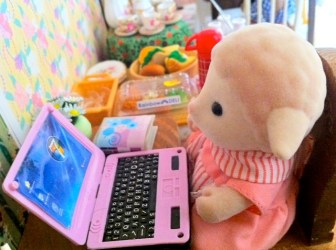
    It’s still cold here in the town of Avonlea with the North Wind reigning his realm of winter. The snow has stopped falling since the last Tuesday, but the cold temperature still befalls the residents of Avonlea. However, the spirits of the little ones are all the more upbeat with their seemingly nonstop frolics and curious minds about what goes around them everyday.

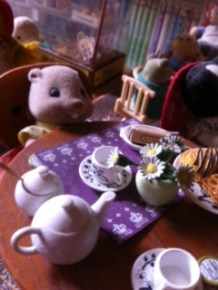
    Yesterday after attending their 9:00 AM Sunday mass in the Church of St. Mary, the little ones gathered again at Mrs. Lompstrompf’s cafe to confabulate with one another with sweets and refreshments. It was a reward for their attending the early morning mass despite the frigid temperature added by frightfully pungent wind slapping he little faces without mercy as they had marched forth to the church. What brave souls they were! That’s why Jesus told that we should be like children to inherit the kingdom of heaven.

    So this was how they spent yesterday in Avonlea. However simple the story might be, it’s recorded in their chapters of life. That’s what a life is. The meaning of life depends upon whether or not we fulfill the demands placed upon our daily tasks. The little ones seem to know it. What about you, dear reader?

    hqdefault

    저장

    저장

  • The Arrival of the Beaver

    Calico Times (Click here to read the article.)

    phoo

    At the outset of the new year, which is also Year of Dog, a new family lands at Littleton Airport in the vicinity of Avonlea with their new hopes and aspirations. The Calico Times, which is the one and only newspaper in Avonlea, welcomes the new family wholeheartedly as new residents of Avonlea with a heartwarming report of their arrival.

    Meet the Beaver from England: the household is headed by Paul Beaver, an able mechanic with amazing technical dexterity and a heart of gold. Brenda Beaver, his better half, is a full-time homemaker, administering the domestic affairs while her husband is working outside the home for the family. In fact, Mrs. Beaver regards housekeeping as a formidable domain of work, contrary to the received idea of the work as drudgery or menial labor degraded by women nowadays. Betty and Wille are their adorable and bright children. They have inherited the good qualities from their parents but are by no means spoiled, thanks to the child rearing balanced with loving care and discipline.

    So the new family will start their life anew in a new land with auspicious thinking and go-aheaditiveness. Also, they are happy to reunite with their good friends, the Collie from Scotland.  In fact, the Beaver will stay a week at the Collie until they find a new abode in the town. Let’s make good wishes for the Beaver!

    0682e26f337825b366e8e3e3e0003ad1--folk-disc-golf


  • The Romans as close as you can be

    Life in Ancient RomeLife in Ancient Rome by Lionel Casson

    My rating: 4 of 5 stars

    There was a time when all the roads led to Rome that lasted approximately 1,500 years ranging from the era of B.C. to that of A.D. It was from this Roman world where the art of politics was crafted and exemplified; it was also from this grandiose empire where Christianity gained ground and dispersed Christendom/Christianity to Urbi et orbi. However, what piqued me most was the key phases of life in the Roman world; what life was like in the various spectrum of society, ranging from the slave to the aristocrat? How different was the life in the Roman world from the life in our modern world? This book by the erudite historian Lionel Casson presents elegant sketches of such aspects of the Eternal City, particularly during the first and second A.D.

    Although Rome was the center of the Empire, its strength came from its provinces. For instance, the grain, wine, and oil came from Egypt, France, and Spain. The businessmen who traded such goods were largely provincials, so were the army recruits. Moreover, even slaves could achieve upward social mobility once they became freed through manumission which granted them Roman citizenship. In fact, it was this practice of incorporating into the state the communities it claimed and the populace it governed by bestowing upon them citizenship on the whole. To illustrate, Horace, the famous Roman poet, was a son of a freed slave who later became a wealthy farmer. Felix, who threw St. Paul in a jail, was himself a freed slave who rose above the planes of his melee. These nouveau citizens joined the citizen body and contributed their labor to the society.

    Most girls married between the age of twelve and fifteen, and they must possess a dowry. If her husband died, or the couple divorced, it was returned, except a portion for the raising the children by the husband and penalty in case of her misdemeanor. No dowry, no husband in this paterfamily society. Also, the common law marriage was accepted, such as in the case of Marcus Aurelius, the philosopher-emperor ruling Rome from 161 A.D. to 180 A.D. After his wife died, he lived with the daughter of his wife’s business agent as concubine. An upper-class woman could have a lover of humble status, even including a slave.

    There are lots of other interesting facts that will surprise the reader with a feeling of closeness to these citizens of the Eternal City because they were not much different from the citizens of the modern world in many ways; the scenery changes, and the people change, but the human nature does not change as long as the humankind exists.