Tag: fiction

  • ‘Howl’s Moving Castle’, by Diana Wynne Jones – review

    Howl's Moving Castle (Howl's Moving Castle, #1)Howl’s Moving Castle by Diana Wynne Jones

    My rating: 5 of 5 stars


    Whether it is for the pursuit of artistic aestheticism or indulgence in sheer egoism, writers tell their stories in books where, in the peculiar alchemy of words dipped in imagination, they blend the real with the ideal. That said, Diana Wynne Jones’s Howl’s Moving Castle is a beautiful world of magic and witcraft that cast a spell on the gloomy reality to make it a gorgeous fantasy.

    A melancholy of vertiginous existential crisis in a life fraught with responsibilities and duties morphs into a fantastic narrative of the imaginary world where magic, wizards, witches, and demons mingle with ordinary people and even fall in love with them like those of Olympus gods with mortals until Hesiod’s Heroic Age. Sophie Hatter, the book’s heroine, is Jones’s alter ego, only younger in age and freer in status. Still, everything else about her is Jones herself, most prominently her being the eldest child responsible for all things adult – by alas, birthright. Sophie’s self-analysis of being the oldest for the principal cause of misfortune applies to Jones’s family background, being the oldest of three sisters just as Sophie is for Martha and Lattie. I remember reading elsewhere that at the time of writing this book, Jones was going through the crisis in adulthood: a sickly husband, live-in mother-in-law, friends in need, children to take care of, etc. Despite Jones’s degree in English Literature from Oxford University, she felt injustice for her talent and mind eroding in the seemingly endless Sisyphean maneuvering of rolling up a daily boulder. So she took a pen to paper and wrote the book to spur her reservoir of existential frustrations on writing her story in the guise of fiction.

    However, after the book’s success, Jones withstood from telling it a reflection of her inner world. She referred it to a certain boy who wanted to create a moving castle. Although the integrity of the inspiration belongs to the author’s literary license, Jones appeared to be reluctant to admit that she told her story in the book due to her celebrity. On a personal note, I could understand her volition to employ a more lovely pretext in safely hiding her existential frustration in privacy. Still, the book’s background written at the time of a crisis of adulthood puts together tesserae in a fanciful puzzler. The agency of magical elements in the story enables Jones to free herself from the mental inhibitions to depict the world’s realism, which seems too dreary and drab, gloomy and harsh, for the reader to be burdened with the author’s frustrations. Instead, Jones created the world populated with witches and wizards not looking like creepy worshippers of the devil and a fire demon far from being diabolic. All the menageries of wondrous characters neutralize the pathos of Sophie.

    I read the book with a kindred spirit of being the firstborn child in the family, so it was a pleasure to know that I was not the only person who felt burdened with family and others’ cares. Witch of Waste’s turning Sophie into a ninety-year-old spinster adumbrates Jones’ feeling of oldness in her soul that affects her appearance due to her continuously solitary labor of care. Yet, Jones is kind to Sophie with the eccentric but wonderful Howl and other helpful characters, including Calcifer, a fire demon, all of whom recognize Sophie’s worth and beauty of heart with respect and care that she deserves so much. Jones does a fabulous job of transforming a vehement narrative of angst as an adult in the real-world into a fairytale of love and luck, where those who feel burdened with the weight of life will be awarded fabulous surprise long overdue.


    View all my reviews

  • ‘The Amiable Fleas’, by John Steinbeck – review

    John Steinbeck was all man. He was a writer of muscles. I meant the powers of strong individuality that disagreed with grandstanding with the political in-vogue trends of his time with his writing as literature for an ideology of grand cultural context, not for the mind’s pleasurable satisfaction. In a word, Steinbeck appears to be in touch with the real world, with the characters realistic and stories palatable, not confined in the seclusion of a leisurely abstract world of the elite. The Amiable Fleas conveys all of the charms described above of Steinbeck as an attractive raconteur at his best: humorous, heartfelt, and honest in his tough cowboy appearance in a strange city filled with quaint aromas of the old civilization.

    The Amiable Fleas is Steinbeck’s testimonial narrative of the truth found in life’s ordinariness; the meaning of life realized in the joy of small pleasure against provisional needs of instant fame and worldly prestige. It’s an innate folly of human nature trying to reason against the significance of Serenity, Courage, and Wisdom as if they are remotely associated with Intellect. As Steinbeck held against criticism about avoiding the political and social issues of his time, he tried to reason his own reason for writing about such simple truth of life.

    The Amiable Fleas is the res ipsa loquiter of the value of small things that Steinbeck treasures, for it is what keeps the troublesome, pugnacious, bickering human tribe tamable and bearable with humor, which is a handmaid to hope and resilience. The amiable fleas represent the idyllic but oddly likable bunch of professionally intellectual people whose existence is a canvas of abstract painting that lacks a touch of realism. The poet, the architect, and the painter occupy their self-designated seats in the eponymous restaurants in Paris, doing nothing but contemplating about their artistic works in the selfishness of intellectual stasis. The excellent chef of the restaurant M. Amite embodies an artist whose ambition is the stir that his honest mind raises. The desire for fame is the infirmity of his admirably good, hearty nature. The star of the Michelin Guide is the apple of the discord, a symbol of outside influence that incites M. Amite’s ambition, not from his love of cooking to please his feline friend named Apollo. M. Amite is the image of an artist swayed by the great things of the world, even if it would cause him a loss of joyful dailiness.

    Originally published in the historically renowned French newspaper Le Figaro on July 31, 1954, as the tenth weekly installment of “One American in Paris,” The Amiable Fleas was published in English for the first time July-November 2019 issue of Strand Magazine. The background of this charming and heartwarming short story was that Steinbeck wanted to be himself, not how the French media imagined him to be or wanted to create their version of him from the counterproductive interviews with the American writer. And so he wrote a series of short stories that only he could tell with his quintessentially American way of storytelling. Yet the result is beyond the territorial boundaries and cultural enclaves, for the narrative reaches the hearts of not only the hard-to-please sophisticated Parisian readers but also the universal readers of all ages. Steinbeck is undeniably American to the core. Yet his love of realism that gives a new viewpoint upon dailiness of life enables readers of the world to get a fresh, bright hold upon our problems. Given that perspective, everything is something, and everyone is someone.

  • ‘Planet of the Apes (1968)’ – film essay

    71oadYuBx+L._AC_SY879_

    Imagine this. You are the only person marooned somewhere far away from your world. You have all heard the dystopian chimes of every brave new world from George Orwell’s totalitarian society of 1984 to William Golding’s terrifying Lord of Flies and Aldous Huxley’s eponymously prophetic Brave New World. Yet, you have not realized how it would be like until you enter such a world alone. The world you face now is the amalgamation of all the worlds described above that exist in the selfishness of lettered cases. What would be your impulsive action toward the stupendousness of the incredible event? Besides, what if your best work a la your reason and hope as good as your pride and hubris can present turns out to be a grand Faux pas?

    planet-of-the-apes-soldiers-pose

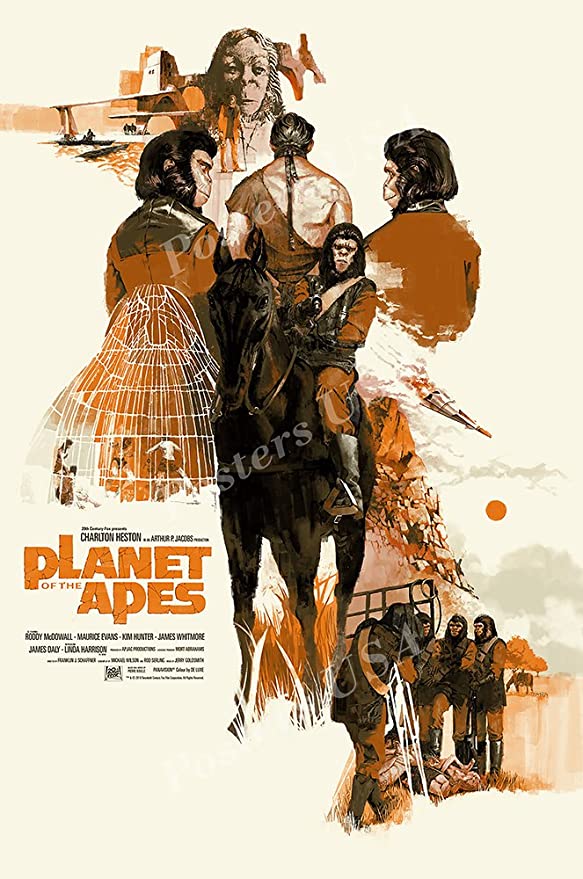
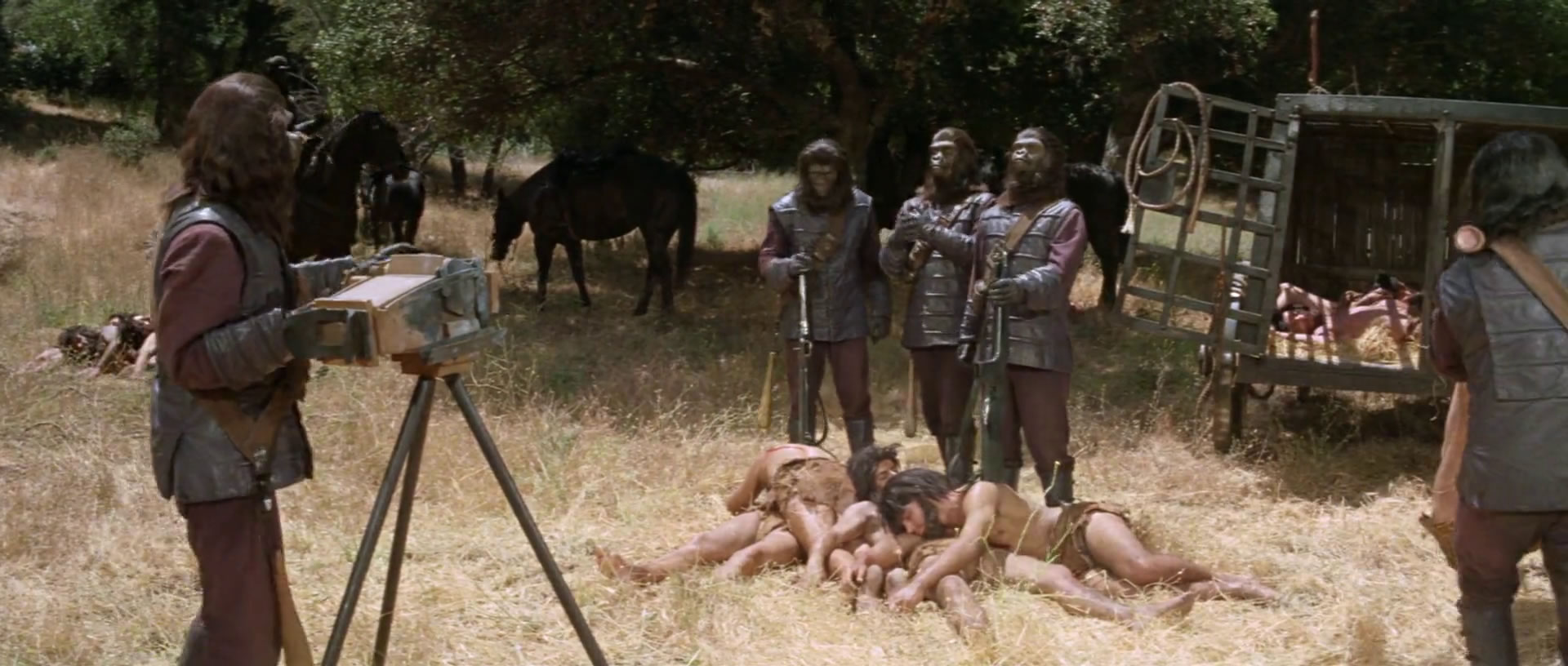
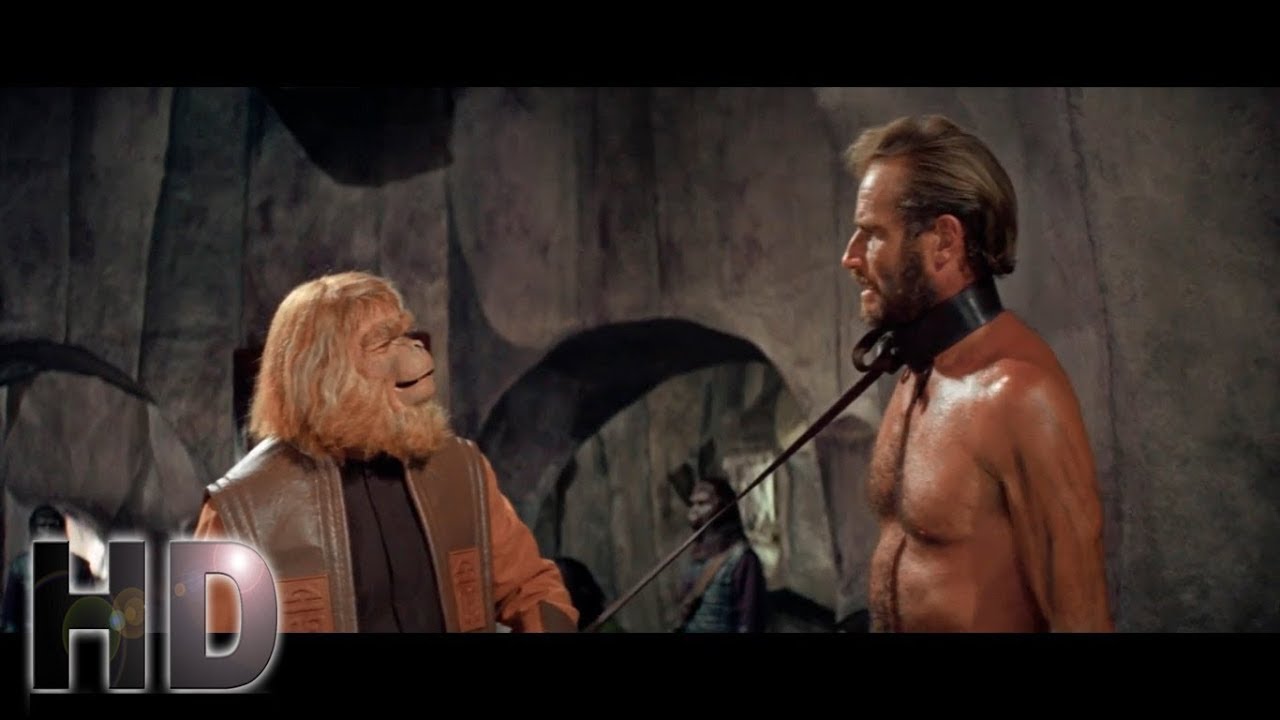
    Planet of the Apes (1968), directed by Franklin J. Schaffner, is a crackling Sci-Fi movie that translates the dystopian thematic of a world in a phantasmagorical display of primal humans and intelligent primates that upends the existing hierarchy of creations and reconstructs the fundamental doctrines of the Origin of Species. It is an advanced society of chimpanzees and orangutans that talk smart, which the 20th-century American astronaut George Taylor (played by Charlton Heston) is hard to stomach with human pride. He then becomes a deformed kind of human slave of the apes in this new brave world where from their God to a prison guard, the apes are the master of the humans. What a wonder this brave new world, that has such apes in it.

    maxresdefault

    The movie is a visually compelling Juvenalian satire that mercilessly but humorously mocks the targeted human hubris that brings about its destruction in an attempt to replace the role of God. The thinking, talking, and even kissing apes mirror the social behaviors that are no more particular to humans who fail to preserve humankind’s prerogatives by the self-destruction of humanity from catastrophic nuclear war. Taylor embodies the hubris in the optimistic veneer of audacious hope that he will find a way home, to his kinds. It is this hubris that causes the downfall of humankind and himself. He hunts desire and hopes together in the constant resistance against the apes despite the impossibility of returning to earth with the defunct spaceship. His faith is nothing but a waking dream, haughty defiance against the reality, dreaming an awareness of odds in his favor.

    charltonhestonplanetoftheapesgeorgetaylor

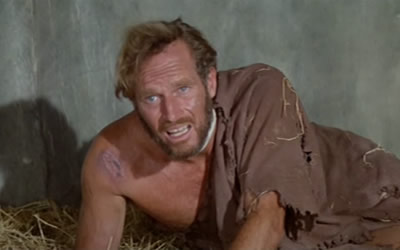
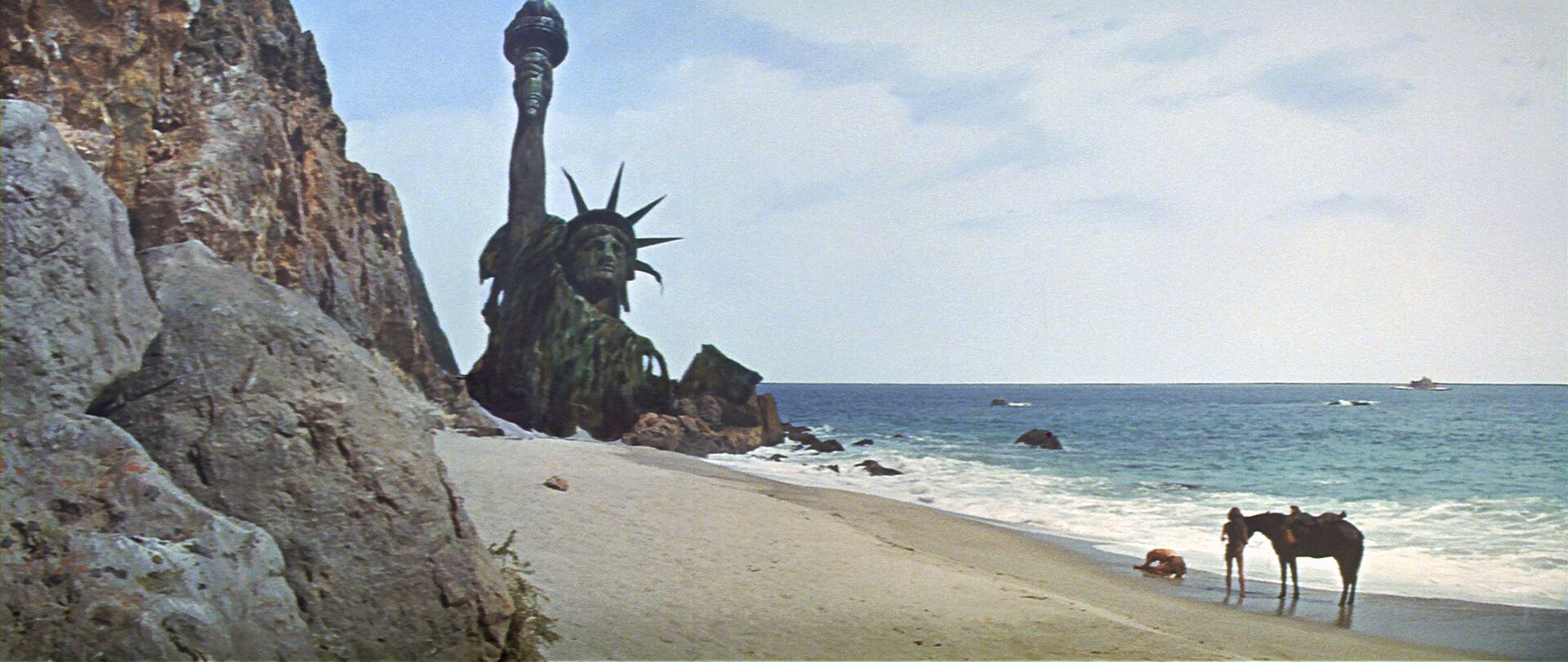
    The figure of Taylor is one oddly fascinating mixture of panache and wit, sarcasm, and heart, wrapped in the likeliness of Shakespeare’s Macbeth. Talyor represents dramas of human characters wonderfully packed in the imposing physique, towering the apes as if to manifest the sovereignty of man over the apes. The pathos of Taylor in the climactic denouement of the movie reveals his frailty in recognization of the collapsed grand narratives of hope, disillusioned wishes, and shattered dreams as uttered by Macbeth: “Life is but a walking shadow, a poor player that struts and frets his hour upon the stage. And then is heard no more. It is a tale told by an idiot, full of sound and fury, signifying nothing.” Will this be an empty outcry of failed civilization, echoing the collective pathos of the human consciousness for the corrupt world at its heart?

    planet-apes-ending

  • ‘A Journal of the Plague Year’, by Daniel Defoe – review

    A Journal of the Plague YearA Journal of the Plague Year by Daniel Defoe

    My rating: 5 of 5 stars

    The biblical cyclicity of history proclaims that what is happening now happened before because there’s no new thing under the sun. As I agree with the cyclical history theory, I prefer stories that confirm the continuity of human nature, which results in this felicitous book I came across on the Kindle store. The precedent epidemic scares and the response to them in Daniel Defoe’s A Journal of the Plague Year, a classic 1722 account of the Black Death that devastated England from 1664 to 1665, do not read no less different than ours. Defoe’s recounting of the plague successfully resurrects the spirit of the epoch as his narrator guides the reader to the places and scenes of the seismic event in the capacity of a charitable and knowledgeable guardian of posterity, making them surprisingly familiar with ours.

    It is a literary eye-witness account of what happened during the resurgence of the bubonic plague that had ravaged Europe hundreds of years earlier in the semblance of a nonfiction narrative. Even though Defoe was only five years old when the plague swept England, his fictional narrator feels very real and the account telltale as though it had been written it in the spirit of Veni Vidi Vici. So much so that the story seems more veritable than the counterpart of Samuel Pepys, whose narrative feels comparatively prosaic without the personal charm of the narrator. The reader will also learn that the 17th-century modus operandi of dealing with a pandemic is not that far from the current 21st-century preventive measures of social distancing, personal hygienic disciplines, and other relevant systematic societal restrictions.

    Defoe holds up a mirror to his posterity that shows what it was like during the epidemic scare and what the people from days of yore did to sail through such calamity as a wise and warm advisor to our current global pandemic situations. In fact, while I was reading the book, I was surprised by how similar the cautious measures decreed by the authority were then to our own now. In my opinion, this book replaces Boccaccio’s The Decameron as a must-read during the pandemic, because of its power of reality drawn on empirical oral accounts so close to the lives of the ordinary folk that we can relate to our own time.

    View all my reviews

  • ‘Plain Girl’, by Arthur Miller – review

    Plain GirlPlain Girl by Arthur Miller

    My rating: 5 of 5 stars

    When I first came across this book while looking for my next read on the train, I was immediately hooked on by the simple no-nonsense title of Plain Girl and incredulously surprised by the famous name of Arthur Miller, a celebrity playwright who had once married Marylin Monroe in his prime. Such an incongruous admixture of the images sprang in my mind like phantasms from a presumed association between the Dolorous and the Gorgeous, the Lonely and the Lovely, the Unlucky and the Lucky, all compactness in this beautifully elliptical and deeply heartfelt story about a plain girl whose jewel of beauty was wrapped in a dull, grey, crude titular epithet.

    Janice Sessions, an intelligent young Jewish woman living in New York City, seems to share the sentiments of the introverts whose quiet modes of behaviors and shyness often make them unnoticed, if not obscure, among vociferous, glamorous crowds. Think Maupassant, who at the hour of his death confides in his close friend, “I coveted everything and enjoyed nothing.” And Charlotte Bronte, who always thinks she is deprived of beauty and fortune, which prevents her from a delight of love as a prerogative of beautiful fortunate women. And then the Monster created by Dr. Frankenstein whose deformity puts him in a cruel shackle of absolute loneliness with an outcry of “I see inside but dare not to go inside!” They are the concerted echoes of estrangement – whether voluntarily or involuntarily imagined or devised – from lonely souls roaming around, wandering about in a search of happiness in life that can culminate in the union of loves, both Eros and Psyche, the spiritualization of sensuality in totality. This Janice is in want of, this is the source of her existential distress, noogenic frustration that keeps her away from anything miraculous and wonderful every happening to her.

    In fact, I wonder if Miller writes this story of a plain girl on the thematics of existential frustration in which his protagonist is made to believe what she really isn’t, whereas her extraordinariness of resilient spirit against endless disappointment and distress renders her all the more distinguished from her peers whose ordinary femininity looks banal and trifle without stories to tell. Such emotional distress may arise from an existential vacuum caused by a collective value, such as in this story the disillusioned tenets of political and social ideologies ultimately culminating in World War II and the aftermath thereof. And Miller so elegantly and dexterously accounts for a woman’s solitary quest for the meaning of life, a sense of purpose in life as a woman of true value against epochal tides of world crisis. The apex of Miller’s literary finesse manifests in every sentence delicately nuanced sentiment wrapped in his elliptical expressions and laconic use of plain words, defying every streak of intricately baroque literature that does not communicate straightforwardly to the hearts of readers.

    This book is not to discuss woman’s liberation or to lecture about the superiority of spiritual beauty over physical beauty that so many of you would quickly respond with stock answers. Janice’s doubt about her value of being loved and her preoccupied consciousness to her appearance makes her all the more palpable and realistic to those of you who find a kindred spirit in her and feel that you are not alone in loneliness and that what you think you are may not be the truth. Janice doesn’t need the glamour spell to transform herself into beauty because Janice is not a plain girl, nor has been, and will never be. The same goes for you.

    View all my reviews

  • they come to her at night

    Screenshot_54

    The night was a strange paradox of light and dark. It was too dark to invoke images of the bright beautiful things. It was too light to provoke imaginations of the blissful obliviousness. The night was a white heat of the sleepless senses that kept taking in all seen and heard even after the provocateurs were long gone out of sight. This was maddening and becoming madder and striking the notes of all madness. Iris couldn’t sleep as the night was getting deeper and darker, and it was consuming every part of her in a great white incandescent flame like a funeral pyre that once engulfed Dido’s forsaken body and unfortunate heart. The senses that kept her awake besieged her glass castle without mercy and started to screen the scenes of sadness and more sadness as an apparition of the past narrated the story buried in its tomb without an epitaph. She was wide awake at the bewitching hour, and she was helplessly defenseless against the force of the hour.

    Since she was a little girl, Iris has been going through the same nocturnal rituals of waking up at 3:00 AM on time, precisely, continuously, as always. Every single night was every single rite of this uncanny performance of sleeplessness – that is, exactly at 3:00 AM. When she wakes up, the electronic digits always show 3:00 AM with glows that seems to grow lighter the more she looks at it in fearful awe. Fearful because Iris has learned that it is the hour when the gates of the underworld, the netherworld, the world beyond are open, and the regions of faeries and wandering spirits roam the earth as witches fly to the devil’s banquets. Hokum it may be, but the bewitching hour also seems to include Iris as a coterie of the supernatural for what’s worth. This secret is hers and hers only in fear of being branded as a weirdo or a witch’s apprentice even. Yet, because Iris’s soft heart cannot bear a secret too long for its painfully tender fullness of emotions and feelings to keep it to herself, it now agonizes her sense and antagonizes her sensibility. And it was this night that got her to a paroxysm of inquisitiveness, inadmissibility, and ineffableness, enveloped in the mysterious veil of incredibility so enigmatically eerie that it almost felt infatuating with the unknown.

    The magical hour was now in possession of the waken Iris with wide eyes, and the effect was smeared into every part of her body without a miss like ink instantly and ferociously diffusing in a glass of clear water. She did not like it, but her opinion was useless under the power of the supernatural hour. Iris wanted to break the spell and doing so would require her of facing another unknown mysterious force. Her Catholicism would defy her magical assumption on the incredible symptom, but Iris knew that her religion itself entailed the magical qualities of belief and that it was only natural for her to connect the dots between the two belief systems as a solution to her ghostly malady. That’s it. She can’t take it anymore, she can’t have it any longer. Forget the religion, and think primal. Iris has made up her mind to start her investigation of the supernatural phenomenon that she has been going through to find whys and wherefores.