Tag: history

  • Voltaire, the moral rebel – book review

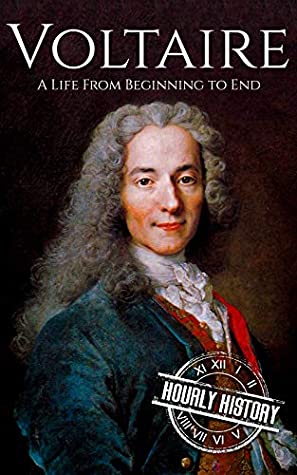
    Voltaire: A Life from Beginning to End by Hourly History

    My rating: 5 of 5 stars


    The role of intellectuals is to see the corrupt at the heart of society and stand furious with the mass and constantly monitor the conditions of ill-effects and actively work on the improvement of living conditions. For books can never teach the use of books. Otherwise, they are no more than armchair academics complacent with their impressive scholastic achievements and high social esteem as elites of society, proudly distanced themselves from the general. But Voltaire wasn’t, nor was he a demagogic writer grandstanding with the ire of the have-nots.

    Born as Francois-Marie Arouet on November 21, 1694, when the discovery of the New World and religious turmoil swept Europe, Voltaire was destined to become a cavalier of new thoughts, the Enlightenment of Thoughts, which the Catholic Church regarded as a dangerous school of ideas to the mass. Yet, Voltaire wasn’t hell-bent on destroying the Catholic Church as a freemason but pilloried the corruption of the ecclesiastical members and the duplicities of their teachings and acts in practice. Religion is also a social institution made and governed by people and therefore subject to corruption and dysfunction. Before the French Revolution, the Catholic Church controlled people’s ways of thinking and exerted its authority over political and cultural spheres. That was why Voltaire’s lifelong resistance against the Catholic Church arose, not from blindly malicious intention to sabotage belief of the religion.

    Voltaire was very human with his volatile temper but also with passionate munificence. He was fluent in English and his years of stay in England, the country he regarded as a model country of liberty of thoughts and religions. During his visit, he met John Locke, Jonathan Swift, and Alexander Pope, to whom Voltaire was said to be very rude for reasons clandestine. Methinks that for a person as at once passionate and sensitive as Voltaire, the anecdotal vignette sounds true, but who can blame him for his temper and let it eclipse his wholesale brilliance as an unbridled thinker and writer unafraid of speaking against the social injustice against the unprivileged? Rousseau, a fellow freethinker, abandoned his child at an orphanage and berated the illiterate. Isaac Newton, whom Voltaire respected for his scientific findings and logical mind, mistreated his servants with whacks and beatings. But, on the contrary, Voltaire paid off all the tax debts of his tenants on his properties. Also, he published ‘Candide,’ which is an allegorical book about the absurdities of the teachings of the Church and a man’s search for a God in this world, in 1759 at a meager price accessible to poor readers yearning for a taste of Enlightenment.

    The absence of God’s presence in the deeds of the clergy and religious people and the presence of injustice in the name of elusive God were the questions Voltaire had in mind, and yet he wasn’t blasphemous about the God they believed. On the contrary, Voltaire’s belief was ecumenical in the principle of syncretism founded on a universal belief system according to Natural Law, a conscience. He was liberal in ideas but responsible in acts by accommodating his knowledge to practice for ordinary life. Samuel Johnson’s definition of an imperiously sullen scholar who loses his days in unsocial silence and lives in the crowd of life without a companion was the opposite of Voltaire. Indeed, Voltaire had no morals, yet he was a very moral person for sure.


    View all my reviews

  • The young heart at flame

    Who would have thought of it? The evening was alight with pillars of fire, and Washington was burning. The heart of the young republic streets was filled with a cacophony of screams, footsteps, and hollers as the king’s soldiers from the old country unfurled the British flag over the capital city. It was August 24th, 1814, thirty-eight years after the U.S. become a sovereign independent country from Great Britain.

    The British invasion of Washington resulted from a combination of a longing to bring back its former colony and vengeance upon the former colony’s brazen-faced act of independence. The U.S. invaded the British territory of Canada in 1812, attacking the city of York, modern-day Toronto as well as Port Dover, which saw American troops destroy a large number of food supplies. However, thanks to the Canadian militia and the Native American forces, the U.S. attempt to take over British-ruled Canada flopped and only fueled the British fury for the imperious behaviors of the young country. To destabilize American power from within, the British supported the Native Americans, who continued to resist the U.S.’s westward expansion and impressed American merchant seamen to become crew on British ships, alluring them with better pay and higher career prospects. Moreover, the British could devote their time to the American affair when the war against France ended triumphantly, exiling the French leader Napoleon to St. Alba in 1814. So, it was ripe time for the British to march into the streets of the American capital city during the presidency of James Madison.

    However, the British army was not altogether barbaric in ransacking civilian houses and burning historical and cultural artifacts like the Taliban. For example, the Taliban destroyed the ancient Buddhas of Bamiyan in Afghanistan in 2001 that were incredible historical artifacts showing a spectacular combination of Indus and Hellenistic civilizations. The British didn’t harm the U.S. Patent Office, whose then-superintendent Dr. William Ornton’s plea for preserving the artifacts of humanity chimed the bell of the universal mind. They also didn’t set ablaze on civilian houses or buildings, except for the Capitol Building and the U.S. Treasury building. However, they did capture many of the valuable pictures and works of art, including the paintings of George III and Queen Charlotte from the President’s House (modern-day White House), later transported to Bermuda. How duplicitous it was to find the portraitures of the royalty from which Americans bled to gain independence owned by the American President’s House!

    That might have become a great war between the two countries ended in the British retreat, thanks to the American blessing of untamed natural climate. An unexpected tornado pushed the British back to their ships and carried them back to their motherland, the Queen’s land. Come to think of it, America has been blessed with luck and timing, not to mention everlasting youth. Yet, this relatively unknown part of American history I have recently learned from a history magazine confirms that history is a series of vengeance on generations upon generations, as Herodotus observed. In that regard, the British burning of Washington reminds me of Julius Caesar’s burning of the library of Alexandria, the Greeks’ burning of Troy, and Nazi Germany’s burning of Paris. American is certainly no exception to the natural cycle of human history, invading and invaded, continuous in cycle and epicycle.

  • the world’s oldest musical instrument

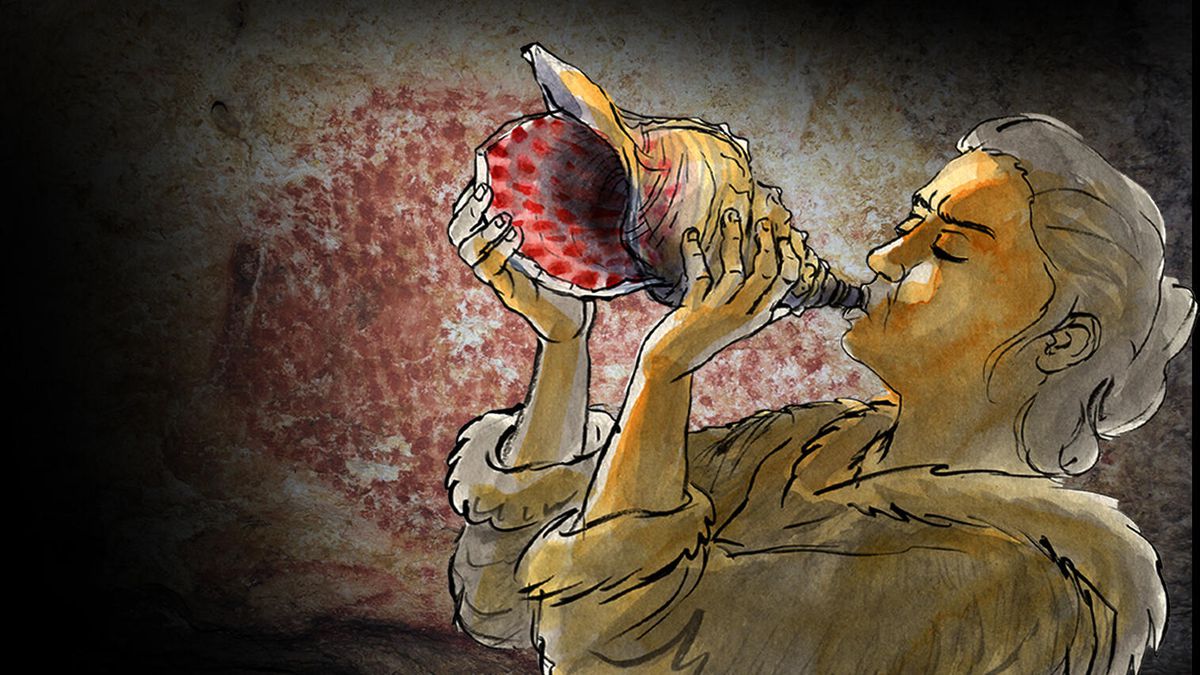
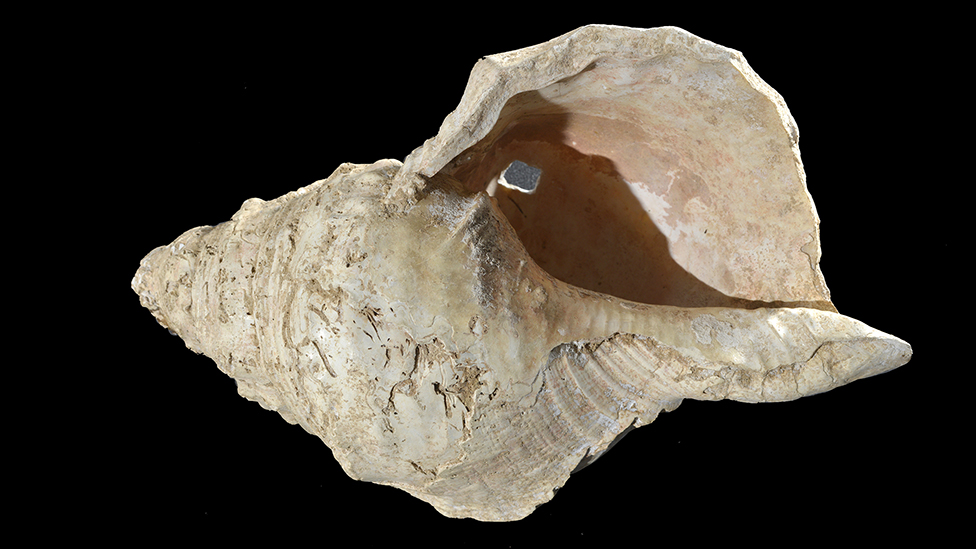
    A team of scholars has recently reexamined a conch horn discovered around the Marsoulas Cave in southern France, the famous cave art site, and concluded that the conch was more than just an ornamental artifact used for a drinking vessel or any other trivial purpose in Upper Paleolithic Age, aka Old Stone Age, dating from around 17,000 to 12,000 years ago. It was an age when Cro-Magnons, a Homo Sapiens nomadic tribe in western Europe, emerged as formidable hunter-gatherers of reindeers and horses from a new cold and gray prehistoric horizon in the dawn of the ages of man. They were Magdalenian, named after a rock shelter located in the French Pyrenees where the artifacts and human remains were discovered. They left the prehistoric legacy in the form of the Magdalenian conch.

    By using a carbon dating system and other state-of-art scientific apparatuses, the scholars posited that the conch horn was a musical instrument to enjoy the prehistoric Magdalenian symphony in the cave. The cause of reason for the hypothesis is a purposefully cut-off apex of the conch horn as if to adjust for blowing and making sounds. In fact, a modern music player tried playing it at its initial discovery and found out that the tunes were ranged close to the notes of C, C Sharp, and D, making it the oldest wind instrument of its kind to this date. Moreover, the conch patterns were similar to those appearing in the pictures of cave walls, which scholars deduced that they were significant in denoting cultural functions in the communes.

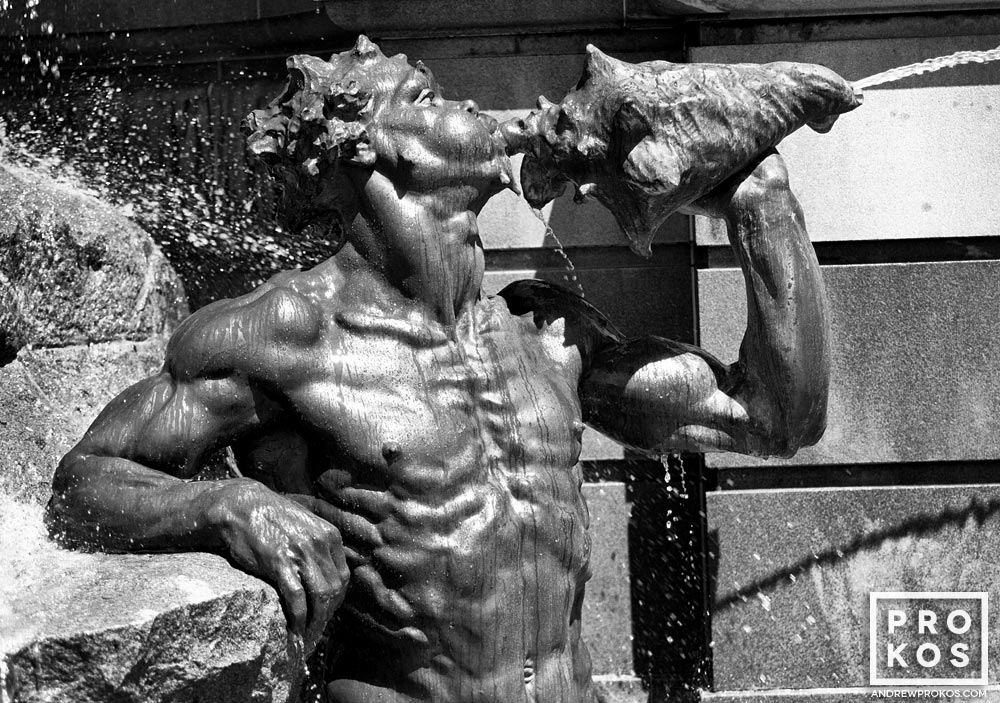
    However, although the connections between the cave art and the conch horn are intelligent hypotheses, the idea of the conch as a musical instrument doesn’t quite hold water to me. First of all, the image of a conch horn always conjures up the dystopian vision of the boys in William Golding’s Lord of the Flies. In the story, boys blow the conch whenever they convoke meetings, which usually spring from sinister motives resulting in gloomy consequences. Also, the god of sea Poseidon blows a conch when he heralds his formidable divine presence, shaking the waves of the oceans. The use of the conch was to be more of notification of alarm for political or social events, not of a musical instrument for cultural appreciation. Besides, as aforesaid, a conch is often associated with the sea, unfittingly matched with hunter-gatherers in the mountain or sea-locked regions. Although scholars pointed out that the Magdalenian could travel to the shore and brought a conch as a souvenir, using it as a pastime wind instrument is a bit of stretch, a romantic imagination about the cave people differentiated from ruthless, animalistic, highly advanced kinds of ape.

    If the scholars’ educated guess becomes a theory, then the Magdalenian conch horn will be entitled to the first place in the history of musical instruments. But considering the geographical reason and natural tendency related to a conch shell drawn upon historical and literary contexts, the Magdalenian conch shell must have been either a curiously collected souvenir from a trip to the shore or a valuable instrument to call upon meetings in the communes. Also, it could have been a convenient alarm to indicate a sight of animals for a hunt or protection. For melodious variations pleasing even to uncultured ears, the sounds of strings made from the leftovers of hunted animals hung on pieces of wood would be perfect for their hunter-gatherer entertainment.

  • ‘Mata Hari’: la madame butterfly – book review

    Mata Hari: A Life From Beginning to End by Hourly History

    My rating: 4 of 5 stars


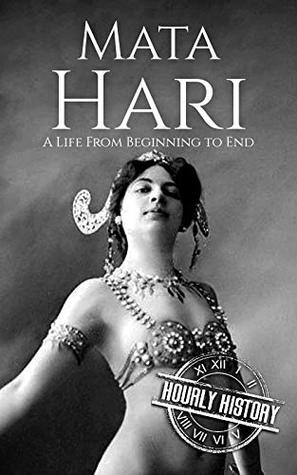
    A paragon of femme fatale with a name meaning Eye of Dawn in Indonesian, Mata Hari has become an unlikely figure of feminism that elevates a famous courtesan into a tragic martyr against male chauvinism. Some even have turned Europe’s first-class exotic dancer into an innovative artist, surpassing the great French-American creative dancer Isadora Duncan. Although Mata Hari expressed her unbridled erotic charge on the influential men in an era when the ideal victorian femininity still reigned in the social consciousness, she was hardly any more creative to the art of dance than Isadora Duncan and less manipulative than Delilah. This concise bioptic narrative about Mata Hari leaves the image of her open to creation on the reader’s perception of her.

    Before her rebirth as Mata Hari, Margaretha Geertruida MacLeod was a divorcee from a Scottish-born dutch army officer. Her divorce from her husband was a ticket to her freedom from conventional womanhood whose place was home, tending her family and domestic affairs. Mata Hari used her womanly prowess tinkered with an exotically alluring atmosphere surrounding the sultry appearance that she used for the glamorous life. While reading the book, I found Mata Hari hard to sympathize with her, commiserate with her when she was hoodwinked by the men she fluttered with, and she believed to fall in love with. A life of courtesan she was leading was dangerous and ephemeral, and she didn’t seem to bother making her livelihood without toiling her hands into specks of dirt, as most of the poor women in her time had to earn a living.

    It is not to say that her wayward lifestyle was meted with her unjust execution, which conspired to use her as a political and diplomatic scapegoat during World War One. She was an easy target to put all the misdeeds of the men involved with her and the faux-pas they wanted to conceal in consideration of her reputation as a persona non-grata with a questionable reputation. The trial of Mata Hari was nothing but a Kangaroo court procedure that only showcased the famed woman under an international spotlight behind which the real culprits of the espionage were hiding. However, her trust in beauty as a sexual prowess over men should not be confused with a woman’s symbol of an unyielding independent spirit under the pretext of being a divorcee without long-term financial security. The spirit of womanhood that evokes a feeling of camaraderie lacks in the figure of Mata Hari.


    View all my reviews

  • ‘Leonardo and the Last Supper’ by Ross King

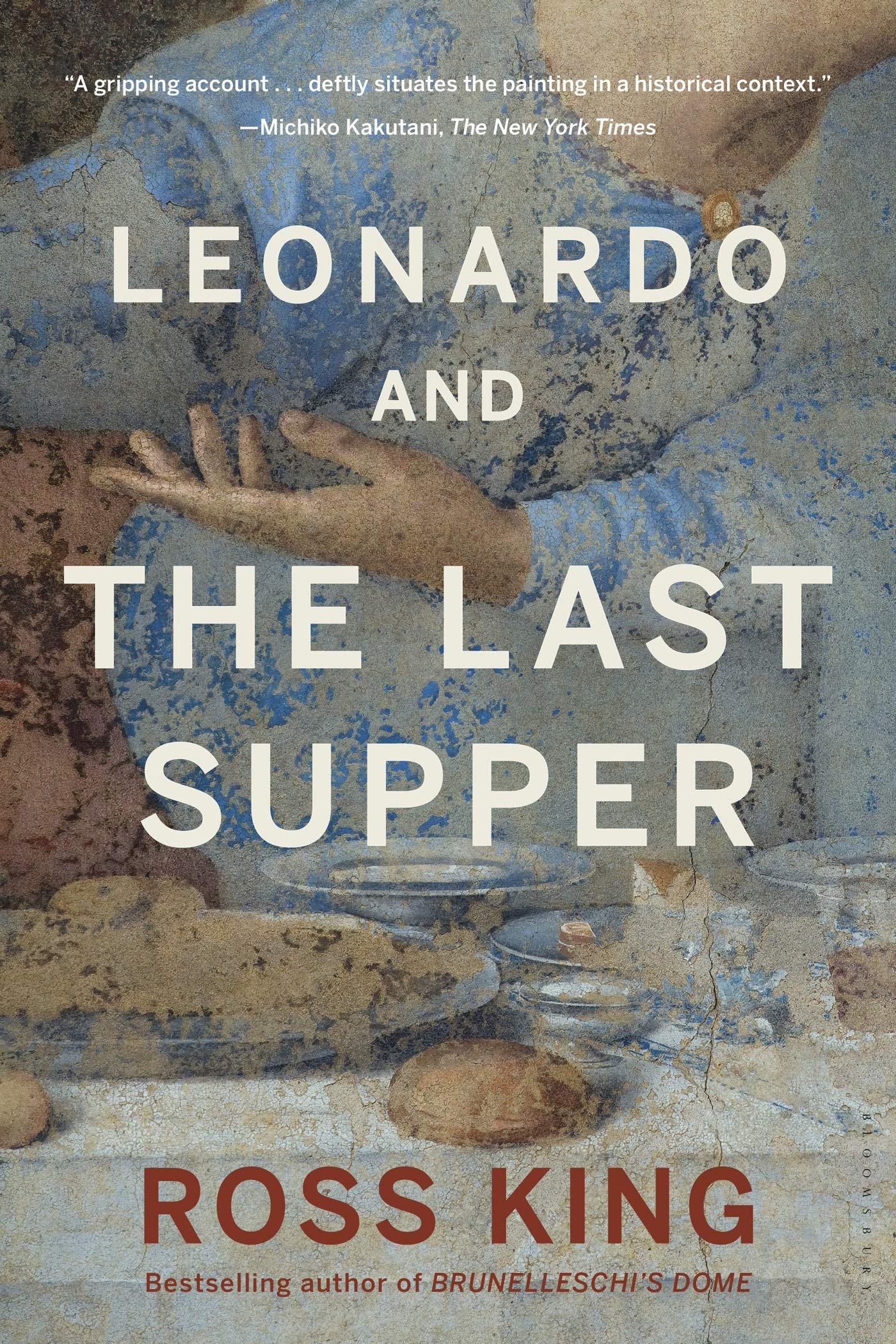
    Leonardo and the Last Supper by Ross King

    My rating: 5 of 5 stars


    I still remember an excellent replica of Leonardo da Vinci’s “The Last Supper” in a tapestry form decorated on the wall of our family living room when I was in elementary school. It was vast and expansive, nonetheless magnificent with the profoundness of the scene and the expressions on the faces in it – all wondrous and curious. Now a stream of time has flown, but the first impression of the art still has become one of the stars in my heart’s constellation. “Leonardo and the Last Supper” by Ross King has added to the star the brilliance with telling stories resurrecting the atmosphere of the time and vividness of the people surrounding the creation and the creator of the art.

    The book is an alluring admixture of the biography of Leonardo da Vinci and the history of religion, politics, society, and culture; all skillfully swirled in Ross’s skillful narrative account of the person of da Vinci and his work of the Last Supper. The narrative becomes more intriguing as the chapters replete with entertainingly informative tidbits about personal accounts of people related to da Vinci and involved in creating the Last Supper are ascending. The story’s construction follows how Samuel Johnson, the 18th-century English essayist and cultural critic, narrated the lives of poets in The Lives of the Poets, composed of a brief biography of a poet, personal accounts of the poet, and professional criticism of the works. The reader will first be acquainted with da Vinci’s biographic backgrounds: parents, a well-to-do lawyer father, and a middle eastern slave mother owned by his father’s household. Da Vinci’s struggle with spelling and even harder Latin education, his fabrication of engineering work experience in his curriculum vitae to obtain a military commissioned engineer post when coming to Milan from Tuscany, and so forth. All the information is a telltale factor contributing to da Vinci’s rise to celebrity in his and our times, which is refreshingly informative to learn that the perennial polymath also had feet of clay with colors of contrast.

    Ross is a scholar with a novelist’s magic wand to wield his writing power, casting a spell on facts and knowledge with the beauty of language and ease of words, captivating readers of all life paths with gripping narrative skills. Another book of his “Michelangelo and the Pope’s Ceiling,” which I enjoyed with great pleasure, is a helpful companion to this book because both Michelangelo and da Vinci were contemporaries, working under their aristocratic patronage the recalcitrant spirits of creative souls in reins of livelihood. It would also be an excellent reference to the social statuses of artists at that time. Contrary to our images of free-spirited artists, artists worked for their royal, ecclesiastical, and wealthy employers. Therefore, they were not free to choose subject matters for their works because their bosses wanted their power and fame to become works of art, as it were.

    Upon closing the last page of Leonardo and the Last Supper, I reminded myself of Plato’s aesthetic definition. Art is a copy of Form, the perfect, pristine Beauty. It exists only in Idea because da Vinci was also a scientist and an engineer who found perfect beauty in perfect numerical and astronomical elements of nature. However, da Vinci’s Last Supper is filled with pathos, contrasts of human emotions, paradoxes of light and dark, good and evil, constantly changing, never-ending. Da Vinci was a humanist, finding beauty in nature as it is, regardless of perfect Form, the unattainable ideal that is out of touch. One thing right about Plato’s Aesthetics is that art is at best entertainment and at worst a dangerous illusion. That says it. Leonardo’s Last Supper is a soul’s entertainment, and so is Ross’s “Leonardo and the Last Supper.”


    View all my reviews

  • ’24 Hours in Ancient Rome: A Day in the Life of the People Who Lived There’, by Philip Matyszak – book review

    24 Hours in Ancient Rome: A Day in the Life of the People Who Lived There by Philip Matyszak

    My rating: 5 of 5 stars


    Edgar Allan Poe once declared that the great was Greece, and the grandeur was Rome. Rome was not built a day, and it lasted from Before Christ to His After for one thousand years. All roads led to Rome, and foreigners, colonials, and slaves from the foes all wanted to become the proud citizens of the Roman Empire. So, what then was it like living in Rome at its glorious prime? 24 Hours in Ancient Rome: A Day in the Life of People Who Lived There by Philip Matyszak comes and carries off the reader in a time coach to Rome’s grandeur and invites to the daily lives of people there with magic of words.

    In terms of residential mode, there were more apartment buildings than villas and detached houses in Rome. Apartments called Insulas had 3 or 4 floors with no bathrooms, which means the residents dumped their bodily wastes in buckets out of their windows to the ground any time of day or night when unfortunate passer-byes would have unpleasant surprise showers from above. The apartment residents were city dwellers whose livelihood was arranged from a fish-stroll attendant to a nightguard, an unlicensed independent prostitute, and primarily others diligent and savvy waiting their time and luck to come.

    Rome was a practical society with shrewd politicians and powerful merchants/tradespeople. For instance, baking was a highly respectful and lucrative trade because not many people had well-equipped kitchens to cook or bake at home. Bakers had their representatives in the Senate who would lobby for the increase in the price of bread. Still, the Senate often rejected the proposal because the Senate knew that keeping the price low would maintain social stability lest the mass should not cause riots for a change of living cost.

    On the other hand, unless they were aristocratic or wealthy mercantile families, women had not many choices of working with desirable pay or respect. They worked in shops or stalls densely concentrated outside the walls of Circus Maximus for long, arduous hours, wrestling between the demands placed upon their tasks at work and home without due respect. Slave women’s employment was mainly hairdressing and doing domestic chores. It was less rewarding and more demanding, contingent upon the mercy of their lustful masters and the whims and caprice of their mistresses, who often inflicted cruel punishment on their slaves if they irked their temper and nerves on a bad day.

    Rome was undoubtedly splendid in its dominance and influence consummate with the longevity, but only a few privileged basked in the sunshine of grandeur. Matyszak puts together tesserae in the mosaic of ordinary Ancient Roman lives in this leisurely entertaining and academically stimulating narrative of his part-fictional and part-actual characters. It becomes each vignette comprising a collective story of human life that still rings true to our modern life. Matyszak is an unlikely, uncommon historian whose erudition and humor put him on the same pedestal as renowned historians, such as Tacitus, Plutarch, Herodotus, and Paul Johnson. His narrative styles are engagingly knowledgeable but surprisingly personable, collapsing a great divide of time between the people of the past and the present reader.

    Rome was no fun when you had none. Nevertheless, for all that’s worth, Rome was a great city rich in ethnic and cultural diversity. The energy of urbanity made Rome all the more vivacious and vibrant, bustling with businesses and people, and created opportunities for better lives. It is no surprise that Poe thought highly of Rome.


    View all my reviews