Tag: history

  • from this corner of the world

    A beautiful field of flowers on a background of mountains and clouds

    It was a great leap from northern New Jersey to southern California when I decided to relocate two years ago. At that time, I felt like a pioneer girl from Willa Cather’s novel or a Horace Greeley in his Overland Journey from New York to San Francisco. Now the not-so-long time has passed, and I still have the job I got first in California, but I am now not sure about being rooted here like a tree without luscious fruits, which is just one of many plain, common trees whose sudden absence will not be conspicuous. Amid in this existential tides of life, willful, fateful, or both perhaps, reading today’s article from the New York Times about a declining trend of relocation after the ease of Pandemic-related restrictions statewide seems to shake my already shaking ship adrift between Scylla and Charybdis.

    The article reports that now that the post-Covid 19 has dawned a new era of remote-controlled employment, many people do not need to move to another state for their new jobs unless they are packaged with satisfying relocation fees. And staying put in their home grounds while working remotely for their bosses across the Rocky mountain or on the other side of the coast fortifies a sense of close-knit family and community that they feel strongly related and belonging by staying put in their home grounds. Further, the article illustrates a particular fragment of well-to-do middle-class people with professional careers or executive positions who indeed don’t have to take trouble moving their already content families to new locations. Finally, the article excludes the peripheral class that orbits around the lesser bright solar system whose life spans depend on a dominant sun’s brilliance.

    People are still moving to and from for their uncertain futures, as I have witnessed so far, despite the Pandemic scare less than the existential threats of daily life. Hasn’t the journalist seen enough of the genuine fabrics of life by getting on a morning bus carrying a crowd of the middlings and underlings heading for their workplaces? Isn’t The New York Times proud of being one of the most liberal newspapers in the world? Or is it for most liberal middle-class only?

    I still like to think of myself as a frontier woman in the Still Wild West, living with an elderly mother and an eleven-month-old tabby cat with chronically weak respiratory and digestive systems in a make-shift house on a pitiful homestead often besieged by the lawless and the uncultured. And I still don’t know my decision to move from here to there was a fool’s wish, acting on a foolhardy impulse neverendingly. Nevertheless, I want that all that wise sayings about hope and courage are truth and nothing but the truth, and I am sure that many people share similar kinds of wishes in the courses of their lives that today’s article excludes.
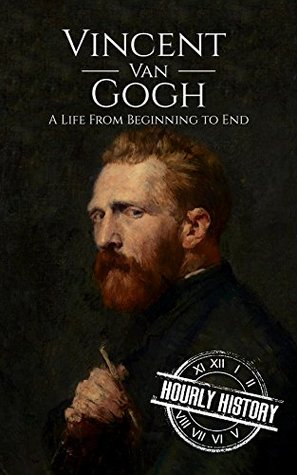
  • Portrait of Vincent Van Gogh

    Vincent van Gogh: A Life From Beginning to End by Hourly History

    My rating: 5 of 5 stars

    Here’s a portrait of a man who hated being alone yet found freedom when alone. Austere yet bohemian, religious yet autonomous, he was a paradox himself like the faces of Janus. It was no other than the painter Vincent Van Gogh himself in his well-known portrait looking more in disappointment with the world than in madness against it.

    As the late eminent Australian biographer of Ben Jonson Ian Donaldson once put, good biography is anything but a bland, chronological summation of a man’s life, and I am not intent on reciting the dates of from Gogh’s birth to death and in-betweens. Instead, I am all mind in positing what I think he was, other than the man with a bandaged self-mutilated ear because our sensory perception often betrays the truthfulness of what we see when stimulated to the external sensation. Indeed, Gogh was a disturbed man whose sensitivity found no elbow room in the world with which he so endeavored to have a long-lasting content relationship. It is not to say that Gogh was an archetypal self-imposed exiled artist who voluntarily distanced himself from ordinary life scenes. Hardly so. As shown in his letter to his beloved little brother Theo, who helped his misunderstood forlorn artist brother as ever, Gogh tried to be as good-humored and cheerful as he wanted. Still, it was the world that seemed to betray him with blows that bludgeoned his unalloyed wishes and noble aspirations.

    Gogh’s paintings reflect his love of realism and reject artificial romanticism without the ideal romantic ambiance in vogue with the time. He was interested in all that existed as they were because discovering beauty in the coarseness of reality was his objective in achieving creative and experiential values. In this regard, Gogh was in the same artistic vein as Francoise Millet, whose paintings Gogh admired because Millet believed that treating the commonplace with the feeling of the sublime was what gave art its true power. The only difference between the masters of art was how to portray it with individual flairs of colors, techniques, and perspectives based on their tastes and judgments. Gogh’s ‘Potato Eaters” might not have that romantic dignity surrounding the hardscrabble peasants. Still, they were unforgettably expressive in the nuanced struggles and strife they had to bear and live with. Perhaps the uneasy cohabitation of the independent spirit and the loving heart distinguished Gogh from his famous peers who had the practical sense to reconcile their creative souls to social needs.

    Moreover, Gogh lost a sense of direction when he realized that a man of the cloth wasn’t his cloth. The existential frustrations from the confliction of the will then added to his already innate fragile sensitivity, a hereditary mental trait running in his maternal family. Nevertheless, Gogh continuously endeavored to fend it off and conquer it, even when the citizens of Arles, where he dreamed of building a haven for his kindred spirits, united to expel him from the city he once cherished. However, one good-hearted postman continued to give him a touch of kindness till he voluntarily admitted himself into a mental asylum for the peace of his mind and others’.

    To me, Gogh tried to live up to his conviction of good, fulfilled life with exquisite sensibilities, and unalloyed humanity too great for the realities of the world he was born into. His life was life imitating art, and art was not imitating but expressing life as he saw. Yet, be it ever the play of the fate, the more he tried to be good-humored, the more estranged he became because he was an extraordinary artist constantly breaking away from confinement prejudicial to his ever sensitive and creative spirit. Upon reading this elegantly narrated life of Vincent Van Gogh, I realized the truth of the genius only took some time for its brilliance to shine, no matter how long it would take. Who would have thought Vincent Van Gogh, who once sold only one of his works out of hundreds, would be looking at his admirers in the constellation of brilliant painters in heaven? For those who are creators of arts in all genres, famous or hidden, amateur or professional, the story of Vincent Van Gogh will be a consolation to the heart and hope to the spirit that never knows the end.


    View all my reviews

  • ‘Ancient Magic’, by Philip Matyszak – book review

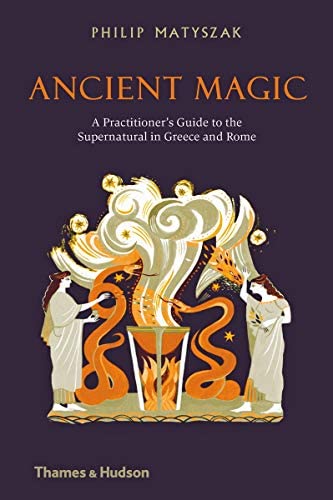
    Ancient Magic: A Practitioner’s Guide to the Supernatural in Greece and Rome by Philip Matyszak

    My rating: 5 of 5 stars


    Magic in ancient Greece and Rome was an art of crafting natural force with a bit of help from the world of gods and spirits wonderous to the user without fully knowing them. Contrary to traditional orthodox Christian teachings, magic was not associated by default with sorcery privileged to an esoteric spiritual elitist often dark and sinister. To the ancient Greeks and Romans, magic was their belief system, part of their modus vivendi in everyday life from slaves to emperors in the sense that we go to doctors or counselors. In a word, magic, as we understand now, was not so much deviltry as a variety of rituals of individual petitions pleaded for the fulfillment, which even the tremendous ancient minds regarded worthwhile to record.

    Before the era of Christianity, the concept of magic was often interchangeably used with the knowledge of natural and supernatural worlds, which the ancients saw as not impossible to cross in between and thus believed the ghosts and the afterlife. Plato and Pliny, the Elder, advised no mortals go to graves alone after dark because there the restless souls of the dead not crossing the Styx, wandered. The most significant of the ghost story is Pliny the Younger’s letter to his friend Licinius Sura. He tells of the philosopher Athenodorus, a stoic astronomer and tutor to Octavian, the future emperor, witnessing a ghost of an old man in shackles showing his improper burial site.

    Magic encompasses auguries and omens by the flights of birds, spells, and potions to charm the figures of desires, and the astrological signs in the ascendant at births and the sun, all of which to make uncertain futures known as guides to walk the paths of life to arrive at the fates. Matyszak tells the reader in the capacity of a Virgil leading Dante to the Underworld that seers at Delphi and Cumae were relatively easy to foretell the futures, which were unchangeable. Their acute intuition took a dreamy leap to poetically versed oracle pronouncement in the background of ethylene atmosphere and told what the petitioners could do at their best to deal with what laid ahead of them because there was no more than one fixed future.

    The book invites the reader into the world of magic like never before because knowledge is a composite of Herodotus, Plutarch, Pliny the Younger, Socrates, and Plato. They took the extraordinary subject seriously because it was part of their daily lives bordering on a thin line of the spiritual world that was as real as they were. The book is written in a language accessible to all spectrums of education and walks of life. It is philosophy, religion, and history magically mixed in the author’s magic potion of erudition that significantly produces learning charmed in natural wits.


    View all my reviews

  • “Insidious” (2010) – film review

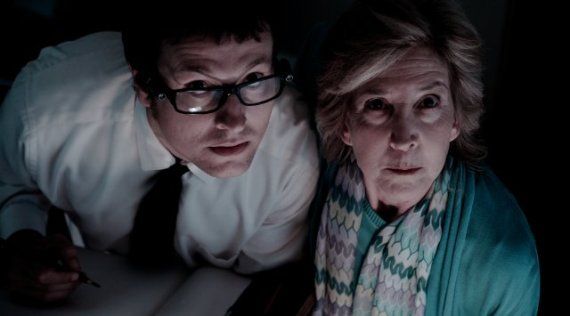
    “Insidious” (2010), directed by James Wan is an intelligent movie with an entertaining flair to hold the attentions of both serious and light-hearted movie lovers. I am glad to have watched it last night on Netflix after reading a book on the history of ancient magic and ritual, and I must say there must be some kind of strange reason that I came upon the movie. It always seems so pat to find a supernatural movie orbiting around me and materializing at an apropos time that it gives me chilling fillip to my suspected element unrealized from within. Whatever it may be, and apart from all the mysterious signs hinting at something about my unknown anima, I am pleased to write about the movie herein.

    The movie is anything but a faulty horror movie. Not “Insidious.” Hardly Ever the criticism of flamboyant cast. Never the limitations of a seemingly infinite range of imaginations that the writer wrote and the director portrayed. It is beautiful alchemy of the harmonious performance of the stellar cast and brilliant storytelling of the extraordinary event in the ordinary existence, all fascinating and riveting. Like an incantation of a professional sorcerer, the narrative slowly builds mystery around the atmosphere. It brings up images of the beyond at the zenith of the ritual when everything seems ready for demons or the superiors to appear before your very eyes.

    The magnet of the movie is the Elise character faultlessly played by Lin Shaye, who began to change my perspectives on a psychic that if there is one like her in real life, I would love to chat with her and possibly work for her even as a part-time assistant. Elise reminds me of an ancient Cumaean Sybil who helped Trojan refugee Aeneas meet his father’s spirit in the Underworld with a gentle but powerful voice elucidating her beautiful spirit. But to call her psychic doesn’t do justice to her essence and vocation as a mystic helping people in distress. She balances her spiritual power with a rational mind by scientific methods to discern the origins of the spiritual maladies of her clients. And she does it in the gracefulness of a good witch performing white magic that I believe even priests would be envious of.

    What makes the movie on par with the timeless supernatural film is the universal subject of the world beyond our sensory perceptions and across religious dogmas. It’s the world of “Further” where spirits lost wander around and dammed lurk in the darker corners of the crossroads. Elise helps the lost spirit of the boy in the Further find his way back to Here and goes further than she should save people’s lives from the evil power even it means to be at her expense.

    “Insidious” is a thoughtful movie dealing with a supernatural thematic element that is harder to play on the screen than it is to envision in the mind’s theater. The movie’s impression spreads into a mind’s garden and stays there in alterations like an insidious charm of ghastly sightseeing so incredible that you can hardly dispel it. If you like to watch a good, decent ghost movie without mutilated bodies and ear-shattering screams, but ghosts or demons only, this movie may do.

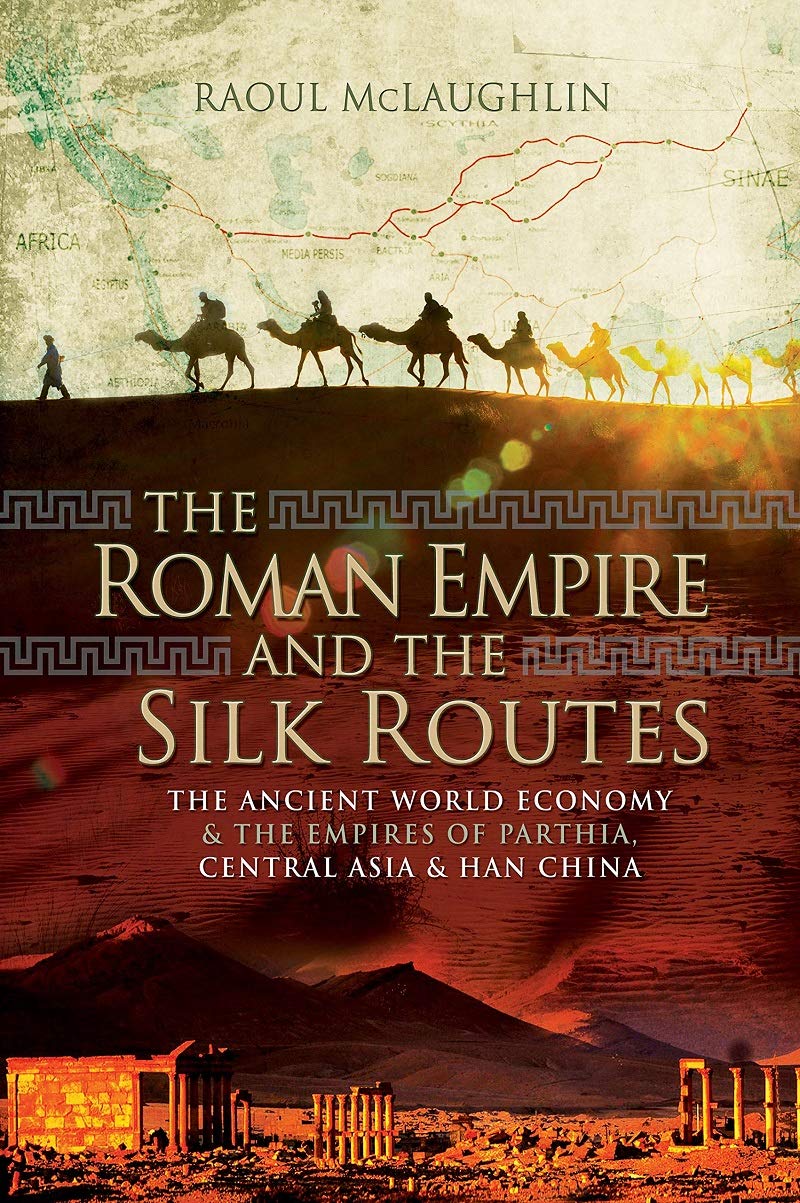
  • ‘The Roman Empire and the Silk Routes’, by Raoul McLaughlin – review

    The Roman Empire and the Silk Routes: The Ancient World Economy & the Empires of Parthia, Central Asia & Han China by Raoul McLaughlin

    My rating: 4 of 5 stars


    We are easily apt to presume that what we can do was an impossibility for those of different eras and places. Yet, what is happening now has happened before, although in various modes of Operandi. Global trade was also part of the ancient world’s economy that affected civilization’s fortune just as it is today in our time. This book shows the reader how ancient commerce happened thousands of years ago across a great distance of continents from the Far East to the West to propagate the prospects and prosperity of Europe and Asia’s far-flung regimes via silk routes through Central Asia.

    The book is a fine organization of roads, resources, and governments involved in the ancient business world that surprise the modern reader that without airplanes, cars, and computers even, our forefathers of humankind found ways to travel a great distance for profits with flares for adventure. First, the term “Silk Roads” became famous by the 19th Century German geographer/explorer Baron Ferdinand von Richthofen, who surveyed the land routes crossing Central Asia from Afghanistan to China as used in the ancient Chinese and Roman texts. His ambitious plan was to construct a railway line across Central Asia that would have linked the German economy to Chinese markets. In ancient times, the Romans imported Chinese silk that came to Roman Syria from Iranian caravan routes crossing the Parthian Empire from Uzbekistan to Mesopotamia. The Romans’ Eastern business also included Indian valuables via the Persian Gulf that reached Parthian markets in Babylonia. An ancient text reveals that one Indian sailor from the wreckage of a trade ship from India around the Red Sea rescued by a Greek patrol ship from the Ptolemaic kingdom of Egypt around the Arabian Peninsula told the Greeks how to sail from India via season Monsoon winds.

    The Romans had already known about India but not the Far East until 1 B.C., when silk began to reach the Mediterranean Sea through the Parthian Empire ruling in ancient Iran via caravan routes, aka the silk roads. It appears that commerce contacts and cultural interactions indeed existed. Modern archeologists discovered the graves of slave workers of textile production during the first century A.D. at Vagnari in southern Italy; one of them had a DNA of Far Eastern ancestry inherited from his mother. From Julius Caesar to Caligula, silk both ornamental and devotional in the panoply of magnificent Roman authority. The Romans made ceremonial silk curtains dyed in royal Tyrian purple as awnings in public ceremonies to protect spectators’ eyes from the fiery Mediterranean Sun’s glare. Silk also made beautiful garments and garlands presented to classical gods’ images and offered to the protective household deities. The reader would be pretty surprised to learn that the end of Cleopatra VIII and her paramour Mark Anthony was a purple augury of lucrative Roman trade from the eastern world. The accumulated Roman economy from Ptolemaic Egypt’s annexation and control over the eastern legions made the distribution of the Roman citizens’ funds possible. The empire gained direct sovereignty over the Red Sea shipping lanes into the Indian Ocean.

    Reading this book confirmed my conviction that people would find the way to do what they needed. However, the younger generations of our time often make the anachronistic mistake of judging the previous generations as culturally retrogressed and hemmed in insular thoughts. It is only a different way of doing business, however slow or primitive it may seem. The ancient commerce contacts show that a country cannot stand alone and survive alone in the world if it refuses to measure the truth with the desire based on ethnocentrism growing into xenophobia. Human cultural progress is a collective enterprise. We live not in isolated islands but a global village.


    View all my reviews

  • Who discovered America?


    The question of “Who discovered America?” lends itself to enlightening trivia pastime, spawning a series of plausible answers. Leif Eriksson and Christopher Columbus contend the discoverer’s title, possibly followed by Walter Raleigh and Francis Drake, except one John Cabot whose name is lost with his ship somewhere in the Atlantic Ocean just as his mysterious disappearance during the final voyage. 

    Giovanni Caboto, aka John Cabot, was a 15th-century Venetian maritime merchant, emigrating with his family to Tudor England in search of substantial royal sponsorship for his ambitious Far East expeditions. The age of expedition was imbued with the spirit of enterprise that propelled colonialism. England was no exception to the European competition. Spain and Portugal were the contenders for uncharted lands and undreamed waterways discovered by Christopher Columbus, Casco de Gamma, and Fernando Magellan. Cabot promised Henry VII that he would find the ways to the Shangri-La in honor of the land to the king with portions of profit for the homage. The king granted his royal patronage on the expedition in the hope of establishing a British mercantile empire around the world. After two misfortunate voyages, Cabot finally made it to what is now known as America in 1497 and called it “New Found Land.”


    However, unlike his contemporary peers whose deaths are recorded either orally or textually, Cabot’s end as an explorer is undeservingly clandestine and amorphous. It is said that Cabot was a victim of mutiny among the seamen on his ship or that he settled in the New Found Land and died there. What is more confounding than the mystery of Cabot’s whereabout is the seemingly less recognizance of his achievement than that of the rival explorers of his time and posterity. Cabot was the first explorer who paved the transatlantic waterways between America and Europe, principally the British Isles, for the progeny.


    Indeed, Columbus found the West Indies and the American continent by happenstance. Still, Cabot proved that rapid Atlantic travel was possible by sailing the west through the ocean, more substantially practical and influential than America’s ideologically symbolic discovery by Eriksson and Columbus. Would Cabot’s discovery of America under Henry VII’s banner be an issue for the recognizance of his achievement for independent minds of Americans liberated from the English sovereignty? Or, to put more blatantly, would the English royal sponsorship of Italian native Cabot’s exploration mar the spirit of American liberty? If England were still a Catholic country, would Cabot’s achievement have been of lesser brilliancy than those of his contemporary explorers? The questions of history require answers, but often they remain unheard and trail off in the wind of zeitgeist.