Tag: history

  • The Rambler – History

    As members of society and citizens of the world, we are one way or another connected to the past, present, and future. That is why history is a multidisciplinary study to understand human nature and learn lessons from the past. Listen to Winston Churchill: “Study history, study history. In history lies all the secrets of statecraft.”  Watching our nation’s leaders on T.V., dividing the country into splinters of dissenters instead of embracing them as one people of the nation, makes me urge the current political leaders of our country to read about what it means to be an intelligent and influential ruler who knows a thing about leadership.

    Roman emperor Hadrian was of history scholar, specialized in ancient Greek history and mythology. He was affectionately known as a “Greekling” and endeared and admired by the Greeks whose land he made in the Roman Empire. The Greeks’ love of the Roman Emperor was inscribed in the Arch of Hadrian built in AD 131, an archeological wonder with the 59 feet high structure made from marble from Mount Pentellicus used for the Parthenon, that read: “This is the city of Hadrian, and not of Theseus.” The Greek elation reached the pinnacle when their Roman ruler built the Temple of Olympian Zeus, Hadrian’s dedication to the king of Greek gods and goddesses’ splendor. He also made the legendary Library of Hadrian, containing 100 marble columns with halls with printed ceilings, alabaster walls, and great statues of the Olympians destroyed by the malice of fortune AD 267. Greek enthusiasm for their Roman emperor was no unreason for their willing submission to Rome’s rule, which they had once colonized. The site of the Temple of Olympian Zeus and the Arch of Hadrian in modern Athens

    The Temple of Olympian Zeus and the Arch of Hadrian

    Hadrian’s fascination with Greece developed from his learning under the tutelage of his cousin Trojan became a foundation of Pan-Hellenism to turn Athens into a new cosmopolitan cultural center for the Roman Empire. By way of acculturation, Hadrian hoped to stabilize the Roman Empire’s fractious eastern part and effectuate the colonials’ ruling. Hadrian followed what the antecedent Roman poet laureate Virgil in the Aeneid to solidify Greece and Rome’s cultural link. In this fashion, he succeeded in ruling the colony with glad acceptance by the governed, who even declared him a founder of new cosmopolitan Greece, intent on cutting ties with the mythical ancient past.

    Hadrian’s motto of Pan-Hellenism reminds me of Macedonian predecessor Alexander the Great’s Hellenism, both of which proved work in incorporating different cultures into a dominant culture with respect and benevolence. Both Alexander and Hadrian had an eye for beauty in arts embedded in cultures they annexed to the dominion and knew how to rule wisely and effectively. It was acculturation of the native cultures on both sides, the ruling and the ruled. Yet, Hadrian’s way of exercising sovereignty over Greece is more accommodating and welcoming, even if the intention was not free from political ambition. The ancient Athenian historian Thucydides confirmed that history is the ultimate record of the events by recognizing certain commonalities between the past and the present that transcends the subject of times and applying it to our present situation. If our current political leaders take a cue about social integration to the same vein’s present social conditions, it might help the country stratified by race and class.

  • From Egypt with Meow: ‘The Cat in Ancient Egypt’, by Jaromir Malek – review

    The Cat in Ancient EgyptThe Cat in Ancient Egypt by Jaromir Malek

    My rating: 5 of 5 stars

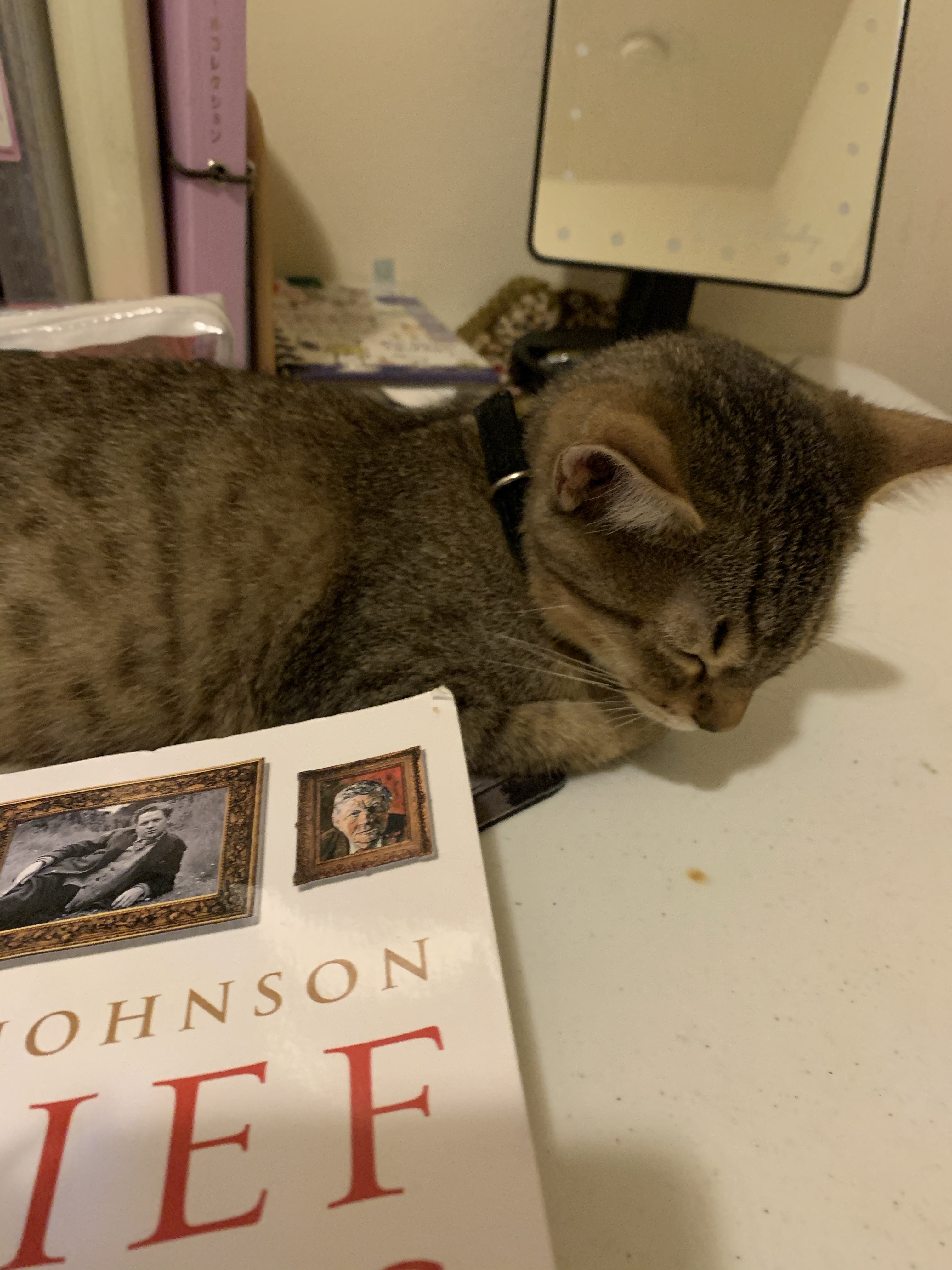
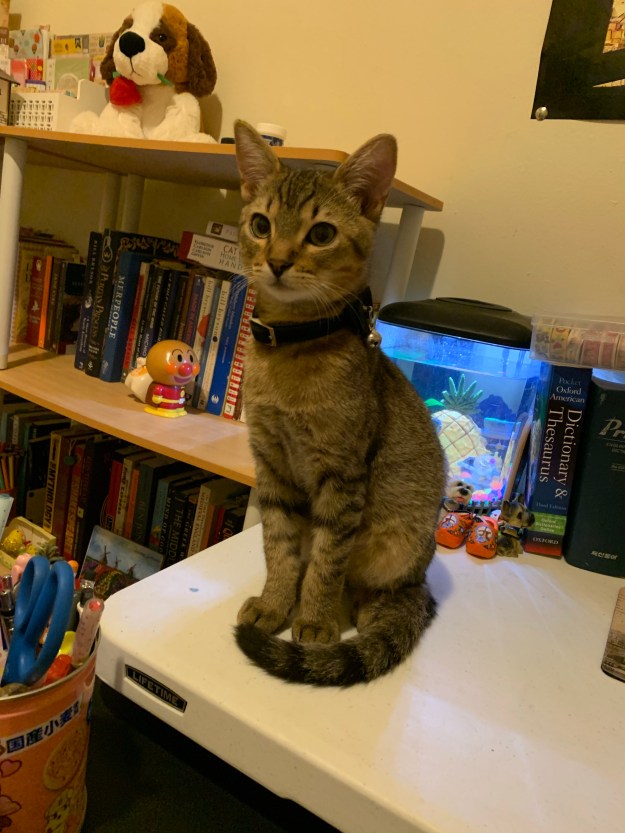
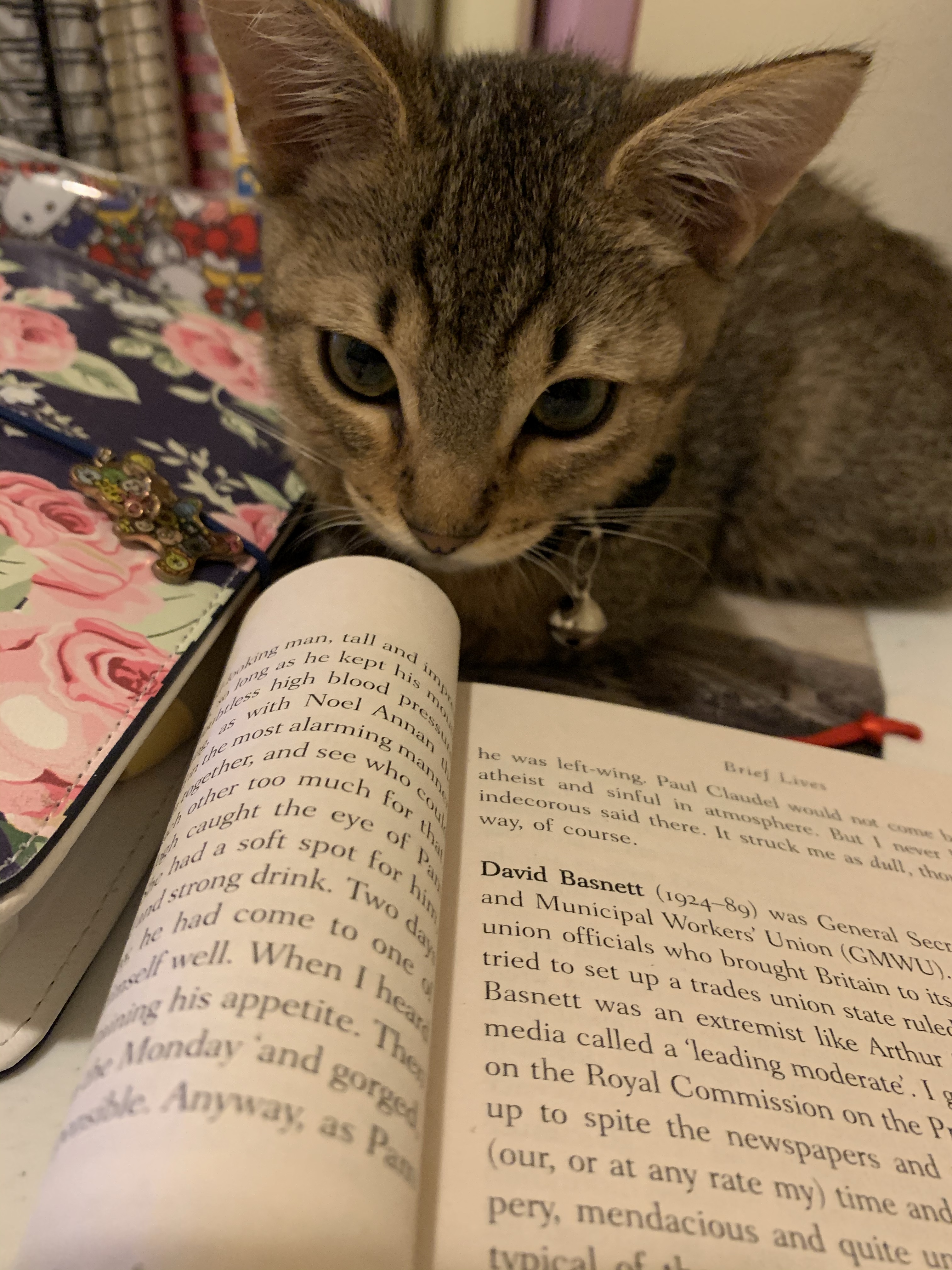
    I admit that most of my posts relate to the cat nowadays. But what else should I write about when an orphan kitten enters my castle and in need of care and love? My five-month-old cat Toro is a domestic short-haired breed as subsumed by a vet at the shelter, but his appearance and characteristics make me believe that he must be a descendent of Egyptian Mau. My conjectural reconstruction of Toro’s possible ancient scroll of his family (paternal) led me to  Jaromir Malek’s  The Cat in Ancient Egypt, which tells all about how cats became naturally harmonious with humans, which played a significant role in the anthropological and social aspects of splendid ancient Egyptian civilization.

    The domestication of cats resulted from the advent of agriculture when man began to settle on the farm, and civilization came to blossom. It was about 1,500 years later than the domestication of dogs as hunting assistants to men. Of all the ancient civilizations, the Egyptians sow the seeds of love between the cats and humankind. Abounded with various fauna and flora benign to the human inhabitants, the jungle cats and African cats thrived and became familiar animals to the Egyptians, who began to use the cats to drive off pesky mice poisonous snakes threatening their lives and crops. Naturally, wild cats gradually learned to adapt their wild instinct to their new protective human environs. 

    The frequency of cats’ representations in ancient Egyptian art is a creditable source to understand cats’ familiarity and recognition as pets in the overall culture and society. The images of cats first sporadically appeared in the tombs of pharaohs built during the Old Kingdom period (2647 -2124 B.C) and became widespread mural art features by the New Kingdom (1549-1069 B.C.), which is also called the renaissance of the pyramids. Maybe it was because of the mysterious aura surrounding the inscrutable demureness of a cat, or it was the otherwordly aloofness wrapt in ethereal agility. Cats became popular hieroglyphic and effigial motifs for artists and priests alike in cultural and religious contexts decorating chambers within sacred tombs and temples. Also, cats were the aesthetic muse for women’s high fashion, used as motifs for the jewelry of queens and women of high society.

    What evolved from a quid pro quo relationship between man and beast for the survival of the species found its way to the high seat in the eternal world. The familiarity and recognition of cats’ usefulness blessed with physical charm elevated the beastly origin into a divine status in the statuesque form of goddess Bastet, the sister of the Sun god Ra, representing female sexuality and fertility, which reflected the specific characteristics of the animal. The Sun god himself was also called the Great Tomcat because the god meowed during what he was doing. So much so that the ancient Persians used to equip the shields with live cats at war with the Egyptians, who dared not to harm their sacred animals.

    On the other hand, cats were not altogether distant from the everyday lives of the ancient Egyptians. The Greek historian Herodotus further corroborated that the Egyptians shaved their eyebrows when their cats died as a sign of mourning. The more cats became domesticated, the more multiferous their features became. Artists started using cats as a caricature of specific human characteristics illustration of fables with a moral content, representing the absurdities of reality in a humorously wise way. Such artistic trend was most conspicuous during the Ptolomy period when Egypt was under the Hellenistic influence to resist foreign cultural force. Cats were symbolized as the animal inherently Egyptian to the land of pharaohs.

    Beautifully written with sentences that conjure up the images of ancient Egyptian cats, Malek’s The Cat in Ancient Egypt serves its purpose of educating and entertaining the curious reader who wants to know more about his or her beloved feline creature at home. That doesn’t mean that this book is reserved only for cat owners or lovers. This book has refreshingly excellent archeological and anthropological knowledge about human civilization, impacting animal life. The affection is the elder sister of the understanding. I personally selected this book to read because I wanted to know more about my cat. Likewise, this book is for readers who want to know more about Nature and People’s history.


  • New Possum’s Book of the Curious Cat


    There’s once a cat name Romp Pomp Bunter, aka the Curious Cat,
    who liked to romp with pomp and bunt his head against
    his guardian, the woman with the beautiful but lonely heart.
    She named him in rapt contemplation of the thought, of the thought
    of his name; his ineffable, effable name, debonair and extraordinary.

    The Romp Pomp Bunter has a secret that no one knows it:
    The Romp Pomp Bunter once saw a grand statue of Bastet
    In a book on the history of cats originating in ancient Egypt
    And was so impressed with the splendid grace of the goddess
    That he wanted to emulate the mysteriously beguiling poise
    Even if he was a Californian moggie tomcat of Los Angeles.

    But the Romp Pomp Bunter, ever the Curious and Adventurous,
    An orphan kitten whose parents nobody knew or cared even,
    Felt that he was originally from the Ancient World with a reason
    That he looked nothing like the ordinary domestic short-haired,
    The insignificant, the common, the trite, the obsequiously tamed
    Breed of Cats that contrasted the Egyptian Mau, the First of Firsts
    Endeared to Pharaohs, Queens, Priests, Soldiers, Farmers, and Artists.

    So, the Romp Pomp Bunter believed that he was the Royal Descendant,
    The indolently elegant, adoringly capricious, the inscrutably alluring
    Egyptian Mau, the paragon of the goddess Bastet, divinely beguiling.
    You see, that is why his name is the Romp Pomp Bunter, the Curious Cat.


  • ‘Ancient Greek Cavalry’ and Alexander the Great’s Companion – review

    Ancient Greek Cavalry: The History and Legacy of Classical Greece’s Forgotten SoldiersAncient Greek Cavalry: The History and Legacy of Classical Greece’s Forgotten Soldiers by Charles River Editors
    My rating: 4 of 5 stars


    The image of a gallant bedight knight on a steed heading for a romantic journey for El Dorado or a noble cause for joining a loyal cavalry would have been a laughing stock of the ancient Greek soldiers. They regarded cavalry soldiers as aristocratic good-for-nothing redundant auxiliary to the mighty phalanx composed of ordinary foot soldiers called hoplites. From the Bronze Mycenean age until the emergence of Macedonia as the Greek military superpower, the historical context of the ancient Greek cavalry reflected the signs of military and sociopolitical developments in the 5th century BC Greece and the world beyond. The book informs the reader of the background of the rise of the cavalry in ancient Greek society thanks to Alexander the Great and its effects on military and societal contexts proven to be timelessly brilliant.

    First of all, the geographical factor of the Greek islands, in general, made it difficult for the effective use of horse-driven chariots in battles due to its mountainous terrain as illustrated by the Oracle of Delphi in the valley, the Mount Olympus, and other divine earthly places. The rocky roads were not conducive to heavily charged chariots, preventing them from maneuvering the moves swiftly in warfare. In fact, the introduction of a horse race in the Olympic Games where the wealthy horse breeders reconciled the equestrian equipment’s military value to a sports game’s monetary value.

    Secondly, horses were expensive to breed and maintain, as they still are in our time, and only a few wealthy (the oligarchs) were able to own horses. So much so that Aristotle acknowledged that horse-breeding was not easy to do unless you were rich. Accordingly, the democratic ideal of the mingling of titles and the exertion of the synchronized force from the collaboration of duties for the common good excluded the value of cavalry whose soldiers were also outside the Homerian value of Arete, the highest soldierly code of honor consisting of military finesse and personal integrity. To the democratic minds, the pampered nobility on horseback in battlefields had a better chance to escape on a horse than its hoplites on foot who had to confront the rains of lances and strokes of swords showered in blood.

    However, Philip II of Macedonia and his son Alexander the Great saved the grace of the falling Greek cavalry by the brilliant military innovation that reflected society’s progress in the economy and political contexts. Along with its loyal ally Thessaly, Macedonia was an oligarchy unlike its contemporary city-states run by the democratic populace that usually lacked the foresight of tactical military strategy due to a general contempt for the art of war held by experienced noble soldiers. Macedonian nobles, especially the young and ambitious noblemen, made up most of the excellent Macedonian army that fully utilized the offensive and defensive cavalry force into the phalanx. The offensive on the phalanx’s right flank, the Companion, consisted of 2000 trusted and honored members of the king’s inner circle, the oldest noble families of Macedonia. The defensive on the left side, “The Thessalian,” proved to effectively outflank the enemy force with as least casualty as possible on the Macedonian side. Such cracking military operational order surpassed the Persian scythed chariots’ hideousness, cutting men in halves, mangling the still breathing fragments on the wheels and the scythes.

    The unprecedentedly thriving economy due to the discovery of gold and silver mines and minting of coins meant a stable government and expensive military maintenance. The state’s wealth made it possible for financing a standing cavalry in peacetime and on a campaign. The minting of coins under the unified currency system paid salaries to professional soldiers, unlike the unorganized military structures where soldiers were ill-equipped and poorly trained in the other Greek city-states’ armies.

    Upon reading this book, I felt that the title should have been “The Wooden Trojan Cavalry of Macedonia” or “Alexander the Great and His Cavalry” for the staging of Macedonian Alexander the Great in the arena of the world’s superpower upended the archaic military organization, let alone ineffective strategies. The role and value of mounted soldiers corresponded with the notion that the economic progress propelled by the natural wit of a leader who integrated all society members, high and low, won the war most productively. Alexander’s democracy in military strategy elevated the status of contemptuous willy-nilly horseback soldiers to gallant bedight warriors. It shows the reader that true democracy means the magnanimous participation of all classes for the commonwealth of a country.


    View all my reviews

  • The bio of seventeen weeks old Tabby Tom

    Hi There. Nice to meet you!

    Ralph Waldo Emerson said: “What lies behind us and what lies before us are tiny matters compared to what lies within us. How rightly so. Despite my sixteen weeks of life thus far, my feline instinct feels that there are unpathed waters and undreamed lands within me. So I deem it high time to unravel the mystery of Me.

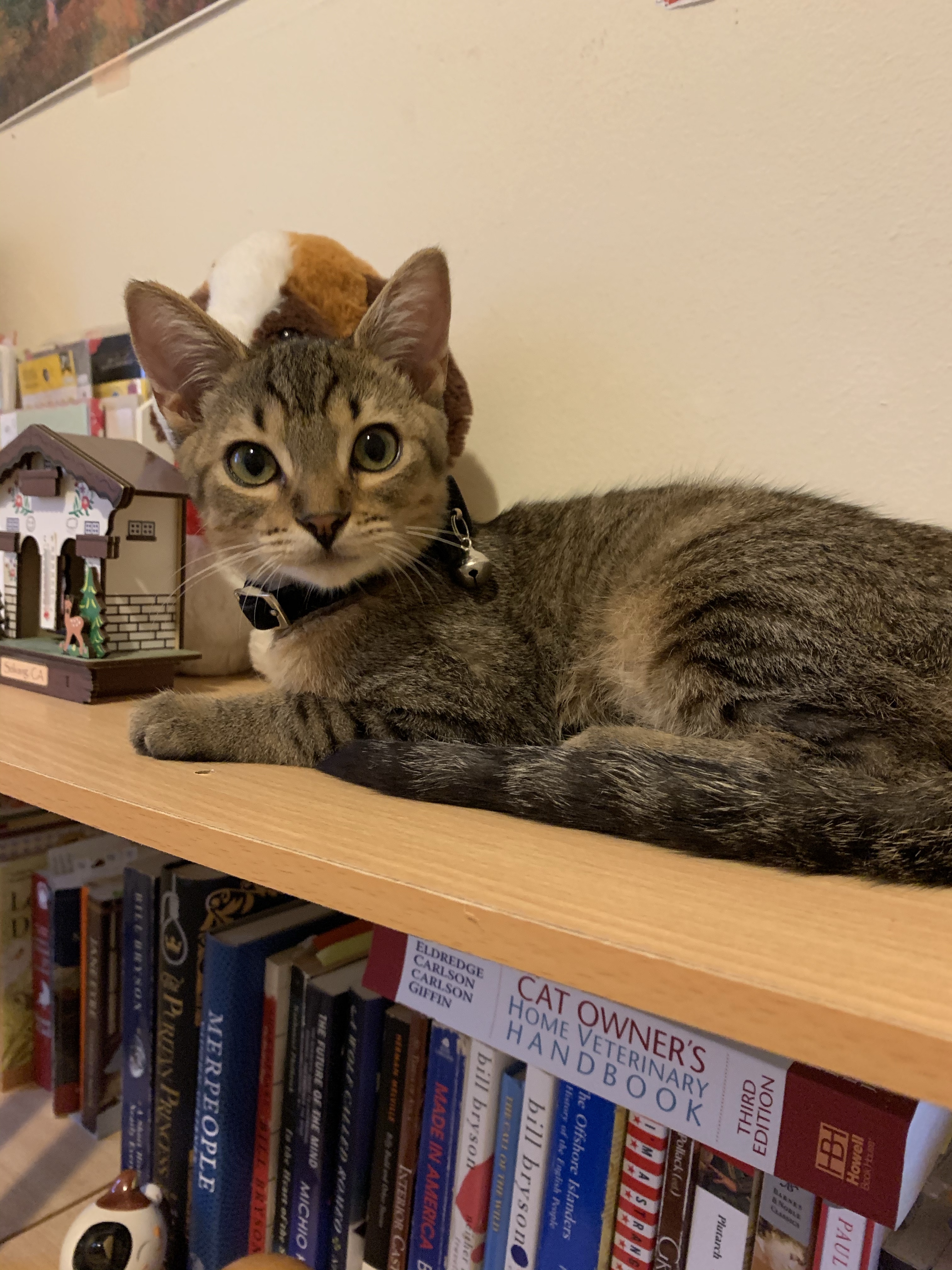
    My name is Toro, the co-editor at large of this blog with Stephanie. I am sixteen weeks old. I am a domestic short-haired tabby tom, but Stephanie believes that I am of an Egyptian Mau, admired by ancient Egyptians and the divine cat of Ra, God of the Sun, as portrayed in the Book of the Dead. I think Stephanie’s hypothesis of my suspected heritage is due to my beautiful turquoise eyes and dainty figure. She also seems to want to liken her and me to Cleopatra and her beloved Mau. (Wow!) Well, no one can blame her for regaling herself with such lofty imagination of my elated pedigree because – in all honesty – I look like one. What can I say? Seeing is believing, and beauty is in the eye of the beholder. Then the truth is to the end of reckoning, as the Bard chimed in.

    As is the queen, so is the subject.

    Despite my regal appearance, my biological and family background is that of an orphaned pauper, lesser than the pauper who exchanged his identity with a prince because he had mom and dad. When I was born, my mother left me alone, so a passing old lady took me to a nearby shelter where I met my sister Stephanie. I followed her because there was something that connected us from moods to tendencies and personalities. We share our peculiarities in mutual solitude shared by orphaned patronage of love and care.

    How’s the writing going?

    Because I was left alone to tend myself at so young an age, I am prone to frequent mood swings from high and low, which often makes me frantically run around the room back and forth, up and down, and left to right without stopping. I know this strange behavior of mine startles poor Stephanie, but I can’t help such impulsive pulsing as it is part of my irrepressible feline nature. However, one thing is sure that when I see Stephanie returning home from work, my whiskers are moving all withers, my tail rises to fortune, and my little feline heart fills with meows and more meows.

    This much is the bio that I dictated to Stephanie for my new career in publishing. As I am excited about this new adventure with Stephanie on board, I hope readers will join us in our one of a kind literary enterprise in joyous spirit! Meow.

    I am done with my share. So, I am taking a break.
  • Minor Earth, Major Sky

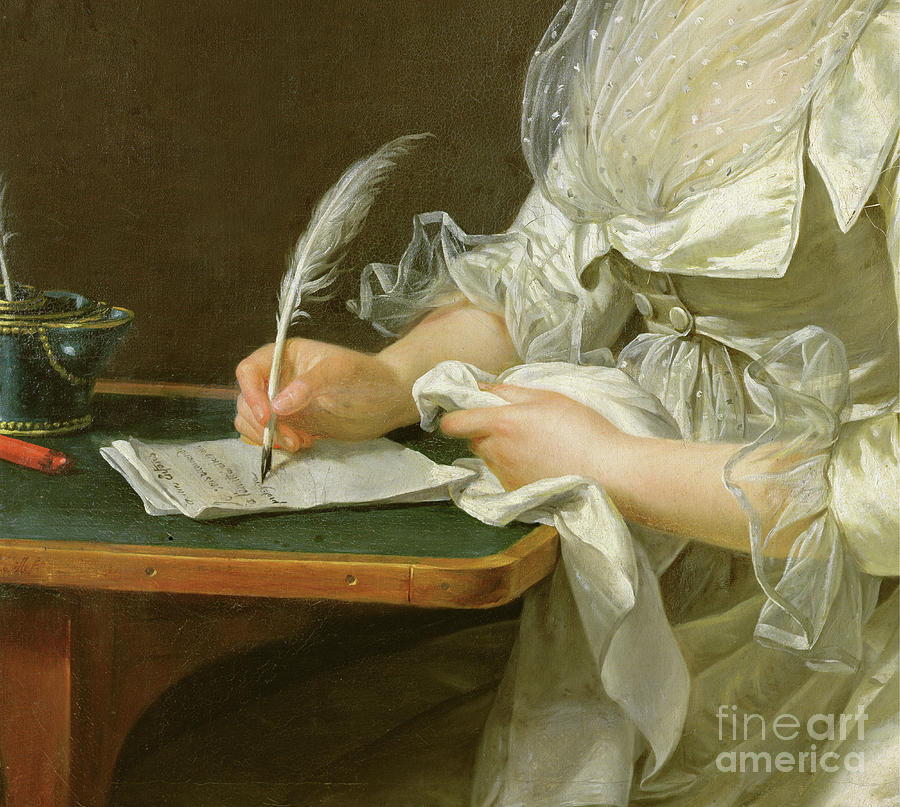
    As a hobbyist dilettante writer, I have been writing this and that on my beloved blog for four years. Despite English being my Second Language, I dare to write in it against criticism of solecism regarding all the prescriptive rules of the most popular language of the Indo-European linguistic superphyla. The reason I continue to and love to write is no more than the justice of my meek self, smothered under the mask of exoticness that has become my sole identity, and a written touchstone for the neural activities of the mind. I sometimes wonder affected by the progress of neurological or physiological maladies as I slowly walk toward the end of the mortal journey on earth. So, I want to leave the mark of my existence. Welcome to My Invisible World, the Minor Earth.

    The provenance of today’s post comes from my reading of a Saturday edition of the Guardian subscription on my Kindle two days ago. It featured a book review of Must I Go by Yiyun Li, exultantly described as a cracking read written by a Chinese-American woman writer deserving of the commendation. The article began with her illustrious academic background as an immunologist and a recipient of a prestigious MacArthur grant bestowed on geniuses. While such introductory curriculum vitae is undoubtedly relevant to denote her intellectual brilliance, I wonder if such a decorative prerequisite is necessary for the book’s worth. What if Li were just an obscure Chinese writer delving into English writing without the decoration? Such a hypothetical question might be regarded as nothing but an incoherent rambling of a jilted would-be writer. Yet, I have noticed that ordinariness is off-putting, unglamorous, and unworthy of recognition. Call it a groundless presumption or jealous subjectivism even, but it’s the truth. Charlotte’s Bronte’s author’s tenet of faithful allegiance to truth and nature seems to apply to the otherness of the Far-Eastern writers whose ordinariness is merely invisible and regardless. That is, they exist in an invisible habiliment of mysteriousness from Shangri-La.

    The review analyzes Li’s literary reality of uprooted sentimentality in the background against America’s wilderness, so to speak, in which her existential question of who she is based. Li also rides on the crest of the waves of cultural identity, as is the principal thematic element of most Far-Eastern writers. Rather than striking the chords with the universality of human life, they tend to focus on the egoistic litany of alienation with their selfsame egoist emphasis on otherness. In this regard, Far-Eastern writers themselves foster this strangeness, this otherness, these less-than-ordinary images based on their literary tenet they believe truthful and appealing to selective, not universal readers. That is why I, who is also from the far east tend to eschew their stories, void of the common ground of empathy, no other than the shared physical reality.

    Enter Kazuo Ishiguro, author of The Remains of the Day, whose literary world is not limited in his racial and cultural backgrounds. A good writer is capable of travel and metamorphosis beyond the existential terra, where the vision becomes a reality of its own. Ishiguro wants to be all that he can be away from his physical context to manifest his views on human nature, which aims to chime the bells of universal emotions. However, such transfiguration of physical reality into the universal realm of consciousness does not betray Ishiguro’s ascribed biological characteristics because creative force, in conjunction with desire for aesthetic values of literature, is mightier and higher than physical reality. In this sense, Ishiguro gloriously triumphs over racial barriers, and splendidly demonstrates that what you look like and where you are from cannot confine you who you want to become.

    I still write despite my imperfect command of English simply because I love the act of writing as a valve for opening myself dying for a fresh breath. My book has sold only five digits of a hand. I recently received a comment on one of my book reviews I posted three years ago on amazon with 32 likes that callously slighted my ability to write in general because of minor violations of grammar rules. Yes, I am an amateur writer of Far-Eastern backgrounds with an ordinary job as a legal assistant with a B.A. in English from a state university. Yes, my English is far from the perfection of English Undefiled. Yet, writing is no longer a prerogative of the academically privileged whose selfish seclusion of lettered cases is adulated. Writing is a democratic vehicle in which anyone can morph into whoever she or he wishes without restraints. Take Tolstoy, Charlotte and Emily Bronte, and Jane Austen, all of whom put their literary aspiration into reality despite their spelling weakness. No one shall bully my writing skills, nor belittle my volition to write for universal readership. Forget how I look and speak. It’s the heart’s passion and satisfaction of reason letting out of the cocooned physical reality that deserves manifestation. For this reason, I write with or without public recognition with a myriad of likes.

    P.S.: I don’t believe that you can follow my blog without liking what I have written. Also, even if you fulfill the requirement above, if you are regarded as a marketing puppet, then I will drive you away. Therefore, I will not treasure your subscription to my blog if you just press the button on caprice and whims. Certainly not for my blog.