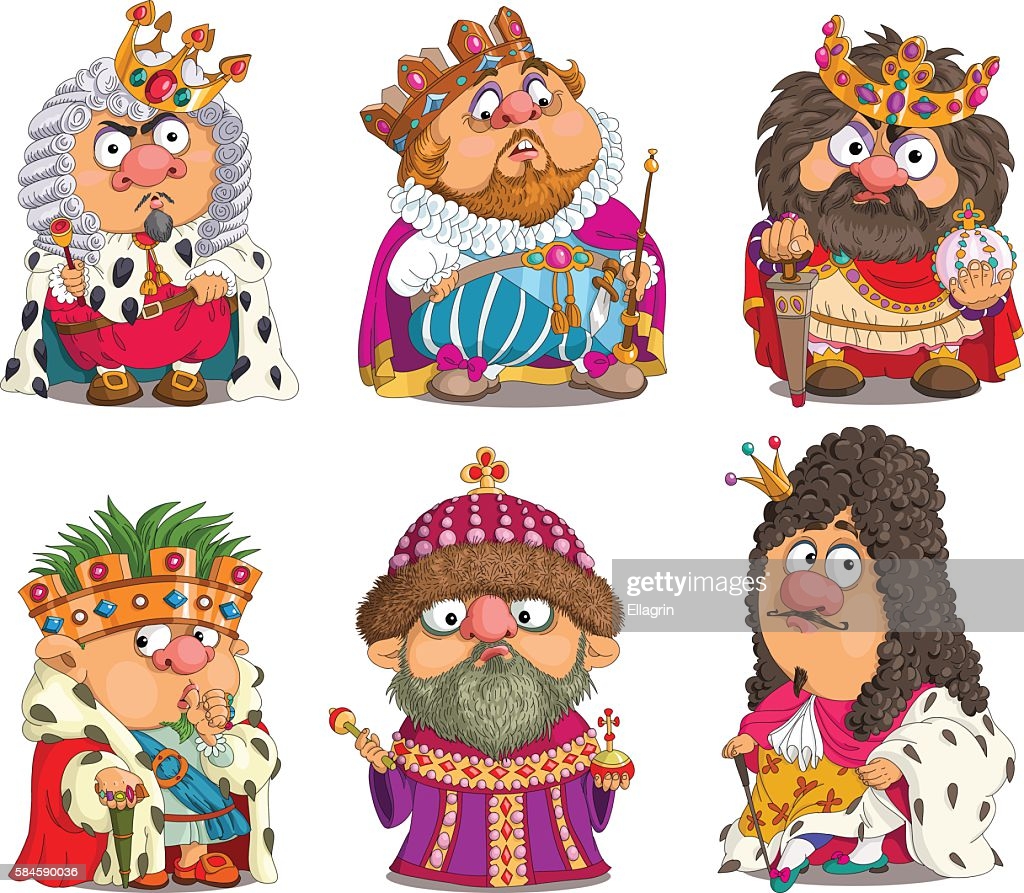
Royalty’s Strangest Characters: Extraordinary But True Tales of 2000 years of mad monarchs and raving rulers by Geoff Tibballs
My rating: 4 of 5 stars
It always amazes me that some people can get away with their character flaws and faults under the aegis of social status and wealth, such as modern-day celebrities. The celebrities of the bygone days were kings and queens whose God-given authorities indemnified them from punishment. Their entitled strangeness swiveled my head in wonderment at the stupendousness of freakiness. Ironically, this anecdotal recounting of the cruel-to-be kind potentates reminds me of a tenet of Logotherapy, which explains that a healthy dose of suspense in life helps us escape boredom, resulting in excessive indulgence in perverted pleasure-seeking.
This book tells of the infamous kings and queens and some aristocrats. They are famous and lesser-known, mainly from Russia and Eastern Europe, which gives a somber ambiance to the tales of weirds born with silver spoons in their mouths. The most memorably horrible and ignoble characters that left indelible marks on my consciousness are as follows:
1. Elizabeth Bethany: This diabolically perverted Hungarian countess whose uncle was a king of Poland had a fixation on blood and pain in devotion to youth and beauty. Some say she was trained to be cruel, but I think it has to do with her connatural inclination for cruelty passed down in her lineage. Her aunt was a Satan-worshipping noblewoman who sought erotic pleasure in young girls, which Elizabeth also learned and practiced in her castle. She had her trusty three maids lured beautiful young girls, usually from poor families, under the pretext of training them for top-rated maids-in-waiting with generous munificence to the families. What happened next was all over but the shouting. Bethany tortured the girls in unthinkably cruel ways and bathed in their blood because she believed doing it would restore youth and beauty. She deserves no revisionist or appeals on the crime against the girls under her care. Nevertheless, modern-day feminists and the radical leftists are moved to portray her as a wrongfully accused Calvinist woman in a time when sectarian religious rivalry and antipathy were rampant. Her being charged by a Lutheran minister in the town does not ipso facto constitute Lutheran machination of destroying the Calvinist influence in the region. If the minister conspired to concoct any such plot, he would have targeted a man, not a woman whose social status was not entirely regarded as equally significant as a man even in high birth.
2. Vlad the Lad, aka the Impaler, aka Dracula: The proverbial bloodsucker ruler had a penchant for impaling men, women, and children for leisure and punishment. The point was to give them slow deaths to heighten the apex of pain till the last breath. The legend of Count Dracula is loosely based on this Romanian ruler who might have inspired an idea of shashlik, kebab. Or any skewed food. Thanks to the detailed accounts of how Vlad artistically mastered impaling, I swore off any such skewered food lest it should conjure up the vista of the impaled helpless.
3. Frederick I of Prussia: A stout and short, the king’s obsession with men in great height was his actualization of ideation. He had the tallest men in all the regions of Europe, especially from the North, to establish the royal military version of a freak company called “The Potsdam Giants.” The recruits, or in many cases, abductees, were consisted of a former woodsman, laborers, and farmers, allured by abundant compensations promising dazzling delights of secured lives. Yet it was an empty promise, beguiling the simple-minded low-class foreigners, who were subjected to mistreatments and even punishments should they attempt to escape. The king’s pastime was to call upon the guards at any time anywhere, including in his chamber at night, and watch them in full uniform, admiring their impossibly imposing physique that he coveted but could never have. Thank God that his son Frederick the Great disbanded the freakish guards no sooner than had he succeeded his father upon his death.
I wonder if these royal characters were due to in-breeding abnormalities, which were usually customary in European dynasties to preserve their noble royal lineage. It also testifies that keeping means in one’s life is a blessing because extreme wealth and poverty lead a soul astray due to listlessness and exasperation, resulting in amoral walking dead subsisting on the pain of the others. Robinson Crusoe’s sagacious father was right in saying that the best is the upper station of low life. Mel Brooks once uttered, “It’s good to be a king.” Unfortunately, it only applies to these afore-described weird and evil characters. A good king or queen doesn’t.
View all my reviews
Tag: life
-
‘Royalty’s Strangest Characters: Extraordinary But True Tales of 2000 years of mad monarchs and raving rulers’ by Geoff Tibballs
-
The princess fairy tale

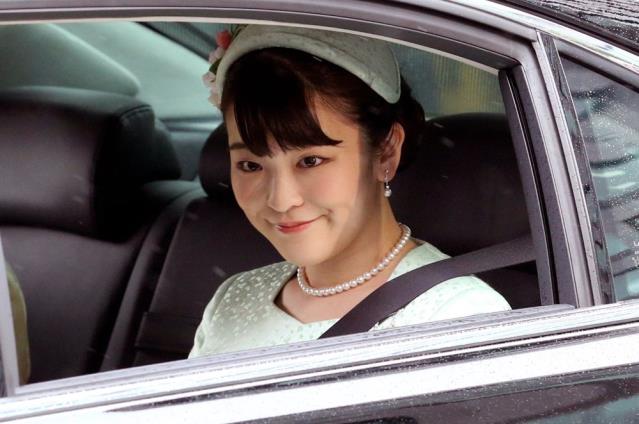
First of all, let me clarify that I don’t believe in fairytales where beautiful poor girls achieve social escalations by marrying handsome princes and kings. Nor am I keen on the affairs of modern-day royalty whose lives are not even desirable. And yet, the news of Princess Mako’s marriage to her college sweetheart despite forced delays and oppositions is worth writing about because it is a fairytale of the most beautiful kind becoming a truth in reality. Would it be a bit of a stretch if I relate Mako’s heartaches and ordeals to Psyche’s Wanderings and Trials set by Aphrodite to separate her son Eros from the insolent mortal? It also shows that the crowned cannot escape from the intoxication of the heart that is worth denouncing the pomp and circumstances.
Marrying a commoner is no new in modern-day history, starting from Edward VIII’s marriage to the American divorcee Wallis Simpson and his descendants Princes William and Harry. While those mentioned above British royal members married those outside the peerages, they were not the average commoners working nine-to-five or even more or fewer hours in ordinary situations where they had to depend on the whims and caprice of their employers for the secure livelihood. But Mako’s case stands most excellently because she was determined to give up the whole royal privilege to live as a commoner by marrying the one who is not from a wealthy, not even above average family. Moreover, Mako refused to receive a considerable amount of money as a gift from the royal family for marrying a commoner. On the contrary, Harry and Meghan are considerably wealthy, living without day-to-day financial insecurity about what might happen tomorrow. Their surrendering the titles publicly will not forfeit their assets as in the case of foreclosure that many struggling hard-working Americans are unfairly subject to. After all, why do they need to hold the titular positions to make more money outside the palace? People flock to the brave Meghan and her ever-supportive husband, but why do they do when their happiness illustrates no emblem of sacrifice without a sense of proverbial entitlement?
I cannot help but compare Mako and Kei to the famously showcased ex-royal couple Prince Harry and Duchess Meghan. Besotted by the sensual charm of his renegade, free-spirited wife, Harry decided to move his young family to Los Angles, California, for good. He joined her Dissent Division to criticize his long-time family for being racist and cold-hearted. On the contrary, Princess Mako never decried her dissenting royal families against her marriage to a commoner, nor did she rebel loudly against the constitutional monarchy outside Japan. Instead, Mako kept all of her affairs of the heart discreetly, remaining true blue to her beloved Kei despite public uproar about his below-than-expected family background for being of a problematic single-mothered household. Forget the stereotypical Japanese politeness and the prejudice on the East Asian women’s submissiveness. Her graceful acts and decencies flow from her natural disposition and upbringing, which I have hardly seen in the famous royal family members.
Watching Mako and Kei looking at each other with the eyes exchanging affection with radiant smiles in their serenely happy faces put me into a pleasant mood to make me wish for their long and happy life together. Mako is a brave princess who surrenders herself to the love of her choice, even if it means giving up her title and privilege that would make her married life comparatively comfortable to ordinary people. Mako’s decision to live the life of an ordinary wife seems anachronistic and incongruent. Still, not everyone wants to be an Amazon or Scythian warrior, nor does she want to climb up the career ladder to prove her abilities. Mako’s declaration of independence signifies an act of exercising her right to happiness by living with someone she loved dearly. What else could she do to prove her worth for love? It is a beautiful fairytale dissolving to the truth.
-
Beam Me Up, Scotty: Admiral Kirk’s onboard
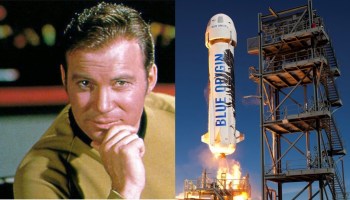
The skies were clear blue, and the wind mild and agreeable. The day was ripe for the moment the star returned to the galactic heavens in rejuvenated buoyancy of jubilee that he would be out to the extraterrestrial world again. “Beam me up, Scotty,” the man said as he boarded on New Shepherd, treating it like his beloved ship USS Enterprise. It was art imitating life in the former captain’s bright eyes; it was life imitating art in the old star’s beady eyes. For William Shatner, aka Admiral Kirk of Star Trek, it was a one-of-a-kind experience, equivalent to an out-of-body experience in which you fly from your corporeal vessel and wander in all whither, floating weightless, groundless. It was his very Real McCoy galactic trip to outer space.
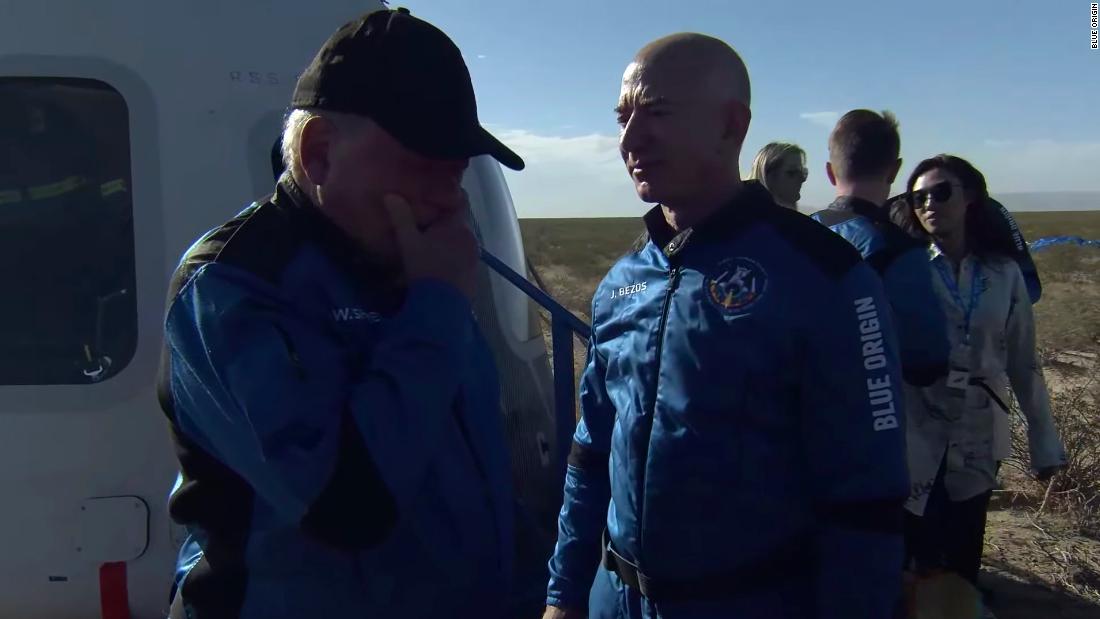
On Wednesday, October 13th, Blue X, Amazon founder Jeff Bezos-owned spacecraft enterprise, took off from its launching site about 20 miles away from Rural Texas town of Van Horn with civilian passengers who paid astronomical sums for their space trip. But not Shatner, who spent nothing at the courtesy of Amazon founder Jeff Bezos said to be a long-time Trekkie and something of a billionaire with a flair for space cowboy. The motive for a publicity stunt to outshine Blue X over entrepreneur rivals, Elon Musk’s Space-A and Richard Branson’s Virgin Galactic Holdings Inc., is impossible to ignore, yet why not when it also produces positive effects of provoking the imaginary in the real? Shatner, at age 90, seemed no longer the dashing brilliant, just young Admiral Kirk any longer. Still, his spirit beamed up as he experienced overview effect outside the orbit, profoundly mesmerized with the deep fragility of Planet Earth, the Galaxy Blue. Shatner articulated the face of the Earth as so ethereal and impossibly gorgeous vis-à-vis the blackness of outer space that he had a eureka moment of what distinguished Light (Life-Earth) from Darkness (Death-Outer Space). Methinks that such pareidolia of the overview effect has something to do with his nonagenarian age, the last age in Seven Stages of Man, one foot closer in the grave. However, when I watched him in the news, overwhelmed by the ineffable emotions, Jeff Bezos removed his shades and embraced the old actor; all looked genuine, not an act staged for a post-trip publicity event. And even if it so, then it is a likable sort of entertainment that does viewers of all kinds good.
Criticisms on the expensive space trip only the haves can afford are worldwide and understandable amid the unequal distribution of wealth makes earthlings live and die or live and suffer. Yet the veteran movie star reminds me of an old soldier who has lived through the vagaries of life. Overall, the 90-year-old Shatner’s space trip materializes the earthling voyage of the USS Enterprise, boldly searching for new life and new civilizations into the galaxies.
Captain Kirk coming home
Floating under a parachute
Touching down on Mother Earth
in a soft haze of excellent dust,
Calling it home, Roger out.Welcome back to Earth, Admiral Kirk.
-
the door of perceptions

My cat sits in front of the door
Like an ancient statue of Basset
And looks at me with desire
To break the spell of the moment.In the high night
When the only light
is iridescent emerald beams
from his large green eyes,I open the door
He believes to be
The door of perceptions
When there is only darkness.But he roams in eager eyes
With a lamp of his cat’s eyes
Searching for the wonder
With neverending hopes.Alas, my elderly mother stops
His hopeful night’s adventure!
Still yearning, ever curious
My cat tries it always tomorrows! -
cathedral of forest
She, with her wings clipped in shackles
Sees the light above the high altar
Through the dusk of leaves and boughs
Beneath the dome of boundless skies
Without spires and stained glass within.
But why else when nature has it all
Sermons in trees, brooks, and skies?
From the haunt of life’s vicissitudes
rests herself under the pillars of trees
As the choristers of hummingbirds begin
The hymns of hope in nature’s cathedral. -
the world in my eyes
On one fine day, a tiny Bushman in Southern Africa comes upon an empty coke bottle thrown from the cockpit of an airplane to desert sand. Thinking it is a gift from the gods, the man sets out a journey to return it to them. Along the journey, the Bushman encounters a pastiche of humanity in a kaleidoscope of the events he comes upon till he reaches an edge of a high cliff mysteriously enveloped by the rings of clouds and throws the bottle into the deep, exclaiming, “The Gods Must Be Crazy!” As I see now, I am in the chorus with him on the top of the cliff overlooking the world.
Nevermore than now have I witnessed the epic moments of history that appear to be atavistic in terms of nature, motive, and consequence. A convenient way of relating the human tragedies to the scourge of gods and God will only put me on a par with Pangloss, the ever-positive pious philosopher who thinks all is God’s will for the best in the best of all possible worlds. The Taliban chanting the name of Allah in their will, Christians taking pride in being a new chosen people, and other zealots of any religion all have had recourse to their deities and used their belief systems as weapons of dominance over others. From the Coronavirus pandemic that forever changed our ways of life to the collapse of democratic Afghanistan by the Taliban and the devastating effects of Hurricane Ida in Louisiana, I see a phantasmagorical display of people’s faces in sorrow and distress in my mind’s theater.
Following the news about the current situations of Afghanistan and its people links me to the Trojan War, which lasted about ten years with the Greek allied powers destroying Troy in the end. From the burning city of Troy comes Aeneas, a royal warrior who escapes the mayhem with his family, carrying his elderly father on his back, holding his little son’s hand besides. That image is always particularly heartfelt because of the Trojan hero’s humanness, unlike his more glamorous Greek victors. What happened in the past happens now and will always, such as the images of parents passing babies to soldiers across the sharp razor wire two young, Afghans falling from a plane climbing high in the sky, and the lifeless bodies of the young and the old, women and men strewn over the dusty ground outside the airport in the aftermath of suicide bombing.
Back in the States, Hurricane Ida ravaged Louisiana, leaving thousands of people stranded, homeless without power (for about a month from now), and sufficient supplies of sanitation, clothing, and food. They lost everything, and nothing is what they have now. I cannot erase the image of a woman from a news interview who said the hurricane took everything from her family, then breaking into tears. Then there is news about an elderly man viciously attacked by an alligator in a flood presumed dead while his wife took a little boat to get help outside their flooded isolated community. Would the man have been swept away by the rapid stream of the flood? Would the alligator that had attacked the man have returned to him for more? Or would the man knowing or believing that was his end have let himself dissipated into the murky waters?
Is this the same kind of significant feeling of epic moments I am experiencing as what George Orwell should have felt when witnessing the death of a Burmese condemned man on his way to the gallows, the carnage of WWII, and the tragedy of the Spanish Civil War? Orwell posited that one of the reasons he wrote was to record historical moments he was living with his own perspectives and feelings, not necessarily popular or compromising. My intention to write this essay is similar to Orwell’s but more with sheer egotism of getting the heartfelt sorrow off my chest and tears away from my eyes. But I am not so sure if that proves effective with the images still vivid in my mind.


You must be logged in to post a comment.