Tag: life

  • ages of man

    No matter how many leaves have fallen from a tree as the wind of changes has been blown – sometimes placidly and many times harshly – I still feel like a girl who has refused to enter into adulthood, shunning away from the nature of things. Cicero said the ages of man have their stages of nature with sovereign rights, so anything you fly in the face of them will ask for troubles. But then Cleopatra declared to reject the forces of mortality, and Shakespeare thus praised her courage and fortitude by saying: “Age cannot wither away, nor customs can stale her infinite varieties.” Oh, and there is also Cher, now rightly revered as a dame of celebrity, and she has recently decried acknowledging her age on our evolutionary scale. So why not me with my consistent resistance against the fate of a mortal in all aspects with all my might, with all my soul, and with all my heart?

    It’s not only the inevitable awareness of the passing of generations by me. With the recent death of Sidney Poitier, the eminent actor famous for his unforgettably charismatic roles in ‘In the Heat of the Night’ and ‘To Sir with Love, it has begun to dawn on me that those who lived through WW2 and pre and post Second Vatican Council are now gone with the wind to the haze of time, a new breed of generations has germinated, sprouted, and dispersed across the lands and oceans, just as mammals began to stage after the extinction of dinosaurs. It’s a nature of the universe, but still hard to accept it, especially when everything else but I change, or seems it so. The difference between the millennials and the Me generation seems as far and wide as that between the Victorians and the Flappers, so to speak. Less than 50 years must have felt a great leap of 100 years to the opposite generations, I gather. But that’s not hyperbole, I believe.

    Greek gods knew too well about such a human yearning to be agrasia and played the weakness in favor of their everlasting egoism. Otherwise, why did they keep nectar made with ambrosia to themselves on the Mount of Olympus? Demeter, the goddess of harvest and corn, put the baby of her master who took the goddess in the guise of a poor woman as her baby son’s nurse in a sacred flame on the pretext of making him ageless as a favor to the kindness of her lesser mortals. And it doesn’t end with Greek gods. Jesus never became old, preserved in his prime days of preaching travels with stylishly long hair that reminds me of a famous musician or poet. So was Mary, the mother of God. In the end, only humans stand in the audience, appreciating the agrasia beauty and immortality, comparing the presence of eternal youth to the absence of it.

    What with the flow of time and what with the present state I am in now, inching toward the end of the era, is already enough to blow me away into the twilight zone, where things are unlike Alice’s Wonderland but Vincent’s Price’s Haunted House. Magic is no joke and is real for sure, but you always have to pay for what you wish for. But I think it’s a mindset that significantly impacts physical reality, which is magic turning you forever young.


  • Rembrandt is Jacob and the angel

    There is something about Rembrandt’s (15 July 1606 – 4 October 1669) paintings that are fascinating, like Bach’s Baroque musical pieces that are profound and elegant. Rembrandt was Northern European art’s answer to Italian Renaissance art. Then there is more to this wonder of genius that touches humanity’s universal hearts and minds.

    What distinguished Rembrandt from his contemporaries was his choice of subjects that were both common and profound in the everyday setting, tinged with a religious theme. Although he was as Protestant as Bach and Handel in terms of his birth of origin being the proud Dutch, he had a Catholic cast of mind regarding the scale and ambiance of the biblical scenes he chose to express. His paintings are an exquisite admixture of sweet simplicity and magnificent sanctity communicated to the eyes then lingers in the heart. It is also realistically factual and mystically imaginative, producing a powerful pathos and awesomeness as though to play a great drama across the canvass in which the actions of the figures, even in still positions, give the impression that they are not suspended in the silence but caught in moments of action.

    To illustrate, one of Rembrandt’s most celebrated paintings, ‘ Jacob wrestling with the angel,’ epitomizes such fine moments of vigor and sereneness altogether, sensuously wrapped around in the forces of life of this world and the meaning thereof. Jacob represents our human life full of highs and lows, loaded with energies that fuel the muscles of desires and the heart of will. Jacob looks coarse, plebeian, and sturdy, simultaneously faulty and confused, whereas his angelic opponent is slender, patrician, and imperturbable. The angel of heaven is supra-meaning, the meaning of life, the refinement of life itself, the beauty of life that we strive to find through trials and foils. If Jacob is the Strength of the Human, the angel is the Spirit from within.

    Rembrandt is a kind of Artist who has the sense and sensibilities particular to Artist with heart, which matches the spirit of enlightenment that mind without humanity is not genuine intelligence that nourishes our mind. So Rembrandt deserves his constellation of stars shining bright in heaven’s dome in all brilliance.

  • New Odyssey

    Sail away to a new beginning
    sail away from an old harbor;
    Sail, Ship of Destiny, ongoing
    Across life’s wide oceans
    Thru the tides of fortune;
    The year has swiftly gone
    let her go, and look at the star;
    Sail away to the bright anon
    Sail away from the dark afar.

  • friends or foes?

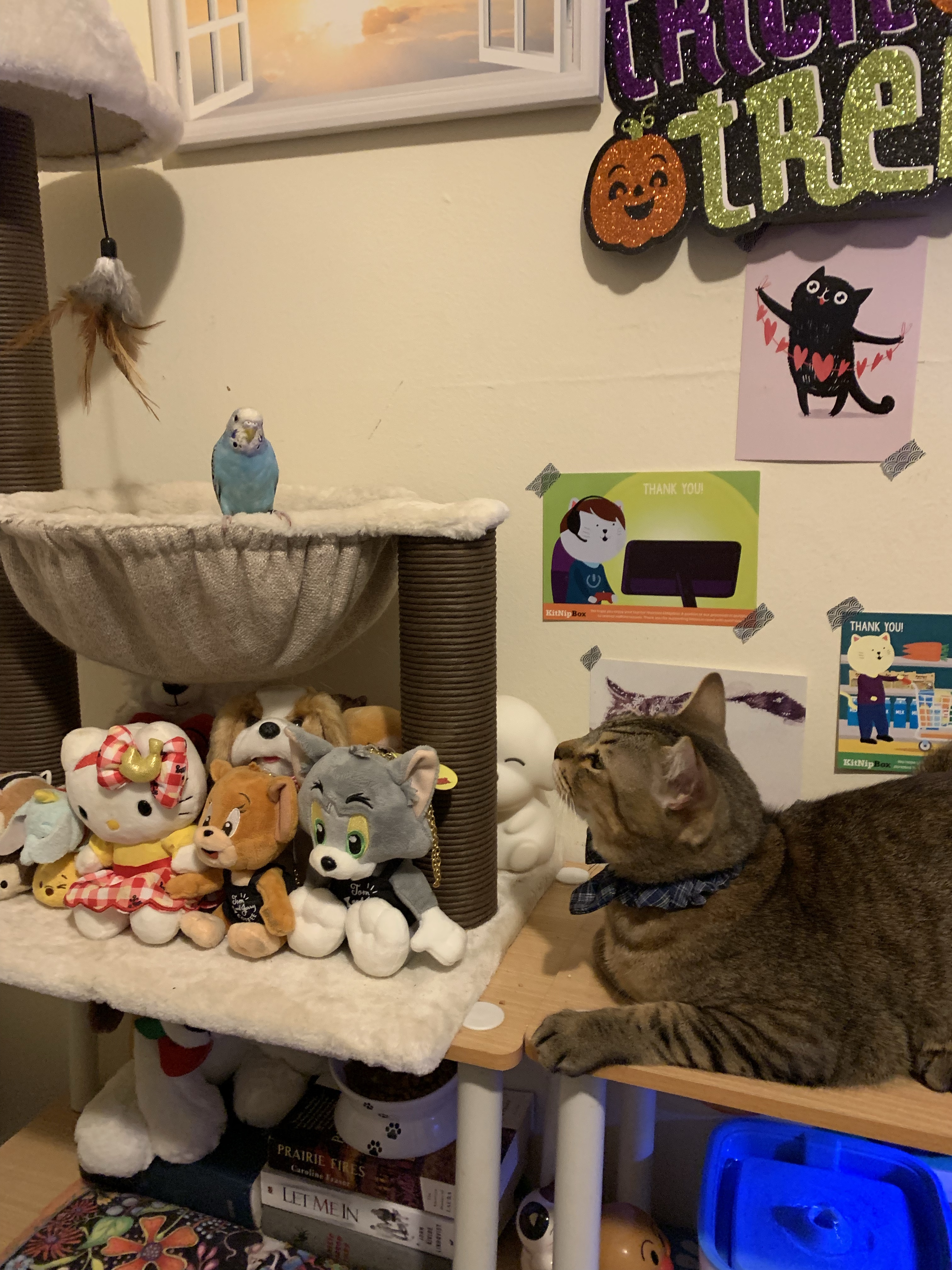
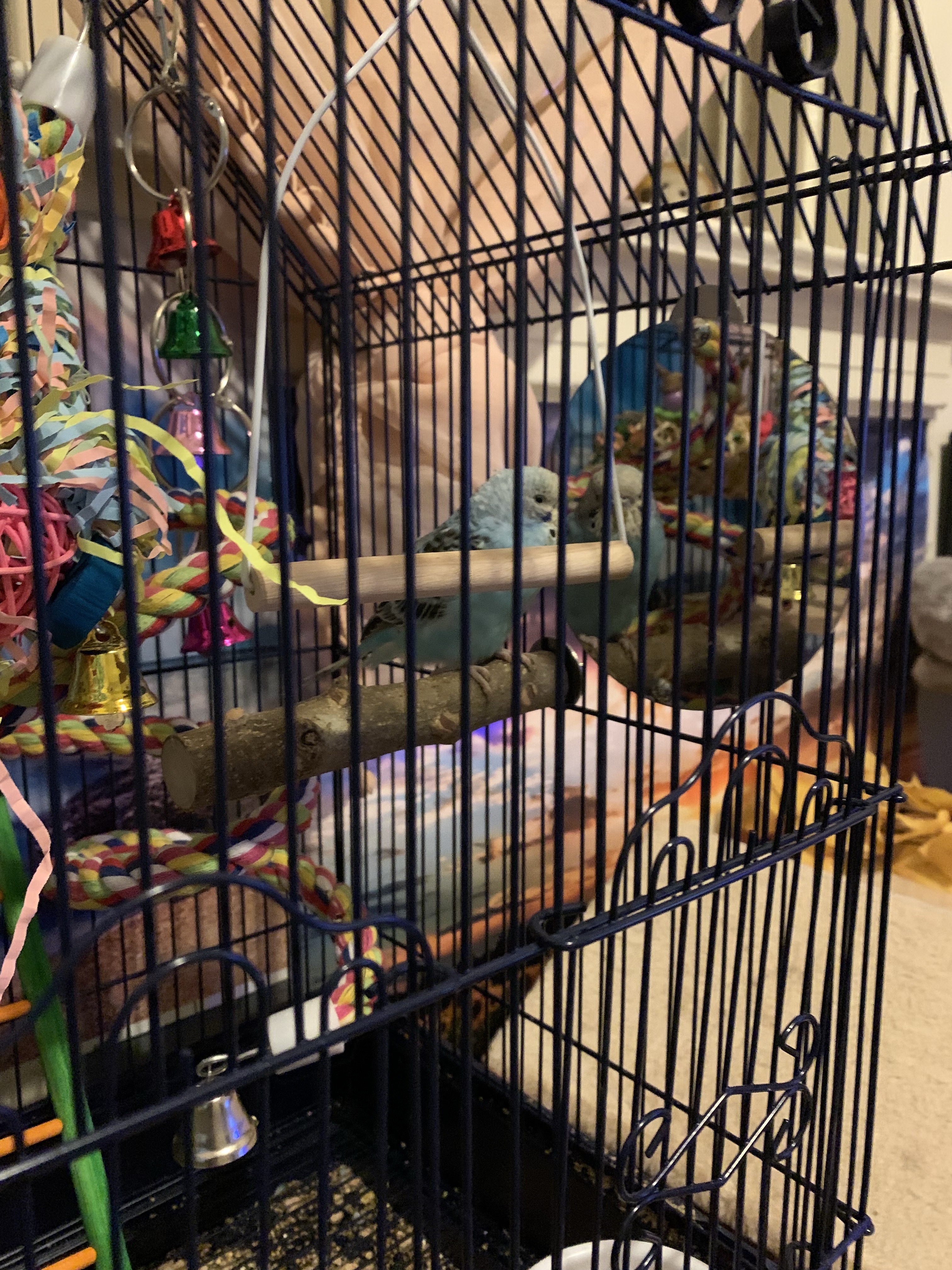
    I always feel guilty about leaving Toro alone when I go to work. It would be best to add another feline companion, but the existential circumstance prevents it. Hence the flying tenants moved in. The new parakeets are Sera (Blue) and Pippi (Green), who demonstrate that the phrase “eats like a bird” should be part of the Woke movement of removal. They are also unknowingly clever and perceptive that I wonder if they are secretly enchanted humans serving their time for misdeeds till the spell is cast off.

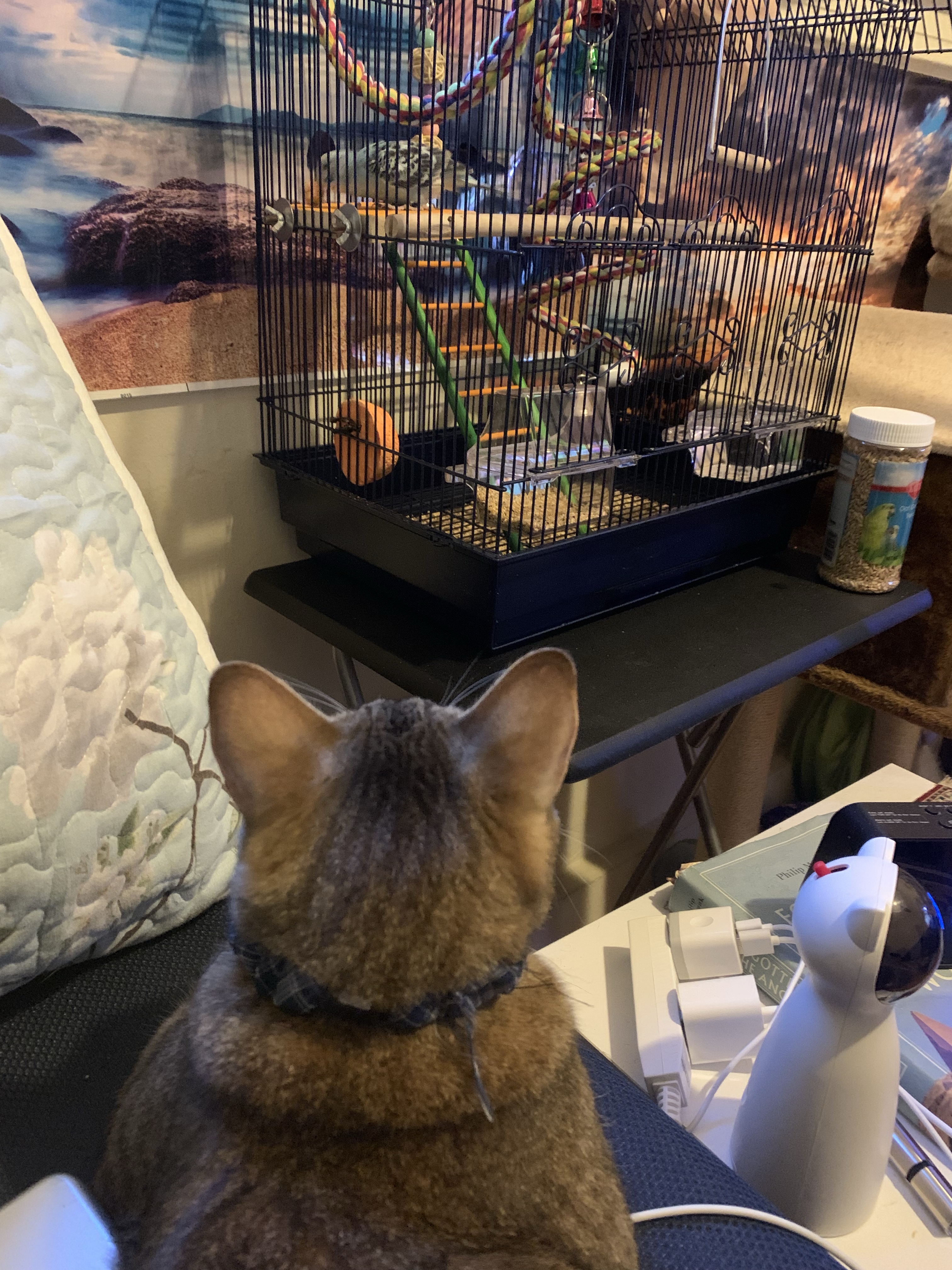
    Toro, aka the Curious Cat, also seems to know that Sera and Pippi are a joint force to be reckoned with, so to speak, but nevertheless shows undeterred attention to every move the duo takes with feline discreetness. Timid but curious, Toro wants to touch the moving feathers of parakeets whenever they come out of the cage for sauntering. But the birds show no fear but irritation against the unwanted friendship from the lonely feline. Poor Toro. I console him after Sera pecks his little nose with her dainty beak in protest against his pawed touch. However, my original purpose of making the birds friends with Toro is still valid because both Sera and Pippi do not altogether repulse Toro with wild shrieks of danger.

    I hope the birds will be warm to Toro as time goes by till we move to a bigger and better place to live so that I can bring another cat to the family.

    Twinkle, emerald dreaming,
    Love flocks in blue and green,
    Curiosity stalks love’s gathering,
    Loneliness emboldens attempting
    touch of love fluttering in longing.

  • Triumph of the Will

    Like Hecate, the goddess of underdogs, I have a soft spot for writers and thinkers who arose above personal hardships and triumphed in the will. If they have not experienced human highs and lows, how could they write and explain the meaning of life? Take the Russian writer Fyodor Dostoevsky whose near-death experience on the gallows and subsequent travails shaped how he viewed humanity, the purpose of God, and the dichotomy of good and evil. I compared the life of Dostoevsky with that of Victor E. Frankl, the father of Logotherapy, who survived five death camps during World War 2 because both men’s intellectual fervor saved them from self-destruction in the darkest hours of their lives.

    Dostoevsky (hereinafter “D”) was a political prisoner sentenced to death for reading banned books. But the most incredible feat of luck pulled him out of the gallows, and he was sent to a Siberian work camp. He forced himself to channel a danger of hopelessness and resignation in such a squalid environment into the world of imagination. His characters were his alter egos trapped in a cycle of solipsistic containment of morality, religiosity, and social justice. In these attitudinal and creative values as a way of relieving himself from the slough of despond, D finds a kindred spirit in Frankl (hereinafter “F”), whose spirit never succumb to the hopeless situations in death camps where life seemed to be a curse. Instead, f kept himself busy by constantly devising his school of thought, analyzing it, and structuralizing the concepts in his head and on any writable medium he could find discreetly. The result is Logotherapy, the third Viennese school of psychotherapy that encompasses philosophy, religion, neurology, and psychoanalysis, whose nature and method are common to all humans and applicable to all regardless of age, gender, race, and culture.

    So much so for the reading of the brief article, but the effect is magnanimous and resonant with a pellucid tenor of a victorious high human spirit with humor as a handmaid to intellect (wit), which would otherwise be grim and dreary subject to temperamental bouts of depression and pessimism. Both men in their prime of youth had their sovereign rights of individualities in tatters and shackles, but their willingness to live and achieve their goals exceeded the compass of the malicious fortune and triumphed in perennial glory. They are, as Ben Jonson in his humor might have concurred, men not of an age but for all time.

  • the unlikely family

    “So you have now the earth, the water, and the sky in your room! Awesome!” That was my brother when I told him over the phone about my recent adoption of a parakeet from a Petco. The paroxysm of excitement catapulted me into the awareness of a reality that I did bring a bird—those small but sharp beaks and those wrinkled tarsi feet manifesting the atavistic characteristics of dinosaurs, particularly the T-Rex. The truth that I now have to cohabitate with the least-likely coveted descendent of T-Rex still swivels my head in wonderment as if the ghost of Alice in Wonderland possessed me. So why the bird then?

    Dreaming of Sinbad and Serah

    While there might be the remotest chance of using my parakeet as a divine medium to consult my future, I have recently brought Sera home with great expectation of making a friend with the lonely Toro. Toro is now one year and four months old, and his growing curiosity calls attention for a playmate to share his enthusiasm and vociferous nocturnal stamina. Of course, the kinship of feline presence is the best option to fulfill the requirement. Still, the existential circumstances of present life eliminate it. Hence the lot fell into a blue parakeet I named Sera after the talking bird Serah, a travel companion of Sinbad the Sailor, from my favorite childhood cartoon. As you can guess, Sera is a girl who spends most of her time in front of the mirror and then trills in high soprano like a pretty and prim starlet prima donna.

    The crossed Sera befriends a reflection of loneliness.

    My endless attempts to tame Sera to sit on my finger and her constant ignorance of my presence are both disheartening and ireful. Toro is a susceptible and timid cat who denied looking at dead fish by turning away his head from the sight. Even though Toro wishes no harm on his new friend Sera, who fastidiously avoids him with all her feathers and beaks, she defends herself from him with all her might. Toro looks at me with his large sad eyes full of liquid heartaches whenever the conflict occurs, and I comfort him in my arms. Sera then flaps her tiny pretty wings, returns to her castle, and ensconces herself on a twiggy perch with a loud and snappy chirping as a sign of victory over the feline Goliath.

    I still don’t know if my decision to extra-species friendship is counterproductive amid Sera’s callous attitude toward Toro and me despite our apologies and continuous endeavor to reconcile with her. Perhaps I should not have taken Sera yet from the cage while she might have been still not familiarized with her new home. Still, there’s hope in my Pandora’s Box weaved in a rope of sparkling diamonds that promises a dazzling delight of trust and love filling the loneliness of the little hearts in our room. Who knows, one day Sera suddenly talks both Korean and English and tells me my todays and tomorrows? You never know.