Tag: literature

  • Things can only get better

    IMG_3984
    Getting ready for work

    Patricia has been recently working as a legal secretary at a personal injury law office in the city, the job she secured through her former boss Alfred Petersen, Esq., a high-profile defendant insurance lawyer at a powerhouse Gothic City law firm. Patricia, a principled, intelligent, and discreet character could have found a position commensurate with her ability and experience in the city had the hiring managers in the HR departments been understanding of a nine-month lapse after her resignation from the position of paralegal at a boutique real estate law firm in downtown last year. The reason for her leaving was that the field of law did not turn out to be her best match, pace her previously held naive anticipation that it would require of her less contentious meeting with demanding clients and less leg work that would push her to be out of the doors most of time. Besides, she did not get along with her boss, Susie K. whose whimsicality flitted though the ebbs and flows of her melancholia and in the weather of her sanity with all too frequent paroxysm of hysteria. Patricia wanted to keep her sanity and dignity rather than to succumb to the incivility of an irreparable solipsist. Hence the lapse in her work experience.

    IMG_3866
    At home

    When Patricia needed a helping hand to secure her employment with a B.A. degree that would leave you either overqualified or under-qualified in this ever volatile job market and the inglorious gaping period in-between employment history, she could not help but think of Mr. Petersen who was a lot like the empathetic boss of Bartleby the Scrivener in Herman Melville’s eponymous short story : that intellectually brilliant, characteristically benign, and professionally equable epitome of a “good” boss. Likewise, when Mr. Petersen whose heavenly blend of moral character and intellectual gifts endeared him to many of his admirers got email from Patricia out of the blue, he was willing to cast her a life jacket on a perilous sea under the aegis of his perennial benign influence. Since Mr. Petersen knew that Patricia was a good person who had not only the intellect but also the heart, an angelic admixture of humanity, he phoned one of his best lawyer colleague in town and connected him to her by sending him her resume via email for review and consideration that did not de rigueur need afterthought; it was the job to be had for the asking.

    So far Patricia has been well adjusted to her work routine in the new office and the work style of her new boss who’s fair and magnanimous. She only secretly wishes that the current state of things will remain unperturbed because she feels that she’s worthy of such reward after what she went through while being the subject of the vertiginous treatment that knew no reason and stratagem at the expense of her wailing spirit smothering in the existential daily duties and responsibilities. Isn’t it a crime for anyone to yearn such a continuation of equilibrium?

    thanks-for-reading-Rok-Hardware

  • ‘Essays of E.B. White,’ by E.B. White – review

    Essays of E. B. WhiteEssays of E. B. White by E B White

    My rating: 5 of 5 stars

    The essay as a respectful literary genre has not yet established its firm meritorious footing in American intellectual society where the novel, poetry, and journals featuring de rigueur social/political issues with gravitas, surrealistic individualism, or puritanical heroism that has recently morphed into a rags-to-riches memoir are the only select legitimate royalties worth being decorated with a laurel. Perhaps it has something to do with the level of American intellectualism being at its still developing stage in consideration of its relatively “youthful” history. For what is worth, despite its general cold reception from the literary hierarchy, E.B. White is nonetheless a quintessential American English writer and a very fine essayist of the twentieth century in the English language into the bargain. In this collection of his essays published in various magazines over the years (from 1920s to 1970s), Whites recorded the overtones of humanity, democracy, and social concerns in ordinary things and experiences described in elegant and crisp prose style that resembles none other than his, thus making him one of the central figures in the canon of American literature without dispute.

    Being an essayist means something of a modern day literary troubadour, an independently-minded man with childlike streaks of artless interest in all things worldly and unworldly and innocent belief that everything he thinks about and everything that befalls him is of general interest. In a way, he’s a likable egoist with venturesome effrontery and verve to write a very egoistic essay on his whims and caprice. However, Whites gently rebukes us for our general perception of the essay as an expression of exalted rootlessness without self-discipline and an intellectual basis; rather, it is a panoply of sensibilities, senses, and intelligence, all broken loose from the hidden private closet of the essayist. For this reason of being egoistically concerned in a panorama of contemporary daily that many serious writers of the other literary genres tend to downplay, an essayist should accept his self-imposed role of small-fry writing gentry in the class of scribe, advised White with a kind of avuncular manner. However, it is this estate of an essayist Whites feels exhilarated about; it provides him with a valve of the emotional influx and outflow, so that he can wield his pen across a page in an expense of his curiosity, conviction, observation, and self-discipline, producing a dazzling delight of literary pleasure in its simplicity of language and subject.

    To illustrate, White’s subjects of his essays vary from his experience of moving from New York City to Maine as in “Goodbye to forty-eighth street,” to the humorous political essay of “Bedfellow,” featuring his canine family member Fred, and from his keen and humane observation of a circus girl rehearsing her show in “The Ring of Time” to his youthful poetic experience of working as a waiter on a ship to Alaska in “The Years of Wonder.”All of the aforesaid deal with a cast of everyday character and contemporary daily life written in simple but perspicacious words to contextualize the inner realm of White. There’s no priggishness or pomposity in his prose style, which I find very appealing and endearing. For someone who’s as erudite and intelligent as White, such simplicity of writing betokens that he wears his knowledge lightly with a general reader in mind. In fact, White thinks it his duty as a writing man to record all items as though he would be held personally responsible if it were to be omitted. This idea of a writer as general secretary of humanity parallels the reasons of writing as posited by George Orwell: It serves as a platform of expressing our sheer egotism, aesthetic pleasure, political evidence, or historical record. A priori, both of the great essayist of the English languages strike the mutual writing chords in their hearts.

    At the heart of the essays lies White’s love of the world where he collected the flotsams and jetsam of what our contemporary human life could bring to us, which were washed up by the waves of time and memories. This collection of essay by White, I think, bestows in spades its sovereign royal heritage of its own on the American essay that merits its own section in nonfiction aisles across the country. That is, in a wide stretch of literary imaginations imbued with historical evidence, the book has made itself the founder of new royal blood in a way that reminds me of William the Conqueror’s  becoming the first Norman king of England by establishing a new royal bloodline in 1066. With a variety of topics, and the practicality of language, this book is a gem that holds the reader’s attention throughout the pages including the unforgettable cover featuring Fred and the author himself, which so fittingly and wittingly demonstrates the Element and Style of Essays of E.B. White. It’s a lovely read that warms your heart and piques your curiosity of the inner world of the writer whose thoughts and feelings chime the bells of ours own in one way or another because White is ageless in his writing and his writing timeless in his essays.

  • The Sun Also Rises – short story/novella

    IMG_3826“Hello, this is Sally Lamb of 62 Errant Terrace, Apt 1C, Ritterford. May I speak to someone in the accounting department?” Sally really did not want to call her apartment management company. She would avoid calling them at any cost because it was operated by the descendants of Scrooge; or so they seemed. Despite the fact that Sally had been a conscientious tenant who paid her monthly rent fees on time, the company never responded to her requests for any repair of out-of-order fixtures through no fault of her own. Their response was always uniformly scripted as thus: “Put it in writing.”  She had acceded to the blimpish command  as dutiful tenant to landlord, but she then gave up pleading for any mercy with the shylock company. You see, it took Sally’s guts to call the management and asked for the particularly supercilious woman dealing with her apartment matters.

    IMG_3790“Yes, what is the matter?” the usual callousness of the woman on the other line punctured her heart, but Sally tried to muster what vestige of courage left in her spirit. She was Lamb to the slaughter. “Yes, I just would like to know when you can pay me back for the overpayment of my apartment rent fees? Can I get it next week?” Upon decanting what had troubled her spirit and soul for long, Sally was still unsure if she had done the right thing because she had a premonition that the request would be thwarted. “No, it will not happen soon. You have to wait at least for 30 days to get your money back. It’s our company policy!” Then came silence on the other line. The minion of Scrooge hung up on Sally after shooting off her mouth. This made Sally godforsaken and dumbfounded. How could anyone possibly do such an inhumane thing? Sally wondered if that woman would still attend Sunday morning Mass tomorrow and receive the Communion for the sake of her family and her shamelessly haughty self.

    IMG_3946

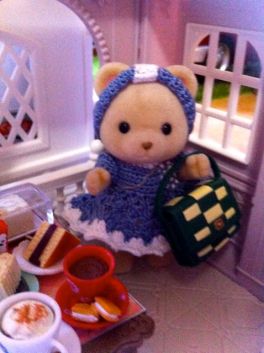
    Sally became distraught, but her spirit resisted being downtrodden. Fretting over tomorrow and languishing over what happened will do nothing good for me. Come on, Sally. you know it better than anyone. Cheer up! Emboldened by her ever resilient spirit, Sally got herself together and changed her cloth to get out of her delipidated apartment and headed for Snoopy’s on Main Street to get fresh coffee and a cake. When Sally got there, Ms. Long, the spinster owner of the coffee shop, greeted Sally in a way a loving grandmother would do when seeing  her dear granddaughter. Ah, that touch of love and kindness touched Sally’s heart. Sally wondered what if she would have only heart not intelligence like a kind of sweet imbecile; would the condition enable her to deal with strains of daily life easily, since the brain would not command “pain” to the neurons in the senses? ‘Oh, just forget about all the worries for now, and let me enjoy this moment of comfort and warmness. For didn’t Jesus say “Do not worry about tomorrow because tomorrow will worry about itself, and each day has enough trouble of its own”?  Well, I have experienced a day’s woe and endured it, so no more anxiety is granted. It’s all in the past now. ‘ Thereafter, Sally began to read a new issue of this week’s The Spectator.

    thanks-for-reading-Rok-Hardware


  • Villain got heart too: review of Oliver Twist (1985 BBC TV adaptation)

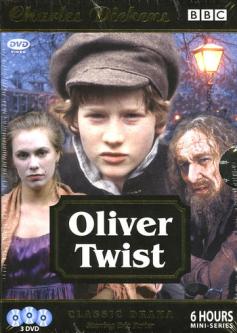
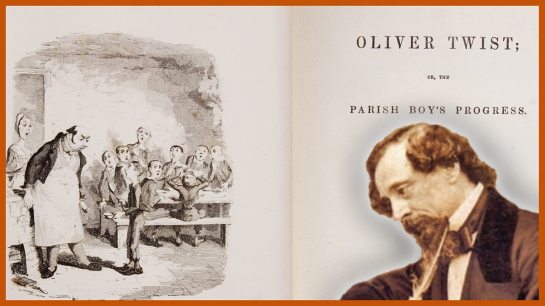
    1330854631What distinguishes Charles Dickens from his contemporary writers is his belief in redemption, forgiveness, and benevolence of a human spirit triumphing over poverty, guilt, and death, the three cardinal ordeals of existential phenomena. For almost every character in his oeuvres, including villains, heroes/heroines, and even minor characters, has some shred of redeemable traits, if not goodness in the case of swindlers, pickpockets, or murderers. The question of morality in the Dickensian world is never proprietarily imposed upon the reader, and thereby leaves out harsh puritanical judgment of a character because humans are more sinned against than sinning. That’s the beauty of Dickensian reality set in the background of the stuffy Victorian reality. That’s why I can’t hate any of his characters, such as Bill Sikes, The Artful Dodger, and even Fagin from Oliver Twist in the parade of humanity.
    The TV adaptation of the novel by BBC (1985) is truthful to the original context, capturing every moment of emotions and feelings as finely portrayed by a skillful cast of the characters. The story of an impoverished orphan child whose resilience and innocence got him through misadventures and ultimately rewarded him with a bounty of loving family and well-deserved munificent largess may look to be a typical rags-to-riches fable. But such a presumptuously precarious judgment of the story will deprive the reader of the beauty of Dickensian characters as aforementioned.

    Take Bill Sikes, a tall and lean professional burglar whose callous treatments of Nancy, his live-in girlfriend also a pickpocket, and his loyal mutt Bull’s eye are downright contemptible. It goes without saying that this Bill Sikes character is in no way likable or pitiable. Yet, such egregiousness that only invokes contempt is what makes Sykes a fortiori pathetic. After he killed his beautiful-hearted Nancy in a paroxysm of rage, Sikes shed a cascade of tears that looked to me more of guilt and regret than of any other reason I could think of. As a matter of fact, watching the Sikes character shedding tears perturbed my heart because I could glimpse at his heart hardened by his life of poverty that had led him to the life of crime.

    What about Fagin, a boss of juvenile pickpockets, who is driven half mad at the thought of his being hanged at Newgate? Maybe it’s because his character was visually manifested on screen, but he also won my sympathy over such madness, which made me wonder if his insurmountable surge of remorse for his crime made him mad. Also, the artful Dodger, the most skillful pickpocket of the gang captured and tried at the court, was the figure of pathos. Would he have fallen into the world of crime had he been born into a well-to-do family? Or if a divisory lot – that is, a play of chance given by goddess Fortuna – had been favorable to him, would he have found himself in where he was?

    Call it childlike credulousness or a feminine streak of maudlinness, but I don’t want to make draconian measures against these antagonistic characters by putting them into a Procrustean bed of morality one by one. For it is necessary without a gesture of condescension or insolent attitude masked in charity to get into the inside world of the characters to understand what made them choose the life they lived in the face of poverty, hopelessness, and loneliness. I cannot help thinking that a game of chance each of them tried to get was against him and scoffed at his attempt to make it right in his life. In that regard, this is the question that Dickens asks to us: what would you do if you would put yourself in their shoes?  Dickens tacitly implies that only the goodness of our heart that comes from our empathy can save the world. Come to think of it, it is no wonder why Catholics and Marxists alike wanted to claim Dickens to be one of their own in his era. For these reasons, his novels should not be confined in a genre of Victorian literature because the subjects are timeless, and the characters appealing with universal traits of humanity that know no cultural, linguistic, and social barriers.

    p053cm0l

  • Our Mutual Friend

    IMG_3875

    Mornings in Avonlea always start with the calliphony of euphonious “good morning” exchanges between and among whomever you meet in the street, banterings of the townspeople on just about anything from what they ate yesterday, to the books or magazines they have recently read with relish, and to their projections on the next episode of their favorite TV movies including “Oliver Twist,” “The Brief,” “Mind Your Language,” “Macgyver,” etc.  And of course, they do gossip in the grapevine about anything they see or hear prodigious and pronounced from the quotidien landscape from their suburban life as it is our indelible human evolutionary trait to be incessantly curious about the lives of others. In this Darwinian regard, Mrs Brenda Beaver and Mrs. Mary Collie are probably the very essence of collective human curiosity. They are good chums together bound by mutual cultural interest, roles and duties of married women with children, and vivacious loquacious nature.

    IMG_3789As usual, Willie’s Fruit Cart is the first business enterprise that heralds a beginning of every day. The merry women of Avonlea are loyal customers of Willie’s fresh and scrumptious fruits because the products are organically planted, cultivated, and handpicked by the conscientious farmer Wille himself.  Naturally, it is no surprise to spot both Mary and Brenda chatting away around the cart on every saturday morning. “Hi, Brenda! You bought some fruits there. Did you get them from Willie’s Food Cart?” Mary opened the day’s bantering (or gossiping, depending upon your point of view.)  “Hi Mary! Yes, I needed to get some fruits for my family because my daughter Betty is on a  diet. I told her she would not need to lose weight, but you know, girls are girls. (sigh)”  Having said it with a touch of motherly concern for her daughter’s growing self-conscious image about herself, Brenda looks ruefully at Betty picking up more fruits from the cart. Mary ‘s innate empathy connects her into the inner world of Brenda and commiserate with her incidental m melancholy. So she decides to turn Brenda’s attention to something provocatively productive.

    IMG_4013

    “Brenda, you surely read The Glass Castle by Jeannette Walls, right? I finished reading it last week and have to tell you my honest review of it. Well, although I admire the author’s resilient and independent spirit in combination with her high intelligence and academic achievement against the vicissitudes of her childhood fraught with economic insecurities and shiftlessness of her parents, her situations did not seem to be as destitute and adverse as Judy Redfox’s in our own town. ” After decanting what she had in mind about the book, Mary feels that her mind could never be clearer and sober. Mary’s zeal soon grasps Brenda’s inquisitiveness, so she asks her to go on.  “You know, the Redfoxes who moved into our town two years ago and have since lived on Bell Street? Well, their only child Judy has been supporting her mother and father since she was eighteen years old by working at odd jobs and going to university at the same time. She worked through her way to university with financial aid from the state and the government. She even joined the National Guard to receive tuition assistance – all because of the fact that her parents lack practicality and totally depend upon their daughter for subsistence and everyday drudgery. I firmly believe that Judy’s travails are incomparable to what the best-selling author went through in her early life as narrated in her famous memoir in all aspects. Judy’s everyday life is a testament to resilience, courage, and determination because although Walls achieved her career and materialistic success, Judy still lives in the existential labyrinth of endless impecuniousness, arbitrary filial responsibilities, and ambivalent future of her own.

    IMG_4014

    Having read The Glass Castle when the book came out for the first time, Brenda knows what Mary talked about enthusiastically and can’t help agreeing to her friend’s point of view. For the author of the book’s now public travails do not amount to what her town’s Judy has been going through. Although Judy has never confided her feelings about her hard life to anyone, Brenda can see her unparalleled difficulty in life that Judy has to bear with all her might, with all her spirit, and with all her intelligence, to get by. Of course, you can not compare one’s life to the other’s, as that’s what social conventions and religious tenets have been conditioning the minds of people. But for all Brenda and Mary see, Judy is an unsung heroine whose existential tasks akin to the Eleven Labors of Hercules are worth the writing of her own memoir in future. So what the merry women of Avonlea will do next is to stop by where Judy works today and treats her with some nice lunch to cheer her up to let her know that she’s not alone.

    thanks-for-reading-Rok-Hardware

  • The Jungle Book by Rudyard Kipling

    the-jungle-book-hero

    It was my first moment of spiritual Eureka mixed with awesomeness and bewilderment in terra incognita when I first read The Jungle Book by Rudyard Kipling. It was a wonderful pictorial book painted with the scenes from the Disney’s classic animated film version. To the child’s eye, it was like a fiesta of vivid colors and vivacious characters set in motion in the heart of jungle I had never seen. What’s more, the animals were so humanlike and likable into the bargain that while reading the book, I almost forgot that they were beasts speaking their own language, which I was able to understand through the presence of Mowgli, who looked a lot like Tarzan in diminutive stature and size wearing only a loincloth and long dark hair. Mowgli’s knack of communicating with his beastly friends who were always there for him even compelled me to try talking to my domestic puppy Nena at that time by using a quaint conflation of the human alphabets and the doggie phonetics to a moderate success.

    Now I am pitchforked forward in 2018, but the childlike sensation of reading The Jungle Book still resonates strongly with me in defiance against the existential horrors of life that I deal with everyday. Amid the the detritus of daily chores and duties, I turned to Disney’s remake of The Jungle Book (2016), which I chose to watch on my Kindle Fire a few nights ago. At first blush, I had a certain indisposition to watch the highly-acclaimed film: although I am not altogether unreconstructed in terms of watching a film version of classic literature, I tend to shun adopted film versions of classic literature because of the gratuitous rendering of post modernist revisionist interpretations of the books they put on screen. But such misgiving was proved to be an unnecessary mental albatross.

    The Jungle Book is a cinematic eye candy to children and adults with its stunning visual impacts and a spectacular scale of the story set in the background of a deep jungle somewhere in India populated with a cast of magnificent characters representing human characteristics in different forms. To classify this film as an anthropomorphic children’s film is to miss the essence of Kipling’s allegorical allusion of our human nature to multifarious animal forms: Sloth, Integrity, Conscience, Humor, Greed, and Vengeance, all of which is manifested in contact with the nature itself whose essence is of neutrality. It is in this background of nature, which is neither paradise nor hell where our human nature becomes conspicuous in its very essence, a primeval form. The manifestation of such human traits is a fortiori overcome by the figure of Mowgli, a feral child brought by a benevolent wolf family. Mowgli is an emblematic of resilience, independence, and courage against the gravitas of trepidation, death, and despondency.

    9780385389839Given the authenticity of the storytelling aligned with the original context by Kipling and the performance of the characters studded with breathtaking scenes of nature so characteristic of Disney’s creative imaginativeness, it is a film worth of the spending your time on screen. It is a kind of film that stimulates your mind by inviting you to think about a meaning of our human life and existence and of our purpose of life. It will also thrill your heart with the adventures of Mowgli in the heart of the jungle and the stereoscopic views of the nature on screen created by a wonderful collaboration of our timeless human imaginations and 21st century feats of technological bona fides.