Tag: literature

  • The Significance of Unread Books

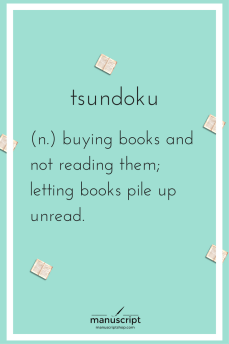
    47def1527c46a0b1c2136d2348a04421To come upon Word of The Day, Tsundoku, as I was checking messages on Facebook during my lunchtime at a regular Starbucks shop gave me a fillip to thinking of my unread books I have piled up, untouched, since my new job became my primary reality. A Japanese word for a pile of unread books, Tsundoku has become something of new word that describes a tertiary group of books  attempted but disinterested, or tried but forgotten. Which is what my tsundoku are comprised of. My books pending my reading speak to me: “Have you deserted us?” Nary a One Bit, My Dear Textual Friends.

    In fact, looking at a stack of unread or partially read books imparts me a sense of subtle satisfaction and small wonder: these books of mine indicate that there’s still unknown knowledge of the world I need to know and that my literary vanity is worth the indulgence. They are part of my personal library built upon flotsam and jetsam of sundry interests, which are similar to the Mathom-House in the Shire, inhibited by Hobbits. The Mathom House is basically a museum of paraphernalia, a sort of odds-and-ends things but not to be discarded for what they are worth. The House is ever-expanding as a Hobbit fills it with this and that to his heat’s content. Likewise, my library is ever-expanding as it is filled up with new ideas and fresh inspirations drawn from the world of writers with unique voices but who always manage to express the universality.

    Tsundoku, the Mathom-House… they are terra incognita in the mind of any adventurer of knowledge. The importance of unread books reminds us that reading is a never-ending activity but an ongoing process of becoming who we want to be because we become what we read. Reading is not a competition but a creation of a reality of the reader by passing over to the minds of the author and the characters. All books , finished and unfinished, are possible to help you get there too because they are unknown unknowns. Therefore, a sight of Tsundoku is not a sign of a failed literary or academic ambition but a display of a wondrous mind whose intellectual/academic/artistic odyssey is still on.
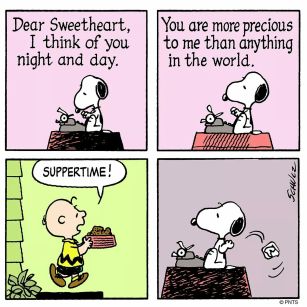
  • She learns from Snoopy and his friends

    10a4193f2c9a845de1c965098bf84b40

    As I read a daily Snoopy comic strip on my Kindle Fire, I believe the power of pop art that shapes the patterns of our culture and the modes of attitude toward the social customs and conventions. This relatively new modern art genre first emerged in the United States and the United Kingdom in the late 1950s as a counter cultural movement to challenge the orthodox forms and formulas of fine art by using imaginary figures or cultural objects from mass demotic culture, such as comic books and advertising. Its wide appealing to all stratum of society devoid of abstruse textual message or abstract imagery only comprehensible to a select few is elegantly manifested in Peanuts, featuring Charlie Brown, his friends, and of course his very famous resident beagle Snoopy.

    which_peanuts_character_are_you_featured_large

    Peanuts is all about being hopeful in the face of hopelessness in living daily life. The round shapes and soft faces of the characters of Peanuts evoke a sense of warmth, innocence, and artlessness with a feeling of secure comfort. What’s more, the simple themes of this affable comic strip are universally translated into the minds of readers all around the world, so much so that in Japan Snoopy and the Peanut Gang have become celebrities in the stationery firmament since their first debut in 1950. Peanuts shows us the incongruity and pain of everyday human condition in the appearance of innocent-faced children and stoical Snoopy. It reveals certain truths of our daily existential dilemma in which we struggle with the meanings of life against our unknown futures. In this regard, Peanuts is a profound comic strip dealing with very adult concerns – that is to say, life is a series of worries and more worries- in disguise.

    charlesschulzdrawingboard
    Mr. Schultz at work.

    The creator of Peanuts, Charles M. Schultz (1922-2000), was in many ways a lot like Charlie Brown. Both of them had that placid, affable smiles, soft facial features that make anyone feel guilty of hollering out their names out of earshot, and relaxed and almost self-effacing comportment that spells out “Humility.” In fact, the shy Schultz found the best medium in a comic strip to express his artistic talent and intelligence and thus created his simple but complex alter ego Charlie Brown. However, Schultz did not purport his creation to be a medium of pontificating about political or social agendas. He did not intend to use Peanuts as a visual aide to contextualize far-fetched psychoanalysis in this comic strip. The triumph of Peanuts over the flight of ages and gaps of cultures lies on Schultz’s keen observation of life per se and his effortless delineation thereof in this quiet but smashing timeless comic strip that deserves of universal recognition across the seas and continents. For this reason, Peanuts is an excellent paradigm of pop art whose excellence is simplicity in character, in style, and in form. Leo Tolstoy said, “There is no greatness where there is no simplicity, goodness and truth.” Peanuts fits all of this.

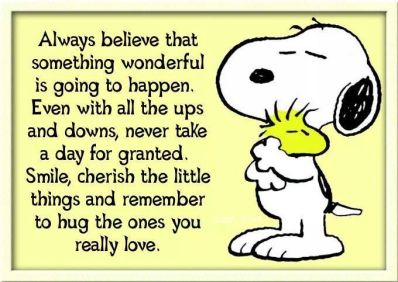
    inspirational-positive-life-quotes-good-advice-from-snoopy

  • Jonah’s Days

    img_0110(1)
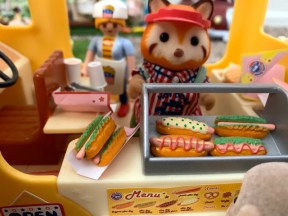
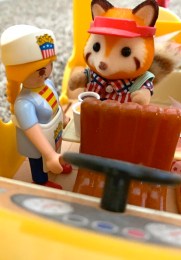
    Andy at the helm of the store during his training of Wendy

    Andy’s culinary business has been doing very well since its opening three months ago and become one of Must-Go eateries through the digital grapevine of regular village chatters, peripatetic wayfarers, lunchtime workers, leisurely saunterers, and food critics incognita. With the growing popularity of the now famed hot dogs, french fries, and waffles of Andy’s, hiring a helping hand was unavoidable. So Andy posted a job on Solid. Com for a full-time attendant with benefits after a 3-month probation period and $13.00 per hour, which was really an excellent job opportunity for anyone looking for decent employment in this time of static unemployment situation and a growing number of homelessness all around the world.

    img_0112The lucky winner of the happy opportunity was Rosetta whose honest-to-goodness character and sweet smile moved Andy’s robust stoical temperament at the interview. So Wendy came aboard as a new cute attendant at Andy’s, and she loved every minute of it, serving customers with care and smile, grilling sausages, flipping buns, frying french fries, and performing all other miscellaneous tasks given ad hoc by Andy or his wife Martha, who always religiously brings her homemade buns, sausages, and other condiments to the establishment every day and attends to customers in the morning until 11:00 AM.

    img_0113
    Andy chides Rosetta for misunderstanding customers’ orders.

    But the halcyon days of the initiation to her new employment came to an end last week. Or it seemed so. Although Rosetta was intelligent, always eager to learn new things with her whole heart, she needed a certain period of time long enough to be proficient in her new trade. But Andy’s spartan way of inculcating a new set of know-hows and modus operendi of the attendant position in his new seemingly fumbling employee did not go hand in hand with Rosetta’s trait and temperament. Maybe he expected from Wendy a novelty effect, which is to say that every new role and responsibility needs to initially improve when such new doctrine is first instituted. Maybe that’s an universal tendency of every employer anticipating from his or her new employee, which is understandable. But then maybe it’s Andy’s short-sighted insight for Rosetta who would need enough time to be soaked into new knowledge until it became her secondary register and octave.

    img_0114
    “Man can be destroyed bit cannot be conquered,” is one of her favorite axioms.

    Rosetta’s shyness and her introvert personality might appear a bit farouche at handling multi-tasks or adroit at communicating with vendors providing products to Andy’s due to her tendency to stay indoor, which makes her guarded against dealing with the outside the world in all aspects of everyday life. Nonetheless, Wendy’s willingness to work to the fullest extent possible, honesty, and kind nature should also be highly esteemed because finding a good person is harder than hiring a smart worker. Surely, employers run businesses, not charity organizations that provision their employees with bread unconditionally for free. But then they deal with people not with cyborgs they can discharge anytime at will. Therefore, it is best to advise employers to learn that there are more things in heaven and on earth that are dreamed of in their business stratagems and callous modus vivendi.


  • BBC History Magazine – review

    https___www.discountmags.com_shopimages_products_normal_extra_i_8533-bbc-history-cover-2019-january-1-issueThis magazine deserves of its honors in History and Literature: the prime qualities of the articles it features on every monthly issue result from its writers who appear to master the Art of Practical English (along with the writers of The Spectator) that should exemplify all others, especially here in the States, where big words and intricate sentence structures are modus operandi of fine writing. In addition to the beauty of writing, the magazine deals with many an interesting historical fact that strikes the chords of the present era, making us realize that as long as the human race exists, human nature remains unchanged. To top it all off, this magazine is a lovely read easily and perfectly downloaded on a Kindle Fire in its entirety and keeps you amusing company on the train and at a coffee shop.
     

    P.S. Happy Friday proffered me a delicious respite at the office today. Then came one of those inconsequential e-mails sent by Amazon asking its Prime members about a review of goods or a book one had ordered. As a way of improving Craft of Writing and compensating for recent lack of writing activities under the pretext of my learning a new trade and exerting my herculean power on  a long commute to and from home, I deemed it productive to write this bullet review of this great magazine that has become a darling of my regular routine reads. How much I wish I could write like the writers of this intelligently entertaining magazine! Hence, Henry Wadsworth Longfellow’s axiom always resonates within me: “Still achieving, still pursuing, Learn to labor and Grow…”

    저장

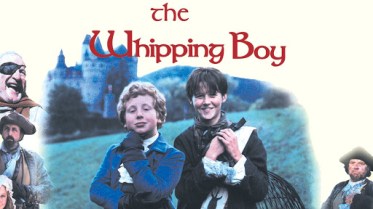
  • ‘Prince Brat and the Whipping Boy (TV Movie 1994)’ – review

    unnamed
    The Unlikely Duo in tandem

    Tales of mistaken or traded identities between either by the irony of fate or whimsical voluntary submission bespeak our desire of realizing dreams and desires at one fell swoop without drudgery of going through rules and conformations of social norms and mores. From The Prince and the Pauper to Cinderella and to The Trading Places, the basic story lines contextualize the instant social mobility of improving one’s social status and the essence of human nature laid bare in dealing with new milieus. But forget the verbiage of latent sociological theory and academic analysis because after all, we all know that such wish for rapid social escalation is only father to the thought. So why not continue to enjoy the world of wishful thinking entertainingly translated on screen for the sake of art, such as this delightful movie Prince Brat and the Whipping Boy (AKA The Whipping Boy)?

    hqdefault
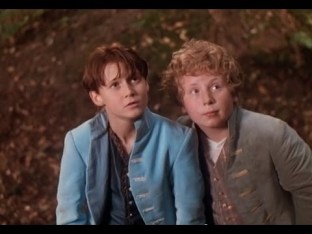
    Guess who’s the prince?

    The movie has a charm of Mark Twain’s The Prince and the Pauper and The Adventures of Tom Sawyer, giving it impression of a spin-off from the two stories in all likelihood. But what makes it worth the viewing are the characters whom you find difficult to dislike and the detailed background setting that conjure up the spirit of the time and bring out the personalities of the characters delightfully rendered on screen. The young prince is not really a brat but a lonely child who needs love and attention from his ever busy king father. The prince’s impudent pranks are signals for sending emotional SOS to the king who puts the security of his kingdom before the attention to his one and only child. And there’s a young rat-catcher about the same age as the prince who accidentally finds himself as a whipping boy for the unhappy prince. What happens next is the gem of this movie in their subconscious quest for their cherished ends, their treasures at heart, through their eventful journey together in the unlikely duo of the prince and his whipping boy.

    All in all, it is a little cute feel-good movie intended for all ages about what’s really important in life. Yes, we all may know the answer to it, but it really touches us in the denouement of the movie, leaving us with a feeling of warmth, affection, and jolliness, chiming the emotional, sentimental bells of our childlike imagoes. That said, if you want a movie that takes you away from your worries and sadness arising out of living adult life for some time, this movie might do good for you as it did for me for the day.

  • Birth of Underworld Train on 01/10/1863

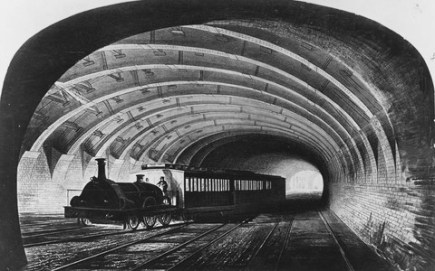
    1863-metropolitan-_2447190a
    1863: A contemporary lithograph of a steam locomotive on the Metropolitan line near Paddington Station, courtesy of the Telegraph

    As a commuter taking trains – that is, both overground and underground – to work, I deem it appropriate to pay a historical tribute to the opening of the world’s first subterranean railway in London, England on January 10th, 1863. The London Underground is the genesis of all the world’s trains running under the surface of earth, such as the New York City Subway, the Los Angeles Metro Rail, Paris Metro, the Tokyo Subway, et al, and for its perpetual legacies as one of the greatest inventions in human history that reconstructed social substratum as well as cultural setting, the commencement of the Underground 156 years ago from today deserves of its deferential recognition and universal commemoration. Thus is my reason I write this post as a personal token of my appreciation for the use of the Metro on a daily basis.

    When the idea of operating underground railways was proposed, the public and the critics alike decried it, demanded it should be offloaded, for they all shuddered at the thought of going under the surface of earth, which Dante indicated in Inferno as where Hell existed, or a pit fit for the condemned prisoners only. Those who had their disbelief on such daring idea of tunneling underground simply dismissed it as stark nonsense or one big hokum. Some even feared about a remote prospect of the tunnels collapsing due to the weight of the houses. And to some, it’s an express ride to Inferno, because the very thought of traveling underground by train seemed so preposterous, so blasphemous, so revolting that round trips should be used as a severe form of punishment for convicted criminals. Besides, like their modern counterparts grumbling about cacophonous environment of construction nearby, the entire procedural only instigated noisome puncturing of the equilibrium of locals.

    p05t5qkm
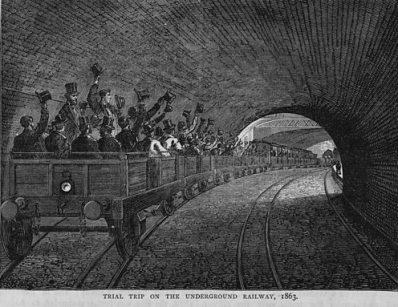
    Commuters waving their hats in the air during a trial journey on the London Metropolitan Underground railway, courtesy of BBC.com

    However, to the consternation of all those critics and public, the result of the Underground, the subterranean train of Hades,  came to fruition of its revolutionary speedy efficiency and cultural experience that was truly one-of-kind. In fact, it proved a triumph of determination and Victorian engineering feat, creating a dazzling combination of Arts and Science in terms of its technical prowess and the novelty of uniqueness in all things creative and venturesome. In fact, on January 10th, 1863, 38,000 people rode between Farringdon and Paddington stations. There were 3 compartment lit by gas, and each of the compartments was designed with care for passengers because efficiency and beauty could accompany one another, never rival.

    When I will be on the Metro tomorrow morning, I will think of those Victorian London passengers on the Underground and will likely to thank Directors and Engineers of the London Metropolitan Railway Company for opening a new era of public transport that has upended our patterns of life and shapes of our perspectives on our everyday life.