Tag: literature

  • Writing is Ego Qua Meaningfulness

    “Hi Stephanie, wow what a great and well-written review. Thank you very much for posting it on your blog! We will share it on our Facebook page and have also retweeted it!” 

    A very well-written and comprehensive review of our new book on Marie Antoinette. Check out the blog post and discover more about this controversial queen of France.

    MILKCARAMEL.BLOG


    My book review of Marie Antoinette: A Captivating Guide to the Last Queen of France Before and During the French Revolution, Including Her Relationship with King Louis XVI by Captivating History was posted on the publisher’s Facebook today. Although I held no intention of being publicized by the publisher of the book when writing the review, it’s certainly good to be recognized by such a credible, esteemed establishment.

    I write not to impress anyone, but I simply like doing it out of sheer egotism and aesthetic pleasure, both of which strike the chords with George Orwell’s reasons for why he writes. Writing is in fact an act of fulfilling my creative and experiential values that chimes the notes of Viktor E. Frankl’s Logotheraphy, a third Viennese School of Psychotherapy based on existential analysis focusing on ego qua meaningfulness, i.e., will to meaning as opposed to Adler’s Nietzschean doctrine of will to power or Freud’s will to pleasure.

    Kurt Vonnegut’s immutable, timeless adage should resonate with bells and trumpets to remind us of the nobility of being a creator of art: “To practice art, no matter how well or badly, is to make your soul grow. So do it.” That’s so patently true. Remember the ever popular catchy advert phrase? Just do it. Think Nike.


  • Eleusinian Craft of Lady Alchemist

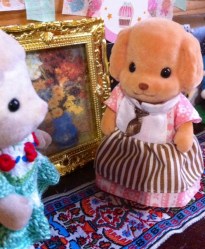
    IMG_3985She writes, and speaks to a soul in many sorts of music. She sometimes invokes inspirations from her favorite Muses: Kalliope for epic poetry; Clio for history; and Euterpe for lyric poetry. In fact, she feels most ecstatic when the divine inspirations become one with her body and soul creating the ineffable rapture of the body and elevating the excitement of the soul in zenith. She is no less a dilettante of amateur music aficionado and an apprentice of alchemy of literature and history than Seraphina by herself.

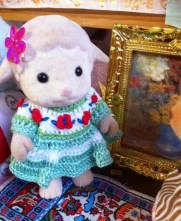
    She also has a secret: that she practices her secondhand acoustic guitar she bought from a traveling troubadour who with his finely cultivated artfulness of sweet talking laced with a streak of medieval chivalry, tempted her to possess it three years ago at a reasonable price of $100. And it turned out that the crafty troubadour was a nice sort of reprobate who could make your otherwise bleak life a bit more cheerful and jovial to live because Seraphina loved the guitar at first blush and has played it since the farewell of the sportive wayfarer.

    IMG_4048

    Seraphina is an Aquarius, and therefore an independent beauty. She is an autodidact and is at best when she’s least self-conscious and left alone. She has been teaching herself to play the guitar in hope of playing the songs she loves flawlessly by changing the chords swiftly in keeping up with the rhythms. One of her repertoires for her guitar practicing is “As Tears Go By” by Rolling Stones – not the version of Marianne Faithful – It is another secret that Seraphina sings the song while playing the guitar in her room, and she loves the moment of doing it because she feels like a Jane Birkin or a Joni Mitchell or a Francois Hardy.

    Kurt Vonnegut once said, “To practice any form of art, however good or bad, is to make your soul grow, so do it.” In accordance with such supportive tenet of art, Seraphina thinks that it’s all about unlocking the artist from within. Surely, not everyone of us can’t make our names marked in the world, but then each one of us is something of a creator of a life. In her ideal firmament, being an amateur artist means being able to create her own artistic world unsullied by the material demands of life that often yield myriads of existential vertigo. But then who would know what might bring Seraphina into changing her weltanschauung in future? After all, we think we know what we are, but know not what we may be. In the brevity of life, Seraphina thinks to herself, ‘Sweets to the sweet: Farewell to worries!’

    thanks-for-reading-Rok-Hardware


  • Walk like Poet Henry David Thoreau!

    photo (1)
    Sally, the Thinker

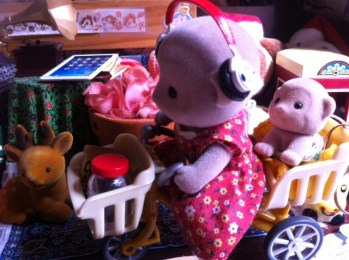
    “Give me a box of bonbons and a pouch of fruit candy assorted with gummy worms to sweeten my vapid imaginations! Oh, and a cup of Hazelnut coffee with a little bit of half-and-half to spark up my dormant spirit that resists to awake after a day-off.” Sally was hoping to make a new Monday as vivacious and jovial as possible, so she decided to meet with her lovely alter ego Bonnie for brisk morning sauntering. Yes, sauntering. Or even perambulating, which in fact reminded her of a baby perambulator.

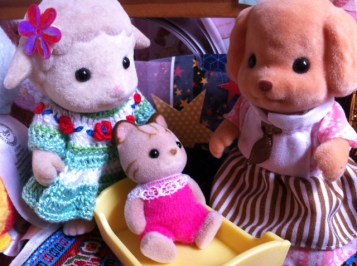
    “Hi, Sally!” Bonnie’s euphonious soprano voice manifested her presence like a spirit conjured up by a magician in an esoteric ancient language. Sally saw her dear friend approaching her from a distance waving effervescently at her with genuine smile. ” Oh, Dear. You look a bit pale… Have you eaten well? And please tell me not you are in a diet because you need it not.” Bonnie was concerned about a noticeable difference in Sally’s outward view: she looked thinner than before, and it did not look becoming to Sally. No, it was not out of that cardinal jealousy of womankind that knew neither friendship nor truth. In the eye of Bonnie, Sally looked prettiest with her round cheeks and dimpled elbows.

    photo (2)

    “No, I am not on a diet, but I just did not have any appetite… I like walking than eating! Well, let’s call it our “sauntering” as the great poet Henry David Thoreau defined. Do you know Thoreau himself was an aumbulater nascitur non fit? He was an avid walker who used to spend about two hours walking in nature. His study was out of doors like his poet pal William Wordsworth.” “Oh, I did not know it, Sally. I only know that Thoreau was a great naturalist poet and died from consumption. “Yes, Bonnie. That too was right. Soon both adorable ladies were embarking on their ritualistic morning sauntering along the Avenues of trees and flowers with larks and bluetits vivaciously chirping and tweeting, all in nature’s symphony that could make you forgive your foes and love humankind at least for that pristine moment of pleasure.

    photo
    Bonnie, La Bonne amie

    Thoreau was right: the act of sauntering in nature would blot out the strains and cares of contemporary life and anesthetize your weary body and minds against the strains of everyday life. It’s absolute freedom from all worldly engagement. Like Thoreau, Sally thought that sauntering was not an exercise but a kind of enterprise, an adventure of a day that invigorated her spirit and mind. And Sally was hoping that Bonnie would share her pleasure of appreciating the symphony of nature. “You know Thoreau was something of an eccentric genius,” Sally decided to add some tidbit of gossip on the poet. “Oh, really? How so? ” Bonnie seemed intrigued.  “Well, he never went to church but believed in God; did not marry, nor did he cast vote, nor did he pay taxes! But this very individuality endowed him with a crown of literary ascendancy, I think.” “How could he not pay his due taxes as it’s his sacrosanct duty and responsibility as a citizen? You know what, Sally? That’s why I do not like any of these intellectuals who put ideas before their civic duties and personal responsibilities.”

    Bonnie’s truculent remark was a bit startling aberration of her usual diplomatic modus operandi of expressing her opinion. But come to think of it, she couldn’t agree more with her friend about the duplicity of so-called the intellectuals, the new ecclesiastical estate of our modern society. And Sally was inwardly glad to have a friend as thoughtful and truthful as Bonnie. But still, Sally wanted to spare Thoreau from the supercilious learned elites.

    1-210

    The ante meridian sun was suavely sunny in the fiercely blue sky that would remind you of the celestial garb of the Virgin Mary in Rembrandt’s paintings.  The Italians would call the color “azure,” and they were good at making the pigment for Renaissance painters who raved about its lucidity and vivacity of the exquisite hue. And the fragrant breeze was a blessing of the beautiful Titan-goddess Aura for their friendship bound by mutual understanding and love of history and literature. As the two good friends were continuing to enjoy their sauntering in nature, it seemed right that without even going to church on Sundays, you could find the evidence of the Creator in awe of nature’s beauty and feel the presence of the existence just as Thoreau and the late Pope John Paul Second had felt and expressed.

    hqdefault

  • From PBS Masterpiece Theater – Mr. Selfridge

    25250071

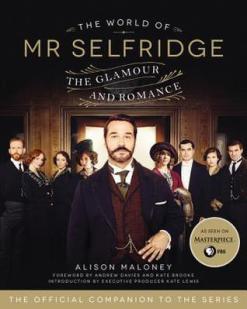
    This Masterpiece Theater Mini-Series of “Mr. Selfridge” produced by ITV is a tour de force of excellent performances of the actors, the finesse of drama scripts, gorgeous costumes, and classically elegant settings coordinated as truthfully as possible. It chronicles Harry Gordon Selfridge’s business adventures from the onset of establishing Selfridges & Co in 1908 until his farewell to his labor of love twenty years afterwards.

     From Episode I of Series 1 to Episode 10 of Series 4 (Final Season), we get to see a man named Harry Gordon Selfridge (1958-1947) who was something of a Napoleon Bonaparte knowing no word in his dictionary for “Impossible.” We see the man build a one-of-a-kind department store in London’s Oxford Street as an adventurous American tradesman against the British aristocratic chauvinism. Selfridge was a man who set a standard of modern department store; by placing the cosmetic/perfume counters on the lobby, Selfridge intended to sweeten the atmosphere of the floor in attempt to use it as a magnet for passers-by, especially women. In effect, Selfridge broke down the class-stratified fashion wall guarded by the rich/privileged by democratizing the luxurious items and making them accessible to common people as well.

    Moreover, the ace portrayal of Selfridge would/could not be possible were it not for the fine acting of Jeremy Piven whose quintessential American accent doubled with inescapable American can-do attitudes triumphs over the transatlantic cultural differences in working with the British peers. The viewer will be left with a feeling of heartfulness of the characters upon finishing all of the episodes in this series and cannot help but applaud to Mr. Selfridge for his entrepreneurial effervescence and Mr. Piven for portraying the man in a stellar performance that evokes both pathos and respect.

  • Mystic Solitude

    Once upon a time, by the sea far away from here,
    In a castle made by crystal, there lived a lady
    With Diamond Eyes and a Glass Heart as pure
    As the chaste high Moon on a wintry night sky,
    As delicate as the dewdrops on the leaves of
    Flowers in the meadow where nymphs of
    Dainty beauty danced with gods of winds.
    
    The lady in the crystal castle heard the merriment
    Of the nymphs and the winds in frivolous levity
    That grew loud and grew louder as the winds
    Blew hard and blew harder as their fiery gaiety
    Reached the demise of the frivolity finally as
    The great waves outside the castle were lulled away,
    Becoming a sweet lullaby of tidal waves peaceful ever,
    Caressing her spirit inviolate, her soul incorruptible ever.
    
    Alone, all alone – was she lonely? Not ever! Never!
    For she had two ravens named Thought and Sense
    That sat on her shoulders and told her of the tales of
    Day and Night, of Heroes and Gods, of Spirits and Sibyls,
    And then flew away when their mistress fell into slumber
    To deliver her message of her Thought and Sense Urbi et Orbi
    That she spurned the frivolities of the world in the guise of
    Romance, Reason, and Reality – the Virtual Vagaries as ever,
    In the crystal castle enameled with her mystic solitude as ever.
  • Bluebird Interview

    photo

    She was born when Saturn and Uranus were housed in the Aquarius. That says pretty much about her. The Aquarian are known for their independent spirits, compassionate and caring nature, and unquenchable wants of knowledge, all enveloped in mysterious estrangement even among the crowds. Yet, Stephanie, the writer and the editor of her two-year old Web log, “The Stylus,” (formally known as “Offbeat) is generally quite approachable and genial although she is never too loquacious at a first meeting. In fact, you might find her quite interesting to talk to, especially when you strike up a conversation with her about books written by classical writers or about history, dogs, or cultures. And if any of these appertains to one of her writings published on her digital log, “The Stylus,” you will see her soul being elevated to the ether with her eyes sparkling like stars on the Persian night sky. On Monday morning at a cozy cafe in Avonlea, Bluebird had the pleasure sitting down  with a cup of warm hazelnut coffee to talk with her about her blog, from the inception, the purpose, and the future thereof.

    BD: Hi, Stephanie. As Oscar Wilde has said that a woman who would reveal her age would tell anything about her, I won’t ask you how old you are because I suspect that you will not anyhow.

    Stephanie: I appreciate your judiciousness. (Smile) And yes, you are right in saying that I won’t tell you my age. (Smile) But I am neither teen-aged nor maturely aged, single, like one of those 10 vestals in the ancient Roman Empire. (Smile)

    BD: Okay, then let’s start talk about your Web log. What was the idea behind the creation of this log of yours? Did it occur to you all of sudden that you wanted to have yours like everyone else?

    Stephanie: Well, I first started thinking about having my writing log about 2 years ago. I had always wanted to write things about what I liked and to convey it in written letters because I think writing revels one’s soul in his/her genuine self without worrying about the physical appearance and how to present the self externally in public. In that regard, writing is non-discriminating of all social and biological differences. And I always thought that in people’s writings I could see the intelligence and nature of the writers because people would tell about their innermost feelings by means of writing rather than by speaking, which I think, sometimes seems a bit pompous and artful.

    BD: So, is this why you came to create your blog to write about what you think and feel that cannot be shared by speaking in public?

    phoo

    Stephanie: Partly so. And partly it’s because writing seems easier to communicate than speaking, which requires of me instantaneous faculty with dialogue that necessitates breaking from shyness. You see, English is not my mother tongue. Being a native Korean, the language differences between the two languages are as wide and deep as the Pacific Ocean: The English belongs to the Indo-European lingual family, while the Korean to the Ural-Altai to which the Japanese, the Turkish, the Finnish, and the Hungarian also belong. The syntax and the grammar are of course very different. So, it will be much different from, say, someone from any Western European country speaking and writing English because Western European languages belong to the same family as the English. Nevertheless, I want to break from such syntactical, grammatical, and literary inhibitions to craft the art of writing, just as Jack Kerouac felt the same about it.

    BD: That’s a sublime motivation to create your blog. Then how about the name of your blog? It has recently gone through some changes…

    Stephanie: Yes, indeed. But for the good reasons. First, it was started as “Offbeat” because one of the teachers at the language school I currently work at told me that my blog seemed to carry this offbeat vibes, a sort of New York feel, the independence, the avant-garde spirit that knew no boundary of subject matters of writing. So I thought it was a cool name for my blog and kept it until the last week. But suddenly I came to think that it needed name changing just for a change of scenery; you know the kind of moment when you want to reinvent your image with a new haircut.

    BD: Okay, Stephanie. By the way, what are your readers like? Do you have many followers?

    WK-AK224_BOOKS2_20071011174112

    Stephanie: To be honest with you, I am more concerned about the qualitative likes I get for what I write from fellow bloggers who also love writing and publish qualitative posts by which I mean the writings, such as musings, creative stories, poems, and/or book reviews. The reason I say this is that recently there has been someone who creates several unsolicited blogs that only contain commercial stuff, copied works of others, or nothing just to get to my blog. And I tell you that I only appreciate the likes from those qualitative bloggers. And I also tell you that I don’t appreciate those of illegitimate ones’ likes. How do I know they are illegitimate? Well, can you like my writing as soon as I publish? That means that person does not bother to read my writing, which I take it as an offense.

    BD: Who is that one plaguing your blog with empty likes? Have you done something about it?

    Stephanie: First, that one appeared in my spam comment section. He said he liked my blog and asked for some advice of writing. I think I was too naive to even reply to him, thinking that he was going to have his meaningful blog filled with writings, but no… I should have never done that…. This is my character flaw; that I bring trouble and pain on myself through pity and compassion… In that respect, I sympathize with Katherine Cookson, who said the same thing in her memoir Before I go, about which I have also written.

    BD: You must be really frustrated with that person… Sorry to hear that.

    betty beaver

    Stephanie: I even contacted an engineer at wordpress. about this issue in effort of stopping him from visiting my blog, but was told that because it’s in a public domain, there’s no way I could do that… And you know it’s really disheartening to see it happening in my blog because it is a sheer form of sabotage to my blog because my blog is not an object of popularity… Although my current followers are 52, what I care about is my works being duly appreciated by fellow writers, amateur or professional. Nevertheless, I don’t want to canvass for liking my writings. It’s just not me. But if you like any of my writings in terms of the contents regardless of any grammatical errors, that makes me feel fulfilled. And any comment is always welcome.

    Don’t be shy to comment on any of my posts because I am a human being, too! (Smile)

    BD: Stephanie, I understand how you care about your blog and your love of writing in this interview. Any word to your readers?

    Stephanie: I just want my readers to know that I write because I like to portray what I feel about things in my heart in poetry and what I think about books I read in my mind in belief that taste and reason is universal in all human creatures regarding principles of judgment and of sentiment common to all mankind, as Edmund Burke averred in his essay On Taste. So Many Thanks to You, Dear Readers with My Whole Heart.

    BD: Thank you, Stephanie. I hope your writings will have a wide range of loyal noble readership.

    Stephanie: Thanks! Have a lovely day!

    img-thing

    저장

    저장