Tag: arts

  • good bye to sunday

    img_0456

    Sunday is the saddest day of a week because it heralds a start of another week that brings unknowns to all mankind: employed/unemployed, men/women, affluent/impecunious, and educated/uneducated. Every minute of Sunday hastens to its end like as the waves make towards the quicksands. For Paul Collie, who works as a manager at a supermarket, is an imperturbable person hardly under the weather, Sunday means constructive solipsism in which his artistic sensibilities and intellectual proclivity are manifested in such forms of gardening, reading and writing otherwise smothered under the pretext of financial needs and familial responsibilities during weekdays. Gardening, because it gives him a sense of being a master of fine arts akin to Michelangelo; reading and writing, because he it teaches the styles of writing he can employ in his own writing. On this late afternoon, Paul is having a jovial time with his like-minded friend Hans Cow, a senior librarian at Tolkien Library and a part-time private investigator, who called on him to talk about the current affairs of the week. This week’s topical subject of the Sunday talk: “Elitist Art exclusive of the undesirable”

    Hans: “Did you read an article about Snotty Museum turning down an annually pledged largess from Johnny Mojo, the chairman of the cleaning company Mojo? The reason for the rejection was said to be of moral, ethical standards because Johnny Mojo was a one-time drug addict and affiliated with some kind of money-laundering scheme. But you know what? I think it’s all about posturing, gestures of some kind of uneducated, former jailbird upstart trying to hobnob with the big wigs and the celebs that these so-called “Guardians of Fine Artsimg_0458” do not want to approve of. For Mojo – let’s be brutally honest – does not meet their standards of impeccable donors. What they want is immaculate man without original sin!”
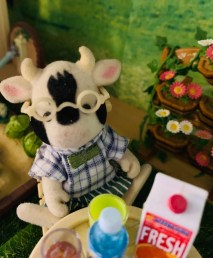
    Paul: “Yeah, I read that Mojo guy. You are right in saying that Snotty Museum’s decision img_0457was rather foolhardy and rash, groundless in their a priori reasoning that a donor should be also morally and spiritually immaculate to support artistic causes. Which is a supercilious stance on the puritanical touchstone of sponsorship. That a company doing a dubious business should not contribute its munificence to the museum is a hokum, nothing but a supercilious illustration of elitist art exclusive of the populace. The museum do not want to be involved in moral money-laundering, or “art-washing”. I want to think that Mojo’s intention to donate his wealth to the museum was bona fide because art is open to all, not a prerogative of the moneyed. Besides, art is for art’s sake and not should be used as a tool for political campaigns or social dogmas. Lucy Maud Montgomery expressed the same sentiment, and W.H. Auden also concurred that art should not be trapped by political and social systems. The museum’s decision shows that even a realm of art has been a domain of social Spencerism…

    Pleasure and activity make the afternoon hours seem short as the discussions seem to have no ends. There’s nothing like a merry heart that goes all day when talking and listening to a kindred spirit who understands your mind’s world and encourages to continue cultivating your mind’s garden. The sun has moved closer to the horizon, and soon the evening will come. Then this Sunday will become a part of the memories of the past as a new Monday comes. Then it all seems legit to chime the timeless Latin phrase: “Tempus figit”. So it does. Times flies.

  • Malaise – chapter ten

    cafe-sans-souci-sheila-kinsey

    ‘Everyone else is doing it, so why can’t I?’ Iris, the interrupted woman whose inverted elitism outed her of the quotidian pleasure, was finally on the verge of private rebellion against the lofty isolation from the world that beckoned her yonder with an alluring panoply of all things sensuous, tactile and visceral, like the tempting fruit from the tree of knowledge. The more she thought about the mysterious man’s Byronic face with Olympian physique, the stronger the flame of her heart grew. It’s really a foolish heart, thought Iris, but when she had no other than a woman’s reason and thought him so, who could berate her? Call it the affair of the heart or whimsical infatuation of the beauty that looked so patrician, so elated, and so untouchable. Yet, her heart was telling her that this time she should surrender to the power of the human nature by letting the force of desire besiege her solitary castle and infiltrate it in all corners without mercy of the inter-cultural code of ethics built on the puritanical dictatorship of the body and the soul.

    Consumed in the flame of passion, the soul of Iris was in communion with that of Dido, who loved Aeneas more than he loved her. Poor Dido- She deserved a better man who could return her love, for she was beautiful inside and out. Silly Dido- She should have moved on even after her lover deserted her for the glory of his predestined royalty in a new land. Dido was a woman of passion, and so was Iris. They lived on the idea of love and must have figures of love, for that’s what gave them perks of life. But at least, Dido had Aeneas, and her love was consummated in the cave on a stormy day, albeit it was all staged by Venus, the goddess of love and the mother of Aeneas, and Juno, the ever-jealous goddess. Dido’s love was actualized even for a short period of time when she was alone together with Aeneas. Alas! Poor Iris, I knew her, my dear readers. It all seems to me now that Cupid’s arrows took aims at her, but not the figure of her love. Her love was alone, her existence was always invisible, and she was not allowed the joy of love. Iris was dissociated from a parliament of Love, a congress of lovers.

    It was said that the idea of love to the classical Athenians was primarily erotic, rather than platonic, instinctual rather than spiritual, physical rather than mental. What we now understand about love was no more than a close bond between family members or a master and a horse or a dog. What Iris was feeling now was a combined love of Eros and Agape. She wanted the wholesomeness of love, as in the union of Cupid and Psyche. People would think that she was disinterested in love because of her beautiful but austere look that prevented people from being jovial with her. She never told her love to anyone but let concealment feed on her damask cheeks. She pined in thought with a green and yellow melancholy with solitude as her steady companion.

  • fairy queen


    yvonne-coomber-slide12

    Fairies, pray come and take me out of this rut

    For I want to ride the wind with you in a heartbeat,

    Stand on the highest crest of the leviathan tide,

    And dance across the meadows and fly with light.  

  • Afterthought

    I didn’t anticipate her response, let alone her thanks. After all, she’s a celeb in the constellation of high stars, a goddess in the pantheon of divine knowledge, and a grand master in alchemy of literature, Or in recognition of her self-titled epithet, she’s the Comma Queen who will not/does not suffer from the grammatical benightedness of ambitious literary proclivity. But it happened, and she did; Mary Norris, author of Greek to Me about which I wrote a review, responded thereto in the following fashion:

    Well, it’s nice to be complimented for my work by someone who is famous, and I certainly wouldn’t mind being rich and famous if I turned into an overnight sensation in literary firmament. Yet, I do not write to make a living nor to be popular with hundreds of likes. Writing to me is an act of sovereign remedy for the existential ills, of personal treatise on the workings of the mind and of sheer egotism of relieving the creative urge from within. Come what may, a little tweet from the celebrated writer will not turn love of the book into worship of the writer. For it is the work of her intellect manifested in her literary craftsmanship, not the person herself. Whether or not the author liked my review does not/will not/should not affect my reason for and act of writing with a million dollar memento from Kurt Vonnegut: “To practice art, no matter how well or badly, is to make your soul grow. So just do it.”

  • deer hunter – chapter 7

    in-birreria-guido-borelli

    5:15 PM to Florencia. Iris looked at her iPhone clock and felt secured because the time was working nicely with her wish to stay longer until the train departed. The cappuccino was still pleasantly warm in her hands, and she loved the aroma that enveloped her tall slender figure like a shimmering halo of rainbow sunshine. The iridescent mist of instant euphoria was clothing her with a veil of poised status that fused mysterious confidence with graceful humility. Emboldened by this sudden transformation, Iris pulled herself out of her glass castle and lifted her beautiful deep liquid brown eyes to the outside the world of her own. Into the sea of her diamond eyes, the images of love and beauty were cast like magical apparitions, bewitching her senses and sensibilities which were otherwise harnessed like a pair of tamed horses. Iris felt that she could forgive all and love all at that moment of euphoria. It showed that a cup of good coffee could do wonder to anyone as it had done to Johannes Sebastian Bach, Albert Camus, Napoleon Bonaparte, Jonathan Swift, and Ralph Waldo Emerson.

    In this caffeine-induced euphoria, Iris did not know she was radiant with her pretty smile. The smile was her most prized jewel. When she smiled, she was sweets to the sweet. It was like a flower blooming around an oasis in a desert, and everyone liked it. It’s as rare as a pearl found in a clam, and it’s this rarity of her smile that kept herself distant from the melee who demanded of her frequent smiles. And who would have known that her pearly smile would have caught the sight of Hector? Yes, it was Hector, the mysterious man with a Byronic face and Olympian physique sitting three seats away from Iris, the smile enchantress. Reader, you should understand that Iris was usually a skillful driver of her Chariot of Mind, keeping a tight rein on the always recalcitrant Horse of Appetites. But at that moment, Iris’s chariot was shaking, and the impudent horse was not responding to her stern command to behave. The harder and more she hit the horse with a goad, the more and harder the horse rebelled against the pain until it became mad with a wild cry of agony. It was the cry of the restrained nature. For the nature of the impudent horse was to act according to its beastly desire, the primal cry of the wild. The ancient Greeks regarded love involving man and woman as the most passionately sensual emotion in which only Eros dominated because it was primarily physical, encompassing carnal pleasure. Was it that Eros and Eros only that reigned in Iris’s entertainment of this rebellious chariot of the mind with the wild cry? Iris did not think so and liked to believe it wasn’t. After all, Iris was chaste, and she believed that she would live as a living goddess like Artemis or Athena, independent of men, of children, flying outside the boundary of marriage and attachment.

    Hector was watching this curious woman all along. He did not know why, but something was telling him that she was different from other women whom he had known and lived with. She looked both woman and girl in her tall thin body. She was beautiful with her chiseled face and large dark brown eyes that looked rather serious and dolorous. Her high-bridged straight nose gave her an impression of a patrician woman whom no one could easily be jovial with. The beauty and the grace of her were not in want, and yet she wasn’t exactly the fairest of all the women he had met. Besides, there was a touch of beyondness to her, which was oddly attractive with her rather sophisticated urban demure. The graceful estrangement emanating from this unknown girl/woman reminded him of a deer that lost a track of her kind in a deep forest. Or did she look like a she-wolf voluntarily detached from the pack? Whatever it was, he was hooked on it and wanted to know more about it. It was in her, and she was in it. He wanted to be in it, willingly and madly. Was it an illusion or just a whimsical mood of a bored artist? Hector was all for the adventure, and he’s up for it like Odyssey in preparation for his adventures between the sea and the devil.

  • ‘A Harlot’s Progress (2006)’, directed by Justin Hardy – review

    71+BMGiROqL._RI_Throughout human civilization, prostitution has been arguably something of a necessary evil, intentional or unintentional, an institution of erotic bartering between a client and s prostitute for wants of flesh and fortune. For a client, it’s all about releasing his rapacious libido in a brothel, whereas for a prostitute offering a pleasure of the flesh can be a means to a social mobility in a period when women’s place was confined by biological determinism. But that social mobility would be possible with the intervention of Goddess Fortuna. ‘A Harlot’s Progress’ follows a life of an unfortunate prostitute named Mary through the eyes of William Hogarth, an English painter and social critic renowned for choice of his subjects crossing the strata of the social class system for inspirations.

    The painter Hogarth chooses Mary as his unofficial muse for various paintings depicting modern moral subjects as a series of picturesque statements of social criticism on the oppressed conditions of the poor whose lives are already determined by their biological and social statuses. Likewise, Mary’s downfall from a beautiful courtesan to a common, over-the-hill backstreet slut is already a foregone conclusion for the nature of the profession. Besides, she’s not exactly cut out for a fine prostitute with artful plans to forward her rank and condition; she has a pride but no courage. She yearns for a polite society, but her frailty of character prevents her from advancing in her career to a mistress of a high-birth man. In other words: Mary chose a wrong job that ruined her life.

    The film is said to be based upon a true story with references to the famous figures of William Hogarth and his friend Henry Fielding, the author of Tom Jones. It gives the veracity of the event with a charge of authority, rendering the story of lachrymose life of Mary emotionally powerful and factually unchallenged in the veneer of historicity. Yet, in terms of objectivity of the stance that the film takes, its view on prostitution in the 18th century London is clearly askew on the side Mary because she is cast as being a victim of the social evil with her purity of the soul torn apart by men’s rampant animalistic sexual desires as presented by all uniformly unattractive and perverted men on screen. In fact, the only pitiful character in the film seems to be Mother Needham, who is mercilessly abused on the pillory for three consecutive days and nights of stoning, defiling, and cursing from the public who were once or twice her clients and neighbors. The sight is sufficient to incite pathos because of her plea for life authentically delivered by the excellent performance of actress Geraldine James.

    No one can throw stones at Mary for her life of “sin and depravity” because there’s no one who is immaculately cleared of guilt and sins to judge her character as arbitrator of morals. But then she is responsible for her own life with her own free will to choose to be a harlot. For not all destitute women driven by abject economic conditions are succumbed to the trade of the flesh. Nonetheless, this film is a good period drama that resurrects the ethos of the time with the parlance, habits, and costumes of different classes peculiar to the 18th century, well executed by a cast of classically-trained fine thespians.