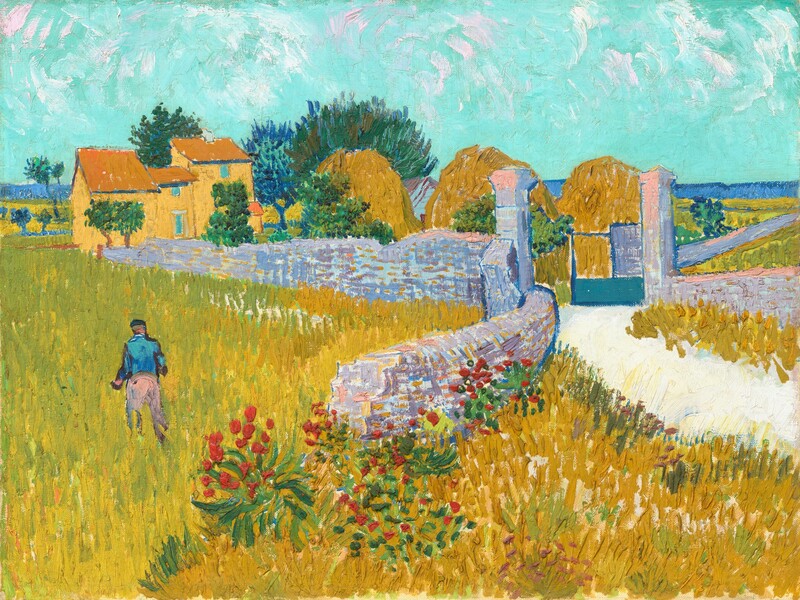
Vincent van Gogh
I have a confession to make. I am a ghost lover. A lover who finds love in language made flesh. Aeneas, Virgil, Sappho, Anne Brontë, and Clarice Lispector remain as I have read and thought of them, without the disappointment of their human foibles in life. My ghost love is not necessarily erotic; it is closer to the Elizabethan sense of the word “friend,” which could mean “lover.” Perhaps I don’t belong to the current period of time, or I am simply made that way. And I love it.
“On Falling In and Out of Love With Dead Artists as an Art Historian” is an Augustinian confession by Allison Leigh, an art historian who fell in love with the artists despite their infamous misogynistic tendencies and appalling behavior towards women. Leigh described her growing attachment in the way a method actor becomes the character she plays. But to me, she seemed more like an investigative journalist covering an artistic scandal who then found herself infatuated with the artist. Or shall I call it erotic Stockholm syndrome?
Honestly, it seems to me that Leigh’s love of the infamous misogynistic artists must have come from her attraction to men with similar tendencies, such as the handsome Russian Karl Briullov. I say this because I could never feel for an artist who enjoyed painting women being stabbed to death, as Eugène Delacroix did, or for Picasso, who slapped his girlfriends simply because they went out without his permission. And anyway, I never liked Picasso. While people rhapsodized about how creative and ingenious his art was, I found nothing to admire about him except his ability as a businessman.
Artists, especially painters, express themselves in colors and shapes, unlike writers or poets. I do not feel as close to their minds, and honestly I couldn’t care less, except for Michelangelo, who endured Leonardo da Vinci’s contemptuous comparison of marble sculptors to bakers. I am not trying to stage a pugilistic contest between a painter and a writer or poet, but I see no reason to be attracted to abusive men, no matter how lonely they were when they tried to be artistic by forever sulking and being uncaring. In this regard, Vincent van Gogh was a romantic man before he was an artist, with his generosity, compassion, and warmth.
You can’t put art before man. I can’t admire the art when I don’t admire the artist. How can you separate the creation from the creator? Artists need not be saints or model citizens. But art does not absolve an artist of vice. That is why my admiration for Charles Dickens has been tainted since I learned that he tried to send his sane wife away to an asylum.


Leave a Reply